AMD helios AI blueprint heats up Nvidia rivalry
The gist
AMD’s Helios platform is turning up the heat on Nvidia with a rack-scale, liquid-cooled AI system that promises epic performance—and a serious challenge to the data center status quo.
What to know
- Helios packs 72 Instinct MI455X GPUs, EPYC 9006 CPUs, and Pensando AI NICs into a single rack, hitting up to 2.9 EFLOPS compute and 260 TB/s bandwidth.
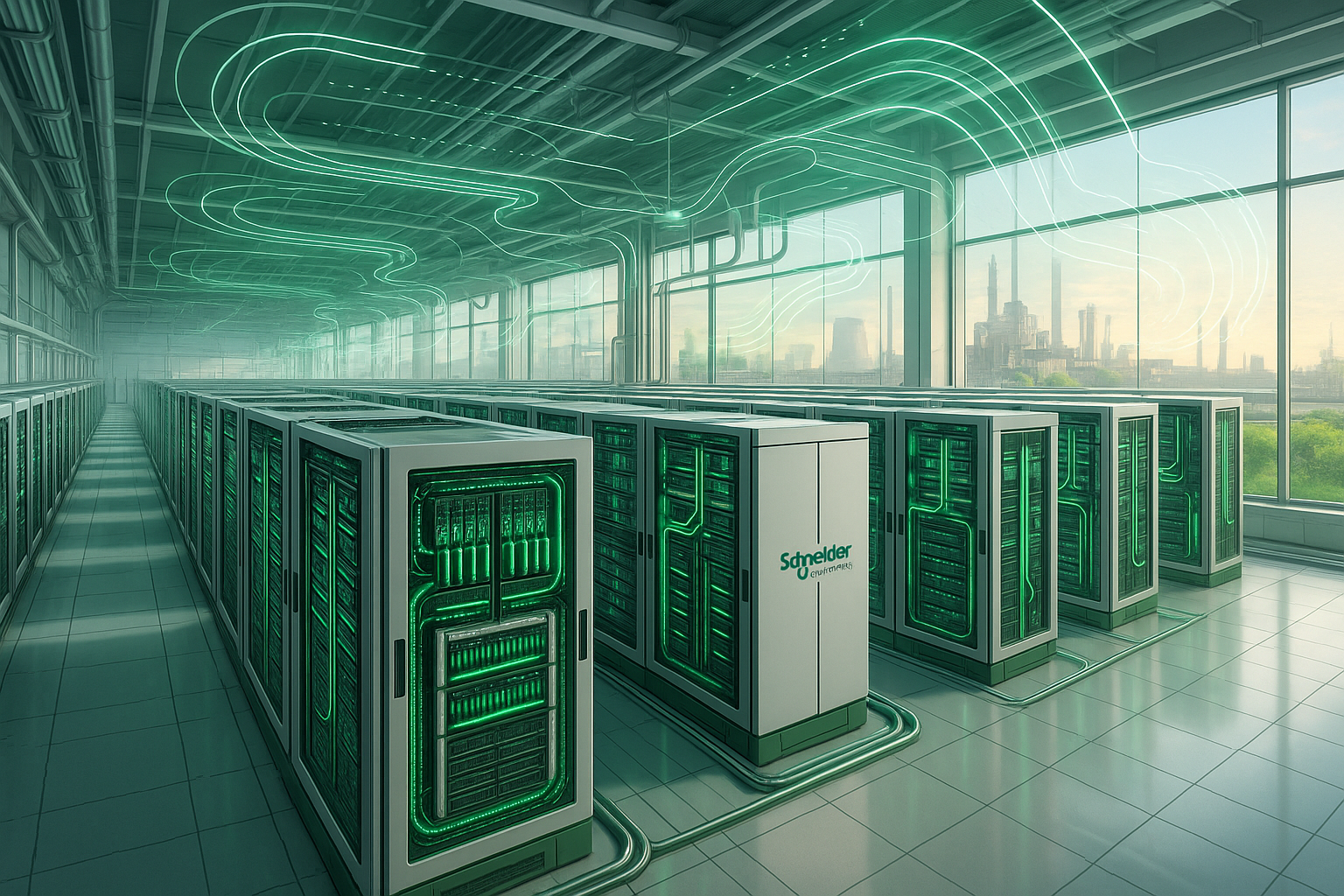
- An advanced liquid cooling system (co-developed with Schneider Electric) removes over 84% of heat and supports racks drawing up to 246kW at industry-leading 1.12 PUE.
- Strategic partnerships with Broadcom, HPE, and Cerebras expand the Helios ecosystem as AMD eyes 50%+ annual data center growth and a real shot at Nvidia’s crown.
Rack-Scale AI Engineering
Helios fuses CPUs, GPUs, and advanced networking into a single rack, breaking server boundaries for unified, high-performance AI infrastructure.
AMD's Helios platform represents a transformative shift from chip manufacturing to integrated systems engineering, delivering a rack-scale AI infrastructure that unifies CPUs, GPUs, DPUs/NICs, and networking into a cohesive, high-performance appliance. Leveraging AMD EPYC 9006 'Venice' CPUs, 72 Instinct MI455X GPUs with 31TB of HBM4 memory, and programmable Pensando AI NICs, Helios achieves up to 2.9 EFLOPS peak compute and 260 TB/s of scale-up bandwidth within a single rack, enabling AI workloads to scale beyond traditional server limits while maintaining operational continuity and rapid deployment capabilities.
At the heart of Helios’ networking innovation is the Ultra Accelerator Link over Ethernet (UALoE), which connects all GPUs in a single-hop Ethernet switch topology using industry-standard AVGO Tomahawk 6 switches. This design minimizes latency and maximizes communication efficiency by enabling direct GPU memory operations across the rack, with multipathing and congestion control embedded in hardware to optimize network utilization without host CPU intervention. Resilience is engineered deeply, as each GPU links through 18 independent UALoE stations across switch trays, ensuring uninterrupted AI workloads despite hardware failures.
Helios emphasizes advanced thermal management and energy efficiency through its liquid cooling architecture, which removes over 84% of heat via direct liquid-cooled compute and switch trays with quick disconnects. This approach supports high-density AI racks consuming up to 246kW each and clusters scaling to 10.4MW, all while maintaining a Power Usage Effectiveness (PUE) as low as 1.12. By integrating liquid cooling with modular rack design and supply chain planning, AMD and Schneider Electric enable rapid deployment of scalable AI data centers that balance performance with operational continuity and sustainability.
Modularity and software integration are key to Helios’ adaptability and customer responsiveness, with AMD Fabric Manager and Fabric OS providing real-time telemetry, deployment automation, and hardware event management that transform the network fabric into a managed operational platform. This software stack, combined with modular chiplet designs and open-source components, allows Helios to quickly incorporate customer feedback and evolve AI transport, congestion control, and telemetry protocols post-deployment, ensuring the platform remains agile amid rapidly changing AI workload demands.

Ethernet Fabric Redefined
AMD’s UALoE and programmable AI NICs deliver ultra-fast, resilient GPU-to-GPU communication, eliminating proprietary lock-in and slashing AI job times.
AMD's Helios platform revolutionizes AI data movement within racks by leveraging Ultra Accelerator Link over Ethernet (UALoE) to unify 72 AMD Instinct MI455X GPUs into a single domain with up to 260 TB/s aggregate bandwidth and access to 31 TB of HBM4 memory. This scale-up fabric is managed by AMD Fabric Manager and Fabric OS, which provide real-time telemetry, automated fault response, and seamless failover across 18 independent UALoE connections per GPU, ensuring uninterrupted AI workloads even during hardware faults.
Built on standard Ethernet switch ASICs and aligned with the ESUN open industry initiative, the Helios networking fabric benefits from a mature ecosystem that supports low-latency, high-bandwidth AI data flows within and across data centers. This approach avoids proprietary lock-in while enabling scalable, resilient AI infrastructure that can adapt to evolving workload demands and interconnect standards.
The AMD Pensando Vulcano 800 AI NIC addresses critical AI networking bottlenecks by delivering up to 2.4 Tbps bandwidth per GPU through the aggregation of three 800Gbps NICs, resulting in up to 13% faster AI job completion. Its programmable design supports evolving AI transport protocols and congestion control, while hardware telemetry enables fine-grained, real-time network statistics that facilitate low-latency congestion management and resilient data movement across multiple data centers.
Pensando’s NIC architecture enhances operational continuity by distributing traffic across independent data paths, reducing switching costs by up to 33% and allowing graceful performance degradation rather than catastrophic failure in case of link issues. Integrated diagnostics and rapid fault isolation empower infrastructure teams to perform on-the-fly repairs without disruptive maintenance, while programmable multipathing spreads GPU-to-GPU flows across 128 to 256 paths to optimize network utilization and minimize stalls in large-scale AI training.
Blueprint for AI Data Centers
AMD and Schneider Electric’s validated Helios design merges liquid cooling, digital infrastructure, and real-time monitoring to enable dense, energy-efficient AI clusters.
AMD and Schneider Electric have jointly developed the Helios Blueprint, a validated reference design that enables rapid, lower-risk deployment of high-density AI data centers featuring up to 246kW per rack and 10.4MW clusters. This scalable, rack-scale solution integrates advanced power, cooling, and digital infrastructure to support modular, multi-cluster AI environments, streamlining complex deployments while emphasizing operational continuity and energy efficiency.
Central to the Helios platform’s efficiency is its advanced liquid cooling system, which removes up to 84% of generated heat through Schneider Electric’s Motivair Coolant Distribution Unit and hybrid air/liquid cooling technologies. This approach, combined with a digital-first infrastructure leveraging ETAP and EcoStruxure IT Design CFD simulation tools, enables real-time monitoring and AI-driven predictive maintenance, driving system-wide optimization and achieving an impressive Power Usage Effectiveness (PUE) as low as 1.12 at full load.
The collaboration between AMD and Schneider Electric bridges the gap between cutting-edge AI compute platforms and energy technologies, simplifying data center planning and reducing integration risks. As Manish Kumar of Schneider Electric explains, the design connects advanced AI compute with real-world data center implementation, while AMD’s Forrest Norrod highlights it as a practical blueprint that accelerates high-density AI deployments with greater confidence, scalability, and operational efficiency.
Ecosystem-Driven Expansion
By aligning with major partners and targeting high-value AI markets, AMD positions Helios as a credible Nvidia rival and accelerates industry adoption.
AMD's strategic transformation from a chip-centric to a systems-oriented company is epitomized by its Helios platform, which integrates GPUs, CPUs, networking, and software into a modular rack-scale AI infrastructure. This focused approach, as Andrew Dieckmann emphasizes, targets select market segments to deliver scalable, high-value solutions that prioritize operational continuity over broad, unfocused expansion.
The Helios ecosystem is rapidly expanding through key partnerships and acquisitions, including ZT Systems and collaborations with frontier model builders, enabling accelerated deployment of validated AI infrastructure. Strategic alliances with industry giants such as Broadcom, Hewlett Packard Enterprise, Astera Labs, and Core Scientific provide critical components—from high-speed networking to manufacturing and data center capacity—creating a cohesive platform that supports scalable, efficient Helios rollouts.
AMD is broadening its market reach beyond hyperscalers by partnering with companies like Cerebras Systems to deliver heterogeneous AI solutions that expand the addressable inference market. This diversification, coupled with major inference deals with OpenAI, Meta, Anthropic, and Microsoft, positions AMD as a formidable competitor to Nvidia, with customers increasingly delaying purchases in anticipation of Helios’ superior value proposition and throughput capabilities.
Market momentum behind Helios is robust, with AMD's data center revenue surging approximately 50% year-over-year and projections to more than double by 2027, driven by MI450 deployments and expanding server supply. Analysts highlight a compelling long-term growth outlook with a 30-40% CAGR and EPS targets exceeding $20 within five years, while ecosystem partners like Broadcom and Core Scientific enjoy bullish analyst ratings, reflecting widespread confidence in Helios-driven AI infrastructure demand.