America’s gilded age 2.0: inflation, inequality, and the new social powder keg
The gist
America’s wealth gap has exploded to Gilded Age proportions, igniting a powder keg of inflation-driven hardship, social unrest, and radicalization.
What to know
- The top 1% now control as much wealth as the bottom 90%, with a Gini coefficient of 0.86—just a hair below the 1890 record.
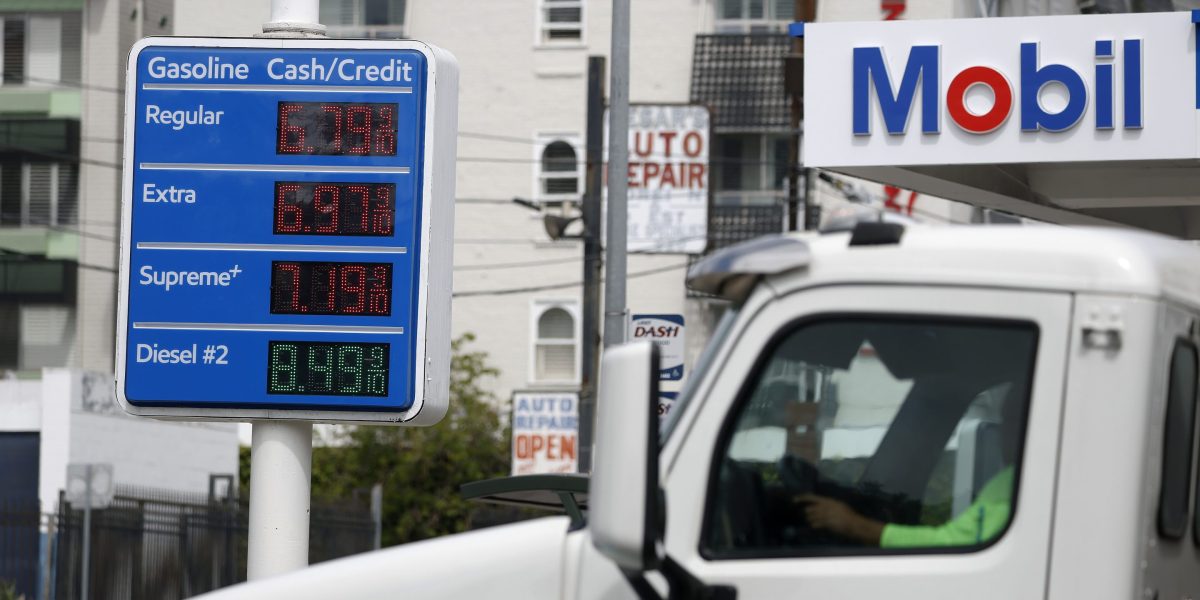
- Persistent inflation and a 21.2% spike in March gas prices mean full-time workers earning $18 an hour spend 65% of their pay on rent, while lower-income Americans pay up to 10% of their income just to fill their tanks.
- Social tensions are boiling over as sympathy for anti-elite violence grows, trust in institutions crumbles, and the K-shaped divide leaves millions squeezed by soaring living costs and depleted savings.
Asset Owners Rule America
A tiny elite’s grip on 93% of financial assets—fueled by lopsided policies and inflation that robs wage earners—has created a wealth gap rivaling the Gilded Age and set the stage for rising class conflict.
By early 2026, wealth inequality in the U.S. has surged to levels nearly indistinguishable from the Gilded Age, with a staggering Gini coefficient of 0.86—just 0.01 shy of the 1890 peak—where the top 1% now hold as much wealth as the bottom 90% combined. This extreme concentration is further underscored by the fact that 10% of Americans own 93% of all stocks and financial assets, a disparity that fuels social instability and echoes historical precedents of societal collapse, as Gary Stevenson warns, "This is essentially the story of Central America and more broadly history throughout time."
Government fiscal policies, characterized by persistent budget deficits and extensive money printing over the past decade, have driven inflation that disproportionately erodes the purchasing power of lower-income households who lack asset ownership. As noted in analyses, this inflation acts as a 'soft default,' transferring wealth from savers and wage earners to the government and asset holders, exacerbating the K-shaped economic divide where asset owners—primarily the top 10%—see their wealth appreciate while the majority struggle with stagnant wages and soaring living costs, such as a full-time worker spending 65% of take-home pay on rent.
The disconnect between soaring worker productivity—up 80.9% since 1979—and meager wage growth of only 29.4% highlights systemic economic inequality that undermines broad-based prosperity. This gap, compounded by government policies that favor a small, well-connected elite through tax loopholes and subsidies, perpetuates a cycle where wealth concentration intensifies, fueling class warfare and undermining investment in the middle class, as Gary Stevenson observes: 'a small group of very talented, hardworking and lucky people... weaponized government' to their advantage.
With no political strategy to reduce the nation’s $39 trillion debt, the government relies on inflation to quietly erode its real value, effectively offloading the burden onto financially illiterate individuals holding cash or fixed-income assets. This approach, described as immoral by critics, deepens social and economic instability by enriching asset owners while impoverishing savers, thereby entrenching wealth concentration and risking further societal fragmentation.


Inflation’s Hidden Wealth Transfer
Relentless inflation, turbocharged by war-driven energy shocks, quietly drains savings from the bottom 90% and funnels gains to asset-rich elites, making cash a liability and deepening economic divides.
Persistent inflation, fueled by government deficits and expansive money printing, has steadily eroded real wages and purchasing power, disproportionately impacting lower-income Americans who lack asset ownership. For instance, a full-time worker earning $18 an hour faces the stark reality of spending 65% of take-home pay on rent alone, leaving scant resources for essentials or savings. This dynamic underscores how inflation acts as a hidden tax, hitting hardest those without the financial cushion of appreciating assets.
The cascading effects of the 2026 Iran war-induced oil supply disruption have intensified inflationary pressures, with gasoline prices surging 21.2% in March alone—the largest monthly spike since the 1960s—accounting for nearly three-quarters of that month's inflation. This energy shock reverberates across sectors, inflating costs for airlines like Delta, construction materials, and food supply chains, thereby squeezing consumer spending power and driving consumer sentiment to historic lows, with 65% of Americans reporting prices outpacing income.
Inflation functions as a stealthy 'soft default' on savings, eroding the real value of cash and fixed-income holdings over time, which disproportionately harms those without assets that appreciate with inflation. As the government’s growing debt incentivizes policies that weaken the dollar, this mechanistic wealth transfer enriches the top 10%—who own 93% of assets like stocks and real estate—while impoverishing wage earners, deepening the K-shaped economic divide and making holding cash beyond a short-term buffer increasingly unsafe.

Economic Despair Breeds Unrest
As historic inequality collides with runaway living costs, sympathy for anti-elite violence surges and trust in institutions collapses, echoing past moments when economic pain exploded into political chaos.
The U.S. is teetering on a precipice of social unrest fueled by a toxic mix of extreme economic inequality and persistent inflation, reminiscent of the Gilded Age’s darkest days. With a Gini coefficient of 0.86—just shy of the historical high—and the top 1% controlling as much wealth as the bottom 90%, economic despair has morphed into political radicalization, exemplified by the widespread sympathy for Mangioni, the health insurance CEO’s killer, whose defense fund has attracted nearly a million dollars from 30,000 donors. Meanwhile, inflation has relentlessly eroded purchasing power, forcing full-time workers earning $18 an hour to spend 65% of their take-home pay on rent, turning economic inequality into a powder keg of social unrest.
Historical and contemporary examples underscore how unaffordability combined with inequality ignites social revolts and political upheaval. From Daniel Shea’s 1786 armed uprising over land seizures that spurred the Constitutional Convention, to the 2019 Chilean protests triggered by a mere four-cent subway fare hike after decades of economic squeeze, the pattern is clear: long-term economic pressures culminate in explosive social reactions. Today, the U.S. faces a similar crisis as inflation, exacerbated by a 70% surge in oil prices linked to geopolitical conflicts, pushes gas prices above $4 nationally and $5 in California, deepening the strain on the bottom 80% and risking unrest on a comparable scale.
Eroding trust in political institutions compounds social instability, as many Americans blame elected officials rather than the wealthy for inflation and economic hardship. This skepticism has metastasized into widespread social fragmentation, where the woman at the oil change, exhausted by a lifetime of official disappointments, no longer trusts the institutions meant to protect her. The media’s shift toward identity adjudication over investigative rigor further deepens divisions, while repeated episodes of political violence—such as assassination attempts at the Washington Hilton in 1981 and 2026—highlight the persistent desperation born from unaddressed economic grievances.
The breakdown of social trust extends beyond institutions into everyday community interactions, disrupting basic economic exchanges and fostering protective, often isolating behaviors. Policies that decriminalize theft or defund police have backfired, signaling lawlessness and prompting measures like locking up deodorant in stores, which only deepen social distrust and economic instability. This pervasive distrust fuels political gridlock and a dangerous normalization of political violence, as seen in recent attacks like the shooting of an Indiana council member’s home. Yet, rather than revolutionary change, this climate is more likely to entrench prolonged stasis, exacerbating social unrest without clear resolution.



K-Shaped Divide Hits Home
Skyrocketing rents, surging gas prices, and higher taxes force working families to cut essentials while the affluent barely flinch—entrenching a two-tier America where prosperity and pain grow further apart.
The K-shaped economic divide has deepened as lower-income households grapple with soaring essential costs, notably housing and gas, which siphon funds away from discretionary spending and force many to cut back sharply. Despite inflation easing from its 9.1% peak in 2022 to under 3% by early 2025, financial relief remains elusive for many; as Gallup reports, concerns about meeting minimum credit card payments have risen by 11 points, reflecting persistent financial anxiety. Administrative assistant Kerigan Rosado encapsulates this strain: 'We don’t go out anymore. We don’t have the money to buy much of anything really,' highlighting how rising gas prices and living expenses compel families to prioritize essentials over non-essentials.
Housing costs have become a crushing burden for lower-income Americans, with rent, mortgages, property taxes, and homeowners insurance escalating dramatically—property taxes surged 15% over five years and insurance costs jumped 70% between 2019 and 2025. This financial squeeze disproportionately affects vulnerable populations like the elderly and fixed-income earners, as housing counselor Katelyn Gravell notes, with many forced to seek emergency aid such as food pantries. Uber driver Cameron Toroni's frustration that 'we’re doing less with more nowadays' underscores the disconnect between technological progress and the persistent unaffordability of housing, which entrenches the K-shaped divide by limiting spending capacity and quality of life for the less affluent.
The surge in gas prices following the Iran war starkly illustrates the K-shaped economic divide: lower-income households, earning under $40,000, reduced gas consumption by 7% yet paradoxically spent 12% more on fuel in March 2026, while wealthier households earning $125,000 or more increased gas spending by 19% with only a 1% consumption cut. This divergence exacerbates financial stress among poorer Americans, who now allocate up to 10% of their income to gas compared to just 2.7% for the affluent, forcing painful trade-offs that deepen economic disparities. The New York Fed highlights this as a more pronounced K-shaped pattern than previous shocks, with increased fuel spending siphoning money from other needs and slowing overall inflation-adjusted consumption.
While higher-income households continue to fuel retail growth and maintain lifestyles marked by vacations and stable spending, lower-income Americans face mounting financial stress, reduced consumption, and growing reliance on debt and savings depletion. Economist Mark Mathews describes spending as 'bifurcated,' with the bottom half of earners struggling to make ends meet, often turning to personal loans and credit cards as Heather Long observes. The personal savings rate has plummeted to 3.6%, the lowest since 2022, and many lower-income consumers are hoarding cash in checking accounts, bracing for prolonged inflation. This stark contrast in economic experience crystallizes the widening K-shaped divide, where the affluent thrive amid economic uncertainty while the vulnerable are squeezed tighter.