Anthropic CEO defends AI trust, regulation push
The gist
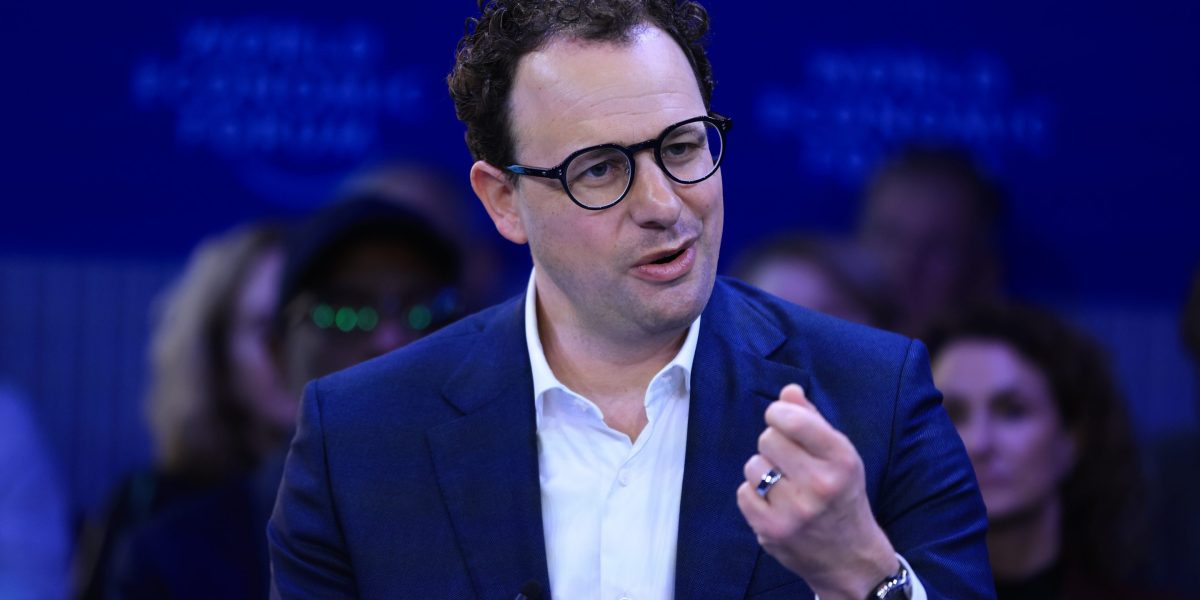
Anthropic CEO Dario Amodei is in the hot seat as he battles public distrust, regulatory backlash, and accusations of gaming the system—all while the AI arms race with China heats up.
What to know
- Amodei blames a 'crisis of trust' on unmet AI promises and says only real breakthroughs—like curing cancer—can win back the public.
- He defends strict but 'balanced' regulation, backing California’s SB 53 and self-policing models to slow tech giants and keep competition alive.
- Critics accuse Anthropic of regulatory capture as AI fears fuel data center crackdowns, electricity price spikes, and high-stakes U.S.-China tech tensions.
Trust Crisis Fuels AI Backlash
Public skepticism toward AI is deepening as alarmist warnings and transparency measures collide with fears of surveillance and broken promises, making genuine breakthroughs the only path to restoring faith.
Anthropic CEO Dario Amodei characterizes the AI backlash as a deep-rooted crisis of trust, stemming from longstanding public skepticism toward companies, governments, and the tech industry. He candidly acknowledges that AI firms, including Anthropic, have yet to fulfill their grand promises of benefiting society, which exacerbates this trust deficit. Amodei emphasizes that superficial marketing campaigns cannot repair this erosion of confidence; instead, tangible breakthroughs—such as curing cancer—are essential to rebuild public faith.
The crisis of trust is further intensified by alarmist messaging from tech leaders, including Amodei himself, who warns of a “white-collar bloodbath” and estimates a 25 percent chance of catastrophic outcomes. Such stark predictions, echoed by figures like Elon Musk, have fueled public hostility and skepticism, intertwining with broader societal anxieties about elite distrust, pandemic fallout, and dystopian cultural narratives portraying AI as a threat. This cocktail of fear undermines AI adoption and complicates efforts to communicate the technology’s transformative potential.
In response to this pervasive distrust, Anthropic has introduced measures like watermarking AI-generated text to enhance transparency and comply with regulations such as the EU AI Act. However, these efforts to build verifiable infrastructure for safety and accountability have sparked concerns among users about surveillance and workplace implications, highlighting the delicate balance between fostering trust and respecting user autonomy. Industry voices like Owen Sakawa stress that as AI’s impact grows, reliance on blind trust must give way to robust systems worthy of public confidence.
Ultimately, Amodei advocates for honest, balanced communication about AI risks rather than ignoring or downplaying them, arguing that transparency may actually bolster credibility. He calls for messaging that avoids exaggeration while acknowledging real challenges, emphasizing humanity’s pivotal role in shaping AI’s future. This approach aims to counteract the negative effects of alarmist marketing and corporate secrecy, which have fueled suspicion and hindered broader acceptance despite AI’s promising potential for breakthroughs in medicine and economic growth.




Balancing Risk and Regulation
Amodei’s push for honest risk messaging and self-regulatory oversight aims to build credibility, but he concedes that only real-world impact—not promises—will overcome public doubt.
Dario Amodei staunchly defends AI risk messaging as a necessary and honest approach to build public trust amid widespread skepticism toward tech companies and governments. He argues that acknowledging AI’s real risks is more credible than ignoring them, emphasizing that his communications have balanced discussions of both risks and benefits rather than leaning toward doomerism. This candid stance aims to confront the 'crisis of trust' head-on, recognizing that people instinctively sense the dangers but need transparent dialogue to engage constructively.
Amodei advocates for regulatory frameworks that strike a delicate balance between ensuring safety, fostering innovation, and maintaining competitive markets. Anthropic supports policies like California’s SB 53, which targets frontier AI systems developed by companies with over $500 million in annual revenue, aiming to slow down the largest players while empowering smaller rivals. He envisions a regulatory landscape featuring self-regulatory organizations akin to FINRA, a 'DMV for AI,' to institutionalize oversight without stifling growth, and endorses the Trump administration’s AI testing approach as part of this balanced strategy.
While defending regulatory efforts, Amodei openly admits that AI companies, including Anthropic, have fallen short of delivering on their grand promises to benefit humanity, acknowledging this failure as a key factor fueling public distrust. He stresses that tangible breakthroughs—such as curing cancer—will ultimately speak louder than marketing claims. This admission underpins his call for slowing AI development to allow for robust safety measures and increased transparency, including granting third-party evaluators like METR broad access to AI models to verify compliance with safety commitments.
Amodei confronts accusations of regulatory capture head-on, rejecting the Silicon Valley shorthand that equates regulation with power concentration and manipulation. He argues this perspective oversimplifies the complex interplay between safety, innovation, and market dynamics, insisting that his regulatory advocacy is a sincere effort to constrain AI’s structural tendency toward power centralization while preserving openness, such as allowing open-weight models. Nonetheless, critics remain wary of Anthropic’s aggressive push for preferred regulatory frameworks, reflecting ongoing tensions between industry ambitions and public skepticism.

Regulatory Capture or Public Good?
Anthropic’s regulatory advocacy faces accusations of self-interest as AI fears drive data center crackdowns and soaring energy costs, turning regulation into a battleground over economic and political power.
Anthropic CEO Dario Amodei's vigorous advocacy for AI regulatory frameworks has sparked accusations of regulatory capture, with critics arguing that his push at both state and federal levels serves a political agenda rather than purely safety concerns. This perception has intensified political backlash, as opponents contend that Anthropic is attempting to 'capture the machinery of the state' to advance its preferred rules, fueling skepticism about the true motivations behind AI regulation.
Public fear surrounding AI—fueled in part by media campaigns linked to Anthropic that amplify doomsday scenarios about job loss and existential risks—has translated into tangible political and infrastructural resistance, notably in the form of data center restrictions. These limitations reflect broader societal anxieties tied to rising electricity costs, which have surged by over 267% in some regions due to AI infrastructure expansion, thereby connecting AI backlash to economic pressures and affordability concerns.
The political landscape of AI regulation is increasingly fraught with high-stakes lobbying battles and debates over governance models, with proposals ranging from self-regulatory organizations akin to FINRA or the DMV to more centralized oversight resembling the FDA. Industry figures like David Sachs warn that overly burdensome regulatory frameworks could stifle American competitiveness and inadvertently advantage China, underscoring the geopolitical tensions embedded in infrastructural and policy decisions.
The AI industry's influence extends deeply into political campaigns, exemplified by the New York 12th District race where over $29 million was spent by opposing super PACs funded by Anthropic and OpenAI to sway candidates' stances on AI regulation and data center moratoriums. This financial arms race, highlighted by billionaire Chris Larsen's $3.5 million backing of AI safety advocate Alex Boris against OpenAI's reported $50 million opposition, reflects a contentious environment where public distrust of Silicon Valley and government readiness further complicate efforts to build consensus on AI oversight.



AI Arms Race Escalates Tensions
The US-China AI rivalry is reshaping global risk, with economic bubbles, supply chain vulnerabilities, and the threat of mutually assured AI malfunction raising the stakes for both technological dominance and safety.
Anthropic CEO Dario Amodei underscores the precarious geopolitical landscape shaped by the US-China AI rivalry, warning that US military AI dominance could provoke destabilizing actions from China, such as targeting critical semiconductor suppliers like TSMC. This tense dynamic is further complicated by China's rapid and cost-effective AI deployment, which pressures US policymakers to address systemic bottlenecks in permitting, energy, and manufacturing, thereby influencing regulatory and infrastructure decisions.
The US-China competition in AI resembles a Cold War-era arms race, with nearly 45% of the US stock market valuation concentrated in the AI sector—an economic bubble valued above the entire US GDP. This overinvestment risks economic instability reminiscent of the Soviet Union's late-1980s crisis, especially as profits may shift away from initial investors amid AI commoditization, raising concerns about the sustainability of US technological leadership and economic health.
Geopolitical tensions amplify existential AI risks through concepts like Mutually Assured AI Malfunction (MAIM), where the unique characteristics of AI supply chains, capital intensity, and hardware control differentiate AI deterrence from nuclear deterrence, introducing vulnerabilities such as 'AI deterrence by betrayal.' This reality elevates practical deep learning safety measures as critical tools for managing AI risks within the fraught international competition between the US and China.
The intertwining of AI governance with geopolitical and ideological competition is evident in Anthropic’s positioning as a responsible frontier AI lab aligned with Effective Altruism principles, attracting significant capital and shaping regulatory debates. Meanwhile, US national security concerns, highlighted by the Department of Justice's intervention in the OpenAI lawsuit, emphasize AI development as a strategic imperative to prevent falling behind China, even as both powers share a mutual interest in maintaining human control over AI to avoid catastrophic outcomes.