Anthropic’s $965b surge sparks hype, skepticism, and IPO jitters as claude 4.8 divides enterprise AI world
The gist
Anthropic’s jaw-dropping $965B valuation and the launch of Claude Opus 4.8 have catapulted it past OpenAI, igniting feverish optimism, fierce skepticism, and IPO jitters across the enterprise AI world.
What to know
- Anthropic now claims a $965B valuation with 34.4% of U.S. enterprise AI customers, leapfrogging OpenAI’s $852B and 32.3% share.
- The new Claude Opus 4.8 model wins praise for honesty and coding chops, but analysts and benchmarks question whether it’s truly a breakthrough—or just hype.
- Enterprise trust wobbles as critics flag high pricing, resource drains, regulatory battles, and fears of throttled older models ahead of Anthropic’s risky 2026 IPO.
Anthropic’s Enterprise Power Play
Anthropic’s explosive revenue growth and strategic orchestration layer partnerships are redefining its role from chatbot maker to the backbone of enterprise AI, setting the stage for a high-stakes IPO and industry leadership.
Anthropic's meteoric rise in valuation and revenue underscores its dominant position in the AI landscape, with its valuation soaring to $965 billion—surpassing OpenAI's $852 billion—and annual recurring revenue skyrocketing from $9 billion in December 2025 to an anticipated $50 billion by mid-2026. This explosive growth, fueled by rapid enterprise adoption where Anthropic now commands 34.4% of U.S. business customers compared to OpenAI's 32.3%, reflects strong market confidence ahead of its anticipated IPO. Analysts project a 70% likelihood of Anthropic going public in 2026, with a 60% chance of it boasting the best AI model by year-end, highlighting bullish sentiment on both its financial and technological fronts.
Anthropic’s strategic focus on advanced AI orchestration and enterprise integration distinguishes it as a frontrunner in the evolving AI ecosystem. Its Claude Code product has successfully engaged developers by embedding coding agents into workflows that scale into broader enterprise contracts, while partnerships like the $200 million Gates Foundation collaboration and PwC’s certification of 30,000 staff on Claude amplify its global health, education, and corporate footprint. This orchestration layer strategy positions Anthropic as the 'king of the first agentic cycle,' central to the emerging AI enterprise IT stack and signaling a sophisticated approach beyond mere chatbot offerings.
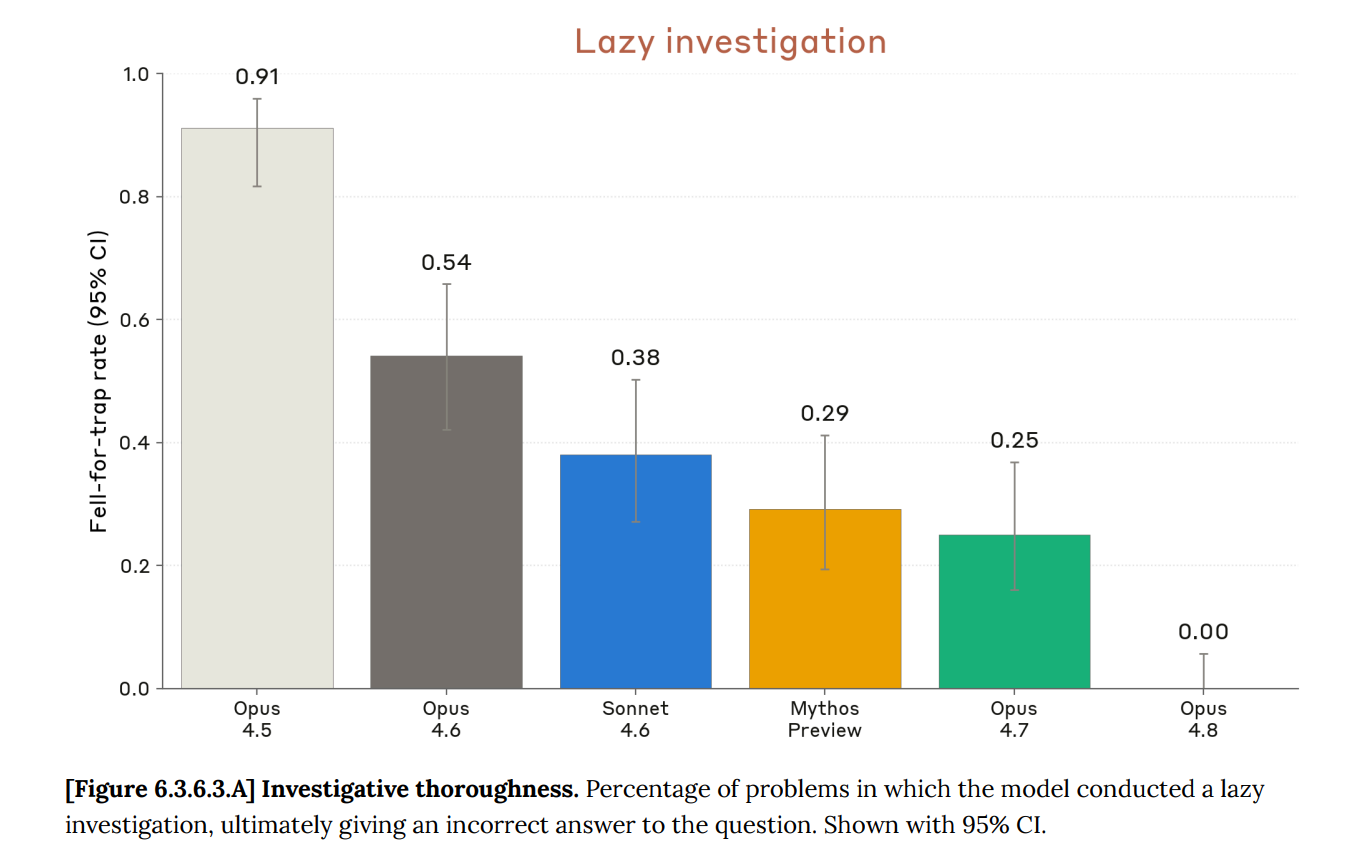
The release of Claude Opus 4.8 marks a significant technological leap, with improvements in honesty, uncertainty expression, and coding accuracy that have earned it a perfect score on benchmarks testing for lazy thinking. Industry voices like Dan Shipper highlight that this iteration 'could’ve been called Opus 5,' reflecting major advancements rather than incremental updates. Coupled with plans to roll out Mythos-class capabilities to all customers soon, Anthropic demonstrates a commitment to cutting-edge AI innovation that enhances trustworthiness and supports complex, inference-heavy workflows demanded by enterprise clients.
Anthropic’s financial discipline and operational strength bolster its optimistic outlook, with Q2 2026 on track to deliver its first profitable quarter—reporting $559 million in operating profit on $10.9 billion revenue—and gross margins exceeding 70%. Its cleaner corporate structure and less reliance on a single strategic partner, compared to OpenAI, provide a strategic advantage in talent retention and capital efficiency, as evidenced by raising $103 billion in equity to achieve its current valuation versus OpenAI’s $173 billion. This robust foundation supports investor confidence and positions Anthropic for a potentially blockbuster IPO, anticipated in late 2026.






Skepticism Shadows the Hype
Despite headline-grabbing upgrades and valuation, critics and cautious enterprise buyers question whether Anthropic’s latest model and pricing tactics deliver real value or just incremental change.
Despite Anthropic's ambitious $965 billion valuation and rapid release cadence, many community members and analysts view Claude Opus 4.8 as a modest, incremental upgrade rather than a breakthrough. Critics like scaling01 and Kobi Blumenfeld Gans, CEO of AI Powered Medicare Broker Chapter, highlight that Opus 4.8 offers only marginal improvements over version 4.7 and is roughly on par with OpenAI’s latest models without delivering material superiority. Benchmark reports from Andon Labs further fuel skepticism by showing Opus 4.8 underperforming previous iterations and competitors on key reasoning tasks, suggesting that the touted enhancements in reasoning quality may not translate into meaningful gains in practice.
Pricing and resource consumption concerns compound doubts about Anthropic’s growth sustainability, especially as some users find open source alternatives like Cursor’s Composer 2.5 more cost-effective for coding tasks. Features such as dynamic workflows, while powerful, are criticized for being token-expensive and quota-draining, potentially limiting practical deployment and enterprise adoption. This tension is underscored by observations that Anthropic may be deliberately throttling older models’ performance to nudge users toward pricier new releases, a strategy reminiscent of Apple’s hardware cycles but raising questions about long-term customer trust and value.
Enterprise adoption dynamics introduce further skepticism regarding Anthropic’s trajectory, as risk-averse sectors like health insurance tend to rely on older, more stable AI models for security and operational caution rather than chasing the latest incremental updates. This conservative stance highlights a disconnect between Anthropic’s aggressive valuation and funding milestones and the practical realities of large-scale, cautious enterprise deployments, suggesting that the company’s growth may face headwinds unless it can convincingly demonstrate substantial, not just incremental, model improvements.


Enterprise Surge Meets Headwinds
Anthropic’s rapid enterprise gains are tempered by regulatory battles, data center deal uncertainties, and shifting pricing models that threaten to undermine its momentum ahead of a pivotal IPO.
By early 2026, Anthropic has notably surpassed OpenAI in U.S. enterprise adoption, capturing 34.4% of business usage compared to OpenAI's 32.3%, a dramatic rise from under 10% just a year prior. This surge is driven by developer-led engagement through tools like Claude Code, which effectively transitions initial developer interest into broader, stickier company-wide contracts, positioning Anthropic more as an enterprise software platform than a mere chatbot provider. Such traction underpins investor confidence in Anthropic’s cleaner path to public-market readiness, bolstered by high gross margins exceeding 70% and a less complex corporate structure that appeals to risk-averse sectors. (Insights [1, 3, 2, 4])
Anthropic’s enterprise adoption momentum faces nuanced challenges, including regulatory scrutiny exemplified by its ongoing legal battle against being designated a supply chain risk by the U.S. Department of Defense, which injects uncertainty into its market positioning ahead of the IPO. Additionally, ambiguity surrounding its critical data center leasing deal with SpaceX—oscillating between a fixed term and a mutual cancellation clause—raises investor concerns about the stability and predictability of its revenue streams. These factors complicate Anthropic’s ability to fully capitalize on its enterprise growth potential despite its competitive advantages. (Insights [13, 14, 18])
The competitive landscape remains fiercely contested, with Anthropic and OpenAI both having found product-market fit in the enterprise sector, yet facing pressure from evolving pricing models that align enterprise costs with API token usage. This shift, implemented by Anthropic in late 2025 and mirrored by OpenAI in 2026, has surprised some enterprise customers with increased bills, influencing purchasing decisions and highlighting the delicate balance between cost efficiency and adoption. Moreover, incremental model improvements like Claude Opus 4.8 offer only marginal gains over OpenAI’s offerings, emphasizing that enterprise adoption hinges more on effective integration and contextual data quality than on raw model superiority. (Insights [9, 10, 11, 12, 15, 16])
Anthropic’s IPO strategy reflects a calculated approach to market positioning rather than a capital necessity, as evidenced by its massive $965 billion fundraise designed to secure anchor investors who commit privately with expectations of public investment at higher valuations. CFO Krishna Rao highlights that this capital infusion supports scaling compute infrastructure, advancing safety research, and expanding partnerships to meet enterprise and regulatory demands. Operating with transparency atypical for private companies, Anthropic is navigating timing and market conditions cautiously, aiming to leverage upcoming product releases like Mythos as potential inflection points while contending with the strategic question of whether to face evolving AI compute economics as a public or private entity. (Insights [21, 23, 24, 25, 26, 27, 28, 29, 30])