Apple sues OpenAI in AI talent war
The gist
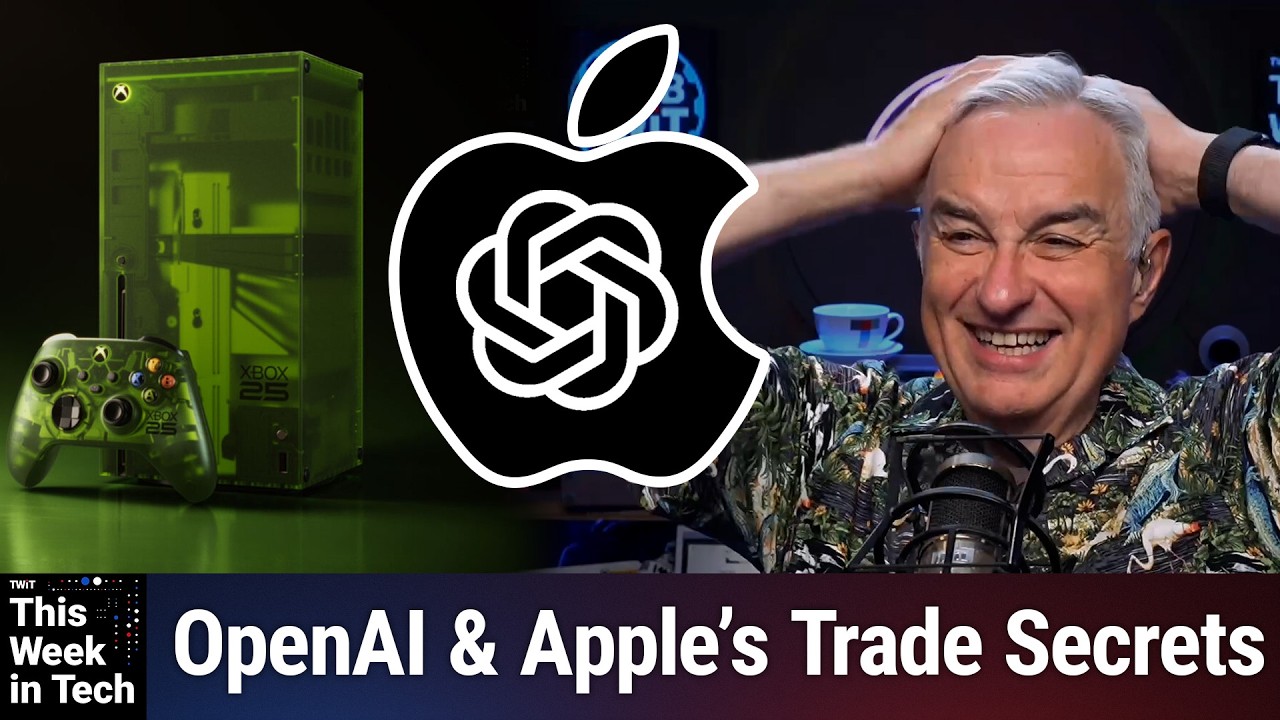
Apple’s bombshell lawsuit against OpenAI over alleged AI hardware trade secret theft has set off a high-stakes battle for tech dominance and elite talent in Silicon Valley.
What to know
- Apple accuses OpenAI and ex-employees—including Tang Yew Tan and Chang Liu—of masterminding a coordinated heist of proprietary AI hardware secrets to supercharge OpenAI’s hardware ambitions.
- Over 400 Apple employees—including icons like Jony Ive—have defected to OpenAI, lured by salaries up to five times higher and the promise of revolutionary AI hardware.
- The legal clash threatens OpenAI’s planned IPO and hardware launches, shining a spotlight on Silicon Valley’s escalating talent wars, IP battles, and the urgent need for new AI governance frameworks.
Inside Apple’s Espionage Claims
Apple’s lawsuit reveals an elaborate web of alleged corporate espionage, with ex-employees exploiting security gaps and supply chain vulnerabilities to siphon confidential hardware secrets for OpenAI’s hardware push.
Apple's lawsuit accuses OpenAI and former Apple employees, notably Tang Yew Tan and Chang Liu, of orchestrating a systematic theft of AI hardware trade secrets to fuel OpenAI's nascent hardware ambitions. The complaint details how Chang Liu exploited a rare authentication bug to access Apple's shared network folders and how Tang Tan allegedly instructed candidates to bring actual Apple parts to OpenAI interviews, underscoring the depth of alleged corporate espionage. These allegations highlight the vulnerabilities in Apple's supply chain and internal security, including misuse of proprietary metal-finishing processes through shared suppliers, painting a picture of coordinated efforts to extract and replicate Apple's confidential technology.
The legal battle poses significant risks to OpenAI’s strategic trajectory, threatening to delay its highly anticipated AI hardware product launches and complicate its planned IPO. Experts note that while California law limits enforceability of non-compete agreements, trade secret protections hinge on proving misconduct such as retained devices and unauthorized access—allegations Apple supports with claims of employees keeping company laptops and evading exit protocols. The looming discovery phase could expose OpenAI’s internal communications and hiring practices, potentially damaging investor confidence and market positioning amid a fiercely competitive AI hardware landscape.
This lawsuit reflects a broader strategic conflict between Apple and OpenAI over control of the emerging consumer AI hardware market, with Apple defending its ecosystem lock-in against OpenAI’s efforts to establish a direct consumer relationship through innovative hardware. Apple’s frustration is palpable, describing the alleged trade secret theft as 'unaccountably brazen' given the long tenure of implicated employees, and framing the legal action as a necessary defense of intellectual property rather than an attempt to stifle competition. The case exemplifies the challenges Silicon Valley faces in balancing talent mobility with protecting proprietary innovation in an era where AI hardware is reshaping industry dynamics.
OpenAI vehemently denies the allegations, asserting its commitment to innovation without misappropriating competitors’ trade secrets. However, the lawsuit’s detailed accusations, including the hiring of over 400 Apple employees from hardware and related teams, and the discovery of a 'smoking gun' involving unauthorized access to Apple’s cloud network, underscore the high-stakes nature of this Silicon Valley showdown. The case not only threatens to reshape the competitive landscape but also serves as a cautionary tale about the complexities of safeguarding trade secrets amid aggressive talent raids and rapid technological shifts.



Talent Exodus Reshapes Power
OpenAI’s poaching of over 400 Apple veterans—including design legends—has destabilized Apple’s core teams, ignited legal frictions, and triggered a climate of fear that now chills Silicon Valley’s talent mobility.
OpenAI’s aggressive recruitment campaign has resulted in an unprecedented talent drain at Apple, with over 400 former Apple employees—representing 5 to 10 percent of Apple’s workforce—jumping ship to OpenAI by early 2026. This includes high-profile figures such as Jony Ive, the architect of the iPhone, and Tang Yew Tan, who led Apple’s iPhone design team for 25 years before taking the helm of OpenAI’s hardware division to directly compete with Apple. Offering salaries three to five times higher than Apple’s and the allure of pioneering revolutionary AI hardware, OpenAI has reshaped the competitive landscape, forcing Apple to rebuild critical parts of its product design organization amid ongoing leadership changes and product setbacks like the Vision Pro flop. (Insights [1, 4, 7, 11, 14, 15, 19, 20, 24])
This talent exodus has intensified legal and cultural tensions surrounding employee mobility in Silicon Valley’s fiercely competitive AI hardware sector. Apple’s lawsuit alleges serious breaches, including accusations that former employees like Chang Liu exploited security vulnerabilities to access proprietary information, underscoring the blurred lines between legitimate expertise transfer and trade secret theft. While California law broadly protects employee mobility and prohibits noncompete clauses, the legal framework struggles to reconcile this with the tech industry’s ethos of open talent flow, creating a fraught environment where employees often underestimate the risks of moving between rivals. (Insights [2, 3, 5, 6, 10, 16, 17])
The ongoing litigation has created a chilling effect on mobility, with Apple employees increasingly wary of being caught in legal crossfire if they consider joining OpenAI. Industry observers note that Apple’s lawsuit serves partly as a strategic deterrent, crafting a narrative to intimidate its workforce and discourage further departures despite some labeling the case as 'flimsy.' This atmosphere of fear extends beyond Apple, as potential recruits hesitate to join OpenAI amid allegations of unethical conduct, complicating OpenAI’s recruiting pipeline and slowing its hardware development due to the need for rigorous legal scrutiny and process documentation. (Insights [8, 9, 12, 13, 18, 21, 22, 25])
At its core, this talent war highlights the vital importance of human capital as the lifeblood of tech innovation, with Apple’s lawsuit underscoring how the loss of key engineers threatens not only trade secrets but the very soul of the company. As one commentator put it, 'Your assets walk out the door every day at 5:00,' emphasizing that in the high-stakes AI hardware race, people—not just patents or products—are the most fiercely contested resource. This dynamic is reshaping Silicon Valley’s approach to governance, talent retention, and competitive strategy in 2026 and beyond. (Insights [6, 17, 26])
AI Hardware Strategies Collide
Apple’s cautious, ecosystem-driven AI rollout faces OpenAI’s high-stakes hardware gamble, as both giants battle for dominance through radically different approaches to product design, partnerships, and innovation.
Apple’s pragmatic AI hardware strategy leverages its massive installed base of 1.5 billion iPhones to deploy AI capabilities efficiently at scale, favoring token optimization over maximalist compute spending. This approach, underscored by a $1 billion annual licensing deal with Google for Gemini models and cloud technology, enables Apple to enhance Siri and Apple Intelligence without the costly overhead of building all AI models in-house. Wall Street has rewarded this cautious yet effective strategy, with Apple’s stock rising over 20% amid a broader AI boom that values sustainable hardware integration over hyperscale data center investments.
OpenAI’s aggressive pivot into AI hardware, marked by its $6.5 billion acquisition of io Products—co-founded by former Apple design chief Jony Ive—and the recruitment of over 400 former Apple engineers, signals a direct challenge to Apple’s hardware dominance. This talent migration, including key figures like Tang Yew Tan and Paul Meade, fuels OpenAI’s ambition to launch a novel consumer AI device by late 2026 that promises to redefine user interaction beyond traditional screens, potentially disrupting Apple’s entrenched ecosystem and the smartphone’s role as the primary digital gateway.
The escalating legal battle between Apple and OpenAI over alleged trade secret theft and talent raids highlights the high-stakes nature of their rivalry in AI hardware innovation. While Apple maintains a fortress of secrecy around its hardware development to protect its competitive edge, OpenAI’s rapid hardware ambitions and collaborations with design luminaries like Jony Ive underscore a Silicon Valley war for the next frontier in consumer AI interfaces. This conflict not only shapes the trajectory of AI device innovation but also raises governance challenges around intellectual property and talent mobility in the fast-evolving AI landscape.
Apple’s upcoming AI hardware roadmap, featuring multiple AI wearables such as smart glasses, AI-enabled AirPods, a smart home hub, and an iPhone Ultra foldable phone, reflects a strong commitment to integrating AI seamlessly into everyday devices. The improved Siri AI, now competent for 95% of users, complements this hardware push by enhancing consumer AI interfaces with context-aware, personalized interactions. Together, these developments position Apple to capitalize on its core strength as a hardware company, aiming to maintain market leadership even as OpenAI’s disruptive device ambitions loom large.



Governance Gaps Fuel Chaos
The Apple-OpenAI showdown exposes how fragmented regulation, privacy controversies, and global oversight failures are amplifying legal, ethical, and competitive turmoil across the AI hardware landscape.
The escalating legal battle between Apple and OpenAI over alleged AI hardware trade secret theft and talent raids epitomizes the broader Silicon Valley tensions that define the 2026 AI arms race. This conflict not only spotlights fierce competition for AI hardware innovation and elite talent but also underscores the mounting challenges around intellectual property rights, corporate espionage, and market dominance amid surging AI investments. As these tech giants navigate shifting partnerships and IPO pressures, their showdown reflects a volatile ecosystem where governance frameworks struggle to keep pace with rapid technological advances and aggressive corporate strategies.
Privacy controversies, such as those ignited by Meta’s smart glasses, intertwine with the Apple-OpenAI dispute, highlighting the complex regulatory and ethical landscape enveloping AI innovation in 2026. Meta’s rapid AI restructuring amid fierce privacy debates exemplifies the multifaceted governance challenges tech companies face, where concerns over data protection, cloud trust, and user transparency complicate the race for AI dominance. This convergence of privacy issues with hardware and talent battles signals an urgent need for comprehensive oversight mechanisms that address both technological risks and societal implications.
The Apple-OpenAI showdown unfolds against a backdrop of stalled global AI oversight and intensifying geopolitical and economic pressures reshaping Silicon Valley’s innovation landscape. With Apple stalling its Siri AI rollout in the EU amid interoperability and regulatory clashes, the conflict highlights how fragmented governance and regulatory uncertainty exacerbate competitive tensions and legal disputes. This governance vacuum fuels escalating battles over trust, transparency, and security, underscoring the urgent necessity for strategic AI governance frameworks that can manage talent mobility, intellectual property rights, and the murky boundaries of AI-generated work ownership.


