Apple turns up heat on OpenAI: lawsuit aims to freeze IPO, curb talent exodus in explosive AI hardware showdown
The gist
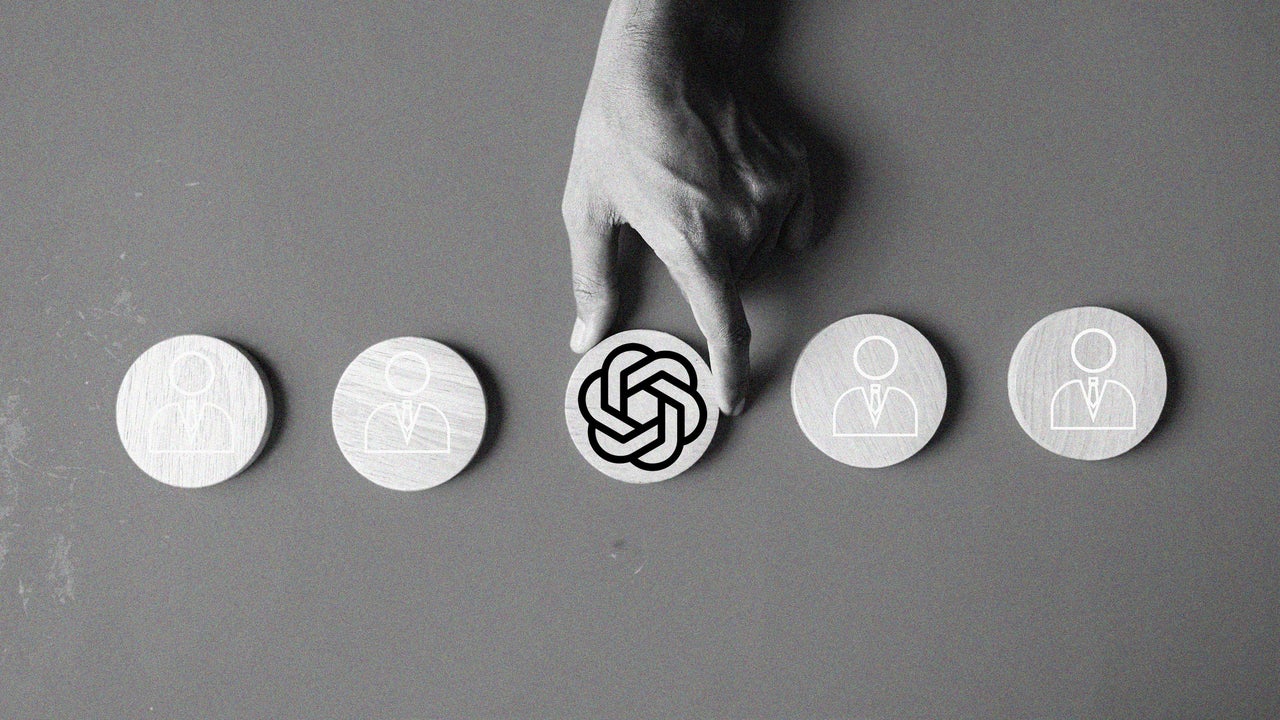
Apple is suing OpenAI and ex-hardware chief Tang Yew Tan for alleged trade secret heists, aiming to freeze OpenAI’s blockbuster 2026 IPO and halt a talent exodus that threatens Apple’s AI hardware dominance.
What to know
- Apple accuses OpenAI and former execs of exploiting security flaws and poaching over 400 employees to steal proprietary hardware files.
- The lawsuit’s timing could derail OpenAI’s 2026 IPO, unleashing legal chaos and market jitters just as OpenAI gears up for hardware launches.
- OpenAI’s hardware push—fueled by Apple’s own ex-talent and ambitious device plans—has forced Apple to fight back with lawsuits, retention bonuses, and a PR offensive to defend its turf.
Inside Apple’s Legal Playbook
Apple faces steep legal hurdles as it attempts to prove deliberate trade secret theft by former employees and OpenAI, highlighting the murky boundaries of talent mobility and proprietary knowledge in Silicon Valley.
Apple's lawsuit accuses OpenAI of orchestrating a brazen trade secret theft scheme centered on former Apple employees like Tang Yew Tan and Chang Liu, who allegedly exploited security vulnerabilities and retained company devices to access and download confidential hardware files. Tang, a 25-year Apple veteran now OpenAI’s chief hardware officer, is accused of recruiting Apple employees to bring proprietary parts and CAD files to OpenAI interviews, while Liu reportedly exploited an authentication bug to access Apple's network storage, highlighting deliberate unauthorized conduct. These allegations underscore the critical challenge Apple faces in California's legal environment, where non-compete agreements are unenforceable and the inevitable disclosure doctrine is rejected, forcing Apple to rely heavily on proving unauthorized acts such as device retention, security breaches, and coached evasion during employee exits.
Beyond employee misconduct, Apple extends its claims to OpenAI's supply chain, alleging that a shared manufacturing partner was misled into replicating Apple's proprietary metal-finishing process without consent, signaling a broader risk of trade secret leakage through third-party suppliers. This aggressive stance, reminiscent of Apple's prolonged legal battles with Samsung over design elements, signals a high-stakes litigation approach aimed at protecting its hardware innovations at all costs, with Apple seeking monetary damages and court orders to destroy any misappropriated materials, potentially forcing OpenAI to redesign its upcoming products.
The evidentiary hurdles in this lawsuit are formidable for both sides: Apple must prove that stolen trade secret files reside on OpenAI’s servers and that OpenAI orchestrated or knowingly benefited from the theft, a complex legal burden given the focus on the company rather than individual employees. Meanwhile, OpenAI’s defense is complicated by the common industry practice of bringing hardware parts to interviews and the difficulty of disentangling proprietary knowledge once operationalized. Additionally, procedural missteps, such as Apple’s initial outreach letter containing incorrect employee names, and OpenAI’s silence on specific allegations, add layers of uncertainty to the case’s trajectory.
The lawsuit’s timing and scope amplify the legal risks for OpenAI, as discovery could expose sensitive internal communications, product roadmaps, and hiring practices, potentially hampering OpenAI’s AI hardware ambitions just ahead of its IPO. Apple’s pursuit of a preliminary injunction threatens to freeze OpenAI’s hardware program, underscoring the strategic nature of this litigation and its broader implications for Silicon Valley’s talent mobility, where institutional knowledge is increasingly scrutinized as proprietary property, potentially chilling innovation and recruitment of former Apple employees.





IPO Pressure and Legal Chess
Apple’s lawsuit is a calculated strike designed to inject uncertainty into OpenAI’s IPO ambitions, leveraging legal and PR risks to disrupt both its hardware rollout and market valuation at a critical juncture.
Apple’s lawsuit against OpenAI is strategically timed to coincide with OpenAI’s highly anticipated IPO, reportedly planned for later in 2026, introducing significant legal uncertainty that threatens to delay or derail the offering. This move comes amid OpenAI’s mounting financial pressures and market scrutiny, with insiders suggesting CEO Sam Altman might postpone the IPO to 2027 in hopes of securing a valuation closer to a trillion dollars. The timing appears calculated not only to challenge OpenAI’s corporate governance and intellectual property management but also to apply public and market pressure, complicating OpenAI’s path to public markets and hardware launch schedules.
Beyond the courtroom, Apple’s legal action functions as a sophisticated PR and strategic leverage play designed to cast a shadow over OpenAI’s hardware ambitions and IPO valuation. By filing the lawsuit months after the accused employee’s departure in 2024, Apple seems to be leveraging discovery risks and public perception to slow OpenAI’s AI hardware development—potentially pushing back launch timelines by years—and to unsettle investors during a critical fundraising window. As Sean O’Kane observes, Apple’s move is unlikely to be casual; it aims to create legal and market hurdles that could freeze OpenAI’s hardware program right before the IPO roadshow, with the preliminary injunction representing the pivotal moment to watch.
The lawsuit also exacerbates internal instability within OpenAI, which is already grappling with executive departures, including the exit of number two executive Fiji Simo, and a mounting public relations challenge. OpenAI’s cautious and muted response to the allegations—contrasting sharply with Altman’s public claim that he is 'Not afraid of Apple'—reflects the complex balancing act of defending its practices while navigating intense financial and competitive pressures. This environment amplifies the strategic impact of Apple’s timing, as OpenAI faces not only legal battles but also investor skepticism around its governance and intellectual property safeguards at a pivotal moment.
Apple’s lawsuit sends ripples far beyond the immediate dispute, signaling to investors, acquirers, and startups that recruiting former Apple employees now carries heightened legal risks, potentially chilling talent movement and complicating mergers and acquisitions due diligence. This structural precedent underscores the broader market implications of the timing, as the lawsuit serves as a warning shot in the fiercely competitive AI hardware arena, where intellectual property and trade secrets are fiercely guarded assets. The case thus not only pressures OpenAI’s IPO and hardware plans but also reshapes the competitive dynamics and risk calculus across the AI innovation ecosystem.



Talent Wars Redefine Boundaries
OpenAI’s aggressive recruitment and sky-high compensation have sparked a fierce battle for hardware expertise, forcing Apple to fight both talent drain and the legal gray zone surrounding employee departures.
OpenAI's aggressive recruitment campaign has dramatically reshaped the competitive landscape between the two tech giants, with over 400 former Apple employees—including high-profile hardware leaders like Tang Tan, Evans Hankey, and Paul Meade—joining OpenAI by mid-2026. This mass talent migration has not only intensified the battle for AI hardware supremacy but also forced Apple to restructure its internal product design teams and offer unusually large retention bonuses to stem the exodus. Tang Tan, a 25-year Apple veteran who led iPhone and Apple Watch hardware efforts before becoming OpenAI’s chief hardware officer, exemplifies this strategic talent shift aimed at directly challenging Apple's flagship devices.
The lawsuit filed by Apple alleges that OpenAI’s talent poaching crossed legal and ethical boundaries, accusing the startup and its hardware chief of orchestrating a coordinated campaign to steal trade secrets. Apple claims that former employees were encouraged to bring actual Apple hardware parts to interviews and delay their removal from Apple systems to access confidential information longer, highlighting the blurred lines between lawful talent mobility and illicit knowledge transfer in Silicon Valley’s AI race. These allegations underscore the complex risks employees face, as those implicated in trade secret transfers risk immediate job loss and legal consequences, creating a chilling effect on talent movement.
Beyond legal battles, the intense competition for AI talent between Apple and OpenAI reflects broader Silicon Valley dynamics where financial incentives and the allure of groundbreaking AI projects drive unprecedented employee mobility. OpenAI’s ability to offer salaries three to five times higher than Apple, combined with the promise of working on cutting-edge AI hardware, has made it a magnet for engineers seeking both monetary reward and innovation excitement. In response, Apple has crafted a narrative through its lawsuit to deter defections by emphasizing potential legal risks, while also grappling with internal fears as employees weigh the reputational and professional consequences of moving to a company accused of trade secret theft.
This fierce talent war underscores a strategic shift in AI hardware competition, where institutional knowledge and human expertise have become as critical as access to frontier AI models. Experts like Zakaria Laaraj and Kyle Elliott highlight that competitive advantage now hinges on an organization's ability to develop, retain, and translate tacit knowledge—much of which is not codified but embedded in employee experience—into innovative products. Apple’s lawsuit signals the high stakes of this battle, as constant turnover threatens to erode proprietary processes and collaborative expertise that are vital for maintaining leadership in AI hardware innovation.



AI Hardware’s New Frontline
OpenAI’s hardware ambitions—powered by ex-Apple leaders and bold device plans—threaten to upend Apple’s ecosystem dominance, as the lawsuit becomes a strategic tool to delay a potential paradigm shift in consumer tech.
The lawsuit between Apple and OpenAI marks a critical inflection point in AI hardware innovation, as OpenAI evolves from a software collaborator into a formidable hardware rival. By acquiring io Products—founded by ex-Apple design leaders like Jony Ive—and planning consumer AI devices by late 2026, OpenAI directly challenges Apple's ecosystem control and hardware leadership. This transition threatens to disrupt the traditional smartphone interface, potentially diminishing Apple's operating system as the primary gateway to digital services, as users might increasingly rely on AI agents to manage tasks across multiple apps, fundamentally reorganizing user interaction paradigms.
Apple's dependence on external AI models, such as ChatGPT and Google’s offerings, amid delays in overhauling Siri, contrasts sharply with OpenAI’s integrated approach combining advanced AI models and top-tier hardware design talent. This talent drain—OpenAI reportedly pays 3.4 to 5 times Apple’s salaries and has recruited hundreds of Apple employees—has intensified competitive pressures, potentially slowing Apple’s innovation pace while accelerating OpenAI’s momentum in AI hardware development. Apple’s lawsuit serves not only to protect trade secrets like its proprietary metal-finishing manufacturing techniques but also strategically aims to deter further employee departures, underscoring the high stakes of talent and IP control in this evolving battleground.
This legal conflict exemplifies a broader market dynamic where control over AI hardware ecosystems—encompassing chip design, manufacturing, operating systems, and distribution channels—has become the new frontier for securing user attention, data context, and revenue stability. Apple’s full-stack control creates formidable barriers against entrants like OpenAI, whose ambition to become a hardware substitute threatens to erode Apple’s dominant position as the primary AI device entry point. The lawsuit thus functions as a strategic maneuver to delay OpenAI’s hardware rollout, potentially collapsing OpenAI’s product launch timeline and preserving Apple’s ecosystem lock-in amid shifting consumer AI device strategies.
Despite these challenges, Apple is aggressively expanding its AI hardware portfolio with innovative products such as AI-powered smart glasses, AirPods, smart home hubs, and a foldable iPhone Ultra, signaling a strategic shift toward deeply embedding AI within its consumer hardware ecosystem. This integration is viewed as a key competitive advantage that could accelerate AI hardware innovation and reshape market dynamics by offering differentiated, AI-native devices. However, the overlapping launch timelines and brand positioning complexities—exemplified by OpenAI’s simultaneous rollout of a screen-free ChatGPT device and ChatGPT Work—highlight the uncertainties and intense competition defining the future landscape of AI consumer technology.