Apple vs. OpenAI: legal firestorm ignites as talent wars and AI hardware arms race reshape silicon valley
The gist
Apple’s blockbuster lawsuit against OpenAI over alleged trade secret theft and mass talent raids is fueling a legal and competitive inferno that’s reshaping Silicon Valley’s AI landscape.
What to know
- In 2026, Apple sued OpenAI for poaching 400+ employees and stealing proprietary AI hardware secrets, threatening to derail OpenAI’s IPO and device launches.
- The AI talent war is red-hot, with tech giants like Nvidia, Apple, OpenAI, and Cerebras battling over chip innovation and data center supremacy as hardware becomes the new AI battleground.
- With the AI model layer commoditizing, industry power is shifting to those who control hardware and infrastructure—leaving everyone else scrambling for a piece of the future.
Apple’s Legal Blitz Unpacked
Apple’s lawsuit against OpenAI exposes a high-stakes battle over proprietary AI hardware, codebase control, and the future rules of Silicon Valley’s innovation wars.
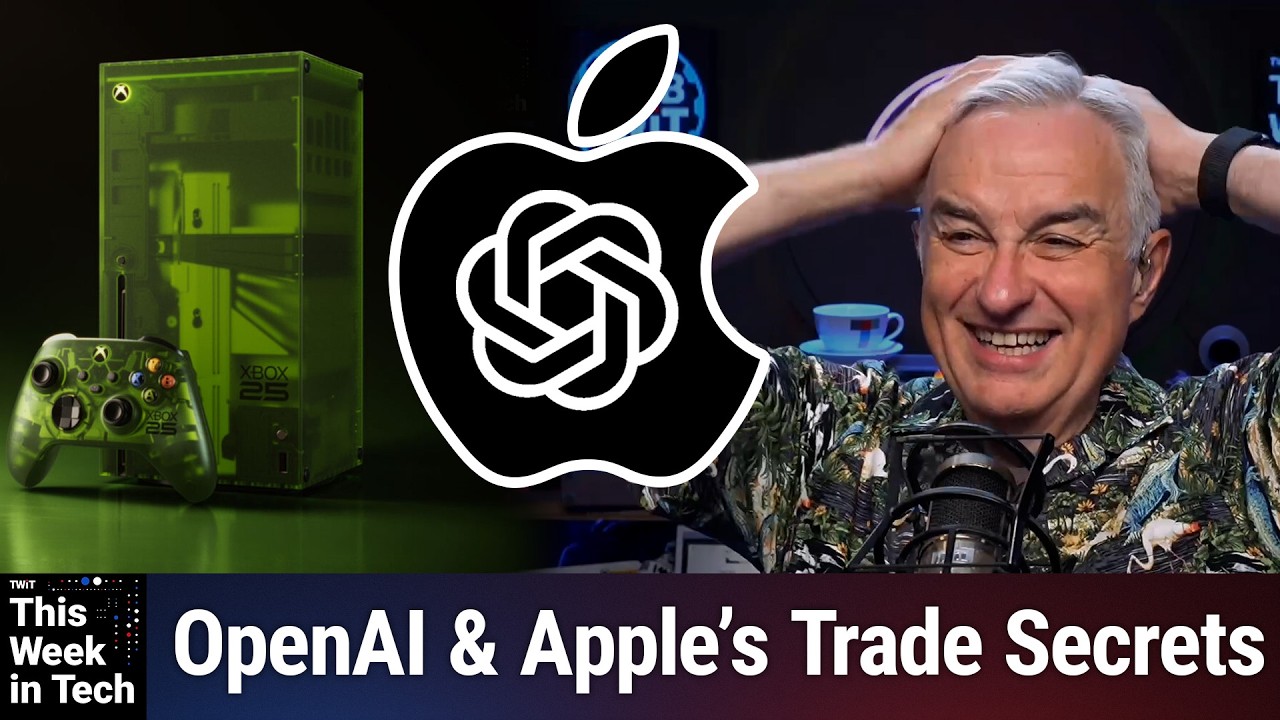
In mid-2026, Apple launched a high-stakes lawsuit accusing OpenAI of orchestrating a 'brazen' trade secret theft involving over 400 former Apple employees who were poached amid fierce Silicon Valley talent wars. This legal action not only alleges misuse of proprietary AI hardware and mobile device technologies but also highlights the escalating battle over intellectual property rights in AI innovation, with Apple aiming to protect its entrenched ecosystem and next-generation hardware interfaces from what it describes as institutional theft. The lawsuit's timing and severity threaten to disrupt OpenAI's planned IPO and device launches, underscoring the high stakes in controlling AI hardware and software advancements.
Apple's lawsuit spotlights the critical role of deterministic coding, rigorous AI agent verification, and innovative AI prompt compression tactics, which are reshaping hardware demands and content conversion efficiency. These technical elements lie at the heart of the dispute, reflecting how proprietary software methodologies intertwine with hardware innovation in the fierce competition for AI supremacy. The conflict thus transcends mere personnel poaching, delving into complex codebase ownership battles that could influence the future of Linux-based AI development and broader Silicon Valley strategies around privacy, cloud trust, and AI governance.
This lawsuit unfolds amid a broader context of an intensifying AI hardware arms race and global techno-nationalism, which complicate the legal and competitive landscape for both Apple and OpenAI. The dispute exemplifies how Silicon Valley rivalries are being reshaped by rapid industry shifts, patent wars, and governance chaos, with the fight over trade secrets serving as a proxy for market dominance in AI innovation. As Apple escalates its legal war, the outcome could redefine norms around intellectual property protection and strategic partnerships in the AI sector, signaling a new frontier in the battle for control over the future of consumer AI devices.






AI Talent Wars Redefine Work
The scramble for elite AI engineers is upending leadership strategies and workplace culture, splitting Silicon Valley between rapid adopters and those left behind.
By mid-2026, Silicon Valley’s AI talent landscape reveals a stark divide in adoption and leadership readiness. While innovators—roughly 3.5% of the workforce—push advanced AI applications like autonomous agents, many executives remain novices, with some C-level leaders yet to log into basic AI tools such as ChatGPT or Copilot. This uneven adoption underscores the challenge leaders face in meeting teams where they are, accelerating progress from mere access to meaningful integration, as highlighted by industry analysts who stress that 'confusing access with real adoption' remains a common pitfall.
The fierce competition between tech giants like Apple and OpenAI has intensified Silicon Valley’s talent wars, fueling a surge in high-skill engineering roles amid workforce restructuring. Apple’s aggressive legal battle accusing OpenAI of trade secret theft and talent raids exemplifies the high stakes involved, as companies scramble to secure cutting-edge AI expertise. This 'thermonuclear legal war' not only spotlights the scarcity of top AI talent but also pressures organizations to rethink hiring strategies and organizational dynamics in an escalating AI arms race.
AI-driven workforce transformations are reshaping traditional employment paradigms, especially for engineers once considered a 'protected class.' Companies now aim to 'build 10x more with 10x fewer people,' forcing leadership to confront the emotional and cultural challenges of downsizing amid rapid AI adoption. This shift demands resetting employee mindsets resistant to change, as roughly half the workforce embraces AI-driven innovation while the other half resists, creating internal cultural tensions that leaders must navigate carefully.
Leadership adaptation is emerging as a critical bottleneck in the AI era, with thought leaders like Kai-Fu Lee predicting that 50% of companies will require new management styles to thrive. Executives are now expected to become stewards of AI culture, driving faster decision-making cycles and embedding AI literacy across the C-suite. Meanwhile, organizations experiment with new structures—such as dedicated AI teams or ongoing AI consulting relationships—to govern AI strategy effectively, recognizing that successful AI integration hinges on human judgment framing and validating AI outputs rather than treating AI as a mere tool.





Hardware Titans Shape AI Race
Breakneck chip innovation and billion-dollar deals are fueling a new era where only the boldest players can survive the AI infrastructure arms race.
The AI hardware and infrastructure landscape in 2026 is defined by a fierce arms race among titans like Nvidia, Apple, OpenAI, and Cerebras, each vying for dominance through strategic partnerships, chip innovation, and data center expansion. Nvidia maintains a commanding lead with its software-driven moat, leveraging MLPerf-optimized libraries and CUDA to deliver superior AI performance, yet faces mounting challenges from rivals such as Cerebras, which secured a landmark $20 billion deal with OpenAI to boost AI inference speeds by 20x. Meanwhile, Apple’s aggressive $30 billion Broadcom acquisition signals its deepening commitment to silicon development, intensifying competition across the AI hardware ecosystem. This dynamic is underscored by industry-wide collaboration exemplified by HPE’s alliance with Vultr and Nvidia to build AI data centers, reflecting a broader push to scale infrastructure amid skyrocketing AI demand.
Andrew Feldman, CEO of Cerebras, emerges as a pivotal figure driving a hardware renaissance that is reshaping AI infrastructure through colossal chip designs and innovative power solutions akin to jet-engine technology. His vision of simplifying inter-chip communication within data centers—potentially extending to space within five years—addresses critical scaling and energy challenges that threaten to bottleneck the $2 trillion global AI data center race. Feldman’s candid revelations about the brutal tradeoffs and relentless collaboration required to build AI infrastructure giants capable of rivaling Nvidia highlight the hypercompetitive nature of this sector, where chip-software co-design is revolutionizing performance and fueling seismic shifts across cloud and system design.
Despite explosive growth in AI compute demand, the industry grapples with a persistent supply-demand imbalance in chips and data center capacity, projected by SK Hynix’s CEO to last until 2030. This bottleneck threatens to throttle the AI arms race by limiting infrastructure scalability, even as compute power remains the primary competitive moat driving consolidation among cutting-edge companies. The escalating capital barriers and operational pressures suggest a future where only a handful of well-resourced players can sustain leadership, mirroring the semiconductor industry's historic winnowing from dozens to just a few dominant firms. Nonetheless, the absence of fundamental barriers beyond capital and talent means that companies like SpaceX can rapidly re-enter the AI leaderboard through massive investment and strategic hiring, underscoring the capital-intensive yet accessible nature of AI hardware innovation.




Model Commoditization Shifts Power
As AI models become cheap and abundant, economic power is consolidating with hardware giants and frontier labs, leaving most players to fight over shrinking margins.
By 2026, the AI industry is grappling with the commoditization of core AI models, a phenomenon described as the 'commodity trap' at the model layer where companies like OpenAI and Anthropic find their proprietary advantages eroding. As Luis Garicano and Jesús Saa-Requejo highlight, value capture is increasingly shifting toward hardware providers and the implementation layer, where organizational constraints rather than technical superiority dictate competitive edges. This transition is underscored by Semianalysis's observation that compute scarcity currently sustains high gross margins for AI labs, but this advantage is temporary as market dynamics evolve and prices for models continue to fall.
The fierce competition between hyperscalers and AI labs, exemplified by coalitions like Microsoft-OpenAI and Amazon-Anthropic, serves as a critical lock-in mechanism that sustains rapid AI buildout despite questionable short-term economics, according to Mihir Kshirsagar. This dynamic contributes to the emergence of a two-tier AI economy, where frontier customers pay premiums for advanced, high-margin AI services while broader users rely on commoditized open model ecosystems. Nathan Lambert predicts that frontier labs may deliberately let API businesses decay to protect these lucrative segments, signaling a strategic shift in market focus and innovation priorities.
The 2026 AI venture capital landscape is undergoing a seismic transformation, driven by a $412.7 billion surge in US funding dominated by AI startups and thematic investing strategies. Investors like Jeff Bezos' family office are pioneering data-driven, boundary-breaking approaches that emphasize adaptability and evidence-based validation amid unprecedented market uncertainty. SpaceX’s historic $2 trillion IPO further exemplifies this regime change, reshaping public markets and signaling a strategic pivot from commoditized SaaS to scarce, judgment-driven innovation across sectors ranging from automotive to cybersecurity.
Amid intensifying geopolitical tensions and a stalled global AI oversight framework, the escalating legal and competitive battles between Apple and OpenAI spotlight broader governance anxieties surrounding data ownership, privacy, and AI lifecycle control. This Silicon Valley showdown over AI hardware, talent raids, and innovative prompt compression techniques not only accelerates the global AI arms race but also underscores urgent cybersecurity challenges fueled by exposed personal data and targeted attacks. As these dynamics unfold, the industry faces mounting pressure to develop clearer governance frameworks that balance rapid innovation with ethical and security imperatives.