Army bets big on lasers to zap drone swarms
The gist
The U.S. Army is going all in on high-energy lasers to zap cheap drone swarms, betting that $5 shots can outlast million-dollar missiles and close a widening defense gap.
What to know
- The Army is finalizing a $400–$500 million deal for up to 20 Enduring High Energy Laser (E-HEL) systems, marking its first permanent laser weapon program.
- Lasers like E-HEL and Boeing’s CLWS are being woven into layered air defenses, slashing per-shot costs and protecting missile stockpiles strained by relentless drone attacks.
- The 2026 Iran conflict exposed the unsustainable cost of using $12.7 million interceptors against $20,000 drones, driving the urgent shift to scalable, cheaper laser solutions.
Lasers Go Mainstream in Army
The Army is shifting from experimental lasers to a permanent, cost-slashing E-HEL program, embedding modular directed-energy weapons into its core defenses for scalable, reusable drone protection.
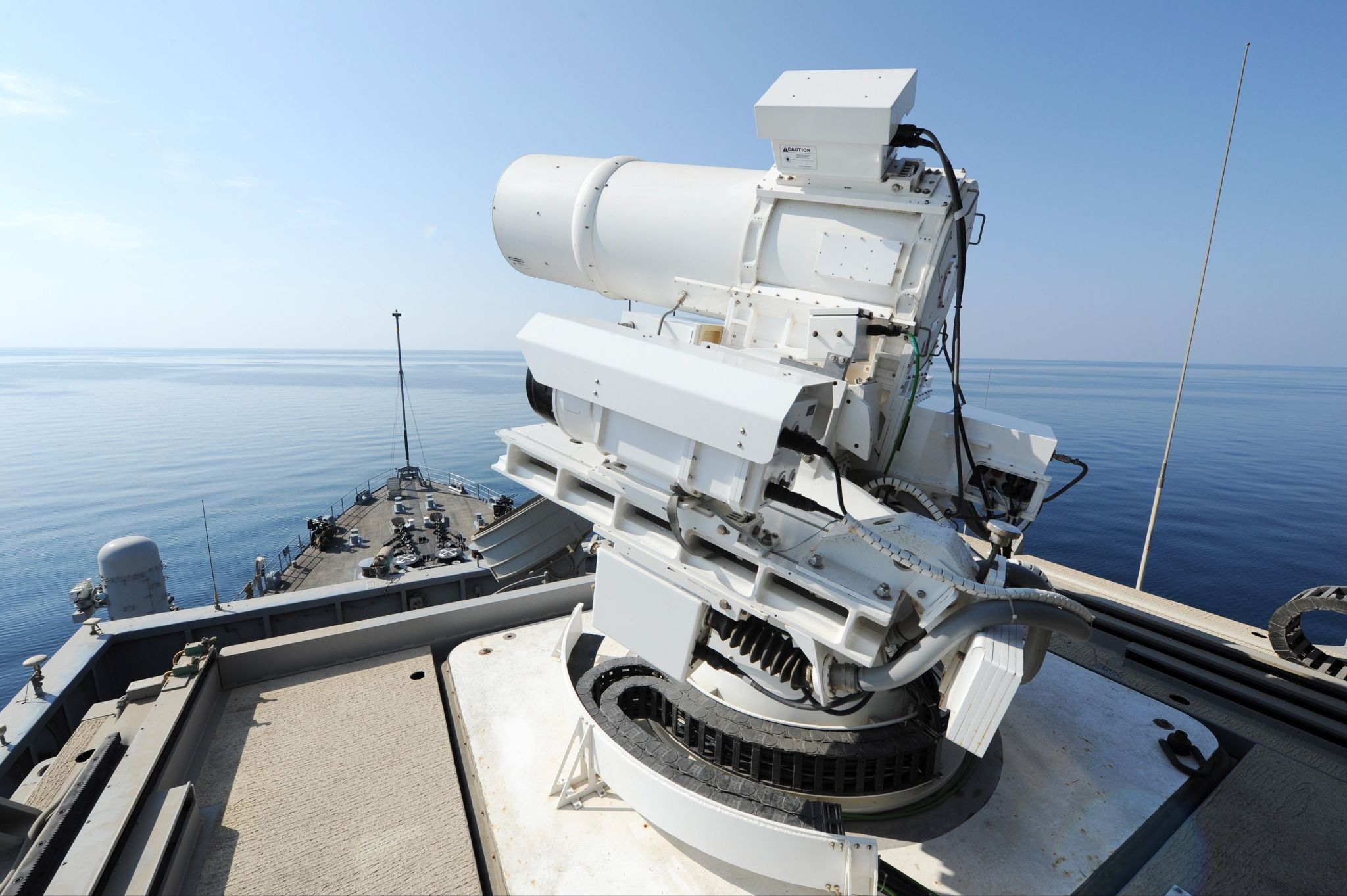
The U.S. Army is on the cusp of institutionalizing the Enduring High Energy Laser (E-HEL) as its first permanent directed-energy program of record, marking a pivotal shift from experimental prototypes to sustained operational deployment. Lt. Gen. Frank Lozano confirmed ongoing negotiations with AeroVironment for a contract potentially valued between $400 million and $500 million to procure up to 20 systems, embedding E-HEL within the Army’s standard acquisition and sustainment framework. This transition underscores a long-term commitment to directed-energy weapons as a core component of counter-drone defense.
E-HEL is engineered as a modular, transportable counter-drone system that prioritizes battlefield adaptability and sustainment over sheer laser power, reflecting lessons learned from the DE M-SHORAD program. Based on AeroVironment’s scalable LOCUST X3 laser, which ranges from 20 to over 35 kilowatts, the system can engage a spectrum of unmanned aerial vehicles from small quadcopters to larger Group 3 drones. This modularity allows E-HEL to protect both semi-fixed positions and maneuver forces, integrating seamlessly into layered air defense architectures alongside RF jamming and kinetic interceptors.
A key strategic advantage of E-HEL lies in its cost-effectiveness, delivering hard-kill counter-drone capability at under $5 per shot by using electrical energy rather than expensive interceptor missiles. As AeroVironment’s VP John Garrity highlighted, the Army has been expending millions on missiles to neutralize drones that cost a fraction of that, making E-HEL a sustainable solution against high-volume drone swarms. By preserving missile inventories for higher-end threats, E-HEL provides commanders with a deeper, reusable defensive magazine that addresses the growing challenge of inexpensive, proliferating unmanned threats.
The institutionalization of E-HEL aligns with a broader Pentagon shift toward integrating directed-energy weapons into layered air defense systems, leveraging recent successful tests at White Sands Missile Range and operational promise demonstrated by the Air Force and Navy. While E-HEL excels at rapid, precision engagements at close range, its single-target engagement limitation necessitates complementary systems like RF jamming and kinetic interceptors to counter drone swarms effectively. This holistic approach reflects a maturing understanding of directed-energy weapons as vital, cost-effective components within multi-domain defense strategies.
Layered Defenses Get Smarter
Modular laser systems like Boeing’s CLWS and Lockheed’s Golden Dome are being integrated with electronic and kinetic tools, automating drone defense and extending protection against swarms and missiles—all while slashing engagement costs.
The U.S. Air Forces in Europe and Africa are actively deploying Boeing’s modular Compact Laser Weapon System (CLWS) to enhance layered counter-drone defenses, integrating directed energy with electronic warfare and kinetic interceptors. This approach leverages the CLWS’s open architecture, enabling seamless integration with existing command-and-control networks and external radars to automate target tracking while preserving human oversight for engagement decisions, thereby minimizing risks to friendly assets. Demonstrated effective against diverse drone threats and swarms at ranges up to 2.5 kilometers during the 2024 Canadian IDEaS trials, the CLWS exemplifies how modular laser systems can flexibly protect both fixed bases and forward operating locations via fixed, containerized, and mobile platforms, including light tactical vehicles.
Recognizing the operational limitations of directed energy weapons—such as atmospheric conditions and range constraints—the U.S. military is embedding laser systems like the CLWS within a broader layered defense that includes kinetic options like the ground-based Advanced Precision Kill Weapon System (APKWS), capable of intercepting drones up to six kilometers away. This complementary strategy balances the cost-effectiveness and near-infinite magazine of lasers, which rely on electrical power rather than expensive interceptor missiles, with the extended reach and reliability of traditional kinetic interceptors, ensuring robust multi-tiered protection against increasingly autonomous and resilient drone threats.
Lockheed Martin’s Golden Dome initiative marks a significant escalation in the Pentagon’s directed-energy ambitions, fielding a containerized 500-kilowatt laser system—the most powerful transportable laser ever built—to counter not only drone swarms but also cruise missiles. This program demonstrated autonomous targeting and engagement capabilities through the Dynamic Defense Autonomous Defeat (DDAD) system, which Secretary of War Pete Hegseth witnessed neutralize multiple threats without human intervention. By integrating such high-power lasers into layered air defense architectures alongside kinetic and electronic warfare assets, the U.S. military is advancing scalable, cost-effective solutions to counter the proliferating aerial threats that challenge traditional missile inventories and resupply logistics.
Cost Crisis Drives Innovation
Facing unsustainable missile spending against cheap drones, militaries are racing to deploy lasers like Iron Beam—despite technical hurdles—while adapting to new drone tactics that test the limits of both budgets and technology.
The stark cost imbalance between inexpensive drones and costly interceptors poses a critical strategic challenge, as adversaries can overwhelm defenses by mass-launching low-cost systems like the $20,000–$30,000 Shahed-136 against interceptors such as THAAD, which cost approximately $12.7 million each. This unsustainable expenditure ratio was glaringly evident during the 2026 Iran conflict, where the U.S. expended over 150 THAAD rounds in just 12 days, depleting 30–80% of key interceptor stockpiles and creating a 'window of vulnerability' that could last until 2029, as noted by retired Israeli Major General Yitzhak Brik who warned of continued missile barrages once interceptors run out.
While laser defense systems like Israel’s Iron Beam offer a tantalizingly cost-effective alternative—using roughly $2 worth of electricity per shot compared to $100,000 to over $2 million for conventional interceptors—their operational limitations and logistical hurdles have delayed deployment. With a limited 10-kilometer range, reduced effectiveness in adverse weather, and the need to build new specialized units amid manpower shortages, Iron Beam exemplifies the complex balance defense ministries face between investing in proven missile systems and emerging laser technologies amid constrained resources.
The evolving nature of drone warfare adds further complexity, as forces adapt to unexpected operational realities such as the use of tethered drones connected by miles of fiber optic cables to circumvent electronic warfare vulnerabilities. Although such hardwired communication methods may not be universally necessary—particularly in U.S. homeland defense—they underscore the need for flexible, cost-effective countermeasures that can address both sophisticated and proliferating inexpensive drone threats, especially when expensive U.S. drones face swarms of cheaper adversary systems.