Army’s robot convoy pushes limits in last-mile tests
The gist
The Army is unleashing a new wave of autonomous ground vehicles and AI-powered logistics, racing to outmaneuver threats and reshape how soldiers get supplies and survive on the battlefield.
What to know
- Six companies—including American Rheinmetall—just landed Army contracts to develop unmanned ground vehicles to solve last-mile resupply and casualty evacuation in contested zones.
- At Fort Hood, drones and self-driving Polaris vehicles powered by Havoc AI are already proving they can find an enemy battalion in 20 minutes and deliver supplies with minimal human input.
- Hybrid-powered, fully driverless trucks with 500-mile range are rolling out for tough, obstacle-strewn terrain—while lessons from autonomous freight and construction are steering the Army’s next moves.
Six Firms, One Mission
The Army’s competitive contracts with six diverse defense innovators are accelerating unmanned vehicle breakthroughs for frontline logistics and casualty evacuation, ensuring no single solution dominates the future of battlefield autonomy.
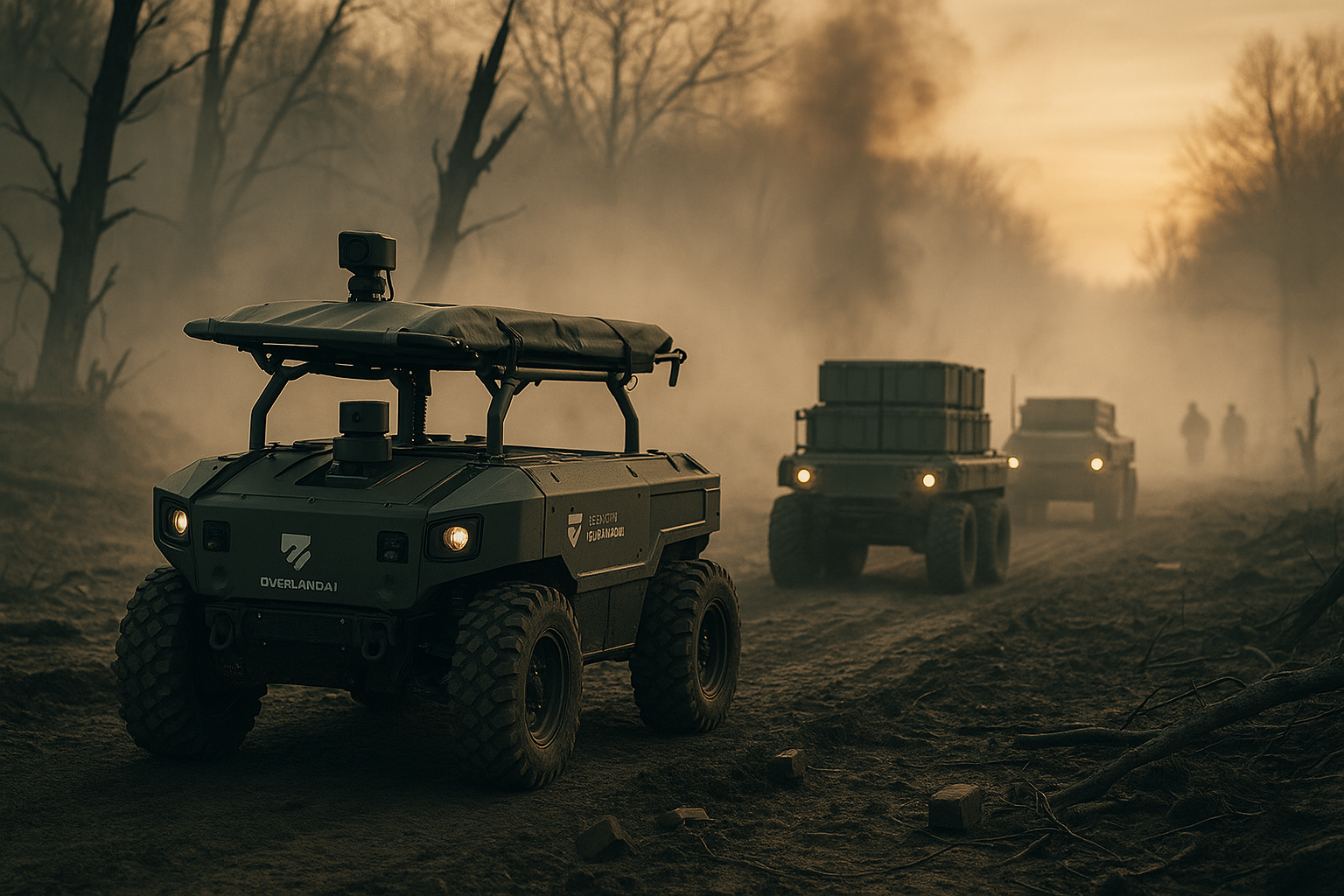
The U.S. Army has strategically engaged six companies, including American Rheinmetall, by awarding them prototype contracts under the Infantry Last Tactical Mile (ILTM) program to develop advanced unmanned ground vehicles (UGVs). These vehicles are designed to revolutionize logistics and casualty evacuation in contested forward areas, addressing critical challenges faced by infantry units operating in high-threat environments. This competitive approach not only accelerates innovation but also ensures a diverse range of technological solutions are explored to enhance operational resilience and soldier survivability.
Fort Hood’s Robotic Proving Ground
Live Army exercises are fusing AI-driven vehicles, multi-drone teams, and soldier feedback to create autonomous systems that can resupply, scout, and survive in the most dangerous, contested zones—while reducing human risk.
At Fort Hood, the Army is pioneering practical integration of autonomous systems that significantly reduce operator burden while enhancing mission effectiveness. Using Havoc AI’s collaborative automation software, operators can set waypoints for self-driving logistics vehicles like Polaris platforms equipped with Field AI’s software to deliver essential supplies such as water and batteries up to a kilometer away, freeing soldiers from constant screen monitoring. Complementing this, multi-drone reconnaissance teams have demonstrated rapid enemy detection capabilities, with one drone system locating an entire enemy battalion in just 20 minutes, underscoring the tactical advantage of autonomous assets taking first contact to improve human survivability.
The Overwatch innovation competition at Fort Hood exemplifies a dynamic collaboration between industry and soldiers, where 20 companies test emerging autonomous technologies alongside the 1st Armored Brigade Combat Team, 1st Cavalry Division, within ongoing training cycles. As Lt. Col. Nick Rinaldi explains, this initiative bridges the gap between commercial capabilities and warfighter needs, accelerating the development of contested-logistics solutions that enhance lethality and operational resilience in complex environments.
Project Sustainment is pushing the envelope with hybrid-powered, fully autonomous ground vehicles purpose-built for contested forward-area logistics. Harbinger’s prototype trucks, which lack traditional driver controls and operate as moving trailer-like platforms, leverage a plug-in hybrid chassis capable of up to 500 miles range. CEO John Harris highlights that electric mode operation near front lines minimizes noise and thermal signatures, providing near-zero detectability critical for survival within drone kill zones. The vehicles’ steer-by-wire and brake-by-wire systems, vertically integrated from inception, enable robust autonomy across unstructured, off-road terrain where no recovery assets are available, addressing a key challenge in last tactical mile resupply.
The upcoming GroundBreaker 1 unmanned ground vehicle demonstration at Camp Grafton represents a pivotal step in validating autonomous platforms under realistic field conditions, with direct soldier feedback shaping their usability and mission effectiveness. This event, part of a broader Pentagon initiative to rapidly integrate UGVs through streamlined acquisition via the DoW Drone OTA Consortium and the Drone Marketplace, seeks vehicles capable of core missions like reconnaissance, logistics transport, casualty evacuation, and explosive ordnance disposal. Emphasizing autonomous obstacle avoidance, all-terrain mobility, and open-system software architectures, the demonstration confronts the unique challenges of ground robotics, where complex terrain and obstacle navigation have historically hindered UGV fielding compared to aerial or maritime unmanned systems.
Digital Overhaul for Military Mobility
From autonomous forklifts to AI-guided maintenance and weaponized self-driving trucks, cutting-edge digital tools and advanced materials are transforming how the Army sustains, repairs, and arms its vehicles in the field.
The U.S. Army's push for autonomy in logistics has expanded well beyond unmanned vehicles to include innovations like autonomous forklifts and yard management systems, addressing critical labor shortages in large-scale operations such as FEMA truck yards in Laredo. Companies like Nordian have stepped in to fill the autonomy expertise gap left by traditional equipment manufacturers, providing the necessary platforms to enable these smart material handling solutions and streamline inventory management.
Digital transformation is revolutionizing military vehicle design and sustainment through the adoption of bonded manufacturing techniques and advanced digital tools that preserve structural integrity while simplifying maintenance. These innovations empower technicians with real-time, digitized instructions and comprehensive vehicle health data—effectively acting as a 'digital physician'—which enhances operational readiness despite a shrinking skilled workforce and extends vehicle longevity in contested environments.
Emerging lightweight, durable materials combined with digital manufacturing processes are critical to sustaining both autonomous and conventional military vehicles, ensuring they can endure the rigors of contested forward areas. This material evolution complements the Army’s broader autonomy initiatives, which now include weaponized platforms like the Ford F-250 equipped with Forterra AutoDrive and 9 Mothers’ Edda weapon station, capable of AI-driven obstacle reduction to clear minefields and barriers, thereby enhancing troop mobility and battlefield safety.


Autonomy Lessons from Industry and War
Commercial driverless fleets, robotic construction, and Ukraine’s battlefield realities are shaping the Army’s approach—revealing both the promise and the persistent human-machine challenges in deploying unmanned logistics at scale.
The commercial transportation sector's rapid adoption of autonomy, exemplified by driverless trucks in Texas and AI-assisted navigation on Mississippi River towboats using systems like Mythos AI’s Advanced Pilot Assist, underscores a broader shift toward maximizing asset utilization and operational efficiency. Autonomous freight vehicles, championed by companies such as Aurora Innovation and Kodiak, are not merely replacing human labor but enabling near-continuous operations that double productivity and reduce fuel consumption through optimized routing and platooning. These advances offer valuable lessons for the Army’s unmanned ground vehicle programs, particularly in sustaining long-range logistics and casualty evacuation missions under contested conditions.
The emergence of autonomous construction equipment, pioneered by Waymo veterans at Bedrock Robotics, highlights the challenge of deploying AI-driven machines in dynamic, unpredictable environments—terrain and tasks that shift daily—paralleling military efforts to operate unmanned systems in complex forward areas. This transitional phase, where robots complement rather than replace human operators, reflects economic realities such as thin contractor margins and the need for clear ROI, issues mirrored in military procurement and integration strategies. As Bedrock’s CTO Kevin Peterson notes, human presence remains essential, emphasizing a collaborative human-machine approach that the Army must consider when fielding autonomous logistics vehicles.
Lessons from the Russia-Ukraine conflict reveal that while unmanned ground vehicles are increasingly used for logistics and medevac, full autonomy remains elusive due to trust and operational complexity, with human operators still piloting these systems. AI’s most effective military role to date lies in battlefield data analysis and target identification rather than autonomous maneuvering, and efforts to enable single operators to control multiple unmanned platforms are nascent. The U.S. Army’s recent decision to phase out specialized drone units, despite Ukraine’s advanced integrated drone networks praised by Army Secretary Dan Driscoll, raises concerns about the Army’s organizational readiness to leverage autonomy effectively in contested environments.
Structural labor shortages in sectors like agriculture and construction are driving the integration of physical AI—embedding autonomy directly into heavy machinery platforms—to maintain operational viability, a trend that resonates with military needs to sustain logistics capabilities amid personnel constraints. This approach, described as 'adding brains in brawn,' equips equipment with onboard perception and edge computing to navigate cluttered, GPS-denied environments in real time, mirroring the challenges faced by unmanned ground vehicles in contested forward areas. The pivotal role of original equipment manufacturers in scaling these autonomous solutions parallels the Army’s collaboration with established defense vendors in initiatives like the Infantry Last Tactical Mile competition, underscoring the importance of industry partnerships in advancing military autonomy.