Asia’s AI revolution hinges on data, not just algorithms
The gist
Asia's AI leap won't be powered by smarter algorithms, but by making chaotic factory and farm data finally make sense.
What to know
- By late 2026, the AI bottleneck in manufacturing shifted from weak models to the mess of fragmented, context-less data—spurring pushes for standards like CESMII's i3X.
- Vietnam now legally requires agricultural traceability, with over 800,000 products registered and QR codes tying produce to every step from planting to harvest.
- Malaysia is pouring millions into agri-tech platforms like i-AGRI and EzyTrace, pulling scattered farm data into a unified, AI-ready national system.
Raw Data Isn’t Enough
Asia’s industrial AI progress is now blocked by the chaos of unstructured, context-free data—forcing governments and companies to confront the hard truth that meaningful automation depends on shared standards, not just smarter algorithms.
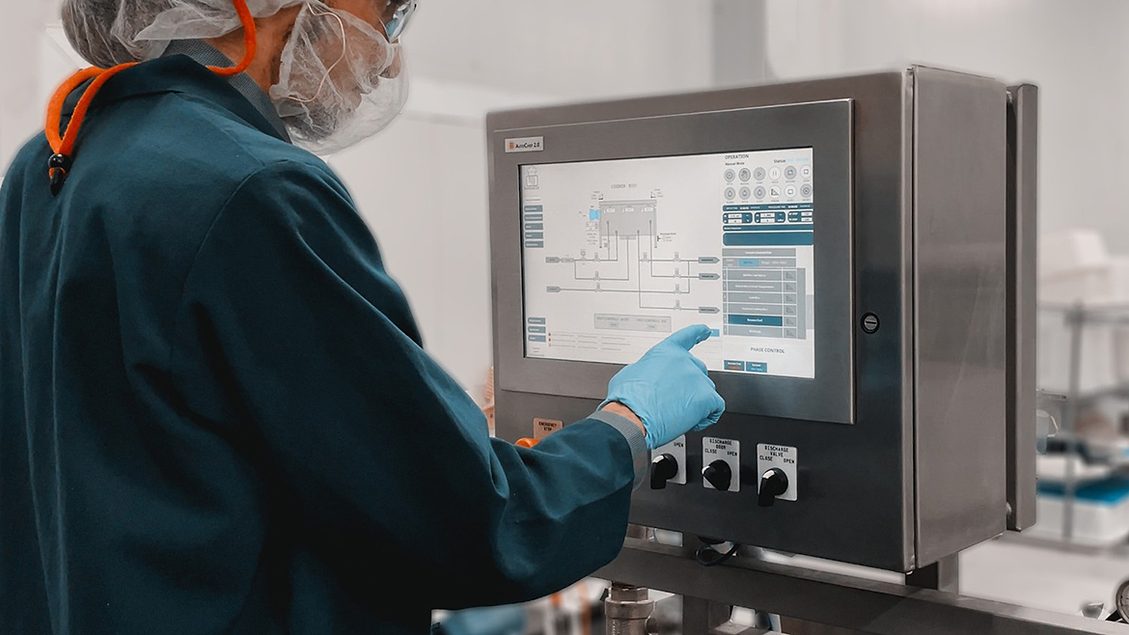
By July, the industrial side of the problem was being stated with unusual bluntness: AI was not stalling for lack of models, but because factory data remained fragmented, incompatible and stripped of meaning. In Assembly Magazine, HighByte CTO Aron Semle said, “We can all disagree on what data a motor produces and what it looks like,” then reduced the issue to a single orphaned value: “If I just say the number 1086, what does that mean to you?”—a concise explanation of why raw data alone cannot support reliable AI.
By the autumn, that diagnosis had hardened into a broader cross-sector imperative as governments and enterprises moved to make data exchange more structured, traceable and usable for automation. Assembly Magazine pointed to standardization efforts as the practical answer, with Semle citing the “Industrial Information Interoperability eXchange, or i3X, an emerging CESMII standard” as “a standard open way to define that interface of data in and out of the factory,” while September and October interviews across industry repeatedly argued that connected, contextualized data—not more AI tooling—was the foundation for scaling real operational decisions.
Shared Models Break Data Silos
Industry consortia are uniting around open data architectures and ontologies, transforming scattered signals into traceable, decision-ready assets that finally let AI drive real-world operations.
What is emerging across industrial AI is not just more data collection, but a shared effort to make data legible across systems, vendors and sites. In Life Science Connect, a bioprocessing executive argued for “an industrial wide open architecture data standard” because data remains trapped in proprietary tools, adding that “a pH code should be the same regardless of whether it's in a 50 L bioreactor or 2,000 L bioreactor,” and that with standardized, interoperable data “the regulators or your quality person can actually trace… what change all throughout the process because you have that footprint that you don't have any gap.”
That same logic is now being operationalized through context layers and rule-linked platforms that turn isolated signals into decision-ready assets. Food Engineering reported that Ruiz Foods “started with its… research and development business unit in 2024” and that “The first step provided regulatory, compliance and track-and-trace benefits,” but then concluded: “today, AI-based manufacturing foundations show that systems need ontology to succeed”; likewise, in supply chains, once relationships among orders, shipments and workflows are modeled, “you can coordinate, you can rank order it, you know what are the vital few, the trivial many, what coordinated actions you need to take in the next 30 minutes.”

Traceability Becomes Law in Vietnam
Vietnam’s new regulations make end-to-end agricultural traceability mandatory, embedding QR-coded transparency and synchronized supply chain data as the backbone of compliance and consumer trust.
Vietnam has moved traceability out of the realm of voluntary branding and into formal compliance. Nhan Dan Online underscored the scale of that shift with the headline “More than 800,000 agricultural products registered for traceability,” while Vietnam.vn reported that the Ministry of Industry and Trade issued “31/2026/TT-BCT (Circular 31), regulating product and goods traceability,” explicitly to “enhance information transparency in the supply chain” and “support market management, and protect consumer rights,” making traceability a governed requirement tied to how products are identified and followed through commerce.
What the rule requires is not just a label, but synchronized information across production and distribution. Vietnam.vn said Circular 31 defines traceability as the ability to track a product through information recorded throughout the supply chain, identifying the batch, the stages it passed through, and the responsible entities at each stage; in practice, local implementation already mirrors that model, with QR codes linking produce to planting dates, treatment records, harvest timing, and monitored field logs, turning standardized product identification and shared data capture into enforceable supply-chain infrastructure.
Malaysia Bets Big on Unified Farm Data
Malaysia is channeling national ambition and millions in investment into centralized agri-data platforms, making digital infrastructure the foundation for its AI-powered agricultural future.
Malaysia’s agri-AI strategy is being translated from national ambition into sector infrastructure, with Digital News Asia capturing the policy framing in the headline, “MDEC steps up digital agtech to strengthen Malaysia’s aspiration to become an AI Nation by 2030.” That matters because it positions agricultural digitization not as a standalone modernization drive but as part of a broader state-backed AI agenda, where better capture, organization, and use of farm and supply-chain information become prerequisites for machine-led analysis and more coordinated decision-making across the sector.
The implementation side is taking shape through platforms and traceability tools meant to pull scattered agricultural records into more usable systems: Pokde.Net reported “i-AGRI Platform Launched by SAT.Asia and MDEC in Malaysia,” directly linking MDEC to a centralized agri-data initiative. In parallel, Stock Titan reported that “Treasure Global's Tadaa lands $52 M deal to launch AI‑powered EzyTrace for Malaysia's agriculture,” tying substantial capital to a national-focused traceability product that reinforces the same direction of travel—consolidating fragmented agricultural information into digital infrastructure for wider sector decision-making.