Australia braces for 'super drought' as el niño intensifies
The gist
Australia faces a record-shattering 'super drought' and catastrophic bushfire threat as 2026’s Super El Niño and a positive Indian Ocean Dipole turbocharge the nation’s heat and drying.
What to know
- Sea surface temperature anomalies in the Niño 3.4 region are projected to spike to an unprecedented 3–3.7°C above normal, intensifying drought and heat beyond historical records.
- Early rains followed by severe heat are fueling lush, flammable eucalyptus growth—setting the stage for an extreme bushfire season starting as soon as September 2026.
- Meteorologists warn this year’s fire and drought risks could eclipse the devastation of 2020–2021, urging urgent action as dry winter conditions threaten water sources like Sydney’s Warragamba Dam.
Super El Niño Unleashed
A record-breaking Super El Niño, fueled by weakened trade winds and a powerful Indian Ocean Dipole, is set to trigger a historic 'super drought' by dramatically reshaping global weather patterns and amplifying Australia’s dry spell.
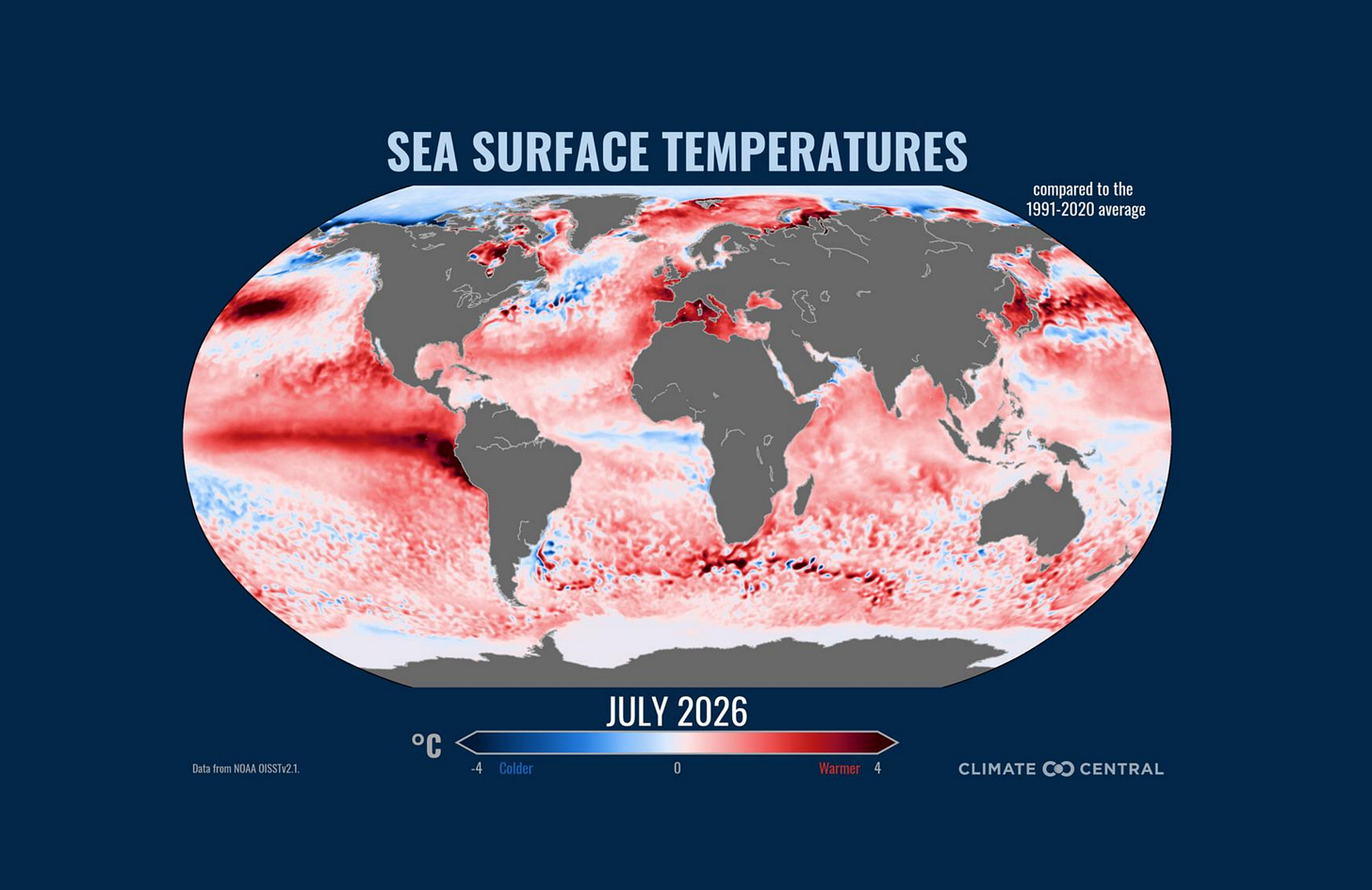
El Niño arises from a cyclical breakdown of easterly trade winds in the tropical Pacific, which allows the warm pool of water normally concentrated in the western Pacific to spread eastward, effectively turning a localized heat source into a vast atmospheric heater. This redistribution of ocean heat energy reconfigures global weather patterns by exposing a much larger portion of the atmosphere to elevated temperatures, a phenomenon driven by wave dynamics on our rotating Earth, as explained in the 2026 explainer on El Niño mechanisms.
The 2026 event is classified as a Super El Niño, with sea surface temperatures in the Niño 3.4 region expected to peak between 3 and 3.7°C above normal—significantly surpassing the previous record of 2.65°C. This unprecedented warming is fueled by a pronounced weakening of trade winds, which allows warmer waters to shift eastward more extensively than in typical El Niño years, intensifying the usual drought and precipitation oscillations, particularly prolonging drought conditions across Australia from winter through summer.
Compounding the Super El Niño’s impact is an active positive Indian Ocean Dipole (IOD), characterized by cooler waters near Indonesia and warmer waters near Africa. This dipole amplifies drying influences on Australia by altering weather patterns from multiple directions—including the Indian Ocean, tropics, and Antarctica—creating a synergistic effect that meteorologists warn will produce a 'super drought' scenario far more severe than a standard El Niño-induced dry spell.
Meteorologists forecast that the combined forces of the Super El Niño and positive IOD will drive spring temperatures in Australia to soar well above normal, edging closer to summer-like heat. This early onset of elevated temperatures, coupled with prolonged drought conditions, sets the stage for an exceptionally harsh fire season and significant stress on water resources, underscoring the dangerous climate trajectory Australia faces in 2026.


Rain-Drought Fire Trap
Early rains followed by extreme heat are turbocharging flammable eucalyptus growth, creating a dangerous fuel load that could turn Australia’s landscape into a tinderbox primed for catastrophic bushfires.
The emerging Super El Niño, amplified by a positive Indian Ocean Dipole, is triggering a dangerous rain-drought fuel cycle in Australia where early rains stimulate prolific undergrowth and eucalyptus growth. This lush vegetation, rich in flammable oils, subsequently dries out under intense heat and drought, creating an abundant and highly combustible fuel load that significantly escalates bushfire risks. Meteorologists warn that this sequence primes the landscape for potentially catastrophic wildfires, with experts urging residents to clear undergrowth immediately to mitigate what could be a fire season surpassing the severity of 2020–2021.
Early seasonal anomalies are evident across Australia as typically wet regions like Melbourne, Hobart, and Canberra experience severe drying, while desert areas have seen unusual rainfall, reversing normal patterns. Eastern Queensland, after its wettest season in 15 years, is rapidly drying with much less than half its usual April to July rainfall, signaling the onset of a 'super drought' driven by the rare combination of a Super El Niño and a positive Indian Ocean Dipole. This drying trend, coupled with record-breaking temperatures predicted for southeastern Australia, is intensifying drought conditions that threaten critical water supplies such as Sydney’s Warragamba Dam and heighten the risk of an early, severe fire season starting as soon as September.
Climate Change’s Amplifier Effect
With global temperatures at all-time highs, climate change is intensifying El Niño’s impacts—turning heatwaves, droughts, and wildfires into more frequent, severe, and interconnected disasters.
The 2026 Super El Niño is unfolding atop an unprecedentedly warm planetary baseline, with global temperatures and ocean heat reaching record highs that amplify the event's severity. As Climate Central scientist Dr. Zachary Labe explains, climate change steadily raises the floor beneath us, while El Niño temporarily jumps on the roof, creating a dangerous synergy that intensifies heat extremes, drought severity, and wildfire risks worldwide. This elevated baseline means that heatwaves are no longer isolated regional anomalies but part of a persistent upward trend, with July 2026 tying 2024 as the warmest July on record and ocean temperatures setting daily records for nearly 100 consecutive days.
Human-caused climate change significantly increases the likelihood and intensity of extreme heat events by elevating baseline temperatures, including unusually warm nights that prevent natural cooling and recovery. This exacerbates heat stress on both human health and infrastructure during heatwaves, while simultaneously intensifying drought conditions that create fertile ground for wildfires. By mid-August 2026, nearly half of the contiguous United States faced moderate drought, illustrating how interconnected climate disasters—heatwaves, droughts, and wildfires—are manifestations of a shifting climate system where elevated baselines amplify their frequency and severity.
Climate change acts as a force multiplier for El Niño impacts by warming oceans and altering atmospheric moisture, thereby increasing the likelihood and severity of extreme weather events without directly causing each one. This subtle yet profound influence reshapes the environmental 'room' in which natural cycles operate, making phenomena like the 2026 Super El Niño far more dangerous than historical precedents. The unprecedented combination of one of the strongest El Niño events with the hottest oceans ever recorded underscores the urgent need to reduce carbon pollution to mitigate escalating risks to communities and ecosystems worldwide.

Race Against a Firestorm
Meteorologists warn of a bushfire season not seen in centuries, prompting urgent action as abnormal winter drought and rampant undergrowth threaten to overwhelm water supplies and emergency response.
Meteorologists across Australia are sounding urgent alarms about a potentially catastrophic bushfire season beginning as early as September 2026, driven by a Super El Niño event described as the worst in 500 to 1,000 years. Experts warn that conditions will be catastrophically hot and dry, surpassing even the devastating fires of 2015 and 2019, with some predicting this season could eclipse the severity of the 2020–2021 bushfires. This unprecedented threat underscores the critical need for immediate public and governmental action to mitigate risks.
Public preparedness campaigns emphasize proactive measures such as clearing shrubbery, leaf litter, and trimming overhanging eucalyptus trees to reduce the abundant fire fuel created by a wet winter that has spurred rampant eucalyptus growth and an accumulation of flammable oils. Residents are urged to act now to make their homes bushfire safe, reflecting a coordinated effort with local councils already mobilizing to clear undergrowth and manage public lands. This early and aggressive preparation is vital to counter the heightened fire risks posed by the combined Super El Niño and positive Indian Ocean Dipole.
The unusual meteorological patterns this winter, including Sydney’s cold and dry conditions deviating sharply from typical mild and wet winters, signal unpredictable drought stress that exacerbates water supply threats such as those facing the Warragamba Dam. These anomalies contribute to a dangerous early onset of the fire season, compounding the urgency for residents and authorities to prepare swiftly and thoroughly to mitigate the amplified bushfire risks.