Autonomous air taxis take off: AI, regulation, and scalable supervision redefine urban flight
The gist
Autonomous air taxis are finally cleared for takeoff, as AI-powered flight systems, bold new FAA regulations, and scalable human supervision converge to make urban sky transit a reality.
What to know
- By mid-2026, the FAA greenlit eight pilot eVTOL air taxi projects across 26 states after launching an $875M, 12-year AI modernization blitz.
- Wisk Aero proved one ground controller can safely supervise three autonomous air taxis—unlocking a crucial model for affordable, scalable air mobility.
- ANRA’s Mission Manager X now orchestrates 55,000+ commercial drone flights monthly, paving the way for nationwide digital airspace management.
AI Powers Safer Skies
Autonomous air taxis are being built on a foundation of AI-driven software, synthetic data, and proactive safety layers that outpace traditional piloted aircraft in both resilience and development speed.
By mid-2026, the technological foundation for autonomous eVTOLs has been fundamentally shaped by a rapid iterative development process that bridges the simulation-to-reality gap, enabling safer and more capable aircraft. This advancement hinges not only on the physical vehicle but critically on software-defined flight systems embedded with AI and agentic engineering, which automate routine experimental tasks and accelerate the development cycle. As one analysis highlights, “The most important technology for a flying robot is not actually the vehicle itself. It’s the development process for closing the gap from simulation to reality.” Complementing this, the maturation and cost reduction of sensor suites—including cameras, LiDAR, GPS, and inertial sensors—paired with enhanced onboard compute and vision models, have standardized the enabling stack for supervised autonomy in eVTOLs.
Safety in autonomous eVTOL operations is being architected from the ground up rather than retrofitted, with autonomy designed to preempt common accident causes such as loss of control and system failures. This proactive approach integrates multiple layers of safety systems that are always active and ready to intervene, reflecting a paradigm shift from traditional piloted aircraft. However, human oversight remains a vital safety net; operators plan to involve more crew members than typical single-pilot operations, ensuring a human pilot is always in or over the loop to intervene if necessary. As emphasized in a 2026 opinion piece, “even if everything does fail, again, we still have that human pilot in the loop, over the loop who can [intervene].”
The use of synthetic training data and adversarial scenario generation has become a cornerstone in preparing autonomous flight systems for rare and emergency events before large-scale real-world fleet data is available. This capability allows developers to simulate and repeatedly test sensor failures and emergency procedures in a controlled environment, significantly enhancing system robustness and safety. Such forward-looking training methodologies exemplify how digital infrastructure and AI-driven simulation are not just supporting but actively enabling scalable urban air mobility.


Regulators Unite for Urban Flight
A coordinated federal push—spanning agencies and local partners—has transformed autonomous air mobility from policy ambition to operational reality, streamlining certification and embedding eVTOLs in diverse communities.
By mid-2026, the US Department of Transportation spearheaded a comprehensive national strategy for advanced air mobility, orchestrating collaboration among multiple federal agencies to lay the groundwork for future autonomous flight operations. This multi-agency approach is complemented by active engagement with the FAA and international partners, aiming to harmonize regulations and streamline certification processes, which are critical steps to accelerate the commercial deployment of autonomous air mobility technologies.
Recognizing the importance of local engagement, the strategy emphasizes partnerships with state, local, and tribal entities through initiatives like the eVTOL Integration Pilot Program (EIP), which are essential to expanding operational capabilities and ensuring community integration. This collaborative framework not only facilitates regulatory acceptance but also fosters practical testing environments that reflect diverse regional needs.
A landmark regulatory milestone was achieved in July 2026 when the FAA and U.S. Department of Transportation approved eight pilot eVTOL air taxi projects spanning 26 states, signaling a decisive move from planning to operational testing. With public flights slated to commence that summer, these projects embody a strategic regulatory push to embed cutting-edge aerospace technologies into urban and regional transit systems, marking a pivotal step toward mainstream autonomous air mobility.

FAA's AI Overhaul Begins
A sweeping $875 million AI modernization is turning the National Airspace System into a predictive, data-driven platform that can anticipate congestion and seamlessly integrate autonomous aircraft.
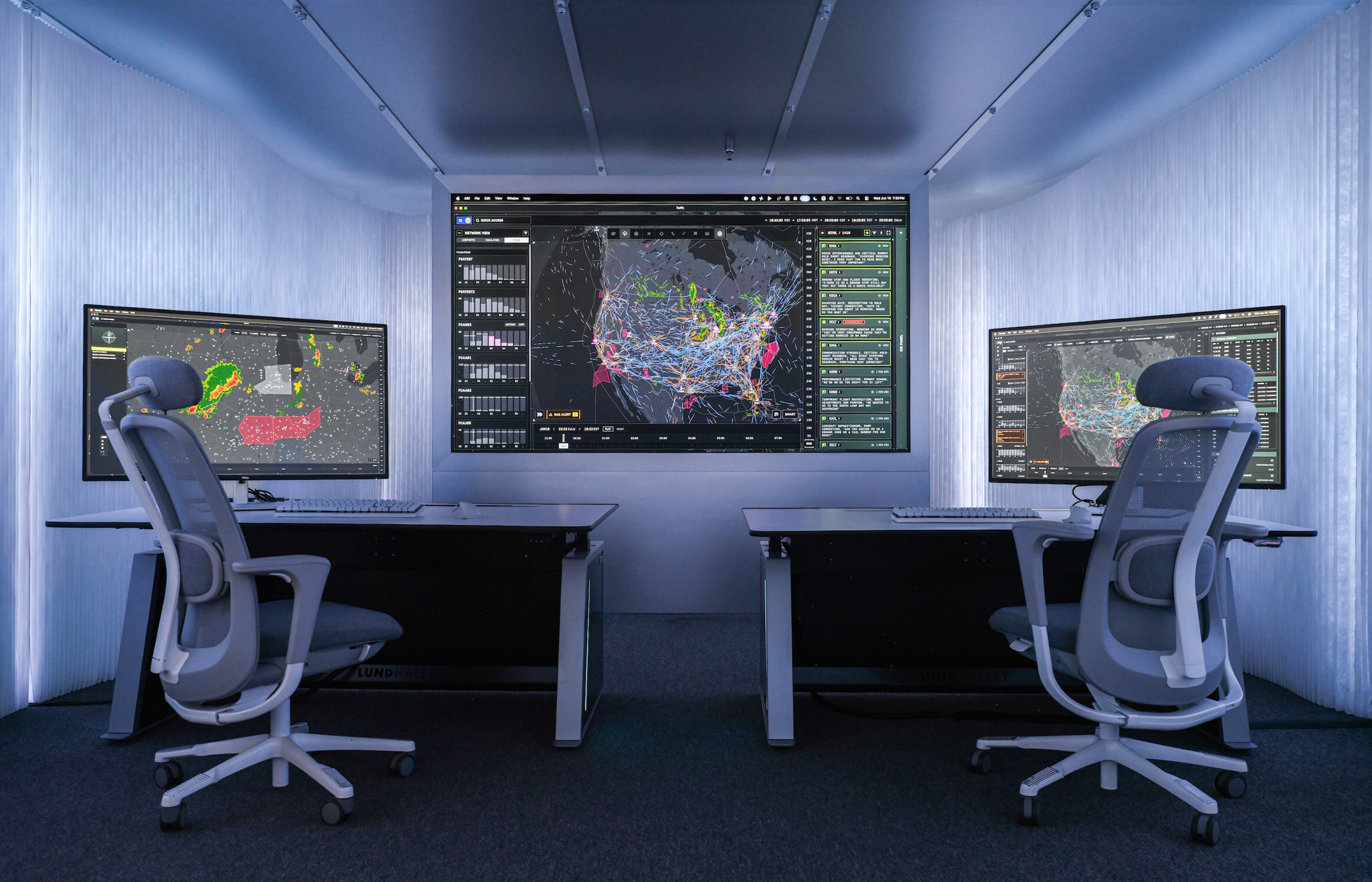
In June 2026, the FAA embarked on a transformative 12-year, $875 million partnership with Air Space Intelligence (ASI) to overhaul the National Airspace System through AI-driven platforms SMART and FMDS. This generational investment targets replacing aging infrastructure to better handle rising demand and congestion, with initial SMART operations slated for fall 2026 and broader deployment following within two years. By unifying operational data, predictive modeling, and decision-support tools, these systems form the NAS’s "central nervous system," enabling controllers to anticipate traffic demand and proactively reduce delays across commercial, cargo, and emerging aviation sectors.
The FAA’s AI strategy, developed alongside Thales and ASI, leverages predictive analytics trained on years of historical flight, weather, and operational data to forecast congestion hours or even days in advance. SMART functions as a strategic overlay to existing traffic flow tools, analyzing airline schedules, weather patterns, and airport capacity to suggest demand smoothing tactics—such as adjusting departure times or rerouting around storms—while preserving human decision-making authority. This continuous data-driven refinement enables more precise, flight-by-flight traffic management, aiming to significantly curb the chronic delays that have plagued recent travel seasons.
Beyond delay reduction, the FAA’s AI modernization initiative is designed to ease controller workload and establish a robust digital foundation for integrating new autonomous aircraft types into the airspace. By enhancing traditional congestion management methods—like scheduling caps at busy hubs such as Chicago O’Hare—with AI’s pinpoint accuracy in timing and location of interventions, the system offers dynamic operational options that balance traffic flow and safety. This evolution signals a proactive shift toward a smarter, more resilient air traffic management ecosystem capable of accommodating the future of autonomous air mobility.

Digital Backbone for Drone Swarms
ANRA’s Mission Manager X now orchestrates thousands of daily commercial drone flights, setting the digital standard for real-time, high-volume airspace coordination ahead of looming regulatory shifts.
By mid-2026, ANRA Technologies’ Mission Manager X (MMX) platform had evolved from experimental trials to a cornerstone of commercial drone logistics, orchestrating over 55,000 flights monthly—approximately 1,800 daily—across the U.S. This surge underscores the drone industry's maturation and the escalating demand for dependable digital airspace management, as highlighted by CEO Amit Ganjoo, who emphasized MMX’s critical role in enabling complex beyond-visual-line-of-sight (BVLOS) operations for major players like Amazon Prime Air, DoorDash, and Manna.
Central to MMX’s scalability is its Mission Manager Exchange, a sophisticated digital framework that facilitates real-time airspace coordination and conflict resolution among diverse operators. This innovation not only streamlines high-volume drone traffic but also strategically positions ANRA ahead of the FAA's anticipated Part 108 and Part 146 regulations, which aim to formalize standards for Advanced Digital Service Providers, thereby cementing MMX’s leadership in the emerging regulatory landscape.
One Controller, Many Air Taxis
Wisk Aero’s NASA-backed trial proved a single supervisor can safely manage multiple autonomous air taxis, paving the way for affordable, scalable urban air mobility.
In a landmark demonstration on July 15, 2026, Wisk Aero validated the scalability of autonomous air mobility by successfully operating three autonomous air taxis under the supervision of a single ground-based controller. This 1:3 supervisor-to-aircraft ratio, tested in collaboration with NASA, proved that multiple autonomous flights can be managed safely and efficiently within busy airspace, marking a critical step toward reducing reliance on one pilot per aircraft and thus making commercial air taxi services more affordable and scalable. Erick Corona, Wisk's Head of System and Operations Integration, emphasized that this operational model is essential for the future viability of autonomous air taxi operations.
The high-fidelity simulations incorporated complex routine and contingency scenarios, integrating Wisk’s Multi-Vehicle Supervisor system with traditional air traffic control managed through existing tools and procedures. This rigorous testing ensured resilience and safety in real-world conditions, demonstrating that autonomous aircraft can coexist seamlessly with conventional air traffic. Moreover, the extensive data collected from these exercises is poised to inform the development of standardized communications and automated flight rules, potentially shaping future policy frameworks and reducing workload for both air traffic controllers and supervisors, thus laying the groundwork for streamlined, digitized autonomous flight operations.
Whistleblower Flags Safety Lapses
A high-profile lawsuit alleges critical software shortcuts at Wisk Aero, exposing gaps in safety oversight and raising urgent questions about the industry’s compliance culture.
In mid-2026, a significant challenge to safety governance in autonomous air mobility emerged when Briahna O’Neill, a former manager at Boeing-backed Wisk Aero, filed a lawsuit alleging wrongful termination after she raised alarms about the Gen 6 air taxi’s software safety. O’Neill’s internal reports, submitted weeks before her March 2025 firing, highlighted critical lapses including reduced FAA-mandated software testing and skipped verification steps, suggesting the Vehicle Management System operated with known defects and noncompliance issues. This case not only spotlights potential systemic risks within the industry’s software development practices but also underscores the pressing need for rigorous adherence to FAA standards to ensure passenger safety.
