Autonomous excavators surge as physical AI funding hits record high
The gist
Venture capital is flooding into physical AI as autonomous excavators break into real-world infrastructure projects, signaling a seismic shift in the future of construction and industrial tech.
What to know
- Physical AI startups in North America raised a record $47.4 billion by mid-2026, with Waymo and Anduril Industries leading the funding surge.
- Retrofit platforms from AIM Intelligent Machines and Bedrock Robotics are converting existing heavy equipment into fully autonomous machines on major U.S. sites, with Bedrock's excavators operating independently by August 2026.
- SoftBank is building a robotics empire through major acquisitions and a $200 million Series A in Gravis Robotics, as autonomous heavy machinery becomes a hot front in U.S.-China tech rivalry.
Physical AI's Funding Explosion
Venture capital is shifting from digital-only AI to integrated hardware-software startups, fueling a funding boom that positions physical AI as the backbone of U.S. industrial resilience against global competitors.
By early 2026, venture capital interest in physical AI skyrocketed, with North American firms attracting a record $24.2 billion in funding and M&A during the first quarter alone, exemplified by Waymo’s landmark $16 billion Series D round. This surge reflects a broader strategic imperative, as the U.S. seeks to bolster economic resilience and close the automation gap with China amid persistent labor shortages and supply chain disruptions, positioning physical AI as a cornerstone technology for future industrial competitiveness.
Investors have decisively shifted their focus from purely digital AI ventures to startups that integrate sophisticated software with bespoke hardware, recognizing that this combination forms a durable competitive moat despite longer deployment cycles and integration challenges. This transition underscores a preference for companies that deliver comprehensive automation solutions across manufacturing, transportation, and construction sectors, where the fusion of AI, sensors, and IoT drives tangible operational efficiencies and measurable ROI.
The momentum accelerated through the first half of 2026, with venture funding for physical AI companies soaring to $47.4 billion—nearly quadrupling the capital raised in the latter half of 2025 and eclipsing the total investment from the previous three years combined. High-profile multibillion-dollar deals, including Anduril Industries’ $5 billion funding round alongside Waymo’s, underscore robust investor confidence that physical AI is not just an experimental frontier but the next wave of AI-driven industrial transformation.
Retrofit Revolution in Action
AIM Intelligent Machines and Bedrock Robotics are transforming legacy heavy equipment into autonomous powerhouses, signaling a new era where retrofitting existing fleets accelerates real-world AI adoption across construction and beyond.
Founded in(https://www.geekwire.com/2026/earth-first-mars-later-inside-aims-grand-vision-for-physical-ai-and-autonomous-bulldozers/) by Adam Sadilek, a former Google AI and autonomous vehicle expert, AIM Intelligent Machines is at the forefront of physical AI retrofit platforms that transform existing heavy earthmoving equipment into fully autonomous machines. Operating out of a 25,000-square-foot facility in Redmond, Washington—once home to SpaceX—AIM rigorously tests autonomous bulldozers and excavators at its proving grounds near Monroe, showcasing a vision that extends from terrestrial construction sites to potential off-planet applications.
Emerging from the legacy of Waymo, Bedrock Robotics was founded in 2024 by veterans of autonomous vehicle technology and is pioneering retrofit AI platforms that currently enable excavators to operate autonomously across commercial sites in Texas and Nevada. CTO Kevin Peterson draws a direct parallel between Bedrock’s scaling ambitions and Waymo’s early autonomous car deployments, signaling plans to expand beyond excavators to bulldozers, dump trucks, and loaders, thereby broadening the scope of autonomous heavy machinery in construction.
Alongside AIM and Bedrock, other key players like Built Robotics are advancing the physical AI retrofit landscape by deploying autonomous machines on specialized projects such as solar farms and Meta’s Hyperion data center. This collective momentum reflects a broader industry shift where startups are not just innovating in isolation but are actively retrofitting existing fleets across construction, mining, and defense sectors, accelerating the real-world adoption of autonomous heavy equipment.

SoftBank’s Robotics Empire Play
SoftBank is executing a 'Kingmaker Strategy'—amassing acquisitions and record investments like Gravis Robotics—to consolidate the autonomous machinery market and build a dominant, hardware-agnostic robotics ecosystem.
SoftBank has aggressively positioned itself as a dominant force in the physical AI space for autonomous heavy machinery through a series of strategic acquisitions and investments. Beginning with its $5.4 billion acquisition of ABB’s industrial robotics division, which employs 7,000 people and is expected to close in late 2026, SoftBank laid the foundation for a vast robotics empire. This move was followed by targeted investments in startups like Agile Robots and culminated in its focused pursuit of Gravis Robotics, a Swiss ETH Zurich spinout specializing in autonomous retrofitting of heavy industrial vehicles, signaling a clear intent to build an integrated ecosystem under its new AI and robotics entity, Roze.
SoftBank's record-setting $200 million Series A investment in Gravis Robotics in August 2026, which valued the company at $1 billion and marked the largest funding round in construction robotics history, exemplifies its commitment to scaling physical AI beyond traditional manufacturing. Gravis’s hardware-agnostic 'Gravis Rack' system, capable of retrofitting a wide array of excavator brands—including Caterpillar, John Deere, and Volvo—reflects SoftBank's strategic bet on capturing a broad swath of the global heavy equipment market, particularly targeting the two-thirds of demand outside the top three OEMs. This investment underscores SoftBank’s broader 'physical AI' thesis to dominate autonomous heavy machinery and construction sectors.
Industry analysts like Martin Janicki of Tenet interpret SoftBank’s moves as a deliberate 'Kingmaker Strategy,' where the conglomerate leverages its capital and corporate structure to build a commanding ecosystem around physical AI and autonomous construction equipment. By funneling investments through Roze and orchestrating acquisitions and funding rounds, SoftBank is not merely investing but actively consolidating the market to establish long-term dominance in the emerging autonomous heavy machinery sector.



Autonomous Excavators Hit Sites
Bedrock Robotics and Gravis Robotics have achieved true commercial deployment of fully autonomous excavators, redefining productivity and safety on major U.S. projects through rapid, hardware-agnostic retrofitting.
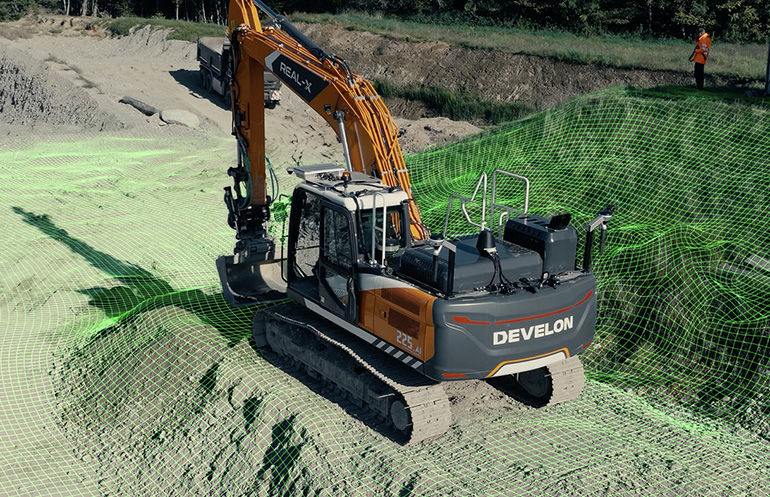
By August 2026, Bedrock Robotics had pioneered the first fully autonomous excavator deployments on major U.S. infrastructure projects, moving beyond supervised testing to independent operation under normal site conditions. Their AI-powered retrofit system, capable of same-day installation on existing fleets, was actively working on diverse projects including a Nevada water treatment facility with Sundt Construction and a massive civil sitework project with Zachry Construction Corporation. CEO Boris Sofman emphasized that this milestone not only boosts individual machine productivity but also redefines the scale of what contractors and the nation can accomplish, signaling a pivotal shift toward scalable, coordinated autonomous fleets addressing capacity bottlenecks and labor shortages in construction.
Safety advancements have been integral to these deployments, with autonomous excavators equipped with features like automatic stopping when detecting nearby people or objects, enhancing operational safety alongside productivity gains. After a rigorous year of supervised testing, these machines now operate independently under real-world conditions, reflecting a maturation of physical AI systems that prioritize both efficiency and worker protection on site.
Parallel to Bedrock's breakthroughs, Gravis Robotics marked a significant commercial scaling of autonomous excavation technology by deploying its Gravis Rack system across more than a dozen major equipment brands—including Caterpillar, John Deere, and Volvo—without requiring custom reprogramming. This hardware-agnostic adaptability underscores a new era where autonomous capabilities can be rapidly integrated across diverse machinery, accelerating industry-wide adoption.
SoftBank’s record $200 million Series A investment in Gravis Robotics on August 17, 2026, the largest ever in construction robotics, underscores the urgent commercial confidence in autonomous excavators to overcome the construction sector’s critical labor shortages and stagnant productivity. With the U.S. needing to attract nearly 350,000 new construction workers in 2026 alone and productivity growth lagging far behind manufacturing, these autonomous systems are positioned as essential tools to alleviate workforce deficits and unlock broader AI-driven economic growth.

Robotics: The New Geo-Tech Battleground
Geopolitical tensions and rare earth supply chains are reshaping robotics as both a strategic trade weapon and a high-stakes market, with landmark deals and looming IPOs marking the sector’s global ascent.
By early 2026, physical AI had emerged as a strategic linchpin in the global race for automation dominance, with North American startups attracting a record $24.2 billion in funding and M&A activity, including Waymo's landmark $16 billion round. Investors increasingly recognize that integrating bespoke hardware with advanced AI software creates a durable competitive moat essential for economic resilience and industrial competitiveness, despite the inherent challenges of longer deployment cycles and complex system integration.
The robotics sector has become a new frontline in US-China geopolitical tensions, as underscored by U.S. Commerce Secretary Lutnick's warnings of an impending crackdown on Chinese state-subsidized robotics firms. This development signals that robotics hardware innovation is no longer just a commercial battleground but a critical element of broader trade conflicts, with rare earth materials—vital for robot manufacturing—taking on heightened strategic importance amid fluctuating market dynamics, exemplified by MP Materials’ milestone first commercial magnet revenue.
Highlighting the growing economic and industrial weight of robotics hardware innovation, Hyundai's acquisition of SoftBank's stake in Boston Dynamics sets the stage for a highly anticipated NASDAQ IPO in 2027-2028. This move not only reflects confidence in the sector's long-term growth but also positions robotics firms as pivotal players within the global technology infrastructure landscape, bridging the divide between cutting-edge hardware development and scalable market impact.