Ballrooms, bulletproofing, and backlash: trump’s security push after WHCD shooting fuels political firestorm
The gist
**A failed assassination attempt at the 2026 White House Correspondents’ Dinner has ignited a fierce national reckoning over elite security, Trump’s $400M bulletproof ballroom push, and the dangerous normalization of political violence in America.**
What to know
- Cole Tomas Allen breached multi-layered security with a shotgun, handgun, and knives, getting within yards of President Trump and VP JD Vance before being subdued.
- In response, Trump is demanding Congress approve a $400 million militarized ballroom on White House grounds, touting it as vital national security infrastructure despite legal blocks and public backlash.
- Media coverage is deeply polarized, with widespread online hoax claims, reluctance to address Trump's divisive rhetoric, and renewed debate about the chasm between elite protection and everyday gun violence.
Security Gaps Exposed
The near-assassination at the WHCD revealed systemic failures in event planning, screening, and threat detection that nearly triggered a constitutional crisis.
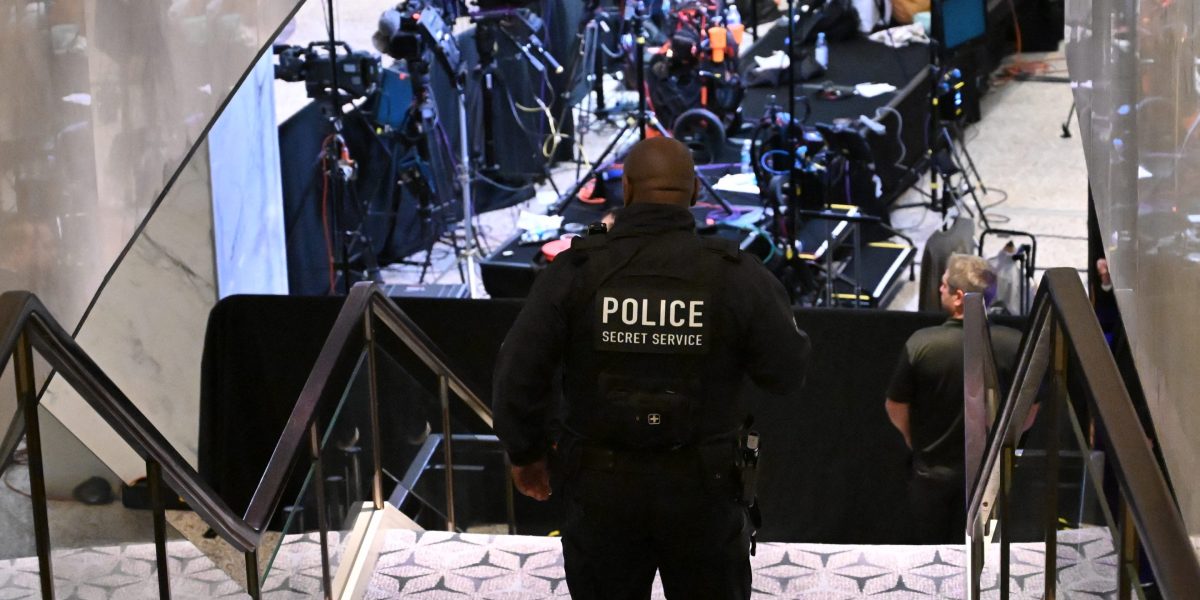
The attempted assassination by Cole Tomas Allen at the 2026 White House Correspondents’ Dinner starkly exposed critical security vulnerabilities despite the presence of multi-layered protective measures. Armed with a shotgun, handgun, and knives, Allen breached a security checkpoint, managed to get within yards of President Trump, and wounded a Secret Service agent before being subdued, underscoring that existing protocols failed to prevent a heavily armed assailant from reaching the event’s core.
Allen’s ability to travel cross-country by train, check into the hotel days in advance, and carry multiple weapons unnoticed highlights significant lapses in hotel access controls and perimeter security at high-profile political events. His premeditated actions, including writings where he self-identified as a 'Friendly Federal Assassin' with grievances against Trump’s policies, reveal how current security frameworks inadequately screen and monitor potential threats well before event day.
The security breach carried heightened risks given that both President Trump and Vice President JD Vance were seated on the same dais, raising alarming concerns about the presidential line of succession had both been harmed. This proximity exposed a glaring oversight in event security planning, as the potential simultaneous targeting of the nation’s top two leaders could have precipitated a constitutional crisis.
In response to the incident, President Trump has advocated relocating future high-profile dinners to the White House East Wing ballroom, promoting it as a more secure venue. This proposal reflects a broader critique of existing protective measures and signals a push for tighter control over event environments to prevent similar breaches, marking a potential shift in how political gatherings are secured moving forward.

Ballroom Push Becomes Flashpoint
Trump’s urgent campaign for a $400 million fortified ballroom turned the shooting into a political and legal battleground over presidential security infrastructure.
In the immediate aftermath of the White House Correspondents’ Dinner shooting, President Trump seized the moment to vigorously advocate for the construction of a fortified, militarized ballroom on the White House grounds, framing it as a critical national security imperative. He emphasized that this secure venue, featuring drone-proof roofing, bulletproof glass, bomb shelters, and advanced biodefense systems, would have prevented the incident, stating on Truth Social that "every President for the last 150 years" has demanded such a facility. This push was not merely rhetorical; within hours, Trump’s political operation called for the dismissal of an active federal lawsuit blocking the $400 million project, highlighting how the event rapidly became a catalyst for advancing his security infrastructure agenda despite ongoing legal and constitutional challenges, including a federal injunction by Judge Richard Leon requiring Congressional authorization.
The shooting starkly exposed significant security vulnerabilities at the Washington Hilton, where the suspect, Cole Tomas Allen, managed to bypass multiple layers of Secret Service protection by exploiting unsecured back rooms and hotel access points. Despite the Secret Service’s praised multi-layered protection, the incident revealed lapses that allowed Allen to travel by train into D.C. armed with multiple weapons and get within yards of both President Trump and Vice President Pence. This breach intensified political debates over the adequacy of existing White House security protocols and underscored the urgency behind Trump’s call to relocate high-profile events like the Correspondents’ Dinner to the more secure East Wing ballroom, thereby intertwining security concerns with broader political and infrastructural discussions.
President Trump’s direct engagement with the incident was immediate and highly public, as he shared images of the subdued suspect on his own social media platforms, underscoring a hands-on leadership style that intertwined legal action with political messaging. Federal prosecutors swiftly charged Allen with multiple felonies, reinforcing a narrative of decisive leadership and accountability. Meanwhile, political allies across party lines, including Meghan McCain and Senator John Fetterman, rallied to support dropping legal challenges against the ballroom construction, signaling a rare bipartisan alignment that leveraged the shooting to bolster the President’s security infrastructure initiatives and reshape public discourse on presidential safety.


Media Fractures and Misinformation
Conspiracy theories and partisan spin flooded coverage of the attack, deepening public confusion and highlighting journalism’s struggle with credibility and polarization.
The media coverage of the alleged attack on Donald Trump was deeply fractured, with a significant portion of online commentary dismissing the incident as a hoax or false flag, complicating public understanding and fueling polarization. This skepticism was exacerbated by the White House’s incongruous response, where Trump and his team appeared smiling during the press conference, undermining the gravity of the event and contributing to widespread confusion about its authenticity. Meanwhile, corporate media largely avoided discussing Trump's own role in inspiring political violence, with figures like CNN’s Dana Bash deflecting blame onto Democrats, a move criticized as propagandistic and indicative of journalistic responsibility challenges amid intense political polarization.
The WHCD shooting coverage also underscored the normalization of gun violence in America, highlighting a stark contrast between the experiences of political elites—who benefit from Secret Service protection—and the millions of ordinary Americans who routinely face such threats without security. Journalistic narratives, such as Luke Broadwater’s in The New York Times, framed the shooting within a broader, persistent pattern of political violence affecting officials at all government levels, emphasizing that this threat transcends party lines and has resulted in fatalities on both sides. This framing urged the media and public to acknowledge the vulnerability felt by everyday citizens during violent incidents, fostering a call for more empathetic and comprehensive discourse.
The immediate media response to the WHCD shooting revealed a tension between the imperative to report facts swiftly and the pervasive pull toward partisan outrage and instant analysis. Journalists quickly resorted to filming and rapid commentary, but the cycle of instant partisan framing and reflexive blame reasserted itself even as facts were still emerging. This dynamic, where righteous indignation often devolves into snark and cynicism mistaken for rigorous journalism, reflects a broader trend in which audiences reward performative outrage over nuanced reporting, thereby eroding the quality of public discourse.
Amid this polarized media environment, a crucial distinction emerged between holding power accountable and perpetuating a corrosive cycle of outrage that undermines public discourse. Responsible journalism, as emphasized in post-WHCD analyses, must strive for discipline, context, and nuance to effectively challenge authority without inflaming divisions. This call for measured reporting serves as a reminder that it remains possible to fulfill the watchdog role of the press while resisting the allure of sensationalism and partisan spectacle.



Political Violence Normalized
The WHCD attack underscored America’s escalating political violence and the widening gulf between elite security and everyday vulnerability, fueling distrust in leadership.
The attempted shooting targeting former President Trump at the 2026 White House Correspondents’ Dinner starkly illustrates the alarming escalation of political violence in the United States, reflecting deep societal polarization and a pervasive climate of fear. Despite the gravity of the incident—where the city of Washington DC was placed on lockdown—the White House’s response, marked by Trump and his team smiling for cameras, fueled public distrust and speculation about the event’s authenticity. This dissonance between the severity of the threat and the leadership’s demeanor underscores the challenges in maintaining democratic norms amid growing political tensions and distrust in official narratives.
The incident also highlights the complex interplay between political rhetoric and violence, with evidence pointing to Donald Trump’s own incendiary language as a significant factor inspiring attacks, while media narratives sometimes misattribute blame to opposing factions. This dynamic is compounded by widespread online conspiracy theories dismissing the shooting as a hoax or false flag, which further deepens societal divisions and mistrust. As Luke Broadwater of The New York Times notes, political violence is no longer confined to high-profile targets like the president but increasingly threatens officeholders at all government levels, signaling a troubling normalization of such threats across the political spectrum.
The WHCD shooting exposed glaring disparities in security protections between political elites and ordinary Americans, with Secret Service presence shielding attendees while millions face gun violence without such safeguards. This event became a microcosm of broader societal fears, as CNN anchor Victor Blackwell remarked, equating the threat faced by elites to that endured daily by schoolchildren, congregants, and shoppers nationwide. The incident intensified debates over gun control and security infrastructure, exemplified by President Trump’s immediate push to build a militarized 'ballroom' at the White House—complete with drone-proofing and bomb shelters—despite ongoing legal challenges and bipartisan skepticism, highlighting the tension between security measures and authoritarian overreach.
Beyond immediate security concerns, the shooting crystallized the broader societal and political implications of living under a persistent shadow of violence and polarization. Public anxiety about constant threats to safety coexists uneasily with strong support for unfettered Second Amendment rights, creating a fraught environment where democratic norms are strained by authoritarian rhetoric and political exploitation. As commentators have observed, the event was swiftly politicized by Trump to advance his agenda, distracting from systemic failures and deepening societal fractures. This moment underscores the urgent need for a national reckoning with gun violence, political extremism, and the erosion of trust that threatens the very fabric of American democracy.


Backlash and Constitutional Tensions
The fallout from Trump’s security push ignited fierce debate over executive power, legal limits, and the balance between protection and democratic norms.
The fallout from Trump’s security push ignited fierce debate over executive power, legal limits, and the balance between protection and democratic norms.