Banks double down on stablecoins, tokenization
The gist
Stablecoins and tokenized assets have stormed into mainstream finance, as Wall Street heavyweights and payment giants race to rebuild the financial system on public blockchains under fresh federal regulation.
What to know
- JPMorgan, Visa, and Citi dove headfirst into stablecoins and tokenization after the GENIUS Act set clear nationwide rules in 2025.
- Stablecoin transactions exploded in Q1 2026—Visa processed $5B in settlements and Citi/Coinbase enabled payments across 94 markets.
- BlackRock’s BUIDL fund and JPMorgan’s MONY money market fund helped push tokenized real-world assets past $65B, making Ethereum the new backbone of global capital markets.
Banks Bet Big on Blockchain
Major banks and fintechs shifted from cautious pilots to full-scale blockchain integration after regulatory breakthroughs, launching new stablecoins and tokenized asset platforms across the financial sector.
In late 2025, major financial institutions such as JPMorgan, Wells Fargo, Visa, Mastercard, and Citigroup made decisive early moves into the stablecoin and tokenization space, signaling a shift from cautious exploration to active integration of blockchain technology. Citigroup’s partnership with Coinbase to pilot stablecoin payment services and Circle’s onboarding of over 100 partners including BlackRock, HSBC, and Visa on its Ark blockchain testnet exemplify this momentum. JPMorgan’s launch of MONY, a $100 million tokenized money-market fund on Ethereum utilizing USDC, and SoFi Bank’s introduction of SoFiUSD, a fully reserved stablecoin backed directly by the Federal Reserve, further underscore the growing institutional embrace of public blockchain rails and tokenized assets.
This institutional surge was underpinned by foundational regulatory shifts that dismantled previous barriers and established clear guardrails for blockchain adoption. The repeal of SAB 121 in early 2025 removed onerous capital requirements that had made crypto custody uneconomical for banks, while the GENIUS Act, signed into law in July 2025, created the first federal licensing framework for dollar-pegged stablecoins, mandating 100% Treasury-backed reserves and removing stablecoins from SEC jurisdiction. These measures, alongside ongoing SEC and CFTC initiatives such as Project Crypto and joint token classification guidance, provided the legal clarity necessary for banks and fintechs to confidently issue stablecoins and launch tokenized products, effectively accelerating the rebuilding of the financial stack around blockchain infrastructure.
While major banks like Bank of America, JPMorgan, and Wells Fargo showed varying degrees of cautious engagement—some launching stablecoin initiatives and others planning crypto custody services for 2026—smaller banks and fintech firms aggressively advanced blockchain adoption through patent filings, tokenized deposit networks, and integrated digital asset platforms. Coinbase’s transformation into a full-spectrum regulated financial platform offering zero-fee stock and ETF trading alongside tokenization-as-a-service, and Fidelity’s launch of the federally regulated FIDD Stablecoin, illustrate this broadening ecosystem. As one industry expert noted, CFOs and treasurers are 'dipping their toes' by starting with single use cases to build expertise, reflecting a pragmatic, incremental approach to mainstream blockchain integration.
The regulatory and institutional groundwork laid in late 2025 set the stage for blockchain to evolve into the future operating system of finance, with integrated wallets unifying stablecoins, tokenized deposits, securities, NFTs, and other digital assets. This vision was reinforced by historic regulatory milestones such as the SEC and CFTC’s joint 68-page token classification interpretation—the first in their combined 183-year history—and the Senate Agriculture Committee’s advancement of a crypto market structure bill granting the CFTC authority over digital asset spot markets. These developments, coupled with strategic investments like BlackRock’s $100 million stake in Canton, signal a maturing landscape where blockchain-based finance is poised for mainstream institutional adoption and innovation.



Stablecoin Payments Hit Scale
Stablecoin settlement exploded as Visa, Mastercard, and Citi embedded blockchain rails into global payments, making programmable, cross-border transactions routine for banks and fintechs.
The stablecoin ecosystem experienced a dramatic acceleration in adoption and operational deployment throughout Q1 2026, propelled by strategic partnerships and infrastructure integration. Notably, Citi and Coinbase launched a collaboration enabling stablecoin-based payment solutions across 94 markets and over 300 clearing systems, signaling a decisive shift from pilot projects to scalable institutional use cases. Meanwhile, Swift’s alliance with Consensys brought over 30 major financial institutions, including Bank of America and Citi, into a blockchain-powered interbank cross-border payment network leveraging Ethereum-aligned smart contracts, underscoring traditional banks’ embrace of blockchain technology beyond experimentation.
Mainstream payment networks Visa and Mastercard cemented stablecoin settlement as a standard feature by early 2026, with Visa supporting eight tokens across 40 countries and reporting a $5 billion quarterly stablecoin settlement volume, a fivefold increase from the previous quarter. Mastercard’s partnership with SoFi to enable SoFiUSD stablecoin settlement across 130 million accounts and Bridge’s expansion of its Visa-backed stablecoin card program to over 100 countries exemplify the operational maturity of stablecoin payment infrastructure. These developments highlight a maturing ecosystem where Visa emphasizes infrastructure neutrality supporting multiple stablecoins, while Mastercard focuses on credential quality anchored to regulated bank-issued stablecoins.
The stablecoin market’s evolution in Q1 2026 reflects a shift from issuance-centric models to a focus on distribution, compliance, and seamless integration with legacy financial systems. Platforms like Circle’s USDC and modular issuers such as m0, alongside neobank innovators like Ether_fi and Plasma, are driving embedded payments, bank-grade compliance, and programmable global settlement. Infrastructure advancements, including Stripe’s integration for stablecoin on/offramps and the x402 ecosystem’s native HTTP-level programmable payments, are critical enablers, allowing banks and fintechs to adopt stablecoins without rewriting legacy software, thus facilitating real-time, programmable, and global payments.
By early 2026, stablecoins had firmly transitioned from experimental assets to foundational settlement rails, processing over $10.3 trillion in monthly volume and surpassing Visa’s transaction volume since Q1 2025. This surge is bolstered by regulatory clarity from the GENIUS Act, which established the first federal framework for dollar-pegged stablecoins, accelerating institutional adoption and infrastructure deployment. Major financial institutions such as JPMorgan, Bank of America, Deutsche Bank, and Citi, alongside corporations like Amazon and Walmart, actively explored or launched stablecoin initiatives, reflecting a broad industry consensus that stablecoins are integral to the future of global payments.



Tokenized Assets Reshape Markets
BlackRock, NYSE, and JPMorgan are driving a sweeping transformation of capital markets, putting billions in real-world assets on-chain and making Ethereum the backbone of 24/7 programmable finance.
By early to mid-2026, tokenization of real-world assets has evolved into a transformative force reshaping capital markets, with institutional giants like BlackRock, NYSE, Franklin Templeton, and JPMorgan leading the charge. These players are pioneering blockchain-based infrastructure that enables native on-chain issuance and settlement of diverse assets including equities, bonds, commodities, and money market funds. For example, BlackRock’s BUIDL fund surpassed $3 billion in assets under management and became tradable on decentralized platforms like Uniswap, while JPMorgan launched MONY, a $100 million tokenized money market fund on Ethereum, marking a historic acceptance of public blockchains for settlement by a major U.S. bank. Meanwhile, the NYSE is developing a 24/7 tokenized securities platform aiming to unlock fractional shares and near-instant settlement, signaling a fundamental shift from legacy intermediated systems to programmable, composable capital markets.
Ethereum has emerged as the foundational blockchain underpinning this capital markets transformation, endorsed explicitly by BlackRock and embraced by multiple institutional initiatives. The network’s technical upgrades, such as the Fusaka enhancement increasing scalability eightfold, have been critical in supporting the surge of tokenized assets and enabling 24/7 trading with instant settlement. BlackRock’s initial tokenized money market fund, Bidd, launched on Ethereum, exemplifies this trend, while other platforms like Securitize and Ondo Finance leverage Ethereum and its Layer 2 solutions to facilitate compliant issuance and investor onboarding. This institutional embrace marks Ethereum’s evolution from a speculative asset to a battle-tested, regulatory-compliant infrastructure central to the future of tokenized capital markets.
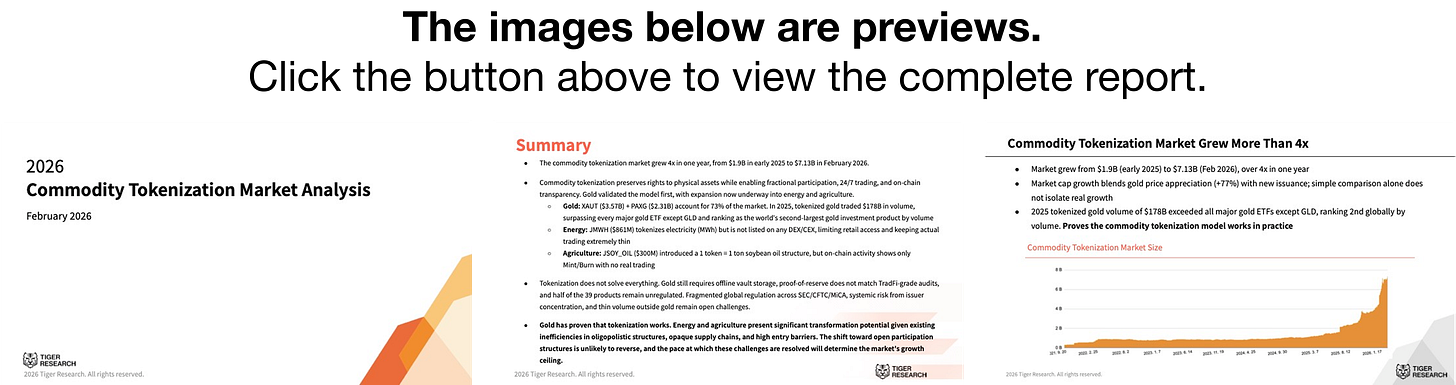
The tokenization ecosystem is rapidly diversifying across asset classes and geographies, with significant growth in private credit, money market funds, and commodities alongside equities and bonds. Platforms like Figure have pioneered blockchain-native loan origination and public equity networks enabling 24/7 liquidity and atomic settlement, while tokenized commodities—especially gold—have seen market caps soar to over $7 billion, driven by products like Tether’s XAUT and PAXG. Solana is emerging as a competitive hub for tokenized equities and US Treasuries, supported by institutional adoption and regulatory engagement. Simultaneously, regulatory clarity is improving globally, with initiatives like the UK Treasury’s tokenization task force and the SEC’s guidance fostering mainstream institutional participation and infrastructure development.
Despite rapid progress, tokenized real-world assets remain in a nascent but accelerating phase characterized by a dual market structure: represented assets confined within issuer platforms and distributed tokens capable of peer-to-peer transfer and composability. The total tokenized RWA market has surpassed $65 billion by mid-2026, with tokenized U.S. Treasuries alone accounting for around $10 billion and tokenized equities exceeding $1 billion in value. Institutional platforms like Ondo, Securitize, and Circle dominate market share, while interoperability efforts by Nasdaq, Kraken, and NYSE aim to bridge traditional and blockchain markets. Challenges persist around regulatory compliance, investor onboarding, liquidity fragmentation, and lifecycle management, but the convergence of technological innovation, institutional demand, and regulatory frameworks is driving a structural transformation of capital markets toward 24/7, programmable, and globally accessible financial infrastructure.


The Stablecoin Land Grab
Payment giants and banks are racing to dominate stablecoin infrastructure through billion-dollar deals, industry alliances, and regulatory wins, turning settlement rails into the new competitive frontier.
The spring of 2026 marked a pivotal phase in the consolidation of blockchain finance as major payment giants and traditional banks accelerated strategic investments and collaborations to dominate stablecoin and tokenization infrastructure. Mastercard’s landmark $1.8 billion acquisition of BVNK, a London-based stablecoin infrastructure provider operating in over 130 countries, exemplified this trend, signaling a defensive yet aggressive pivot to rapidly integrate stablecoin payments into its core network rather than risk obsolescence. This move, which outbid Coinbase and reflected Mastercard’s preference for speed over in-house development, underscores a broader industry shift from fragmented crypto issuance battles toward unified settlement infrastructure ownership, with key players like Visa, Stripe, and SoFi also advancing complementary stablecoin platforms to serve mid-market fintechs and global payment flows.
This consolidation wave is further characterized by unprecedented collaboration among over 85 crypto-native firms and financial institutions, including Binance, Circle, PayPal, and Gemini, united under Mastercard’s Crypto Partner Program to co-develop stablecoin and blockchain payment solutions. Such alliances mark a decisive break from past token partnership scams, positioning stablecoins as genuine alternatives to traditional payment rails and reflecting a strategic consensus that controlling the settlement layer—not merely issuance—is the critical battleground. Concurrently, traditional banks like HSBC and Standard Chartered secured Hong Kong’s first stablecoin licenses, signaling regulatory acceptance and a coordinated push to build integrated tokenization platforms that blend blockchain efficiencies with established financial infrastructure.
The strategic embrace of stablecoins by incumbents is driven by tangible competitive advantages, with early adopters realizing direct cost savings of 60–90% on payment flows and achieving supplier network lock-in that pressures laggards through margin compression. European banks’ launch of stablecoins despite ECB caution highlights the urgency to capture this transformative payment innovation, while industry thought leaders emphasize that the true winners will be those who master integration atop existing financial rails rather than competing solely on issuance volume. This evolving landscape, set to be a focal topic at the upcoming EastPoint: Seoul 2026 forum, reflects a maturation of the stablecoin ecosystem into a hybrid, regulated, and institutionally integrated financial infrastructure.





Institutional Infrastructure Matures
Banks and asset managers now rely on interoperable blockchains, advanced custody, and regulatory clarity to deliver secure, real-time financial services without legacy bottlenecks.
By mid-2026, the maturation of market infrastructure is vividly illustrated through the rise of interoperable blockchain networks and institutional-grade custody solutions that enable seamless, secure, and scalable blockchain adoption across finance. Banks like DBS and J.P. Morgan’s Kinexys have pioneered cross-bank frameworks allowing tokenized deposits to move fluidly across permissioned and public blockchains such as Base and Ethereum L2, while Franklin Templeton’s $798 million asset move onto the Canton Network underscores institutional commitment to privacy and authorization standards. This evolution is complemented by real-time, 24/7 settlement capabilities integrated directly with core banking systems, eliminating reliance on legacy rails like SWIFT and making tokenized deposits a practical on-chain cash alternative for corporates and treasuries.
Regulatory clarity has advanced significantly, catalyzing institutional confidence and adoption. Landmark developments include the Senate Agriculture Committee’s crypto market structure bill granting the CFTC authority over digital asset spot markets and the SEC’s clear delineation that securities laws apply to tokenized stocks, distinguishing issuer-issued tokens from synthetic versions. The joint SEC-CFTC initiative “Project Crypto” exemplifies unprecedented regulatory collaboration, culminating in a 68-page joint interpretation on token classifications—the first in 183 years—while SEC Chair Paul Atkins’s announcement of four non-security crypto asset categories and the proposed end of the Howey Test signal a tailored, principles-based regulatory framework fostering innovation and institutional integration.
Institutional-grade custody, compliance, and wallet solutions have evolved from nascent concepts into robust, scalable infrastructure critical for secure blockchain adoption. This is evidenced by BitGo’s $2.1 billion IPO, Kraken’s historic acquisition of a Federal Reserve master account, and the development of multi-asset custody frameworks supporting stablecoins, tokenized equities, and real-world assets. The emergence of zero knowledge proofs enables private enterprise blockchains that interoperate trustlessly via Ethereum, addressing longstanding privacy concerns and enabling cryptographic guarantees of incorruptibility and confidentiality essential for institutional use. Moreover, major financial players including Citadel Securities, DTCC, and Google Cloud backing the Layer 1 blockchain Zero further signal a shift toward interoperable, on-chain settlement ecosystems.
The convergence of clearer regulatory frameworks and mature market infrastructure has accelerated institutional adoption and integration of blockchain technology into mainstream finance. BlackRock’s tokenization of its money market fund and trading on UniswapX, alongside banks filing patents for stablecoin technology and launching tokenized deposit networks like Cari, illustrate growing institutional confidence. Payment giants Stripe, Visa, and Mastercard are collaborating on stablecoin platforms that combine issuance, wallet infrastructure, and payment network connectivity, aiming to reduce operational barriers. As one analyst noted, 'the real race was never about who mints the coin. It’s about who owns the pipes,' highlighting a strategic shift toward controlling interoperable blockchain payment rails that deliver significant cost savings and supplier network lock-in for enterprises.

Crypto’s Reality Check Arrives
The market now rewards only blockchain projects with real user demand and institutional adoption, leaving hype-driven sectors behind as finance giants quietly embed crypto infrastructure into daily operations.
By mid to late 2026, the crypto market has decisively shifted from hype-driven, narrative-centric cycles to a diversified landscape focused on genuine product-market fit, real user demand, and sustainable revenue generation. This transition is underscored by the collapse of once-hyped sectors like GameFi, exemplified by Axie Infinity’s 99.7% drop in monthly active users from 2.8 million in January 2022 to just 8,000 by May 2026, highlighting the market’s intolerance for innovation without demand. As articulated in multiple analyses, only projects demonstrating balanced growth across product quality, brand strength, user base, and revenue—rather than mere token price appreciation—are surviving and thriving in this new era.
This maturation is accompanied by blockchain technology becoming increasingly embedded as invisible yet essential infrastructure within mainstream finance, much like the shipping container revolutionized global trade logistics. Major financial institutions such as BlackRock, Fidelity, Vanguard, and Morgan Stanley have embraced tokenization, stablecoins, and regulated on-chain fintech platforms, signaling a profound integration beyond crypto-native ecosystems. Products like Coinbase’s $1 billion in crypto-backed loans and Superstate’s $82 million Series B funding for official securities tokenization exemplify real utility and institutional confidence, while stablecoins like FRAUSD, custodied by BlackRock and Fidelity, demonstrate regulatory compliance and practical financial use cases.
The evolving market dynamics reveal a bifurcation between speculative demand and genuine financial demand, with the latter driving the growth of stable custody, transfer, and asset management functions critical for mainstream adoption. On-chain capital allocators, such as stablecoin holders and treasury managers lacking traditional banking access, are fueling demand for tokenized real-world assets (RWAs) that offer superior liquidity and composability compared to off-chain counterparts. Platforms like HyperLiquid, with over $1 billion daily volume in commodities trading, and Apollo’s on-chain private credit funds illustrate how blockchain-enabled products are delivering tangible financial efficiencies and sustainable revenue, moving beyond crypto’s ideological roots toward practical, user-focused solutions.
Despite this progress, challenges remain around operational adoption and governance risks as blockchain infrastructure becomes foundational. The BONK DAO’s $20 million exploit through governance manipulation underscores vulnerabilities inherent in decentralized governance models, emphasizing the need for robust mechanisms as blockchain embeds deeper into financial workflows. Meanwhile, the transition from crypto-native users to mainstream institutional and corporate adoption requires a natural learning curve, with companies cautiously 'dipping their toes' into blockchain use cases amid a limited pool of Web3 expertise. As Hoolie Tejwani of Coinbase Ventures predicts, blockchain will become so normalized within Fortune 1000 companies by 2031 that it will cease to be a distinct topic, marking the end of speculative hype and the dawn of ubiquitous, invisible infrastructure.