AI data center backlash spurs legal fights, moratorium wave
The gist
A nationwide revolt against AI data centers is stalling $130 billion in projects as noisy, resource-hungry facilities spark legal showdowns, environmental fears, and bipartisan political heat.
What to know
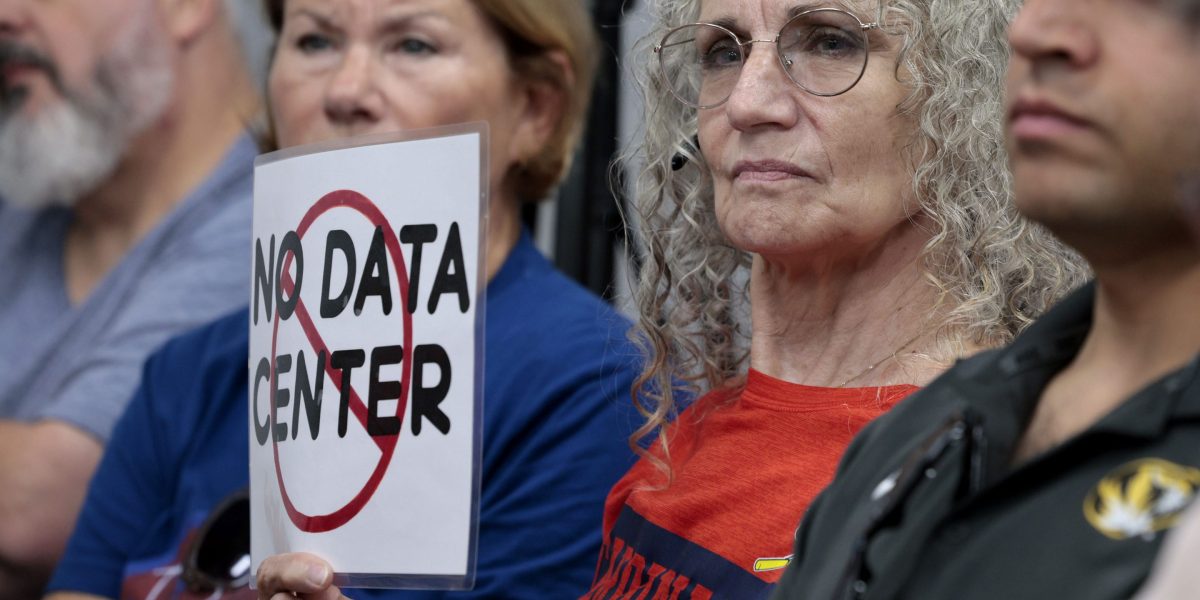
- Roughly 70% of Americans oppose AI data centers near their homes, fueling over 120 moratoriums in 38 states and delaying billions in development.
- Utilities and governments are seizing land for data center infrastructure via eminent domain, triggering fierce court battles over what counts as 'public use.'
- Massive water and power consumption—like Google’s Pryor, OK site using 1.1 billion gallons a year—has states like New York demanding moratoria and stricter environmental reviews.
Grassroots Revolt Intensifies
Community distrust of tech giants is fueling organized resistance, legal action, and demands for local benefits as data center projects spark bipartisan backlash nationwide.
Public opposition to AI data centers is both widespread and deeply rooted, with polls showing that approximately 70% of Americans oppose having these facilities near their homes due to concerns over noise pollution, rising utility costs, air and water quality degradation, and the loss of green space. This resistance is not limited to the data centers themselves but extends to the associated infrastructure like transmission lines, which often require eminent domain seizures, exacerbating community tensions and leading to displacement, as seen in Georgia where a family was forced from their home amid national attention. The backlash reflects a profound distrust of tech elites and big corporations, with grassroots organizing and bipartisan political pressure mounting to challenge projects that are perceived as imposed without adequate local consent or tangible benefits.
This surge in local resistance has translated into concrete political action, with over 120 moratoriums enacted across 38 states, delaying more than $130 billion in data center projects. Bipartisan backlash is evident as 36 governors face electoral accountability over these issues, and prominent figures like Senator Bernie Sanders and Congresswoman Alexandria Ocasio-Cortez have pushed for federal moratoriums. Communities are leveraging a playbook of demands—ranging from investments in local schools and bioswales to installing batteries in basements—to negotiate meaningful concessions, signaling that opposition is not merely reactive but strategically organized to protect quality of life and local resources.
Underlying much of the opposition is a pervasive social trust deficit toward the tech industry and AI’s rapid expansion, which many perceive as being forced upon communities without transparent communication or consideration of broader societal impacts. As David Roberts articulates, this is not a problem solvable by technical fixes alone but one deeply intertwined with cultural and political tensions, including fears of job displacement and privacy loss. The backlash cuts across traditional political divides, uniting conservatives and progressives alike in skepticism of Big Tech’s influence and the future trajectory of AI-driven economic change.


Eminent Domain Under Fire
Courts and landowners are challenging the use of eminent domain for AI infrastructure, fracturing legal precedents and stalling projects amid fierce property rights disputes.
Utilities and governments across states like Georgia, Pennsylvania, and Texas are increasingly invoking eminent domain to secure land for transmission lines powering AI data centers, despite overwhelming public opposition—70% of Americans oppose nearby data center construction. This surge in land seizures has sparked intense legal debates over whether infrastructure serving predominantly private data centers meets the constitutional 'public use' requirement, with courts split on interpretations; for instance, the Texas Supreme Court mandates that projects must serve the public and not solely private interests, reflecting a patchwork of state rulings that complicate eminent domain applications.
The legal justification for eminent domain in AI infrastructure projects hinges on the evolving and contested definition of 'public use,' a debate reignited by the 2005 Kelo v. City of New London decision which broadly allowed takings for economic development benefiting private entities. While some states like South Dakota and Vermont have upheld takings when transmission lines provide wider grid benefits, others such as Mississippi have rejected seizures lacking direct local advantage, underscoring the fractured judicial landscape. This ongoing tension highlights the challenge of balancing property rights with the demands of rapidly expanding AI infrastructure amid shifting technological and economic contexts.
Landowners are increasingly resisting eminent domain efforts, with some rejecting multimillion-dollar offers—up to $80 million in Wisconsin—and facing warnings that utilities may forcibly acquire easements if negotiations fail, as seen in Kentucky and Pennsylvania. These heightened legal tensions underscore a growing backlash that complicates project timelines and costs, while also fueling community opposition rooted in environmental and historic preservation concerns. The collapse of major projects like QTS Data Centers’ withdrawal from the Prince William Digital Gateway exemplifies how procedural hurdles and local resistance can derail even well-funded developments.
In response to mounting opposition and legal challenges, governments are adopting stricter regulatory frameworks, including moratoria and enhanced environmental reviews, to treat data centers as major industrial infrastructure rather than routine commercial projects. For example, New York Governor Kathy Hochul’s Executive Order 62 imposes a statewide moratorium on new hyperscale data centers pending a comprehensive environmental impact statement. This regulatory shift signals that securing land through eminent domain is no longer sufficient; developers must now navigate complex approval processes and cultivate durable political support to ensure projects can progress from land acquisition to energization.


Resource Strain Sparks Alarm
Data centers’ massive appetite for power and water is overwhelming local utilities, inflating bills, and sidestepping environmental oversight, prompting urgent calls for stricter regulation.
AI data centers exert immense pressure on local environmental resources, consuming vast amounts of electricity and water that strain both ecosystems and utility infrastructure. For example, Google’s Pryor, Oklahoma facility uses approximately 1.1 billion gallons of water annually—equivalent to the yearly usage of 10,000 households—primarily for evaporative cooling systems that lead to significant water loss. This heavy demand contributes to rising utility bills and heightened community anxiety, as seen in Virginia where inadequate safeguards caused electricity costs to spike, fueling calls for companies to innovate in energy sourcing and water recycling.
The rapid expansion of data centers, which accounted for over 4% of U.S. electricity use in 2024 and could rise to nearly 15% by 2030 according to Lawrence Berkeley National Laboratory, is intensifying environmental and regulatory challenges. The construction of new transmission lines to support these power-hungry facilities often disrupts local ecosystems and private lands, exacerbating community opposition. Meanwhile, regulatory frameworks lag behind, with many data centers bypassing traditional environmental permitting processes, such as in Oklahoma and Memphis, where facilities avoid water and air permits, raising concerns about unchecked pollution and resource depletion.
Environmental concerns extend beyond resource consumption to include noise pollution and the siting of data centers on protected lands, where local economic benefits are minimal and ecological risks high. Amanda Garcia highlights the constant hum of data centers as a persistent nuisance, while court battles in Scotland reveal conflicts over developments in pristine areas that offer only temporary construction jobs but import specialized maintenance labor. These issues underscore the urgent need for stricter public input and mandates for genuinely renewable energy use rather than reliance on carbon offsets, as current approval processes often outpace those for traditional infrastructure projects.
In response to mounting environmental and community pressures, some states are adopting regulatory measures to enforce sustainability and shift financial risk onto developers. New York’s executive order pauses large data center permits pending environmental review, though enforcement remains limited, while New Jersey requires data centers to cover 85% of their energy costs for a decade regardless of project completion. Additionally, pioneering examples like Massachusetts’ Green High Performance Computing Center demonstrate the potential for 'green' data centers that prioritize environmental friendliness, signaling a cautious but growing industry pivot toward sustainable practices amid ongoing backlash.


Developers Rethink Community Trust
Industry leaders and regulators are shifting toward early engagement, transparency, and adaptive policies to rebuild public trust and align AI growth with local sustainability.
Developers and regulators are increasingly adopting early and transparent community engagement as a cornerstone of responsible AI data center development, recognizing that past failures in communication and disregard for local concerns have fueled widespread backlash. Industry leaders like David Roberts emphasize that hyperscalers missed an opportunity to build goodwill by not linking AI expansion with decarbonization efforts from the outset, while operators such as Hot Paper Lantern’s CEO Ed Moed report unprecedented levels of town-to-town and county-to-county outreach. This shift toward proactive dialogue aims to rebuild trust by funding local benefits—such as batteries in basements, rooftop solar, and school support—and by committing to minimize environmental impacts, thereby aligning AI growth with community interests and sustainability goals.
In response to mounting public opposition and environmental concerns, a wave of moratoriums has swept across the United States, with 120 moratoriums in 38 states delaying approximately $130 billion in AI data center investments. Governors like New York’s Kathy Hochul and Michigan’s Gretchen Whitmer have imposed pauses and launched action plans to ensure developers bear the full costs of infrastructure upgrades, reflecting a regulatory pivot toward cautious, measured growth. However, these moratoriums are widely viewed as temporary stopgaps requiring complementary measures such as enhanced data transparency, collaborative policymaking, and enforceable standards to effectively balance innovation with community welfare.
Regulatory frameworks are evolving to integrate nuanced strategies that balance AI data center expansion with grid reliability and environmental stewardship, including bespoke industrial electricity rates designed to avoid negative precedents and spend-to-earn utility models that incentivize grid modernization. Simultaneously, developers like Hyperscale Data are pioneering phased expansions on repurposed industrial sites—such as former Bitcoin mining facilities in Michigan—to minimize new land disruption while securing long-term contracts with cloud customers, exemplifying a pragmatic approach to infrastructure scaling. These efforts underscore a growing recognition that sustainable AI infrastructure requires not only technical upgrades like distributed batteries but also adaptive regulatory and economic tools responsive to complex social and political dynamics.
The political landscape surrounding AI data center development is increasingly fraught, with 36 governors facing midterm elections pressured to address affordability and public trust amid rapid expansion. Federal initiatives, including the White House’s Ratepayer Protection Pledge and legislative proposals by figures like Congressman Michael Baumgartner, seek to ensure that AI data centers cover the full costs of power and water infrastructure, protecting consumers from utility bill hikes. Yet, partisan resistance remains strong, as some lawmakers fear that moratoriums or stringent regulations could undermine U.S. leadership in AI. Investors, meanwhile, are recalibrating their risk assessments, prioritizing permitting certainty and stakeholder engagement over traditional engineering metrics, signaling that political and social acceptance is becoming a critical competitive advantage in this sector.