Bitcoin’s $75k rally tests ETF demand
The gist
As retail panic drives the Fear & Greed Index to record lows, institutions and whales are quietly feasting on Bitcoin above $75K, fueling wild volatility and setting the stage for a seismic showdown.
What to know
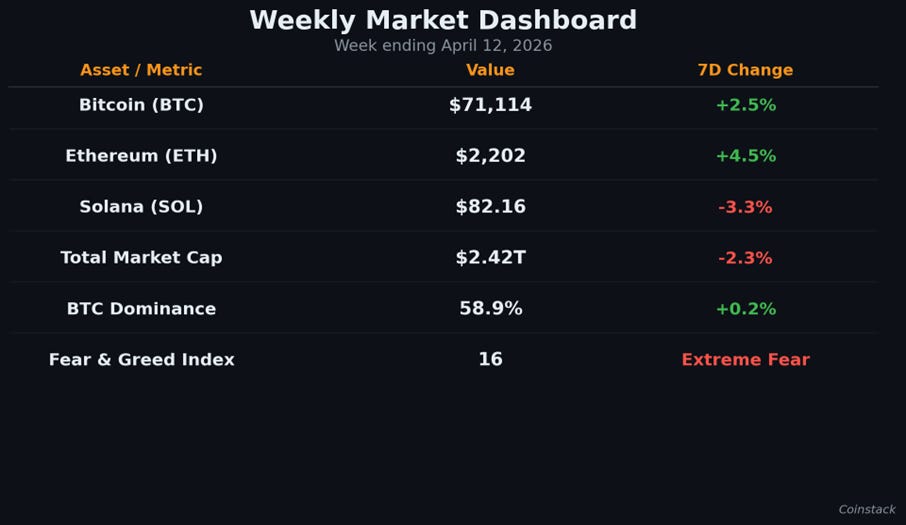
- Retail investors are fleeing Bitcoin in early 2026, with the Fear & Greed Index stuck below 10 for over two months—double the panic seen during the Terra/LUNA crash.
- US Bitcoin spot ETFs—now topping $90 billion in assets—saw $471.4 million in inflows in a single day, while Morgan Stanley’s new MSBT ETF is shaking up Wall Street with a 0.14% fee.
- Whales snapped up 270,000 BTC in 30 days, pushing exchange reserves to a seven-year low and triggering violent liquidations as Bitcoin rocketed from $68K to $75K.
Institutions Exploit Retail Panic
As retail investors capitulate in record fear, institutions are aggressively accumulating Bitcoin, deepening the psychological divide that now drives market volatility and sets the stage for a high-stakes power shift.
By early 2026, retail investors are engulfed in unprecedented fear and panic, as reflected by the Fear & Greed Index plummeting to a historic low of 5 and lingering below 10 for over 60 days—doubling the record set during the Terra/LUNA crash in 2022. This extreme retail anxiety manifests in counterintuitive behavior, where instead of capitalizing on Bitcoin’s 43% price drop from its all-time high, many flee the market, akin to shoppers rejecting a 46% discount at Zara. Meanwhile, institutional investors quietly seize this opportunity, accumulating Bitcoin with strategic conviction despite ongoing volatility and regulatory headwinds, signaling a fundamental psychological divide between panic-driven retail and opportunity-seeking institutions.
Institutional investors’ confidence in Bitcoin’s resilience amid geopolitical turmoil—such as the US-Iran Strait of Hormuz crisis—and inflation fears starkly contrasts with retail investors’ faltering resolve. While altcoins stumble and regulatory uncertainty clouds the market, institutions double down on Bitcoin, leveraging advanced risk management tools and cautious strategies to navigate record liquidations and volatile price action near $76K. This steadfast institutional demand not only stabilizes markets during geopolitical shocks but also fuels a strategic pivot that defies traditional market cycles and widespread retail skepticism.
The widening gap in market participation is underscored by retail investors’ struggles with liquidity constraints and a lack of education, which exacerbate their fear and hesitation amid turbulent conditions. In contrast, institutional players deploy sidelined capital with a defiant psychology that dismisses macroeconomic risks, driving Bitcoin’s relentless rally despite regulatory pressures and intense volatility. This divergence creates a high-stakes battle on exchanges, where institutional conviction fuels liquidity surges and risk management battles, while retail panic intensifies market swings and amplifies volatility near critical price thresholds.




ETF Inflows Fuel Volatility Surge
Massive ETF inflows and whale accumulation are creating a feedback loop of liquidity battles and violent short squeezes, reshaping Bitcoin’s price action and amplifying market turbulence above $75,000.
By early 2026, Bitcoin spot ETFs in the US, managing over $90 billion in assets, have become a critical barometer of institutional demand, with sustained net inflows—such as the $471.4 million absorbed on April 6 alone—signaling a robust return of institutional capital. The launch of Morgan Stanley’s MSBT, the first Bitcoin spot ETF from a major Wall Street bank listed on NYSE Arca with a competitive 0.14% fee, underscores this growing institutional adoption, which is amplifying trading volumes and injecting fresh volatility into the market.
Whale activity is intensifying Bitcoin’s price swings by aggressively accumulating large quantities of BTC, as evidenced by on-chain data showing 270,000 BTC absorbed by whale addresses over 30 days and exchange reserves plummeting to a seven-year low of 2.21 million BTC. This concentrated buying power, combined with record negative funding rates and heavy short positions, has triggered violent short squeezes—such as the surge from $68,000 to $72,700 in early April—that liquidated millions in leveraged shorts and magnified market volatility.
The interplay between massive ETF inflows and whale-driven trading has created a feedback loop fueling Bitcoin’s sharp price rallies past $75,000, with institutional investors doubling down despite regulatory uncertainties. The $411 million ETF inflow coinciding with these price surges highlights how institutional vehicles are reshaping market dynamics, driving liquidity battles and record short liquidations that demand sophisticated risk management and cautious trading strategies amid heightened volatility.



Risk Rules Redefine Trading
A new era of disciplined, risk-managed trading is emerging as both pros and retail adapt to rapid price swings, with advanced strategies and community-driven education redefining survival in Bitcoin’s high-stakes market.
In 2026, Bitcoin traders have increasingly adopted disciplined, rule-based risk management strategies to navigate the asset's volatile price action, particularly around critical breakout zones near $73,000 to $75,000. Analysts emphasize the use of tight stop losses and strategic limit orders to capture favorable risk-to-reward ratios without chasing exhausted moves, with position sizing dynamically adjusted—trading only 20% exposure within consolidation wedges and scaling up upon confirmed directional breaks. This cautious approach is exemplified by traders who warn, 'I have to be careful to not get caught up that it's the real bounce yet,' underscoring a broader market ethos of patience and precision amid rapid short squeezes and liquidity challenges.
Amid heightened macroeconomic uncertainty and geopolitical tensions, market participants are blending tactical short selling with contrarian strategies, leveraging advanced liquidity management and razor-sharp risk controls to hedge against unpredictable swings. As one analyst noted, short positions are taken with tight stops, accepting potential stops if positive geopolitical deals emerge, reflecting a nuanced balance between caution and opportunism. This evolution in trading tactics coincides with a surge in retail shorts and waning institutional volume, demanding sophisticated approaches to manage the tug-of-war between bullish institutional accumulation and retail fear-driven selling.
Institutional investors and seasoned professionals are increasingly deploying sophisticated risk management tools such as options hedging to mitigate emerging threats like quantum computing risks, while preparing for a potential 'seismic unwind' that could catalyze the next explosive rally. Michael Nadeau champions a cash-heavy, cautious strategy, emphasizing that Bitcoin’s next major move hinges on confirmed macro catalysts and disciplined risk frameworks. This strategic conservatism is complemented by vibrant community-driven education and live trading challenges that foster collaborative learning and real-time adaptation to volatile market dynamics.
The intense volatility near Bitcoin’s $75K-$76K range has triggered massive liquidations and scalp trading, underscoring the critical need for sober market analysis and disciplined risk management. While retail traders are rattled by these wild price swings, seasoned pros double down using advanced tools and cautious strategies to capitalize on institutional bets and ETF inflows totaling over $411 million. This environment of brutal volatility and record negative funding rates demands that traders maintain razor-sharp focus on risk controls to survive and thrive amid the market’s rapid shifts.
