Blanche’s DOJ nomination stalls amid epstein scandal uproar
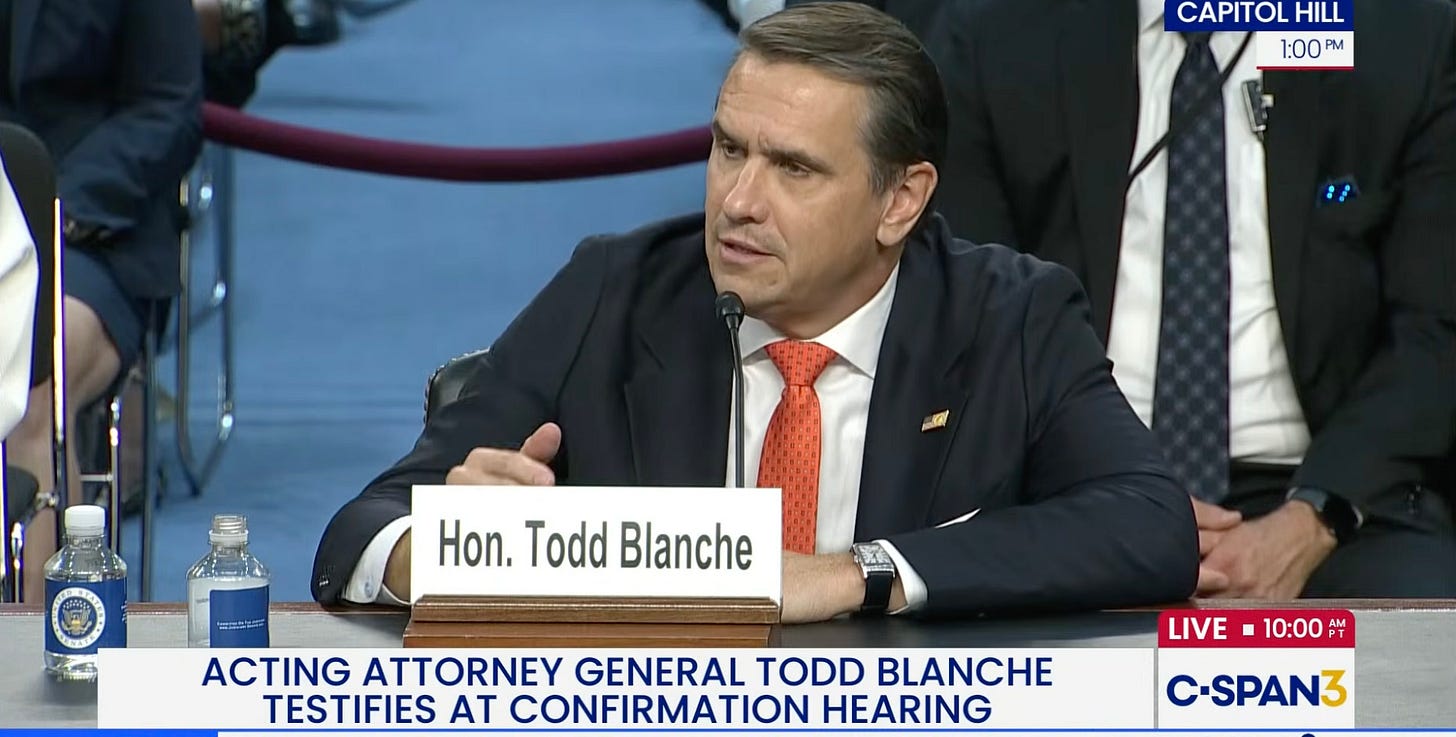
The gist
Todd Blanche’s DOJ nomination is in freefall as bipartisan outrage explodes over secret deals, missing Epstein files, and his deep Trump ties.
What to know
- Senator Lindsey Graham is demanding a special counsel to oversee the DOJ’s Epstein document review, citing a need for true transparency.
- Blanche faces fire for secret meetings with Ghislaine Maxwell, withholding nearly 3 million Epstein files, and refusing to disclose his recusals from Trump-linked cases.
- Epstein survivors and over 1,200 former DOJ officials are blasting Blanche’s dismissive approach and ethical conflicts, stalling his Senate confirmation.
Graham Pushes for Oversight
Senator Lindsey Graham is demanding an independent special counsel to ensure the DOJ’s Epstein probe is free from political interference and to maximize public release of secret files.
Senator Lindsey Graham has been a vocal proponent for appointing a special counsel to oversee the Department of Justice's document review related to the Jeffrey Epstein investigations, aiming to ensure impartiality and extricate the process from current political pressures. He emphasized that while he refrains from pre-judging any wrongdoing, entrusting an independent figure with this task would serve the country by fostering a transparent and unbiased examination. Furthermore, Graham stressed the importance of releasing as many Epstein-related files as possible to the public, balancing transparency with the need to protect victims, thereby restoring public trust through openness and accountability.

Blanche’s Web of Secrecy
Blanche’s secret meetings with Ghislaine Maxwell, selective file releases, and refusal to reveal recusals have ignited accusations of DOJ stonewalling and ethical misconduct.
Under Acting Attorney General Todd Blanche, the DOJ has been embroiled in a web of transparency failures and ethical conflicts surrounding the Epstein investigations. Blanche’s controversial private meetings with Ghislaine Maxwell, including a secretive prison interview granting her limited immunity, coupled with a suspicious prison transfer, have exposed deep cracks in the department’s handling of critical files. Despite identifying over six million potentially responsive pages, the DOJ has released only about 3.5 million, with approximately 47,000 files mysteriously removed from public databases, prompting judicial orders to reduce redactions and an official audit. This pattern of delay, selective disclosure, and resistance to broader transparency demands has fueled allegations that Blanche’s DOJ prioritizes institutional self-protection and shielding powerful individuals over delivering justice to survivors.
Ethical concerns surrounding Blanche’s leadership are compounded by his close ties to former President Donald Trump, raising questions about conflicts of interest in prosecutorial decisions. DOJ ethics officials, including top career lawyer Joseph Tirrell, advised Blanche to recuse himself from Trump-related matters, but Tirrell was subsequently fired amid a reduction in ethics staff, and the department has refused to disclose which cases Blanche recused from. Critics argue that Blanche’s role in shielding Maxwell—and by extension Trump—reflects a troubling politicization of justice, with Blanche accused of abusing his position to protect high-profile figures rather than uphold legal integrity.
The DOJ’s failure to engage transparently with survivors and state-level prosecutors further underscores its ethical shortcomings. New Mexico Attorney General Raúl Torrez has condemned the department’s withholding of unredacted Epstein records, warning that each day of delay erodes the foundation for future prosecutions. Meanwhile, Senator Dick Durbin has highlighted that at least ten survivors who repeatedly requested direct contact with DOJ or FBI officials have been ignored, illustrating a disturbing disregard for victim voices. Blanche’s public minimization of these failures and refusal to personally meet with survivors perpetuate a culture of secrecy and institutional evasion that undermines public trust and accountability.


Confirmation Battle Intensifies
Blanche’s close Trump ties, controversial IRS deal, and bipartisan doubts over his independence have made his Senate confirmation a flashpoint for allegations of political favoritism.
Todd Blanche’s Senate confirmation has become a battleground marked by profound doubts about his independence and ethical fitness to lead the DOJ. His direct transition from serving as Donald Trump’s criminal-defense lawyer to acting Attorney General, coupled with his admission during hearings that he still identifies as Trump’s lawyer, has fueled bipartisan skepticism and raised alarms about conflicts of interest and transparency, especially given the DOJ’s refusal to disclose the full scope of his recusals. This perception is compounded by Blanche’s controversial role in advancing a nearly $1.8 billion IRS settlement designed to shield Trump’s family from audits, a deal overseen by commissioners he appointed and later blocked by a federal judge, which critics argue exemplifies a troubling intertwining of political loyalty and legal authority.
The political fallout from Blanche’s handling of the Jeffrey Epstein investigations has intensified opposition during his confirmation, as allegations of cover-ups, withheld documents, and dismissive treatment of survivors have undermined his credibility. Despite former Attorney General Pam Bondi’s testimony confirming Blanche’s leadership over the Epstein matter and the DOJ’s release of only a fraction of potentially responsive pages, Blanche’s interactions with survivors like Annie Farmer—described as 'abrasive, condescending, and intentionally noncommittal'—have alienated some senators and advocacy groups. This controversy has galvanized a broad coalition of over 1,200 former DOJ employees, the New York City Bar Association, and 101 former judges to publicly oppose his nomination, framing it as a continuation of systemic secrecy and injustice rather than reform.
Blanche’s confirmation process is further complicated by intense GOP dynamics and political negotiations deeply entwined with President Trump’s interests. Senators John Cornyn and Thom Tillis have been locked in fraught discussions over modifying Trump’s slush fund and immunity schemes as conditions for Blanche’s confirmation, with Cornyn lamenting, 'They know what they need to do, but they simply refuse to do it.' Trump’s threats to withdraw Blanche’s nomination and keep him in an acting capacity to preserve these schemes have exacerbated Senate opposition and exposed fractures within the Republican caucus. While some GOP senators have shifted from vocal critics of the Epstein investigations to staunch defenders of Blanche, this retreat has raised questions about their consistency and the nominee’s true independence.

Survivors Slam DOJ’s Conduct
Epstein survivors and legal advocates denounce Blanche’s dismissive attitude, warning that his leadership signals a retreat from accountability and justice for victims.
Epstein survivors have voiced profound frustration and dismay over Acting Attorney General Todd Blanche's dismissive and condescending approach during victim engagement, particularly criticizing a recent meeting they described as 'political theater' designed to secure Senate Judiciary Committee approval rather than offer genuine accountability. Survivors like Annie Farmer have condemned Blanche’s abrasive demeanor and refusal to take responsibility for investigative failures, including his unwillingness to release critical documents related to Epstein’s charging decisions or to commit to probing early reports such as Maria Farmer’s 1996 complaint. This disconnect between Blanche’s public testimony and his treatment of survivors has severely undermined trust and confidence in his leadership.
Legal experts and survivor advocates have raised alarms about Blanche’s impartiality and commitment to justice, highlighting controversial actions such as his prolonged interview with Ghislaine Maxwell—deemed 'repulsive' and 'triggering' by survivors—and his personal prison visit that coincided with Maxwell’s transfer to a low-security camp with privileges. Critics like attorney Brian Sullivan and defense lawyer Ron Kuby warn that Blanche’s confirmation could effectively halt prosecutions of Epstein’s co-conspirators, protecting wealthy enablers and perpetuating a culture of concealment rather than transparency. Survivor advocates Gretchen Carlson and Julie Roginsky express anger at Republican support for Blanche but remain determined to continue the fight for accountability.
Public and survivor reactions also underscore a broader perception that Blanche prioritizes political loyalty and public relations management over pursuing justice, as evidenced by his urging the DOJ to 'move on' from the Epstein files despite millions of unreleased documents and ongoing unanswered questions about Maxwell and others. Critics accuse Blanche of acting more like 'Donald Trump’s personal lawyer' than a defender of survivors, noting his role in managing fallout rather than investigating Epstein’s associates. This pattern of evasiveness and mixed messaging has fueled widespread skepticism about his assurances of transparency and willingness to pursue new suspects, with many calling for his nomination to be rejected to prevent further disservice to survivors and the truth.