Brexit’s revolving door: burnham steps up as UK’s political earthquake fuels calls to rejoin EU
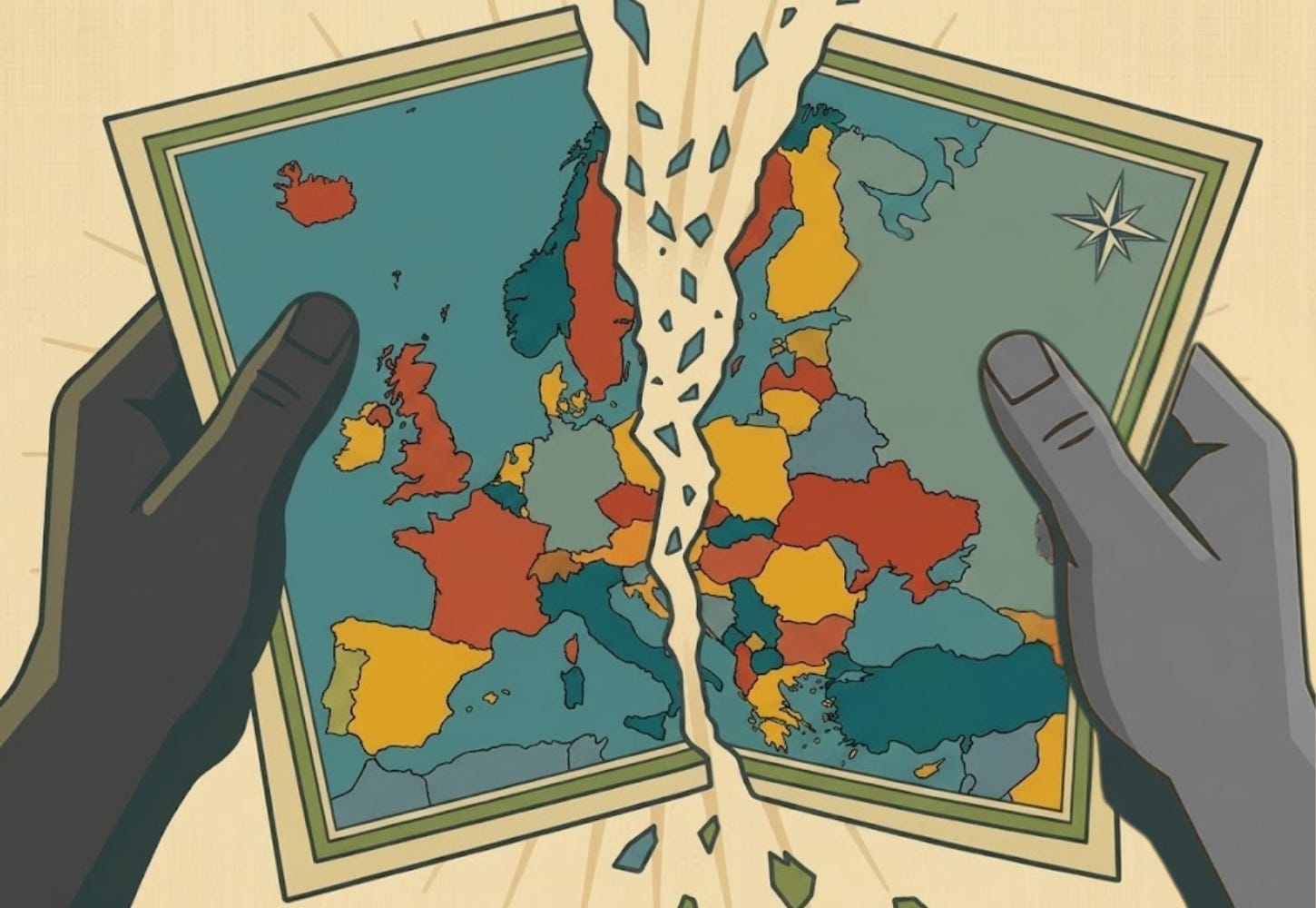
The gist
Britain’s post-Brexit turmoil has thrust Andy Burnham into the spotlight as political chaos, economic stagnation, and surging pro-EU sentiment shake the UK’s foundations.
What to know
- Seven prime ministers have come and gone since the 2016 referendum, with Andy Burnham now poised to take the helm amid deep party fractures.
- Economic fallout from Brexit includes a 4-6% GDP slump, a 12-18% drop in business investment, and a sluggish £2 billion IPO market trailing far behind U.S. tech giants.
- Over 80% of Labour, Lib Dem, and Green voters—and nearly 40% of Conservatives—now support rejoining the EU as the country debates electoral reform and political realignment.
Brexit’s Endless Upheaval
Britain’s post-Brexit decade has been defined by relentless prime ministerial turnover, deepening political chaos, and the collapse of economic stability as trade barriers and nationalist fervor fracture the old order.
Brexit unleashed a decade of unprecedented political turmoil in the UK, marked by the rapid turnover of seven prime ministers, including David Cameron, Theresa May, Boris Johnson, Liz Truss, Rishi Sunak, and most recently Keir Starmer. Cameron’s resignation immediately after the referendum set the tone, while May’s three-year struggle to negotiate exit terms, Johnson’s eventual ousting amid scandals, and Truss’s brief 49-day tenure underscored the deep challenges Brexit posed to governance. As one observer noted, "Prime Ministers come and go — by the time we’ve learned how to pronounce their names... we’re on to the next one," reflecting widespread public dissatisfaction and political instability.
The Brexit vote’s narrow 52%-48% margin not only shocked markets—sending the pound tumbling and leaving every major industry trading in the red—but also fractured British politics along new lines, severely wounding the Conservative Party and destabilizing the traditional two-party system. This upheaval was compounded by the rise of nationalist and anti-globalization sentiments, as predicted decades earlier by figures like Davidson and Rees-Mogg, manifesting in growing hostility to immigration and skepticism toward free trade. Nigel Farage’s populist influence further deepened political divisiveness, contributing to a volatile environment where even Labour’s Keir Starmer ultimately succumbed to leadership pressures.
Brexit’s aftermath not only fractured the political landscape but also disrupted the UK’s previously stable economic environment, ending a period of sustained growth that lasted until 2016. New trade barriers and regulatory burdens have severely impacted traditional UK-EU commerce, with British food exports to Europe declining by about a third and customs delays—such as trucks to Ireland being stopped for 16 hours due to 200 required documents—exacerbating economic and political fragmentation. This economic strain has fed back into the political chaos, making governance even more fraught amid a divided electorate.





Labour’s Leadership Meltdown
Keir Starmer’s lack of vision and internal party rifts left Labour vulnerable to insurgent parties and triggered a leadership crisis, with Andy Burnham’s rise exposing the party’s ideological fault lines.
By early 2026, Keir Starmer's leadership of the Labour Party was marked by a lack of bold economic vision and decisive action, especially on welfare reform, which fueled internal tensions and questions about his effectiveness. Unlike predecessors like Ed Miliband, who championed renewable energy expansion despite skepticism, Starmer struggled to present a coherent strategy, leaving Labour vulnerable to smaller parties such as the Greens and Reform UK under the first-past-the-post system. This strategic ambiguity contributed to Labour's declining vote share and internal instability as the party grappled with threats from emerging political forces.
Starmer’s tenure was further destabilized by deep internal divisions between the party’s centrist leadership, inspired by Tony Blair, and a left-leaning base demanding transformative change. This ideological rift manifested in a vague 2024 manifesto and widespread criticism of Starmer’s lack of political vision, culminating in over 80 Labour MPs calling for his resignation by May 2026. The relaxed leadership removal rules Starmer himself introduced ironically made it easier for opponents to trigger a leadership contest, intensifying factional battles and undermining party unity.
Amid mounting pressure from poor local election results and the rise of Nigel Farage’s Reform UK, Starmer became the most unpopular British Prime Minister since the 1970s, with commentators highlighting his political vulnerability and the party’s broader instability. Potential successors like Andy Burnham and Wes Streeting emerged as focal points for leadership challenges, though Burnham’s appeal was largely personal and lacked a compelling policy alternative, especially given his pro-EU stance which risked alienating reform-leaning constituencies. Despite Starmer’s defiant stance—declaring readiness to face any challenge—the leadership contest reflected Labour’s ongoing struggle to reconcile internal factions and restore public trust.
Ultimately, Starmer’s failure to confront Brexit’s enduring legacy and his centrist approach, focused on ‘better management’ rather than transformative change, alienated core supporters and fueled public disillusionment. While Labour did secure some legislative wins like the Employment Rights and Renters’ Rights Bills, these achievements were overshadowed by persistent internal rebellions and a political strategy chasing an elusive voter base. This disconnect contributed to Labour’s declining popularity and the party’s fracturing identity, underscoring how leadership struggles and ideological divisions have compounded the UK’s post-Brexit political instability.





Populists Break the System
The surge of Reform UK and the Greens has shattered the two-party status quo, exposing the first-past-the-post system’s flaws and fueling urgent calls for proportional representation amid a legitimacy crisis.
By early 2026, the UK's first-past-the-post electoral system is increasingly strained by the rise of populist parties such as Reform UK and the Greens, which have begun to eclipse traditional powerhouses like Labour in key constituencies. This shift has fragmented the once stable two-party landscape, creating political volatility where parties can secure majorities with a surprisingly low share of the popular vote, as evidenced by Labour's 2024 landslide majority despite polling fewer votes than under Jeremy Corbyn. The system's structural vulnerabilities disproportionately amplify populist gains, raising urgent questions about representation and legitimacy.
The surge of Reform UK, which captured over 1,400 council seats and 14 councils with an estimated 26% national vote share in the 2026 local elections, alongside the Greens’ recent by-election victories, underscores deep public dissatisfaction with mainstream parties. This discontent is fueled by economic malaise, regional disparities, and the disruptive influence of social media and AI, driving voters toward populist platforms that, while sometimes lacking comprehensive policies, offer simpler and more appealing messages. Consequently, calls for electoral reform have intensified, with figures like Labour MP Alex Sobel and Greater Manchester Mayor Andy Burnham advocating for proportional representation to better reflect the multiparty reality and restore voter trust.
Mainstream parties, particularly Labour under Prime Minister Sir Keir Starmer, face mounting internal challenges and leadership crises as they grapple with the populist surge. Over 90 Labour MPs have publicly urged Starmer to resign or set a departure timetable to regain credibility and effectively counter Reform UK's rise. Unlike some European populist movements burdened by extremist legacies, Reform UK and the Greens lack such baggage, suggesting that pragmatic engagement and selective cooperation could be a strategic response rather than outright dismissal.
The long-held argument that first-past-the-post ensures political stability is increasingly questioned amid frequent changes in Prime Ministers and unstable governments since Brexit. As Sobel notes, the only recent five-year government under David Cameron was a coalition, which many did not view as stable. This evolving political landscape strengthens the case for electoral reform, with proportional representation seen as a potential path to more balanced governance that better mirrors the UK's complex and fragmented party system.


Economic Malaise Deepens
Brexit’s fallout has hollowed out UK growth, triggered investor flight, and left the country struggling with trade chaos, shrinking investment, and policy blunders that have undermined public services and confidence.
A decade after Brexit, the UK economy has been mired in stagnation and fiscal strain, marked by a 4 to 6% GDP contraction and a 12 to 18% drop in business investment, according to the Bank of England and NBER. This economic malaise is compounded by political instability—with seven prime ministers since 2015 and soaring government borrowing costs reaching levels not seen since 1998—undermining investor confidence and exacerbating currency depreciation against the dollar. The resulting fiscal challenges have forced difficult policy choices, such as welfare cuts proposed by Conservative leader Kemi Badenoch to bolster defense budgets amid geopolitical tensions, reflecting a government grappling with competing priorities and shrinking resources.
Despite possessing strong foundational assets like world-class universities and a robust rule of law, the UK has struggled to capitalize on technological and economic renewal post-Brexit. While US tech giants like OpenAI and SpaceX raised $150 billion in fresh capital last year, the UK’s entire IPO market managed only £2 billion, highlighting a stark disparity in innovation financing. Moreover, policy missteps such as abolishing the non-domiciled tax status prompted an exodus of wealthy individuals, shrinking the tax base critical for funding public services like the NHS, thereby deepening fiscal pressures amid stagnant wages, housing shortages, and rising populism.
Trade disruptions have been a tangible economic consequence of Brexit, exemplified by increased customs delays and costs that have severely impacted British exporters. Iconic retailers like M&S have ceased delivering fresh sandwiches to Paris due to prohibitive certification costs exceeding a million pounds annually, while trucks to Ireland face 16-hour delays with burdensome documentation requirements. This logistical quagmire has contributed to a roughly one-third decline in UK food exports to Europe, further straining sectors reliant on Eastern European labor, as migration flows have reversed with 25,000 Poles returning home amid Poland’s surging 3.5% growth compared to the UK’s 1.1%.
Partial post-Brexit agreements, such as youth mobility schemes and sector-by-sector deals, have delivered only limited economic relief, failing to address core structural issues. Research suggests that rejoining the EU could generate a £92 billion GDP boost, providing much-needed funding for social services, infrastructure, and growth. Analysts argue that signaling a credible intent to pursue EU membership would itself catalyze improved investment decisions, business confidence, and Britain’s international standing, underscoring that incremental arrangements fall short of reversing the economic damage wrought over the past decade.
Rejoin Momentum Accelerates
A decisive shift in public opinion toward rejoining the EU is driven by economic pain and disillusionment with Brexit’s broken promises, cutting across party lines and challenging the government’s patchwork solutions.
By mid-2026, public opinion in the UK has decisively shifted in favor of rejoining the EU, with support transcending traditional party lines—over 80% among Labour, Liberal Democrat, and Green voters, and notably nearly 40% of Conservative voters also in favor. This growing consensus reflects a pragmatic response to tangible economic hardships such as a 6% GDP reduction and a 12-18% drop in business investment since Brexit, rather than the emotive or identity-driven motivations that characterized the original referendum.
Despite 61% backing the government's post-Brexit reset strategy, only a minority feel strongly about it, underscoring widespread dissatisfaction with partial arrangements that fail to address the UK's economic malaise. Analysts suggest that a credible commitment to reinstating EU membership could unlock £92 billion in GDP growth and restore business confidence, signaling that public appetite for rejoining is not merely nostalgic but rooted in a desire for tangible economic recovery.
The decade following Brexit has left British politics fractured and disillusioned, exemplified by Labour Prime Minister Keir Starmer's resignation amid economic stagnation and governmental dysfunction—challenges widely seen as Brexit's legacy. Early Brexit support, driven by nostalgia and opposition to immigration without clear explanations of consequences, has given way to widespread public dissatisfaction as the promises of regained control and economic prosperity have collided with harsh realities.
Burnham Faces a Broken System
As Andy Burnham steps up amid Starmer’s resignation, the UK’s leadership carousel continues against a backdrop of market anxiety, policy drift, and a nation grappling with economic stagnation and political fatigue.
Keir Starmer's resignation in June 2026 marks a pivotal moment in the UK's ongoing political instability, making him the sixth prime minister to fall since the Brexit vote a decade earlier. His departure, driven by mounting pressure within his own Labour Party and widespread dissatisfaction over unresolved issues like immigration, crime, and economic stagnation, underscores a broader crisis of governance. Critics highlight Starmer's failure to confront Brexit's challenges directly and the internal rebellions that eroded his leadership, reflecting a nation grappling with deep political and economic turmoil.
Andy Burnham, former mayor of Greater Manchester and backed by figures like ex-Health Secretary Wes Streeting, has emerged as the frontrunner to succeed Starmer, polling with a commanding 20% lead in the Makerfield contest. While Burnham's left-leaning policy proposals, including full nationalization, resonate with parts of the Labour base, they lack detailed implementation plans, fueling market anxiety. This nervousness has manifested in a sell-off of UK gilts and speculation that fiscal rules may need to be redefined to accommodate his expansive spending agenda, raising concerns about the UK's fiscal discipline amid geopolitical pressures to increase defense budgets.
The rapid succession of prime ministers since Brexit—Liz Truss’s two-month tenure, Rishi Sunak’s nearly two years, and now Starmer’s two years—reflects a pattern of political volatility exacerbated by unresolved economic challenges. The UK faces stagnant growth, with average household incomes reportedly lower than Mississippi’s, and a faltering IPO market that pales in comparison to US tech giants like OpenAI and SpaceX, which raised $150 billion recently compared to the UK's $2 billion. This economic malaise compounds the political instability, leaving markets and allies alike uncertain about the UK’s fiscal direction and governance.
Amid this leadership upheaval, fiscal policy debates have intensified, with Conservative leader Kemi Badenoch and NATO’s Undersecretary for War Elbridge Colby urging cuts to welfare spending to bolster defense budgets in response to rising geopolitical tensions. This pressure adds another layer of complexity to Burnham’s potential premiership, as his expansive social policies clash with calls for austerity in defense, highlighting the profound challenges the UK faces in balancing domestic welfare priorities with international security commitments.
