BYD turbocharges EV future with 10,000 flash chargers in China
The gist
BYD is turbocharging China’s EV future by rolling out 10,000 ultra-fast 1,500 kW chargers in just six months—turning gas stations into electric superhubs almost overnight.
What to know
- BYD has installed 10,000 Flash Charging stations in 325 Chinese cities since March 2026, aiming for 20,000 by year’s end at a pace of 80 new stations daily.
- A powerhouse partnership with Sinopec allows BYD to convert over 30,000 fuel stations into EV charging hubs, slashing infrastructure timelines without building from scratch.
- The new 1,500 kW Flash Chargers—backed by durable Blade 2.0 battery packs—can juice certain EVs from 10% to 70% in just five minutes, all without straining the power grid.
BYD’s Blitz-Scale Expansion
BYD is installing 80 ultra-fast charging stations every day, leveraging rapid deployment and a push into Europe to become a global EV charging powerhouse.
BYD has demonstrated an extraordinary pace in deploying its ultra-high-power 1,500 kW Flash Charging network, installing 10,000 stations across China in under six months since launching the strategy in March 2026. This rapid scale-up marks half of its ambitious goal to reach 20,000 stations by the end of the year, with the network already spanning 325 cities and targeting a mix of 18,000 urban and 2,000 highway chargers. To maintain this momentum, BYD must continue installing approximately 80 stations daily, underscoring an unprecedented deployment speed in the EV infrastructure sector.
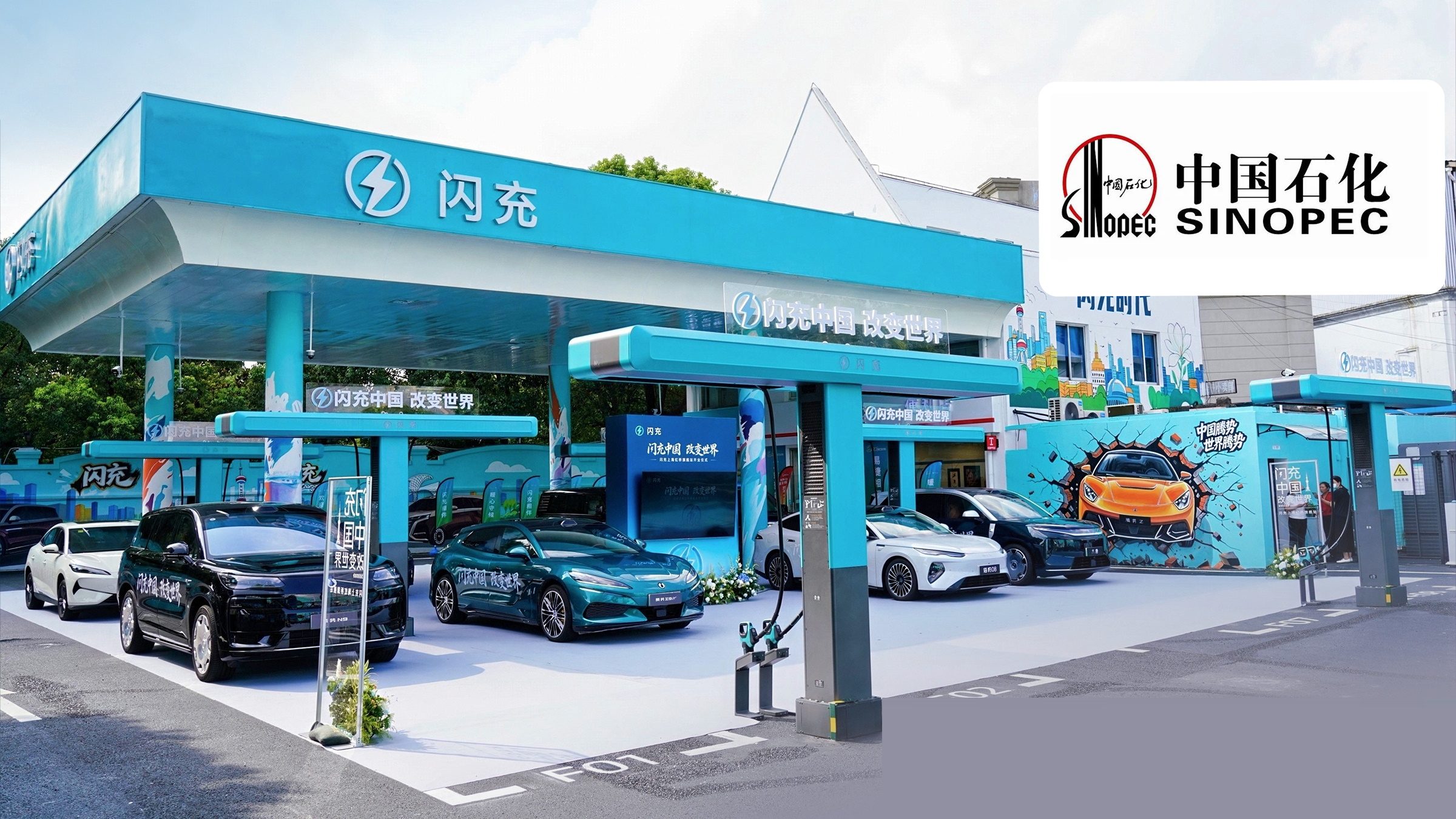
Central to BYD’s swift rollout is its strategic partnership with Sinopec, China’s oil giant operating over 30,000 service stations nationwide. By converting existing fuel forecourts into Flash Charging hubs, BYD leverages Sinopec’s extensive network to accelerate deployment without the need for greenfield sites, exemplified by the first converted station in Shanghai. This alliance not only expedites infrastructure expansion but also signals a transformative shift in energy retail, where legacy gas pumps are rapidly replaced by ultra-fast EV chargers.
Beyond China, BYD is ambitiously scaling its Flash Charging network on a global stage, planning to install 6,000 stations overseas with a significant focus on Europe, where 3,000 chargers are slated for deployment. The international rollout, which began with the opening of the first overseas station in June 2026, highlights BYD’s intent to export its ultra-fast charging technology and infrastructure model, positioning the company as a formidable global player in the EV charging market.
Gas Stations Go Electric
BYD’s partnership with Sinopec is transforming thousands of China’s fuel stations into EV charging hubs, accelerating the shift from gasoline to electricity at record speed.
BYD’s strategic partnership with Sinopec represents a transformative collaboration that repurposes China’s extensive fuel retail infrastructure into ultra-fast EV charging hubs. By gutting traditional gas stations—such as the pioneering Shanghai site where underground gasoline tanks were removed to install BYD’s 1,500 kW Flash Chargers and Blade battery packs—this alliance leverages Sinopec’s 30,000 service stations and 14,000 charging points to accelerate the nationwide rollout of BYD’s charging network, aiming for 20,000 stations by the end of 2026.
Complementing its robust domestic expansion, BYD is aggressively scaling its ultra-high-power Flash Charging technology internationally, with a focused UK rollout of 300 stations targeting motorway service areas, existing charging hubs, and BYD and Denza dealerships. This initiative not only introduces the Denza Z9 GT—the first model in the UK to fully support 1,500 kW charging—but also exemplifies BYD’s broader global strategy to deploy 6,000 overseas stations, including 3,000 across Europe, thereby positioning itself as a dominant player in the international ultra-fast charging market.
Blade Batteries Break Barriers
BYD’s Blade 2.0 batteries enable five-minute ultra-fast charging without grid overload, while rigorous high-speed testing proves minimal degradation—even under extreme conditions.
BYD’s ultra-fast 1,500 kW Flash Charging system leverages second-generation Blade LFP battery packs as energy buffers, allowing the delivery of megawatt-level bursts to vehicles without necessitating costly grid upgrades. Each charging station is equipped with four Blade battery packs holding between 169 and 185 kWh, which draw only about 100 kW from the grid to maintain charge, effectively decoupling peak charging demand from grid capacity and enabling rapid scaling of the network.
The Blade 2.0 battery technology underpins BYD’s ability to achieve remarkable charging speeds, enabling compatible vehicles to charge from 10% to 70% in approximately five minutes and reach up to 97% in just nine minutes, even in cold conditions as low as -30°C. This ultra-fast charging capability, rated up to 1,500 kW on a single connector, positions BYD among the fastest-charging EV brands globally, significantly reducing downtime for drivers.
BYD has rigorously tested the durability of its Blade battery technology under extreme conditions, conducting 350 ultra-fast charging cycles over 18,600 miles at sustained speeds of nearly 150 mph and ambient temperatures reaching 36°C. The Yangwang U7 retained an impressive 98.7% of its battery capacity after this intense regimen, demonstrating that BYD’s battery buffering and thermal management technologies effectively mitigate degradation even under demanding real-world scenarios.
Beyond enhancing charging speed, BYD’s buffered battery system also provides resilience by serving as a backup power source during grid outages, ensuring continuous operation of the flash chargers. This dual functionality not only improves reliability for users but also underscores the system’s innovative integration of energy storage and charging infrastructure to support a robust and scalable ultra-fast charging network.