BYD’s low-cost EV push reshapes auto industry
The gist
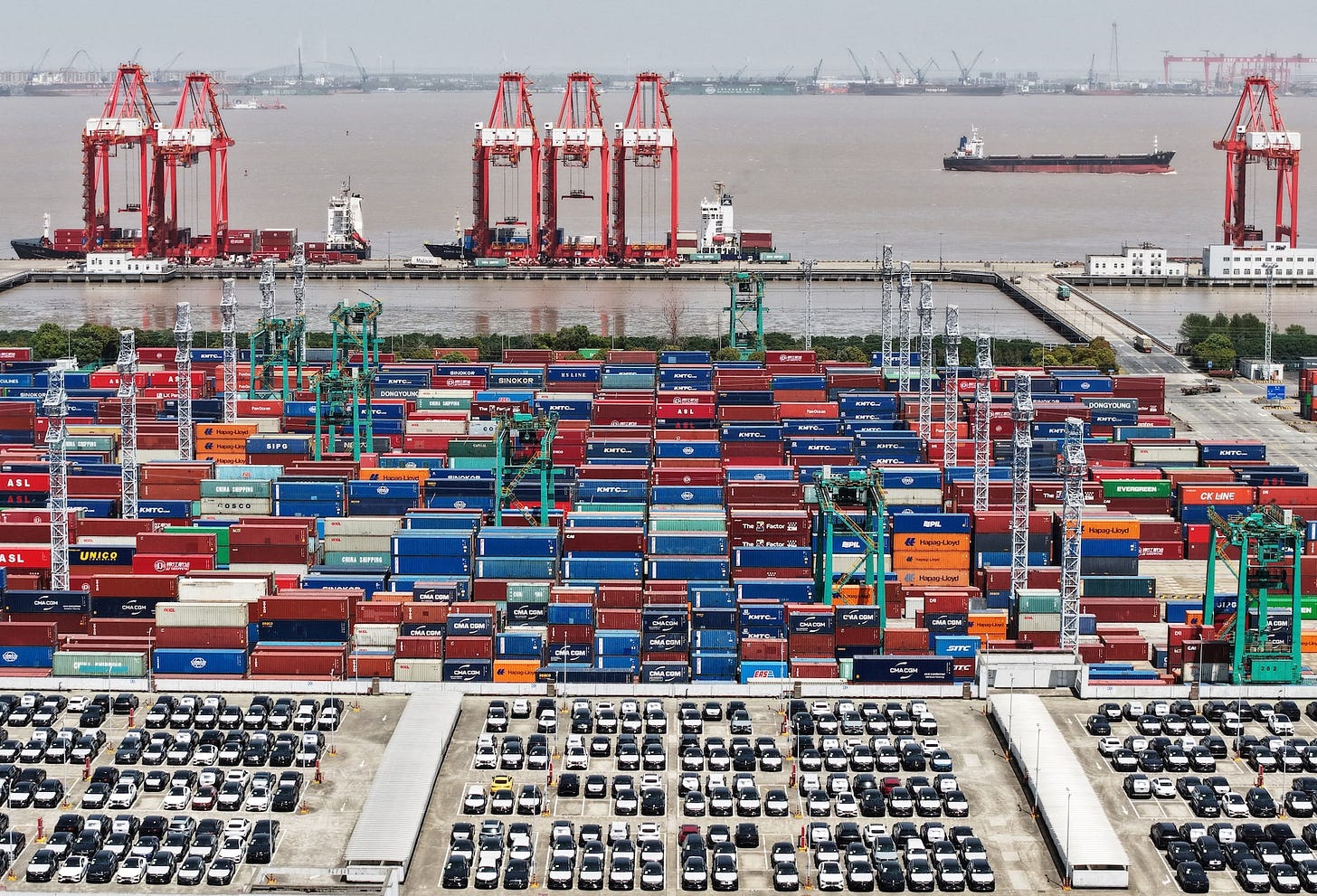
China’s EV makers—led by BYD—are shaking up the global auto industry with ultra-cheap prices, advanced tech, and a vertically integrated supply chain that leaves Western rivals scrambling.
What to know
- Chinese giants like BYD control 75% of their vehicle components and source global raw materials, enabling sub-$10,000 EVs and profit margins that outpace Tesla.
- Aggressive government policies, tech-first leadership, and massive green infrastructure have fueled China’s rapid leap from copycat to EV powerhouse.
- Despite EU and US trade barriers, Chinese EVs and batteries are surging into Europe and North America, pushing Western automakers into layoffs, debt, and a high-stakes race to adapt.
China’s Supply Chain Power
Chinese EV makers like BYD slash costs and outpace Western rivals by tightly controlling their entire supply chain, from raw materials to financing, prioritizing scale over labor productivity.
China’s deep vertical integration and mastery over localized supply chains underpin its durable cost advantages in EV manufacturing, enabling companies like BYD to sharply reduce prices while maintaining higher profit margins than Western rivals such as Tesla. Despite lower labor productivity—where Tesla employees generate six to seven times more revenue than BYD’s—Chinese automakers leverage tighter supply chain control and aggressive supplier-backed financing to drive fundamentally lower operating costs, emphasizing scale and cost efficiency over labor output.
BYD exemplifies China’s vertical integration strategy by controlling roughly 75% of its vehicle components in-house, spanning battery chemistry, raw materials, and semiconductor production. Since 2004, BYD has developed power chips, becoming the second-largest Chinese supplier of IGBT chips with a 22.9% domestic market share by 2022. Strategic partnerships and acquisitions, such as with Chile’s SQM lithium producer and mining rights in Brazil’s 'Lithium Valley,' have fortified BYD’s supply chain resilience, allowing uninterrupted production during global chip shortages that stalled competitors.
China’s comprehensive vertical integration extends beyond individual firms to a national blueprint that fosters numerous regional automotive companies, collectively building an independent supply chain capable of manufacturing EVs without Western reliance. This integration encompasses control over raw materials like steel and critical minerals, enabling ultra low-cost EV production with vehicles sold for under $10,000—30 to 40% cheaper than in Europe or the U.S. While margins remain razor-thin, Chinese manufacturers prioritize volume sales, leveraging their resource-backed, resilient supply chains to dominate global EV markets.
China’s strategic focus on EVs is driven by its lack of natural gas resources and severe pollution challenges, compelling the country to prioritize solar and electric vehicle technologies as sustainable alternatives. This energy imperative reinforces the vertical integration model, as China seeks to secure energy independence and environmental goals simultaneously, ensuring its automotive sector’s supply chain is both cost-effective and aligned with broader national priorities.




Technocrats Fuel EV Revolution
China’s engineering-driven leadership and government-industry alliances have rapidly propelled the nation from industrial laggard to global EV innovator through relentless policy and partnership.
China’s rapid ascent in the electric vehicle sector is deeply rooted in a technocratic leadership imbued with an engineering mindset, which has enabled swift and pragmatic industrial advancements. This culture of innovation is bolstered by the concept of guānxì (關係), fostering tight-knit collaborations between government bodies, manufacturers, and startups that accelerate technological breakthroughs and market responsiveness, as exemplified by the unique access leveraged by Persimmon Systems founders Sharon Chen and Roger Zhang during their factory tours.
Since the early 2000s, China’s strategic industrial policies have prioritized electric vehicles as a national imperative to reduce oil dependence and combat air pollution, embedding EV development into successive Five-Year Plans starting in 2003. This long-term vision was operationalized through robust local government-private sector partnerships, which, between 2009 and 2022, provided substantial state support and incentives that empowered Chinese automakers and startups to leapfrog legacy combustion engine manufacturers by focusing on battery technologies and EV innovation.
Local governments played a pivotal role in China’s EV boom by forging strategic alliances with private firms that circumvented restrictive central regulations, leveraging capital markets, policy loopholes, and post-2008 credit expansions to attract investment and upgrade regional industries. This dynamic shifted dominance away from state-owned enterprises and foreign joint ventures toward agile private manufacturers, enabling rapid market expansion and technological innovation that fueled China’s spectacular EV industry growth after 2015, despite some costly failures.
China’s commitment to building a comprehensive green energy ecosystem—evidenced by massive infrastructure projects such as solar farms larger than Manhattan, extensive high-voltage transmission lines, hydroelectric stations, and the world’s largest nuclear fleet—reflects a strategic integration of energy and transportation policies. These monumental investments, driven by local government-private partnerships, have created an unparalleled industrial foundation that supports the EV sector’s rapid scaling and innovation, underscoring the country’s ability to execute large-scale projects at unprecedented speed.



Global Markets, Chinese Momentum
Chinese EVs are breaking into Western markets with advanced tech and unbeatable prices, forcing governments and automakers to rethink trade barriers and competitive strategies.
By early 2026, Chinese EV manufacturers like BYD, Geely, and Great Wall Motor have aggressively expanded their global footprint despite trade barriers, benefiting from gradually liberalizing markets such as Canada—where tariffs dropped from 100% to 6.1%—and Europe, which is shifting from tariffs to price minimums. This gradual opening, coupled with increasing consumer acceptance, is pressuring Western governments to reconsider protectionist measures often justified by security concerns, as the growing presence of connected Chinese EVs on roads challenges the narrative that these vehicles pose insurmountable risks.
Chinese EV makers are disrupting Western markets much like Japanese and South Korean automakers did decades ago, leveraging competitive pricing, robust government support, and rapid technological advances. BYD exemplifies this trend by selling nearly 80,000 vehicles annually in Mexico—capturing a quarter of the country's EV market—and by offering cutting-edge features such as a $10,000 small EV with a 650-mile range and luxury amenities. Their technological leap was evident at the 2023 China Auto Show, where Western automakers were 'blown away' by the sophistication of Chinese designs and software, signaling a shift from skepticism to serious competition.
BYD is redefining the global EV landscape by integrating advanced autonomous driving hardware, notably its roof-mounted lidar system dubbed 'God's Eye,' into budget vehicles like the $13,000 Seagull EV, which ranked as the fifth best-selling EV worldwide with nearly 450,000 deliveries. This commoditization of premium autonomous tech, enabled by domestic supply chain partnerships such as with SAI Technology, forces Western automakers—who are retreating from deploying Level 3 lidar in luxury models—to reconsider their strategies and potentially rely on Chinese technology to stay competitive, accelerating a global rush to introduce Level 2+ systems.
Chinese EVs are making significant inroads in North America and Europe, despite regulatory hurdles in the U.S. where direct sales remain restricted. Vehicles like BYD and MG are increasingly visible in U.S. border towns via Canada and Mexico, fueling grassroots consumer awareness that could pressure regulators to open the market. Meanwhile, in Europe, Chinese brands have captured a 10% market share for the first time, prompting major disruptions such as Volkswagen's planned 100,000 job cuts and production shutdowns, as well as market share losses for established automakers like BMW and Mercedes-Benz. In Australia, Chinese EVs dominate the top-selling models, underscoring their global reach and the accelerating displacement of internal combustion vehicles worldwide.




Legacy Automakers in Crisis
Western car giants underestimated Chinese innovation and are now losing ground, facing layoffs, shrinking profits, and exclusion from key growth markets.
Western and legacy automakers have long underestimated the rapid advancements of Chinese EV firms, a miscalculation that has cost them significant market share globally. Once dismissed as inferior at Detroit auto shows in the 2000s, Chinese companies like BYD and Geely now dominate emerging markets such as Mexico, where BYD alone sells nearly 80,000 vehicles annually, capturing a quarter of the market. Meanwhile, Western automakers face exclusion from key markets like the U.S., where Chinese EV imports remain effectively banned, further complicating their competitive positioning.
Chinese EV manufacturers leverage deeply integrated supply chains and robust government-backed investments to accelerate innovation and scale, enabling them to offer advanced technologies at unmatched price points. BYD’s Seagull EV, equipped with Level 2+ autonomous driving hardware including a roof-mounted lidar system for as low as $13,000, exemplifies this disruptive approach, challenging Western OEMs who struggle to match these costs and often must source technology from China despite geopolitical tensions. This dynamic validates Tesla’s strategy of broad Level 2+ deployment and forces Western firms into a costly race to catch up without incurring the liabilities of Level 3 systems.
The operational and financial toll on Western legacy automakers has been severe, particularly in Europe and China, where companies like Volkswagen face historic challenges including plant closures and plans to cut up to 100,000 jobs by 2030. German automakers’ sales in China plunged 30-41% in Q2 2023, eroding profits and forcing drastic strategic shifts such as Volkswagen halving its model lineup. Similarly, Honda recorded its first loss since the 1950s, while Nissan and Stellantis teeter on the brink of joint ventures or acquisitions by Chinese firms, underscoring a profound industry upheaval driven by Chinese competition.
Beyond automakers themselves, German auto suppliers like ZF, Continental, and Schaeffler are grappling with rising debt burdens and operational inefficiencies that exacerbate their vulnerability amid the EV transition. With interest expenses surpassing operating earnings and equity ratios lower than competitors, these suppliers face a widening cost gap against leaner, more efficient Chinese counterparts who have aggressively cut overhead and manufacturing costs since 2019. This financial strain threatens the broader European automotive ecosystem’s ability to compete in a market increasingly dominated by Chinese innovation and scale.

Tariffs Can’t Stop China’s Rise
Even as the West imposes tariffs and trade barriers, China’s EV juggernaut exploits regulatory gaps and cost advantages to dominate global markets and challenge Western industrial policy.
China’s strategic dominance in the global EV market is underpinned by its aggressive use of targeted subsidies, massive R&D investments, and control over critical raw materials, enabling it to outcompete Western manufacturers despite fragmented regulatory responses. While European governments and industry players express concern over China’s subsidy-driven model and its WTO rule exploitation—which has contributed to significant industrial job losses in Europe and a shift in global power—there remains no unified Western front to impose tougher countermeasures, leaving China’s structural advantages largely unchallenged.
EU tariffs on Chinese electric vehicles have reshaped production and trade flows but have not halted China’s expansion in Europe. Western automakers like Tesla, BMW, and Volvo have responded by relocating manufacturing from China to Europe, reducing imports of China-made EVs, while Chinese firms such as BYD and Geely have countered by increasing local production and focusing on plug-in hybrids to maintain competitive pricing. Despite tariffs of up to 35%, Chinese EVs remain about 21% cheaper than European-made vehicles, sustaining their market appeal and enabling brands like BYD to more than double their EU battery-electric vehicle imports between 2024 and 2026.
Chinese EVs are circumventing US trade barriers through indirect routes, entering American markets via Canada and Mexico despite a prohibitive 100% tariff, which is gradually raising consumer awareness and increasing pressure on US regulators to reconsider direct sales restrictions. This informal market penetration strategy highlights the limitations of tariff-based protectionism and underscores the growing influence of Chinese EV brands in Western markets beyond Europe.
The surge in Chinese battery imports into the EU—growing sevenfold from 2020 to 2025 and facing virtually no tariffs—poses a significant challenge to European battery producers and the broader EV supply chain. Calls to impose a 20% tariff on batteries aim to bolster domestic manufacturing, as such a tariff would only marginally increase EU-made BEV prices by 2.8%. Meanwhile, European automakers are slowing their EV efforts amid pressures to relax CO2 targets, potentially ceding further market share to financially robust Chinese manufacturers accelerating local production, which could double Chinese EV market share in Europe by 2035 under weaker regulations.


A New Global Auto Order
China’s vertically integrated EV ecosystem and supplier dominance are forcing Western automakers to restructure, collaborate locally, and confront a seismic industry power shift.
China’s comprehensive vertical integration—spanning steel, batteries, and critical minerals—has established a structurally advantaged EV supply chain that contrasts sharply with Western outsourcing models. This strategy, driven by resource availability and geopolitical considerations such as limited natural gas reserves, enables China to pursue self-sufficiency through regional automotive companies, reducing reliance on Western automakers like Chrysler and signaling a profound market realignment within the global automotive industry.
The rise of China’s integrated industrial ecosystem, which encompasses battery materials, power electronics, software, and digital cockpits, challenges traditional automakers like Volkswagen to rethink their strategies beyond mere cost-cutting. Volkswagen’s 'In China, for China' approach—emphasizing local sourcing and collaboration with Chinese tech firms—reflects a shift toward bilateral knowledge exchange and a diminished role for German headquarters, underscoring the need to adapt to shorter product cycles and intense domestic price competition.
While Chinese automotive suppliers have surged, dominating the 2025 suppliers list and driving global supply chain momentum, the broader industry remains cautiously stable with legacy players maintaining their positions amid flat revenue growth in North America and Europe. This reflects a strategic pause as Western companies grapple with uncertainty and seek long-term clarity in an evolving market increasingly shaped by China’s structural edge.
German auto suppliers face mounting financial strain as China’s cost and efficiency advantages widen, with interest expenses surpassing operating earnings and equity ratios declining for firms like ZF, Continental, and Schaeffler. This growing debt burden and overhead contrast starkly with Chinese suppliers’ streamlined operations, exposing supply chain vulnerabilities and heightening risks of further market realignments amid the ongoing EV transition and tariff pressures.