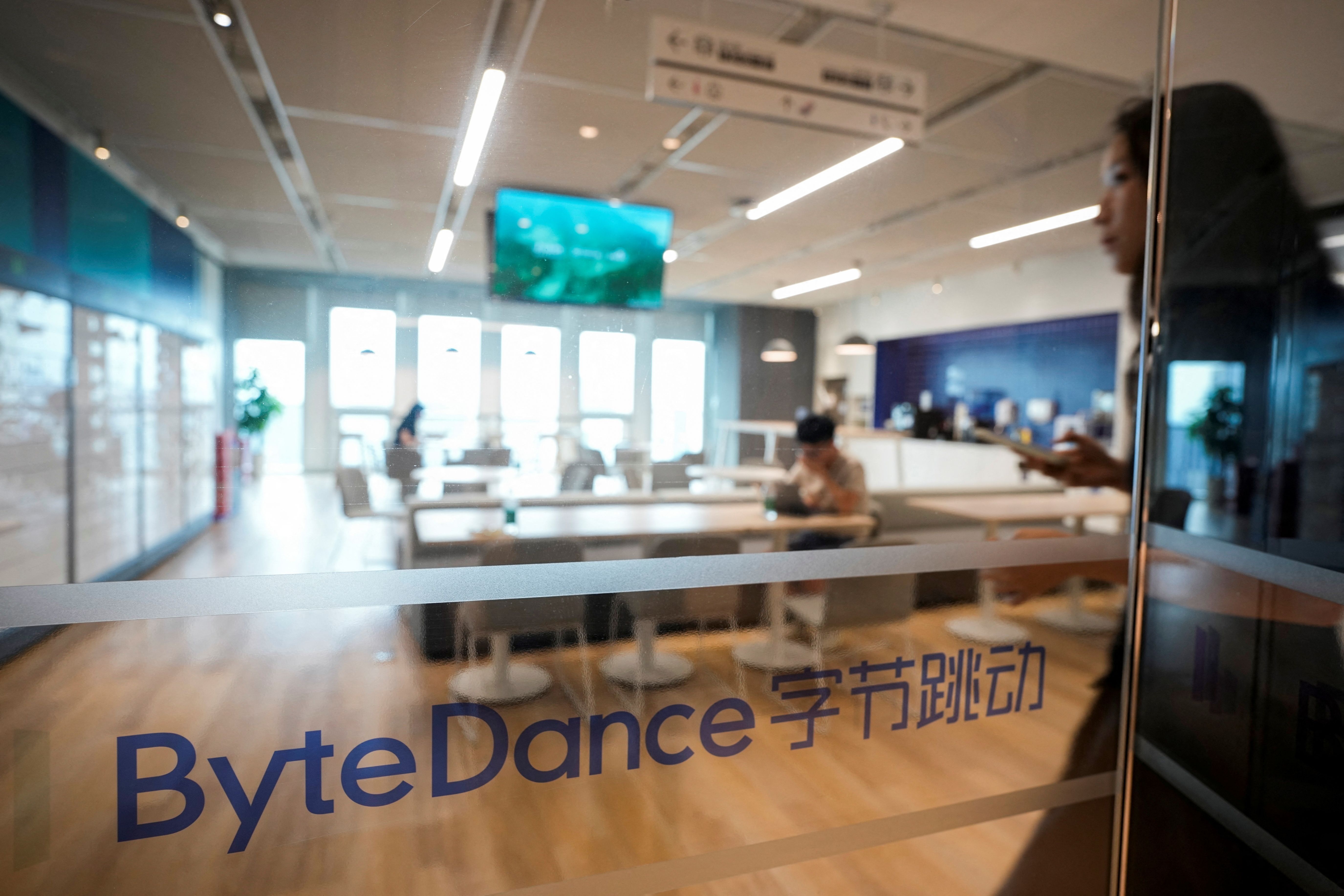
ByteDance, alibaba double down on unified AI office platforms
The gist
China's tech titans are ditching freebie AI for unified, paid office platforms—turning workplace AI into their next cash cow.
What to know
- ByteDance, Alibaba, and Tencent have consolidated fragmented AI teams and tools into integrated enterprise ecosystems with tiered subscriptions, launching platforms like Doubao Work and Qwen Office by mid-2026.
- ByteDance’s SeedRealtime slashed audio-visual latency by 50% for over 200 million daily users, while Alibaba’s Qwen Office unified multiple AI agents for real-time task management.
- With over 1,000 staff dedicated to data and security, ByteDance is investing tens of millions in long-term R&D, aiming for AI models surpassing 5 trillion parameters to rival global productivity giants.
From Freebies to Profit
Chinese tech giants abandoned unsustainable free AI giveaways to chase Silicon Valley-style tiered pricing, marking a pivotal shift toward enterprise-focused revenue.
In the early stages of AI development, Chinese tech giants like ByteDance, Alibaba, and Tencent prioritized rapid market share acquisition by offering free AI products, often at the expense of profitability. This fragmented approach reflected a broader strategy to capture consumer attention and build user bases quickly rather than focusing on sustainable revenue models.
By mid-2026, a strategic pivot emerged as these companies recognized the need for profitable enterprise AI revenue streams, prompting a shift from consumer giveaways to tiered pricing models akin to those popularized in Silicon Valley. ByteDance exemplified this transition by restructuring to integrate its workplace tool with its AI chatbot Doubao, signaling early consolidation efforts aimed at strengthening its leadership in China’s AI revenue landscape.

Unified AI Ecosystem Race
ByteDance, Alibaba, and Tencent dismantled internal silos to forge integrated AI office platforms, ending the era of fragmented 'horse racing' and prioritizing organizational efficiency.
By mid-2026, leading Chinese tech giants like ByteDance, Alibaba, and Tencent undertook significant organizational consolidations to unify their fragmented AI teams and platforms into cohesive enterprise AI ecosystems. ByteDance merged Feishu’s product team with Doubao and aligned marketing with Volcano Engine to form a three-layer architecture where Volcano Engine provides infrastructure, Doubao delivers AI models and user entry, and Feishu focuses on office scenarios and enterprise channels. Similarly, Alibaba integrated its AI products QoderWork, Wukong, and MuleRun into the unified Qwen Office platform under the Alibaba Token Hub, signaling a strategic shift from standalone AI tools to integrated ecosystems designed for scalable enterprise deployment. Tencent also consolidated resources by merging QClaw into its 6th Cloud Product Division to bolster its office AI agent, WorkBuddy, reflecting a broader industry move toward unified AI platforms.
This wave of consolidation marks a deliberate transition from a 'horse racing' approach—where multiple teams independently trialed AI solutions—to a 'joint force' model emphasizing organizational efficiency and commercial viability. ByteDance’s appointment of Zhao Qi to lead the merged Doubao and Feishu product teams exemplifies this shift, fostering tighter R&D collaboration and streamlined enterprise customer service. Alibaba’s elevation of the Qwen Office Business Unit to a first-level group under ATH further underscores the prioritization of integrated AI office products that combine models, desktop execution, data, permissions, and commercialization into unified offerings. Tencent’s resource concentration on WorkBuddy similarly demonstrates the strategic focus on scalable, commercially viable AI office agents.
ByteDance’s consolidation culminated in the August 2026 launch of Doubao Work, a standalone AI office product deeply integrated with Feishu that autonomously manages complex workflows by leveraging enterprise knowledge within permission boundaries. This integration enables secure collaboration and knowledge reuse across the enterprise, positioning Doubao as a future 'pillar business' alongside Douyin, as articulated by CEO Liang Rubo. The folding of AI coding platform Trae and agent-building tool Coze into Doubao further centralized AI product efforts, enhancing ByteDance’s competitive stance against Tencent’s dominant WorkBuddy in the office software market. This reflects a broader industry trend where major players consolidate smaller AI tools into unified platforms to create scalable, enterprise-ready AI ecosystems.
AI Tools Become Platforms
Alibaba and ByteDance transformed standalone AI agents into unified, enterprise-grade platforms, while Tencent doubled down on specialized, competing agents for diverse business needs.
Alibaba’s rapid consolidation of its AI offerings into the Qwen Office platform marks a strategic evolution from standalone AI agents to a unified enterprise system that seamlessly integrates models, execution, data, permissions, and commercialization. Launched in public beta by August 2026, Qwen Office combines the capabilities of QoderWork, Wukong, and MuleRun into a single autonomous task management and real-time interaction platform, reflecting a higher organizational prioritization of integrated AI solutions within enterprise workflows.
ByteDance’s SeedRealtime represents a significant leap in multimodal AI technology, delivering full-duplex real-time processing of audio, video, and text that enhances conversational fluency by 12% and halves audio-visual latency issues. Integrated into the Doubao app with over 200 million daily users by August 2026, SeedRealtime’s unified architecture adeptly manages conversational timing and context while filtering background noise and resolving ambiguities, enabling smoother, more natural interactions at scale.
Tencent’s development of a reusable Agent execution framework, exemplified by the evolution from CodeBuddy to WorkBuddy, showcases a flexible and efficient approach to AI agent creation that supports rapid deployment across diverse scenarios from programming to office tasks. Unlike Alibaba and ByteDance’s centralized AI platforms, Tencent embraces a 'horse racing' model where multiple specialized agents like WorkBuddy, CodeBuddy, QClaw, and Marvis coexist and compete, targeting distinct task domains and reflecting a decentralized strategy for AI enterprise transformation.
By mid-2026, ByteDance’s formation of a dedicated AI Data & Security unit under Adam Wang underscores its commitment to a long-term, proprietary R&D strategy dubbed 'no distillation,' prioritizing high-quality, large-scale data resources as the foundation for advancing large language models. With budgets exceeding tens of millions of dollars and data evaluation teams surpassing 1,000 members, ByteDance is investing heavily in cross-modal data services and foundational model training, embracing delayed gratification to solidify its AI capabilities for sustained enterprise impact.
Enterprise Monetization Pivot
China’s tech leaders ditched consumer AI distractions to build subscription-driven productivity suites, mirroring Microsoft’s enterprise playbook and intensifying competition for office dominance.
By mid-2026, leading Chinese tech giants like ByteDance, Alibaba, and Tencent have decisively shifted from competing over consumer-end AI applications to focusing on enterprise productivity tools, aiming for sustainable monetization through AI-driven office solutions. This strategic pivot is exemplified by ByteDance's consolidation of its AI products—such as folding its coding platform TRAE and agent tool Coze into the Doubao system—and Alibaba's rapid integration of its Wukong platform into the unified Qwen Office, signaling a move away from fragmented offerings toward comprehensive enterprise AI ecosystems.
This evolution is marked by the adoption of tiered subscription pricing models and unified go-to-market strategies that mirror Silicon Valley's commercialization playbook, as seen in ByteDance’s Doubao Work platform which offers a free basic tier alongside paid subscriptions to capture a broad enterprise user base. The launch of Doubao Work in August 2026, positioned to challenge Tencent’s WorkBuddy, underscores a deliberate shift toward monetizing AI-enhanced office productivity with scalable, subscription-based revenue streams, reflecting lessons from Microsoft 365 Copilot’s success with over 30 million paid seats globally.
Beyond pricing, the industry’s rapid consolidation of AI office tools into integrated platforms highlights a maturation from merely building AI Agents to delivering seamless enterprise solutions that unify models, desktop execution, data permissions, and commercialization capabilities. ByteDance’s creation of a three-layer architecture—Volcano Engine for infrastructure, Doubao for model capabilities, and Feishu for office scenarios—alongside Alibaba’s Qwen Office integration, illustrates a coordinated effort to enhance organizational efficiency and customer service by connecting R&D, marketing, sales, and support under unified management.
The timing of these strategic shifts around mid-2026 reflects a broader industry consensus that sustainable monetization in AI lies in enterprise productivity rather than consumer-facing 'horse racing.' ByteDance’s CEO Liang Rubo’s emphasis on building Doubao as a 'pillar business' with a 'thick trunk' strategy encapsulates this long-term vision, focusing on core AI and productivity services to drive scale and optimization. This unified deployment approach contrasts sharply with earlier fragmented efforts, positioning Chinese tech giants to effectively compete with established players like Microsoft and Claude Code, whose $2.5 billion ARR by early 2026 demonstrated the lucrative potential of AI-assisted office tools.
Diverging Paths: Super-App vs. Agent Factory
ByteDance and Alibaba centralized AI under unified super-apps, while Tencent’s multi-agent 'factory' approach bets on rapid, specialized agent deployment for market flexibility.
By mid-2026, China's leading tech giants are distinctly diverging in their AI enterprise strategies, reflecting a broader industry shift from fragmented 'horse racing' models toward more integrated, unified platforms. ByteDance exemplifies this evolution by consolidating its AI assets—Feishu, Doubao, and Volcano Engine—into a streamlined three-layer architecture, enhancing synergy between infrastructure, model capabilities, and user-facing office scenarios under Zhao Qi’s leadership. Similarly, Alibaba and Tencent have initiated organizational consolidations, merging disparate AI teams and products into centralized units like Alibaba’s Qianwen Office and Tencent’s 6th Cloud Product Division, aiming to boost R&D efficiency and commercial execution in enterprise AI solutions.
Despite this industry-wide trend toward unification, Tencent maintains a distinctive 'horse racing' multiple-agent approach, developing a portfolio of specialized AI agents such as WorkBuddy, CodeBuddy, QClaw, and Marvis that cater to diverse scenarios from software development to operating system interactions. This strategy leverages a common execution framework originating from CodeBuddy, enabling rapid agent creation and migration across domains, effectively operating as an 'agent factory' rather than consolidating into a single super-app. This contrasts sharply with ByteDance and Alibaba’s focus on centralizing AI capabilities into unified platforms to streamline product boundaries and optimize resource allocation.
ByteDance’s aggressive consolidation under the Doubao brand, merging teams behind its Trae coding platform, Coze agent-building tool, and Lark workplace software, signals a direct challenge to Tencent’s dominant WorkBuddy, which commanded 21 million monthly visits as of June 2026. By unifying its AI tools into a ChatGPT-style super-app, ByteDance aims to streamline resources and product offerings, employing a tiered subscription model that retains a free basic tier—an approach that contrasts with Baidu’s abandonment of free tiers for Ernie Bot. This strategic positioning underscores ByteDance’s ambition to capture enterprise AI market share by balancing accessibility with monetization, setting the stage for intensified competition with Tencent’s entrenched multi-agent ecosystem.
Data, Scale, and Long-Term Bets
ByteDance is pouring resources into proprietary data and mega-scale models, prioritizing patient, fundamental R&D over shortcuts to reshape the future of enterprise AI.
ByteDance's creation of the AI Data & Security department in mid-2026, consolidating over 1,000 staff across data evaluation and business teams, underscores a strategic elevation of proprietary data as the cornerstone of its AI enterprise transformation. By investing tens of millions of dollars into training foundation and coding models and supporting each algorithm engineer with a dedicated data team, ByteDance is setting an unprecedented standard in China’s tech industry for leveraging proprietary data to fundamentally reshape enterprise workflows and collaboration.
Reaffirming founder Zhang Yiming's 'no distillation' strategy, ByteDance is committed to long-term, independent R&D over short-term shortcuts, even accepting temporary lagging behind competitors. Zhang’s emphasis on 'long-termism and delayed gratification,' echoed by CEO Liang Rubo’s focus on solidifying fundamentals and enduring short-term setbacks, signals a deliberate shift from rapid gains to sustainable innovation, ensuring robust AI capabilities that can transform enterprise operations at scale.
Looking ahead, ByteDance is pushing the envelope by planning AI models exceeding 5 trillion parameters, potentially the largest in China, while merging product teams like Feishu and Doubao to accelerate the commercialization of desktop AI agents. This evolution reflects a broader industry trend toward organizational agility and the deployment of sophisticated AI agents designed to revolutionize enterprise workflows and collaboration, moving beyond incremental improvements to systemic transformation.