Castelion’s $1b bet: mass-market hypersonic missiles take off
The gist
Castelion just scored a $1 billion war chest to mass-produce affordable hypersonic missiles, aiming to shake up the defense industry’s status quo.
What to know
- A $1B Series C round launches Castelion’s valuation to $13B, fueling mass production of Blackbeard hypersonic missiles at its massive New Mexico facility starting next year.
- Inspired by SpaceX, Castelion is betting big on vertically integrated, cost-first manufacturing to deliver high-capability missiles at scale—and on budget.
- The US Navy’s $90M contract puts Blackbeard on track for F/A-18E/F Super Hornets by 2028, with export options and future F-35 integration in the pipeline.
Scaling Hypersonics, Not Hype
Castelion’s billion-dollar funding surge is about building a missile factory, not just a missile—backed by a powerhouse investor lineup betting on mass production over moonshots.
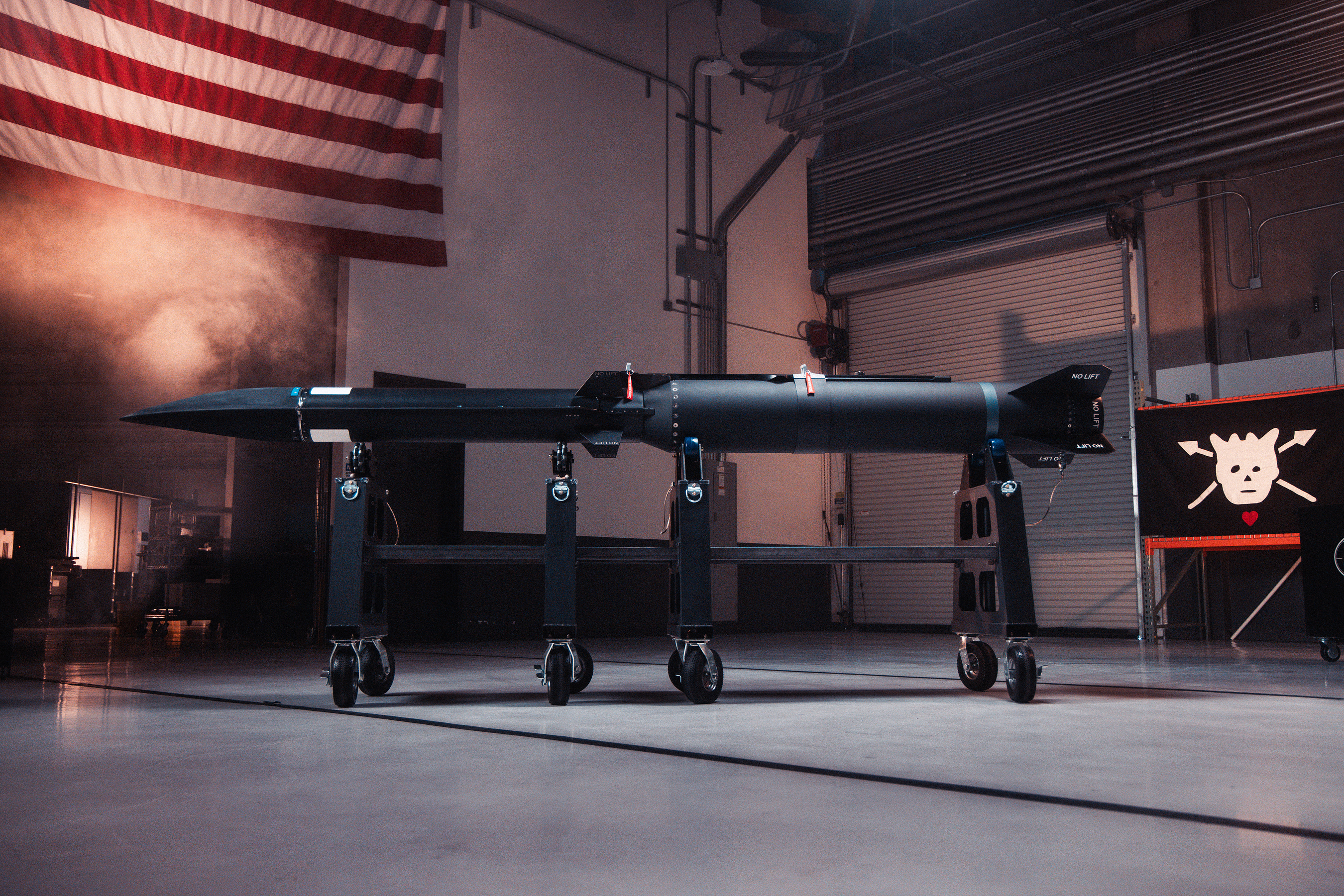
Castelion's recent $1 billion Series C funding round, which combines $800 million in equity with $250 million in revolving credit, has propelled the company to a $13 billion valuation and is explicitly aimed at scaling mass production of its Blackbeard hypersonic missile. This infusion of capital is designed to accelerate the transition from development to high-volume manufacturing, with production ramping up as early as next year at the company’s expansive 1,000-acre Project Ranger facility in New Mexico.
The investor consortium backing Castelion blends early-stage hardware expertise and seasoned financial acumen, featuring Andreessen Horowitz—an early and consistent supporter—alongside JP Morgan and Carlyle, whose deep aerospace and defense private equity experience signals confidence in Castelion’s maturity and path to cash flow generation. This diverse mix underscores a strategic balance between technological innovation and financial discipline as the company prepares for public market readiness.
Castelion’s strategic focus diverges from traditional hypersonic missile development by prioritizing the mass production of a lower-cost weapon, emphasizing manufacturing thousands of Blackbeard units rather than just perfecting a single prototype. As company leadership stresses, the core engineering challenge lies not in making one missile but in scaling production to meet volume demands, a philosophy that underpins their aggressive push to establish Blackbeard as a cost-effective hypersonic strike weapon with potential expansion into precision strike and defensive missile systems.
The Series C funding is not merely about closing out Blackbeard’s development but about hitting 'maximum speed' on production scale-up, signaling Castelion’s commitment to rapid operational deployment and financial sustainability. This approach aims to deliver a strong business maturity signal to public markets by achieving cash flow generation through volume manufacturing, positioning Blackbeard as a disruptive force in hypersonic weapons by 2028.


SpaceX DNA in Missile Making
Castelion is rewriting the hypersonic playbook by fusing SpaceX-style vertical integration with a relentless focus on affordable, high-volume manufacturing to disrupt defense industry norms.
Castelion’s manufacturing philosophy is a direct evolution of the cost-first, vertically integrated approach pioneered at SpaceX, where the founder witnessed firsthand how rethinking engineering and supply chains could dramatically slash expenses. By aggressively internalizing production processes and focusing on removing cost drivers, Castelion challenges the traditional notion that hypersonic missiles must be prohibitively expensive, opening the door to scalable, affordable mass production.
This strategic pivot from crafting exquisite, low-volume weaponry to delivering high-capability missiles at scale aligns with shifting government priorities favoring quantity without sacrificing performance. As the founder articulates, meeting the demand for mass-produced, cost-effective hypersonic weapons is not just a business model but a national security imperative, especially given concerns about America’s eroded defense industrial base amid decades of outsourcing and consolidation.


Navy’s Bet on Blackbeard
The Navy’s $90 million contract fast-tracks Blackbeard from prototype to operational weapon, signaling a shift toward mass-produced hypersonics that fit seamlessly onto today’s carrier fighters and tomorrow’s F-35s.
The US Navy's $90 million contract awarded to Castelion marks a pivotal milestone in advancing the Blackbeard hypersonic missile toward Early Operational Capability by 2028, underscoring the service's commitment to integrating this weapon into frontline carrier air wings. Prioritized for deployment on the F/A-18E/F Super Hornet, Blackbeard enhances rapid-response, standoff strike capabilities, reflecting a strategic shift toward equipping tactical fighters with hypersonic precision weapons to complicate adversary defenses.
This contract not only funds critical engineering, logistics, and manufacturing efforts for 50 Early Operational Capability missiles but also supports design modifications to accelerate exportability to allied partners, signaling Blackbeard's broader role in coalition defense. The Navy’s focus on system safety, airworthiness certification, and carrier suitability through hardware and software integration efforts demonstrates a comprehensive approach to transitioning Blackbeard from development and testing phases into a fully operational Navy Program of Record.
Blackbeard’s design philosophy as a low-cost, mass-producible hypersonic weapon aligns with the Navy’s Multi-mission Affordable Capacity Effector program, aiming to provide magazine-depth strike capability that supplements existing long-range systems. Its compact size enables integration not only on the Super Hornet but also future internal carriage on F-35A/C platforms, enhancing survivability and distributed strike options across carrier air wings and reflecting a transformative approach to hypersonic weapons deployment.