Ceasefire on life support: US-Iran truce unravels as pakistan’s mediation stalls
The gist
The US-Iran ceasefire is on the brink as Pakistan’s high-stakes mediation falters, proxy attacks surge, and diplomatic deadlock deepens.
What to know
- The April 2026 truce between the US, Israel, and Iran quickly unraveled amid conflicting terms, persistent attacks on Gulf oil facilities, and fierce disputes over the Strait of Hormuz.
- Pakistan’s bold bid as mediator earned global attention but hit a wall as talks stalled, with Iran and the US trading blame and refusing to budge on blockades and security demands.
- By mid-May, renewed violence—including Gulf Arab strikes on Iran and Trump’s incendiary rhetoric—left the ceasefire on life support and the peace process in tatters.
Truce Terms in Disarray
Conflicting interpretations and ongoing attacks exposed the ceasefire as a patchwork of unresolved disputes and mutual distrust, with each side effectively fighting under its own rules.
The ceasefire declared in early April 2026 between the U.S., Israel, and Iran was immediately mired in contradictions and ambiguities, with each party offering conflicting accounts of the terms and implementation. Iran’s insistence on military coordination and tolls for ships passing through the Strait of Hormuz, as stated by its foreign minister and Iranian media, underscored unresolved sovereignty disputes that complicated the truce's operationalization. These ambiguities were compounded by divergent interpretations of the ceasefire's geographic scope, notably Pakistan’s claim that it applied to Lebanon, which Israel vehemently denied while intensifying attacks there, highlighting the fragile and contested nature of the agreement.
Despite the ceasefire’s formal declaration, hostilities persisted within the first 12 hours, including strikes on oil facilities across Iran, Saudi Arabia, the UAE, and Kuwait, undermining the peace process and prompting warnings from Pakistan’s prime minister about the erosion of the truce’s spirit. This pattern of ongoing attacks extended into May, with drone strikes attributed to Iran targeting Gulf Arab nations and U.S. blockades and strikes on Iranian ports and oil tankers, provoking Iranian threats of heavy retaliation. Such military actions underscored the ceasefire’s tenuous hold amid unresolved strategic disputes, particularly over Iran’s nuclear program and control of vital maritime routes.
Negotiations slated to begin in Islamabad in early April faced immediate hurdles due to contradictory statements from all parties regarding the negotiation framework and core issues, reflecting deep mistrust and divergent objectives. Iran, through Pakistani mediators, sought a permanent end to hostilities on all fronts, including Lebanon and maritime security, but the U.S. swiftly rejected this proposal as 'totally unacceptable,' signaling a fundamental impasse. The talks struggled to reconcile competing demands over sanctions relief, nuclear commitments, and phased reopening of the Strait of Hormuz, with both sides effectively announcing different deals—illustrating the fragile ceasefire’s precarious foundation.
The ceasefire’s fragility was further exacerbated by Iran’s assertive territorial claims over the Strait of Hormuz, where it published a map extending regulatory control deep into UAE and Omani waters, provoking a joint warning from five Gulf states to the International Maritime Organization against compliance. This expansionist posture not only intensified regional tensions but also revealed parallel conflicts undermining the peace talks, as control over this strategic chokepoint remained a core unresolved issue threatening the truce’s durability.



Pakistan’s Diplomatic Tightrope
Pakistan’s emergence as a peace broker is complicated by its sectarian divisions, regional alliances, and newfound international recognition—all while it walks a perilous line between rivals.
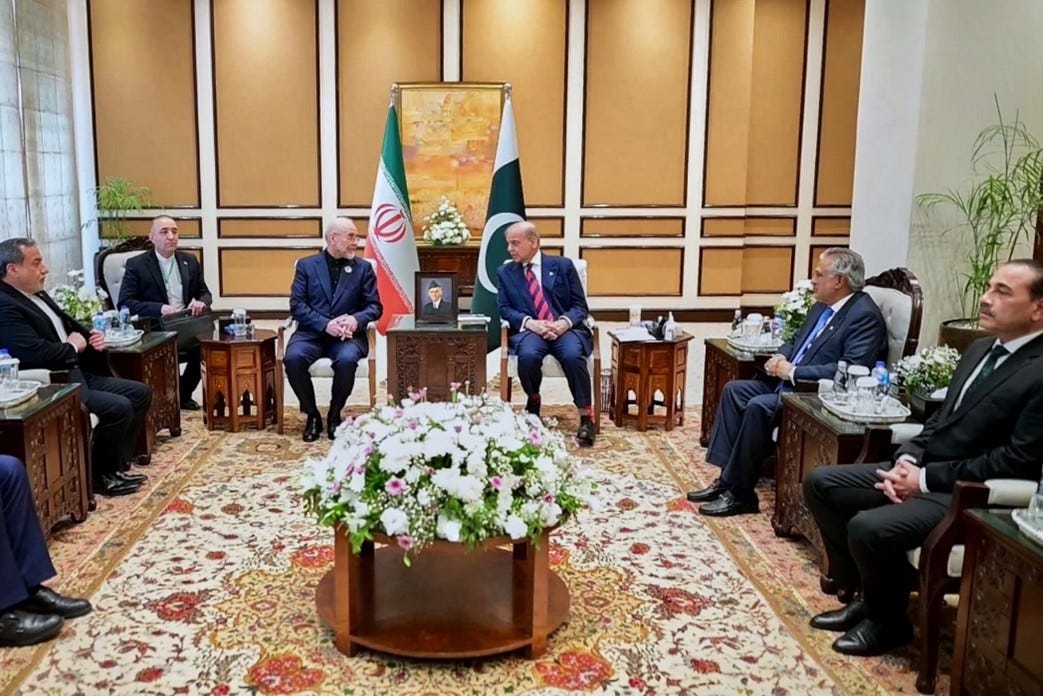
By early 2026, Pakistan had firmly established itself as a pivotal diplomatic mediator in the US-Iran conflict, hosting high-level talks and facilitating ceasefire negotiations that positioned it as a critical interlocutor between Washington and Tehran. This emergence was underpinned by Pakistan's unique geopolitical advantages—its strategic location, formal ties with Saudi Arabia, functional relations with Iran, and a strengthened working relationship with the United States following its 2025 military confrontation with India, which notably enhanced its international credibility and reshaped its image from a regional security liability to a capable crisis manager.
Despite its growing diplomatic stature, Pakistan’s mediation efforts are constrained by complex internal and regional dynamics, including its sectarian composition and a long, porous border with Iran that exposes it to spillover from Iran-Saudi tensions. This delicate balancing act is further complicated by Pakistan’s defense partnership with Saudi Arabia, placing Islamabad in an inherently precarious position as it navigates competing regional interests while striving to maintain its role as a neutral peace broker.
Pakistan’s role as a crucial intermediary gained formal international recognition in May 2026 when Congressman Al Green introduced a resolution honoring Islamabad’s diplomatic efforts in facilitating peace talks among the U.S., Israel, and Iran. This resolution not only underscored the global significance of Pakistan’s mediation but also highlighted the broader importance of prioritizing dialogue over conflict in resolving complex international disputes.
Further cementing its position as the indispensable go-between in one of 2026’s most consequential diplomatic exchanges, Pakistan officially relayed Iran’s response to a U.S. proposal aimed at ending hostilities between Washington and Tehran. This act of diplomatic facilitation showcased Islamabad’s operational role in maintaining critical communication channels and underscored its evolution from a peripheral actor to a central mediator in the fraught US-Iran-Israel conflict.



Blockades and Blame Games
With U.S. naval blockades and Iran’s internal rifts stalling talks, the extended ceasefire became a fragile standoff marked by threats, strategic restraint, and mounting frustration on both sides.
In mid-April 2026, President Trump indefinitely extended the ceasefire with Iran primarily at Pakistan's behest, aiming to provide Tehran the necessary space to unify its fractured leadership. Despite this diplomatic gesture, talks stalled as Iranian representatives refused to attend negotiations in Pakistan, citing what they deemed unreasonable U.S. demands, while the U.S. attributed the deadlock to Iran's internal divisions. Vice President JD Vance's planned mediation trip underscored Pakistan's pivotal role, yet the impasse highlighted the fragile nature of the truce and the complexities of reconciling divergent political factions within Iran.
While the ceasefire paused active hostilities, the U.S. maintained its blockade of the strategically vital Strait of Hormuz, a move Iran's foreign minister vehemently condemned as a violation of the truce and an act of war. This blockade, coupled with recent U.S. seizures and disablements of Iranian cargo vessels, escalated tensions, prompting Iran to threaten retaliation—though no direct response had materialized by early May. This persistent U.S. naval pressure complicated prospects for renewed negotiations, creating a 'chicken or egg' dilemma where Iran refuses talks until the blockade lifts, and the U.S. insists on maintaining it for security reasons.
The ceasefire extension, while signaling a temporary restraint, remained inherently fragile and precarious. President Trump’s administration balanced a complex posture: stepping back from immediate military action yet remaining poised to re-escalate if provoked. This nuanced stance reflected a strategic calculus of maintaining pressure without igniting full-scale conflict, underscoring the delicate equilibrium between diplomatic patience and readiness to respond to any Iranian provocations amid stalled talks and ongoing regional tensions.

Proxy Escalation Drowns Diplomacy
Rising Gulf Arab strikes, Trump’s nuclear brinkmanship, and mutual rejection of peace proposals shattered mediation hopes, driving the region toward wider conflict despite last-ditch efforts.
In early May 2026, diplomatic efforts brokered through Pakistan to establish a permanent ceasefire across multiple fronts, including Lebanon and maritime security, faltered as President Trump swiftly dismissed Iran’s response as 'totally unacceptable.' This rejection came amid escalating proxy confrontations, with the U.S. enforcing a blockade on Iranian ports and striking oil tankers, while Iran warned of heavy retaliation against attacks on its vessels, underscoring the deepening hostility despite mediation attempts.
By mid-May, the fragile ceasefire unraveled further as Gulf Arab states, notably Saudi Arabia and the UAE, launched previously undisclosed attacks on Iran, intensifying proxy conflicts in the region. The UAE publicly blamed Iran for drone assaults on its territory, exacerbating regional instability. Concurrently, President Trump amplified tensions through provocative rhetoric, including sharing an AI-generated image symbolizing a nuclear threat, signaling a hardline posture that overshadowed peace overtures and heightened fears of broader escalation.
The repeated exchange of peace proposals via Pakistani intermediaries in late May culminated in outright rejection by both the U.S. and Iran, marking a significant diplomatic breakdown. Iran’s warnings of strong responses to any U.S. missteps contrasted sharply with Trump’s threats of severe consequences if no deal materialized, reflecting entrenched mistrust and the diminishing prospects for negotiated resolution amid rising regional attacks and proxy warfare.