China bets on shoppers, not skyscrapers, as property crisis forces economic rethink
The gist
China is ditching its property addiction in favor of consumer power, betting that shoppers—not skyscrapers—can rescue its wobbly economy.
What to know
- The government is pivoting from real estate to targeted fiscal and monetary support, rolling out EV tax breaks and tourism vouchers to boost household spending and innovation.
- A 65% plunge in land sale revenues since 2020 and giants like China Vanke facing default have left local finances reeling, exposing vast hidden debts and slashing public budgets.
- Consumer confidence is creeping back but faces headwinds from high savings, weak job growth, and a demographic crunch—with a record-low birthrate and 400 million retirees looming by 2035.
Targeted Policy, Not Bailouts
Beijing is abandoning broad stimulus and property dependence in favor of precise, sector-specific support and a historic push to raise household consumption.
China’s macroeconomic policy has undergone a marked shift from its historic reliance on the property sector and broad-based stimulus toward a more nuanced, targeted approach, as signaled by the Central Economic Work Conference (CEWC) in late 2025. Rather than unleashing large-scale stimulus, Beijing is doubling down on stability and measured support, with Andrew Polk summarizing the outlook as 'Beijing envisions 2026 looking a lot like 2025.' This continuity reflects a deliberate pivot: policy is now focused on fostering consumption and innovation through targeted fiscal measures and sector-specific support, aiming to boost domestic demand without risking the imbalances of past cycles.
The government’s toolkit for 2026 features proactive yet disciplined fiscal and monetary measures designed to revive domestic demand and stabilize vulnerable sectors, especially as the property downturn and local government revenue pressures intensify. The CEWC confirmed a continuation of expansionary fiscal policy—embracing 'necessary fiscal deficits' and moderate increases in central government investment—while standardizing tax breaks and subsidies to avoid excesses. Monetary policy remains 'moderately loose,' with expected interest rate and reserve requirement ratio cuts to support credit expansion in key areas such as tech innovation and small business, all while avoiding the pitfalls of unsustainable borrowing that fueled previous property booms.
Reviving consumption has become the centerpiece of China’s rebalancing strategy, with a suite of targeted measures ranging from purchase subsidies and tax breaks on electric vehicles and appliances to tourism vouchers and explicit efforts to raise urban and rural incomes. The Politburo’s call to 'adhere to domestic demand as the main driver' is being operationalized through special actions to boost spending and remove barriers to consumption, including proposals to allocate consumption-tax revenue to local governments to incentivize pro-consumption policies. This marks a historic policy shift: for the first time, Beijing is explicitly prioritizing an increase in the household consumption ratio as a structural goal, signaling a decisive move away from the old investment-led growth model.
While the property sector remains a source of economic strain, authorities are stabilizing it through city-specific measures and controlled interventions such as encouraging 'good-quality housing' and managing corporate debt restructurings in firms like China Vanke. Rather than reigniting a property boom, the focus is on restoring trust and stabilizing expectations, with the government exploring tools like a central Property Stabilisation Fund. At the same time, policy support is being redirected toward high-tech manufacturing, software services—including AI and robotics—and innovation, with industrial output in high-tech sectors growing 8.4% year-on-year by late 2025, underscoring the strategic pivot toward new engines of growth.
Underlying these policy shifts is a recognition that traditional stimulus and broad monetary easing are increasingly ineffective in addressing China’s structural challenges, such as deflation, overcapacity, and a persistently high savings rate that now acts as a drag on growth. Policymakers and analysts like Sun Liping and Qian Junhui emphasize the need for structural 'repair'—raising disposable incomes, expanding rural pensions, improving housing affordability, and equalizing public services—to reduce precautionary savings and unlock consumer spending. The 2026 macro stance thus prioritizes building a strong domestic market through targeted fiscal tools, such as shifting subsidies from goods to services and mobilizing SOE resources for social security, reflecting a more sophisticated and sustainable approach to economic rebalancing.






Property Bust Exposes Debt Risks
China’s willingness to let giant developers fail has cracked open a hidden web of local government debt, forcing painful fiscal choices and revealing the fragility behind decades of growth.
China’s property market crisis has evolved from a drag on economic growth to a source of acute financial risk, as major developers like China Vono and China Vanke teeter on the brink of default under enormous debt burdens. This deepening turmoil has not only battered consumer sentiment—casting a persistent shadow over domestic demand—but also signaled a broader shift in Beijing’s approach, with authorities increasingly willing to let large property firms restructure or default rather than treating them as 'too big to fail.' The resulting uncertainty and negative headlines have further dampened confidence, complicating the government’s efforts to stabilize the sector.
The collapse in property sales and land revenues has delivered a fiscal gut punch to local governments, whose budgets have long relied on land sales to fund infrastructure and service debt. By 2025, new-home sales had fallen to pre-2010 levels, while residential land sales revenue plummeted 65% from its 2020 peak, forcing local authorities into fiscal distress—some even resorting to cutting civil servant pay or delaying payments for public services. This revenue crunch has exposed the fragility of local government finances and underscored the unsustainable reliance on property-driven growth.
The property downturn has also laid bare the vast, largely hidden web of local government debt, much of it funneled through opaque Local Government Financing Vehicles (LGFVs). While official figures put hidden debt at ¥10.5 trillion by end-2022, the IMF estimates the true number soared to ¥60 trillion—nearly half of China’s GDP—by the end of 2023. Beijing’s ¥10 trillion debt swap program (2024–2026) has offered only temporary relief, with 60% of the ¥9.1 trillion in bonds issued in the first ten months of 2025 used merely to refinance old debt rather than fund new projects, leaving the underlying risks largely unresolved.
These intertwined property and debt risks are now reverberating through China’s financial system, as banks—especially regional and state-owned lenders—face mounting bad loans tied to developers, LGFVs, and mortgages. The resulting pressure on bank capital has led to tighter credit conditions for both the property sector and local governments, raising the specter of broader financial instability. Meanwhile, policymakers are caught in a delicate balancing act: supporting the property sector enough to prevent collapse, but not so much as to reignite speculative excess, as they reiterate that 'housing is for living, not speculation.'
Complicating any recovery, China’s property market is now behaving more like those in mature economies, where demand is driven by upgrades rather than first-time buyers—an inevitable shift in a country where, as a 2019 People’s Bank of China survey found, 96% of urban households already own their homes. This structural change means that traditional stimulus tools, such as building more units or loosening credit, are unlikely to generate sustainable demand, further limiting the government’s options for reviving the sector and stabilizing local finances.

Cautious Consumers Hold the Key
A fragile rebound in consumer confidence is shifting China’s growth engine from public investment to households—yet high savings and job uncertainty keep spending on a tight leash.
Chinese consumer confidence has emerged as the linchpin for the country’s transition from property-fueled growth to a more sustainable, consumption-driven economy, but the path forward remains fraught with structural and psychological challenges. While Beijing has repeatedly emphasized the need to boost domestic consumption—most notably at the 2026 central economic work conference—policymakers remain wary of deploying aggressive fiscal stimulus that could inadvertently destabilize the still-fragile property market. As one analyst put it, the government must carefully calibrate its fiscal levers to convince Chinese consumers, 'who are the real weapon here in terms of the next part of the Chinese growth story,' to step up and drive private sector demand, marking a decisive shift from public investment to household-led growth.
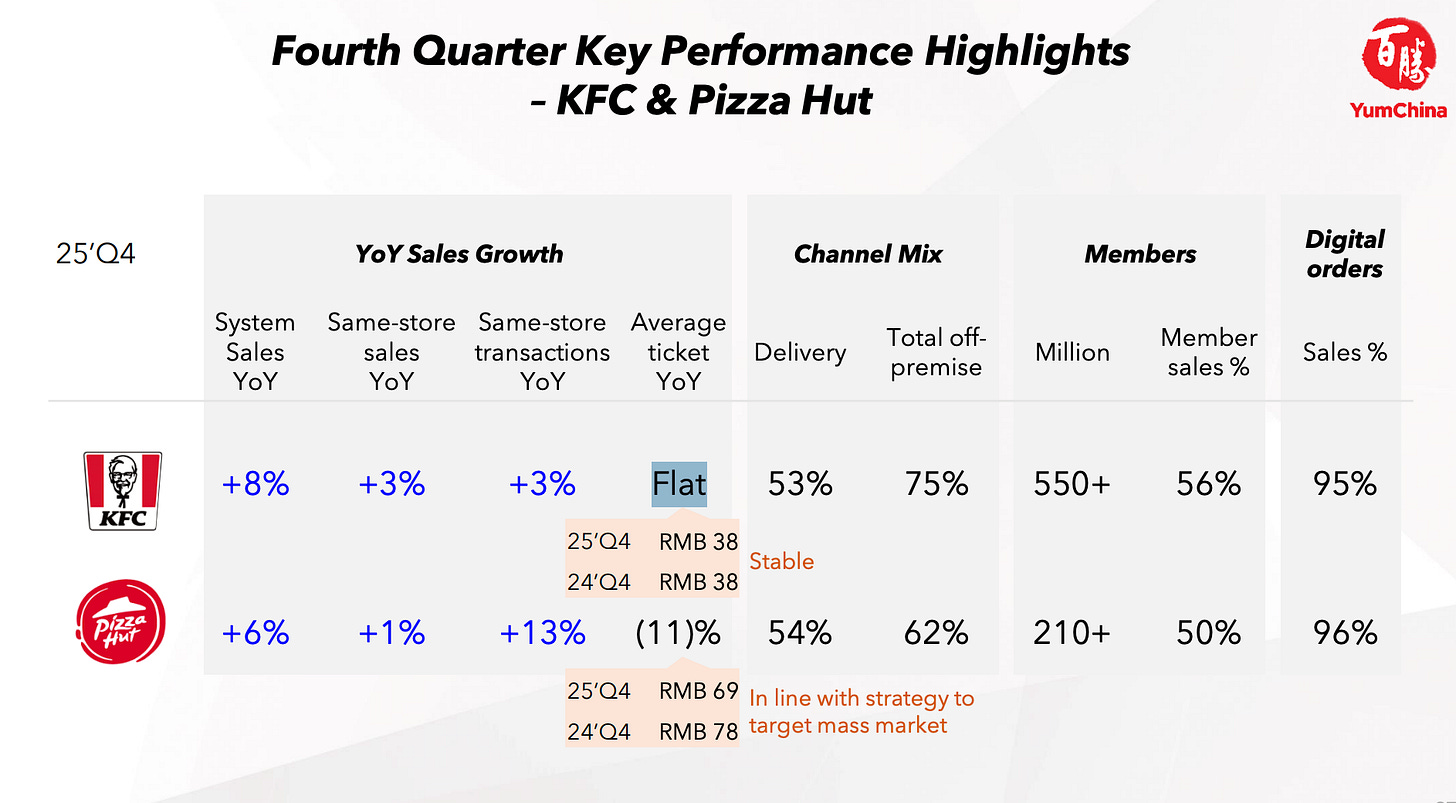
Despite persistent headwinds from a weak property sector and lingering post-pandemic malaise, recent data and private sector signals suggest a tentative but meaningful rebound in Chinese household confidence. The CRRAI index and anecdotal evidence—such as bustling coffee shops and strong foot traffic at Shanghai’s IFC Mall—point to a recovery in consumer sentiment since late 2024, with the stabilization of average selling prices at KFC and a rising Shanghai stock market fueling a 'wealth effect' that is making 'hope' feel investable again. However, analysts caution that while these green shoots are promising, broader data is needed to confirm a sustained turnaround, as confidence remains fragile amid high savings rates, soft employment, and only marginal improvements in the government’s consumer confidence index, which had climbed from a low of 87 during the 2022 Shanghai lockdown to just 90.3 by November 2025.
The evolving landscape of Chinese consumption is marked by a notable shift from goods to services and a growing emphasis on rural markets and innovation-driven trends. Retail sales data from late 2025 show services consumption rising at its fastest pace of the year—up 6.2% year-on-year in November—while companies like JD.com are investing billions in rural logistics and customer service to tap into lower-tier markets, reporting an annual active customer base of 700 million by Q4 2025. Policymakers are doubling down on these trends by extending trading programs, encouraging service sector growth, and targeting high-impact categories such as healthcare and baby products, all while promoting sustainable and AI-enabled products to capture new waves of demand.
Structural barriers continue to weigh on the prospects for a robust, consumer-led recovery, with high housing costs, income inequality, and inadequate social safety nets fueling precautionary savings and dampening consumption. Experts like Cai Fang and Qian Junhui argue that China’s persistently high savings rate has become a macroeconomic drag, calling for expanded rural pensions, mortgage support, and more progressive taxation to raise disposable incomes and narrow the urban-rural income gap. The government’s stated aim to reduce the Gini coefficient below 0.4 by 2035 and lower the urban-rural income ratio from 2.3 to 2 underscores the recognition that only by addressing these deep-rooted disparities can China unlock the full potential of its vast consumer market and complete its leap to high-income status.


Aging Nation, Shrinking Wallets
With a record-low birthrate and a surging retiree population, China faces a demographic squeeze that threatens to choke off consumption and widen income divides.
China’s demographic time bomb is now ticking audibly, with a record low birthrate—just 7.92 million babies born in the past year, down from 9.54 million in 2024—and a rapidly aging population projected to hit 400 million people over 60 by 2035. This seismic shift is shrinking the workforce and swelling the ranks of retirees, a combination that threatens to depress domestic consumption and stall economic growth. As retirees tend to spend less on big-ticket items like cars, housing upgrades, and appliances, the country faces a consumption bottleneck that cannot be solved by demographics alone, but will require bold income reforms and redistribution to keep the economy moving.
Despite government attempts to reverse the demographic slide—ranging from relaxing the One-Child Policy to the eyebrow-raising idea of taxing condoms—China’s birthrate continues its downward spiral, revealing that societal and economic norms have firmly shifted toward smaller families. This entrenched trend not only undermines efforts to boost the population but also exerts persistent downward pressure on property prices and domestic spending, forcing China to lean more heavily on exports. The result is a challenging environment for both domestic growth and foreign brands hoping to tap into the Chinese consumer market, as weak spending becomes the new normal.
While China aspires to cross the high-income threshold by 2035—with per-capita income above US$14,000 and a consumption share of GDP to rival its high-income peers—structural headwinds like income inequality and the urban-rural divide remain formidable obstacles. The Gini coefficient, stuck at 0.465, and a stubborn urban-rural income ratio of 2.3 highlight the need for more aggressive redistribution, especially since taxes with strong redistributive impact, such as personal income and capital gains taxes, make up a notably small share of government revenue compared to OECD norms. As Cai Fang argues, only by narrowing these gaps and boosting household incomes can China hope to unlock its full consumption potential and avoid a prolonged growth slowdown.


Markets Rally, Reality Bites
A buoyant stock market masks the disconnect between investor optimism and China’s sluggish real economy, as debt fears and global shifts keep risk ever-present beneath the surface.
Despite persistent macroeconomic headwinds and policy caution from Beijing, Chinese equity markets have shown surprising resilience, fueled by a combination of attractive valuations, light investor positioning, and credible—if measured—policy support. In 2025, global investors remained dramatically underweight China, with allocations at just 7.1% versus a 10.1% benchmark, yet equities rallied as the People’s Bank of China adopted a moderately loose monetary stance and fiscal support reached roughly 12% of GDP. This rally was further bolstered by state-owned enterprise reforms, such as tying executive compensation to stock performance and increasing shareholder returns, which saw SOE dividend payouts rise to nearly 40% and total dividends and buybacks hit RMB 3.6 trillion, up 20% year-over-year.
Yet, beneath the surface optimism in financial markets, a persistent disconnect remains between bullish sentiment and the realities of China’s economic transition. While market narratives tout a consumer-led recovery and sectoral outperformance in technology, healthcare, and materials, real economic indicators—such as nominal GDP growth lagging below 4% due to deflation and the absence of a much-anticipated infrastructure investment boom—underscore the fragility of the recovery. As John Louu notes, 'the nominal rate of growth is actually much lower,' and the failure of infrastructure-related stocks to rally highlights that 'a compelling top-down narrative is worthless if the underlying economic activity does not follow through.'
Investor sentiment remains a delicate balance of opportunity and caution, shaped by ongoing property sector woes, policy restraint, and shifting global dynamics. Concerns over potential defaults, such as China Vanke’s bond maturity, have stoked fears of further pessimism, though Beijing’s confidence in containing such events as non-systemic has tempered market anxiety. Meanwhile, China’s strategic reduction of U.S. Treasury holdings and diversification of foreign reserves, including record gold purchases, signal a recalibration of risk perceptions and a move toward de-dollarization, further influencing global investor outlooks.
By early 2026, a nuanced divergence in sentiment has emerged between onshore and offshore markets, with Hong Kong leading Greater China’s rally through broad-based, controlled risk-taking, while onshore investors display selective appetite for innovation and growth over defensive, yield-oriented stocks. Technical breakouts, surging retail participation, and a tentative upturn in macro indicators have contributed to a bullish feedback loop, yet skepticism lingers among global investors, who remain wary of structural headwinds and the fragility of consumer confidence. As one analyst observes, 'there’s still an air of skepticism among global investors,' even as price momentum and sectoral leadership suggest room for further upside.
Globally, the narrative around China’s investability is far from monolithic: while US-centric views often skew bearish, many institutional investors—especially from Asia and outside the US—see significant upside potential, particularly in technology sectors like AI and semiconductors. Hong Kong’s status as the world’s top IPO exchange in 2025, with 120 deals raising $37.5 billion, underscores robust international interest, and the region’s markets are increasingly seen as mispriced on the upside. As Bonnie notes, 'people are still not really seeing the potential upside' in Asian markets, suggesting that the disconnect between perception and reality may itself be an opportunity for those willing to look beyond prevailing narratives.