China’s chip giants surge, fueling U.S. security fears
The gist
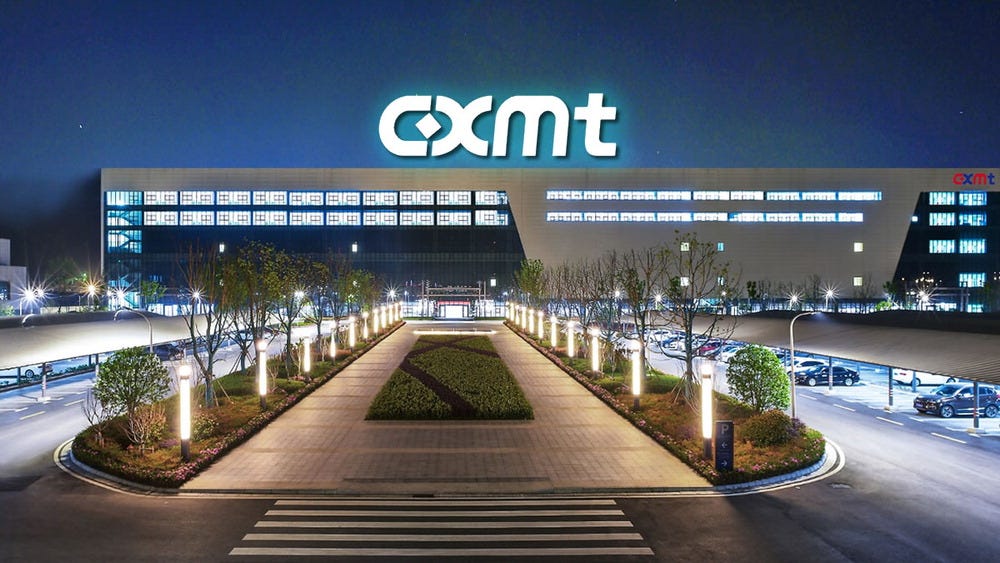
China’s memory chip giants CXMT and YMTC are riding an AI-fueled boom to global dominance, sparking U.S. security fears and putting Apple in the congressional crosshairs.
What to know
- CXMT’s Q1 revenue skyrocketed 719% to $7.5 billion, and it’s eyeing an $8.6 billion Shanghai IPO that will make it the world’s fourth-largest memory maker.
- Backed by China’s Big Fund, CXMT is scaling wafer output from 40,000 a month in 2020 to as many as 375,000 by 2026—directly challenging U.S. and South Korean rivals.
- U.S. lawmakers are turning up the heat on Apple for sourcing chips from CXMT and YMTC, citing fears these deals prop up China’s military-industrial complex.
China’s Memory Chip Power Play
Fueled by state backing and surging AI demand, CXMT and YMTC are using aggressive pricing and blockbuster deals to challenge global memory giants and reshape the semiconductor landscape.
Chinese memory chip makers CXMT and YMTC have surged to prominence amid the global AI data center boom, with CXMT alone booking a staggering $7.5 billion in Q1 revenue—a 719% year-over-year increase—and preparing for an $8.6 billion IPO on the Shanghai market. This rapid growth, fueled by soaring AI-driven memory demand, positions CXMT as the world’s fourth-largest memory producer, challenging established giants like Samsung and SK Hynix by dictating pricing and securing major deals, including a $7 billion five-year contract with ByteDance. Meanwhile, YMTC aims for a lofty 1 trillion yuan ($148 billion) valuation ahead of its own IPO, signaling both companies’ ambitions to dominate the global semiconductor landscape.
CXMT’s meteoric rise is a testament to strategic local government investment and robust state backing, notably from China’s state-backed Big Fund, which helped the company weather initial years of losses before the AI memory boom transformed its fortunes. This government support, combined with savvy decision-making in Hefei, has enabled CXMT to expand its DRAM wafer production capacity from a modest 40,000 wafers per month in 2020 to an anticipated 350,000–375,000 wafers per month by the end of 2026, closing in on US-based Micron’s scale. Plans to nearly triple capacity to 950,000 wafers per month by 2030 would cement CXMT as China’s largest memory manufacturer and a global heavyweight, despite current limitations in producing cutting-edge memory types like HBM and high-end DDR5.
The AI-driven surge in memory demand is reshaping the industry’s long-held cyclical nature into a potentially sustained growth trajectory, with Chinese chip makers aggressively injecting supply at competitive prices to capture market share from entrenched leaders like Samsung and SK Hynix. This shift is reflected in the doubling of China’s semiconductor exports by value in the first half of 2026 and growing Western adoption of Chinese-made DRAM, as exemplified by companies like Corsair turning to CXMT chips to escape soaring DDR5 prices. However, despite strong fundamentals and investor excitement around CXMT’s IPO—marking the first heavyweight memory producer listing on China’s A-share market—there remains investor anxiety over valuation and capital absorption risks, underscoring the complex interplay of market dynamics and political factors influencing this pivotal sector.


Hefei Model: State Capitalism in Action
China’s local government-driven, patient capital strategy is propelling CXMT’s rise but remains vulnerable to political shifts that could disrupt the nation’s chip self-sufficiency ambitions.
The development of Chinese memory chip firms like CXMT is deeply intertwined with the Hefei Model, a state-led, patient capital strategy that exemplifies how local governments can fuel semiconductor ambitions amid global AI hardware competition. While this approach has enabled strategic foresight and high-stakes investments yielding rare successes, such as CXMT’s rise, it remains vulnerable to local political turnover, which can disrupt long-term state investment plans and complicate China’s broader chip self-reliance goals.
CXMT’s anticipated IPO in China’s A-share market marks a pivotal moment, offering domestic investors rare direct access to a heavyweight memory chip producer previously absent from this exchange. This event reflects a strategic local investment model that aligns with broader global trends in tech IPOs and AI-driven industrial shifts, yet it also stirs cautious optimism and anxiety among investors wary of inflated market expectations and the capital absorption such a large listing entails.

Washington’s Security Crackdown
U.S. officials are escalating export restrictions and blacklisting efforts against CXMT and YMTC, citing military links and sparking a fierce battle over access to global supply chains.
The U.S. government has intensified scrutiny of Chinese memory chip makers CXMT and YMTC, designating them as military-linked entities due to their roles in China’s military-civil fusion strategy. YMTC is already on the U.S. Entity List, restricting its access to American technology, while CXMT awaits a similar fate despite interagency committee approval, reflecting internal debate over balancing national security with commercial interests. This designation has led to export restrictions and blacklisting efforts aimed at curbing China’s semiconductor advancements that could bolster its military and surveillance capabilities.
Apple’s reliance on CXMT and YMTC for memory chips has become a flashpoint in U.S. legislative efforts, with lawmakers arguing that every purchase indirectly subsidizes the People’s Liberation Army. Apple has actively sought assurances that CXMT will not be added to the Entity List, underscoring the tension between corporate supply chain dependencies and escalating national security concerns. Meanwhile, legislative proposals increasingly target companies like Apple to sever financial flows supporting China’s military-industrial complex.
Western competitors such as Micron are lobbying aggressively for stricter U.S. restrictions on CXMT and YMTC, including limiting their access to critical chipmaking equipment, to maintain technological and market advantages. This push complements broader U.S. efforts to slow China’s semiconductor progress amid fears that advanced AI-capable chips could enhance Chinese military power. However, the debate remains fraught as some U.S. agencies and companies emphasize the importance of preserving global supply chains and market stability.
Despite broad validation of CXMT’s DDR5 memory by major motherboard manufacturers like GIGABYTE, MSI, and ASUS, U.S. PC builders face limited availability due to ongoing national security restrictions. CXMT’s emergence as a key supplier amid a global DDR5 shortage highlights the complex interplay between supply chain demands and security concerns, as the Pentagon maintains its military-linked designation to prevent consumer electronics supply chains from subsidizing China’s military-industrial complex.
AI Boom Upends Chip Market
CXMT’s new pricing power, fracturing alliances, and supply chain bottlenecks are fueling price spikes and volatility as AI and geopolitics transform the memory chip business.
The rapid expansion of AI and other cutting-edge technologies like quantum computing and robotics has injected significant volatility into the memory chip market, where valuation and supply-demand dynamics remain unsettled amid ongoing monetization efforts. CXMT’s newfound pricing power over major clients such as Huawei, exemplified by forcing higher DRAM prices despite Huawei’s requests for relief, underscores a pivotal shift where suppliers now dictate terms in a historically buyer-favored market.
Competitive tensions within China’s memory chip ecosystem have intensified, with CXMT evicting Huawei-linked engineers from its R&D facility, signaling fractured alliances even among domestic players previously expected to unite against U.S. export controls. This internal strife reflects a broader realignment where firms like CXMT and YMTC prioritize clients willing to pay premium prices amid constrained DRAM supply, illustrating a mercenary approach to revenue maximization in a geopolitically charged environment.
While CXMT has secured validation from major motherboard manufacturers such as GIGABYTE, MSI, and ASUS, enabling broad compatibility with AMD and Intel platforms, its DDR5 memory remains largely inaccessible to U.S. consumers due to supply chain bottlenecks and U.S. national security concerns. This scarcity is exacerbated by the Big Three memory giants—Samsung, SK Hynix, and Micron—redirecting capacity toward high-bandwidth memory for AI data centers, causing prices for standard DDR5 kits to skyrocket from $80-$120 in mid-2025 to $400-$470 by mid-2026, with CXMT filling a critical yet controversial supply gap.
Aggressive tactics employed by Chinese memory chip makers, including alleged intellectual property theft and undercutting prices with 'good enough' chips, further destabilize global market dynamics. These strategies, while fueling CXMT and YMTC’s rise amid the AI data center boom, contribute to an unpredictable competitive landscape where traditional norms are upended, and geopolitical tensions amplify supply chain challenges for U.S. and global consumers alike.
