China’s electrotech blitz reshapes global energy—but hydrogen hits a Wall
The gist
China’s electrification blitz is rewriting the global energy map, but hydrogen’s clean energy hype is hitting a hard infrastructure wall.
What to know
- China now holds 75% of global electrotech patents and is electrifying its economy twice as fast as the West, aiming for 30-35% by 2025.
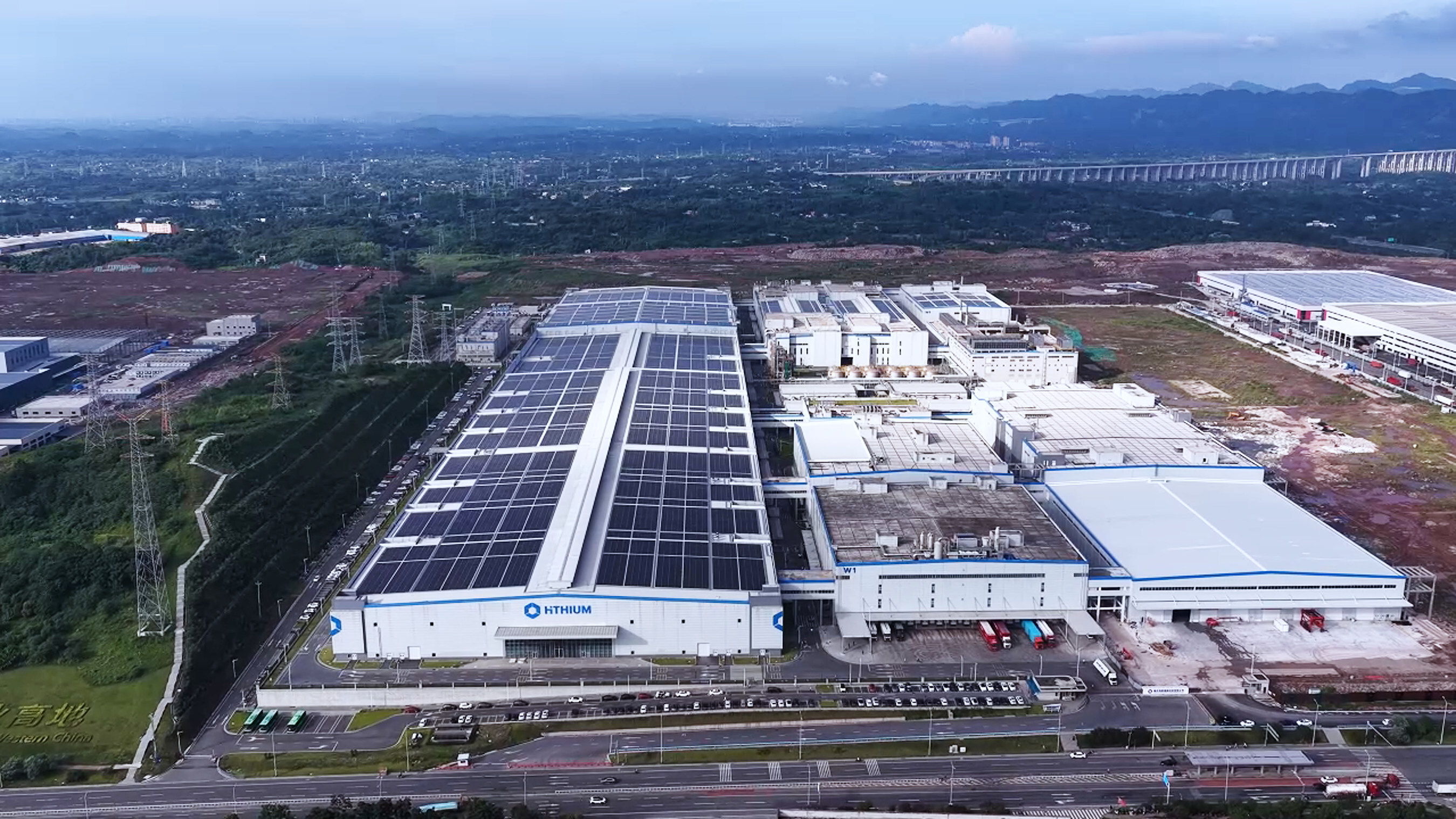
- AI-powered factories like HiTHIUM’s WEF Lighthouse battery plant are supercharging clean tech breakthroughs, while Chinese exports help two-thirds of emerging markets leapfrog past fossil fuels.
- Hydrogen’s big promise is stalling as costly, underbuilt distribution networks and regulatory bottlenecks threaten billions in clean energy growth.
China’s Strategic Power Grab
China’s two-decade industrial masterplan has made it the world’s electrotech superpower, tilting global energy markets and geopolitics in its favor.
China’s electrification leadership is the result of a deliberate, long-term industrial strategy rooted in national self-interest rather than environmental altruism. Over the past two decades, China has seized control of 75% of global electrotech patents and is electrifying its economy at a pace of 10 percentage points per decade—reaching 30-35% by late 2025, while Western countries lag at just over 20%. This strategic focus, identified as a major opportunity by Chinese policymakers 10 to 20 years ago, has paid off handsomely, positioning China as the dominant supplier of advanced, efficient electrification solutions and reshaping global energy markets and geopolitics in the process.
By flooding global markets with affordable, mass-produced electrification technologies, China is enabling emerging economies to bypass traditional fossil fuel development and leapfrog directly into clean energy adoption. As a result, two-thirds of emerging markets now surpass the United States in solar’s share of electricity generation, a shift that is upending long-held fossil fuel demand forecasts in the West. This export-driven approach not only accelerates the global transition away from fossil fuels but also cements China’s influence over the future trajectory of the world’s energy systems.

Exporting the Clean Energy Playbook
China’s mass-market electrotech exports are enabling emerging economies to skip fossil fuels entirely, rewriting energy demand forecasts worldwide.
By early 2026, the global clean energy race has seen a dramatic acceleration in AI-driven manufacturing, with flagship facilities like HiTHIUM’s Chongqing plant and Xiaomi’s Beijing EV Hyperfactory setting new industry standards. HiTHIUM’s recognition as the first WEF Lighthouse Factory for energy storage batteries underscores the transformative role of intelligent manufacturing in battery production, while Xiaomi’s Hyperfactory has become a magnet for industry leaders and diplomats, highlighting its status as a global benchmark for automated, AI-powered electric vehicle manufacturing. These developments signal a broader shift toward deep tech innovation as a cornerstone of industrial strategy in the clean energy transition.
The integration of advanced AI and manufacturing technologies is not only boosting efficiency but also delivering tangible sustainability gains, as exemplified by EVE Energy’s factory, which joined the WEF Lighthouse Network after pioneering AI-driven cylindrical battery manufacturing that slashed emissions by 60%. Meanwhile, the rapid scaling of wafer-scale AI compute and zero-water heat plants is enabling more sustainable industrial processes, while deep tech breakthroughs—ranging from sodium-ion and biochar-glass storage to microbial extraction—are enhancing energy storage and resource efficiency across the sector. These innovations are increasingly intertwined with national industrial strategies, with policy mechanisms like SAFE defense loans and chip onshoring hard-wiring clean energy scaling into the global economic fabric.


AI Factories Redefine Energy Tech
AI-powered gigafactories like HiTHIUM and Xiaomi now set the global standard for clean tech manufacturing, signaling a new era of deep tech-driven industrial policy.
By early 2026, the hydrogen sector faces a critical choke point: distribution infrastructure is lagging far behind advances in production and storage, developing at only half the pace. This imbalance, compounded by the fact that a handful of major companies control most distribution assets and are reluctant to share knowledge, is stifling innovation and threatening billions in clean energy investments. As Dr. David Dekker notes, this lack of collaboration 'slows progress across the entire sector,' making distribution expenses a disproportionately large share of hydrogen system budgets and undermining sector-wide efficiency.
The high capital costs and labyrinthine regulatory environment surrounding hydrogen pipelines and liquefaction plants are formidable barriers to scaling up distribution networks. Dr. Dekker highlights that 'distribution requires massive pipeline networks and liquefaction plants that need billions in capital investment,' while safety regulations and permitting processes further bog down progress. Without significant policy intervention and targeted investment to de-risk these infrastructure projects, warns Professor Dimitris Christopoulos, distribution costs and uncertainties will keep hydrogen uncompetitive, jeopardizing the clean energy transition.
The sector is also trapped in a classic 'chicken-and-egg' dilemma: industrial players are hesitant to commit to hydrogen at scale without reliable pipelines and terminals, yet infrastructure developers are unwilling to build without guaranteed demand. As Professor Mercedes Maroto-Valer explains, this mutual dependency stalls both sides, requiring coordinated policy and incentives to break the cycle. The analysis recommends targeted policies, incentives for knowledge sharing, open technical standards, and publicly backed demonstration projects as essential tools to reduce risk and accelerate the rollout of viable hydrogen distribution solutions.

Sustainability Gains Go Industrial Scale
AI-driven manufacturing is slashing emissions and boosting efficiency across batteries, storage, and materials, hard-wiring clean energy into national economies.
China’s aggressive industrial strategy has fundamentally redrawn the map of global energy competition, rapidly increasing its dominance in electrotech patents—now commanding 75% of the global share—and pushing electrification of road transport to 30-35%, far outpacing the West’s sluggish progress just above 20%. This technological and manufacturing lead is not only undermining traditional fossil fuel markets but also exposing the risks in Western assumptions about the persistence of fossil fuel demand. By underestimating the ongoing cost declines in solar and batteries—where the IEA’s latest scenario mistakenly predicts a sharp slowdown—Western analysts and policymakers are gambling against the momentum China and emerging markets are building in clean energy adoption.
Emerging markets are upending the conventional fossil-fueled development trajectory by leapfrogging straight to renewables, thanks to the flood of affordable Chinese electrotech. Two-thirds of these markets have now surpassed the U.S. in solar’s share of electricity generation, a shift driven by China’s overproduction and export prowess. This not only disrupts the expected coal-heavy path but also accelerates the global pivot away from fossil fuels, undermining the economic prospects of traditional exporters and redistributing geopolitical influence.
While climate goals remain a headline driver, the real engine behind the global energy transition is a blend of availability, affordability, and geopolitical security. Countries like India and China are prioritizing electrification to reduce dependence on volatile oil imports, with one analyst noting, 'it is availability, affordability and geopolitical driver as opposed to a carbon driver.' Renewables paired with batteries offer nations greater control over their energy destiny—once a solar or wind plant is operational, the resource is domestically controlled, enhancing national security even as intermittency challenges persist.
Industrial strategy is now hard-wiring national security and economic priorities into the global energy transition, as seen in defense loans, chip onshoring, and quantum alliances that directly influence capital flows. This scramble for supply chain security is intensifying, with the competition for critical minerals—exemplified by the high-stakes maneuvering around Greenland’s rare-earth deposits—underscoring the messy realities of 'minerals security' and friend-shoring. Yet, despite surging investment—such as the $1.1 billion funneled into nuclear startups at the close of 2025—industrial capacity and robust supply chains remain significant bottlenecks, and venture capital is consolidating into mega-firms, potentially starving the specialized deep-tech ventures that are vital for clean energy leadership.