China’s Meta-manus crackdown sparks AI cold war, fractures cross-border innovation
The gist
China’s dramatic veto of Meta’s $2B Manus AI deal signals a new era of AI decoupling and regulatory muscle-flexing that’s fracturing global innovation.
What to know
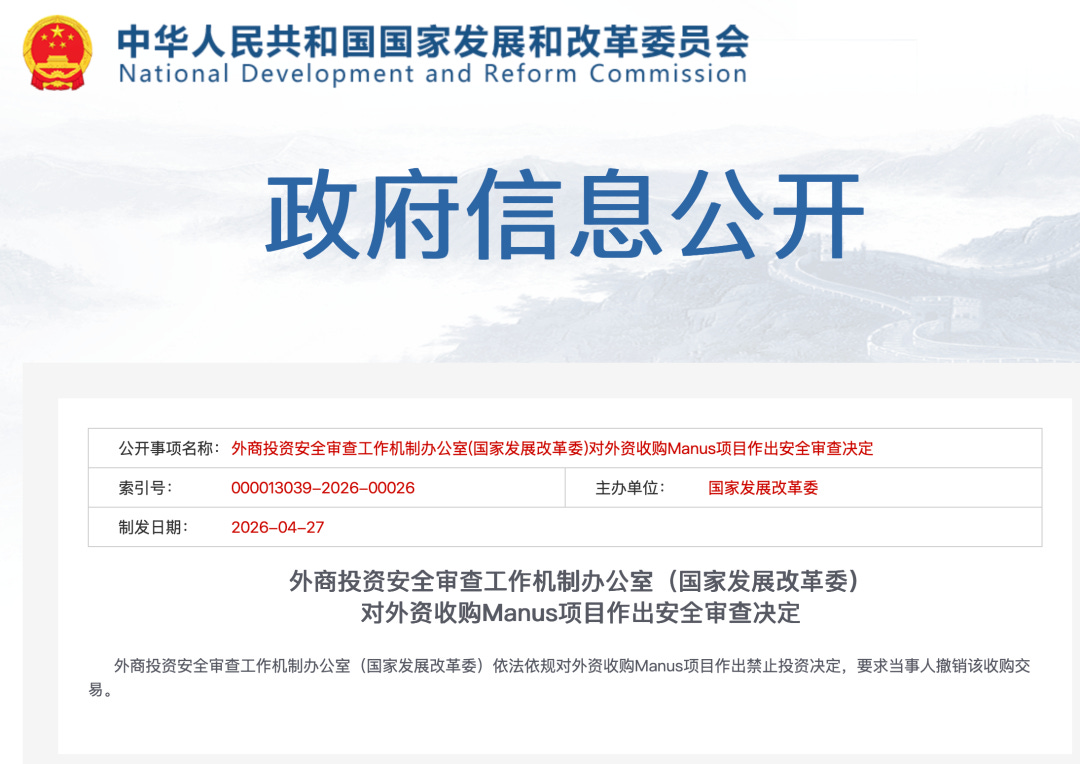
- China’s National Development and Reform Commission blocked Meta’s $2 billion acquisition of Manus AI, targeting ‘Singapore-washing’ and expanding scrutiny over foreign control in sensitive AI sectors.
- US policymakers are now weaving tech firms into national security frameworks, aiming to both outpace and actively slow China’s AI progress amid accusations of large-scale intellectual property theft.
- Cross-border capital flows and AI startup strategies are being upended, fragmenting East Asia’s innovation ecosystem and raising new legal and financial risks for founders and investors on both sides.
China Clamps Down on Loopholes
Beijing’s regulators are targeting not just foreign ownership but any form of control—including shell headquarters and contractual influence—to shut down regulatory arbitrage and cement national security dominance over AI.
China’s National Development and Reform Commission (NDRC) has decisively leveraged its foreign investment security review system to block and unwind Meta’s $2 billion acquisition of Manus AI, marking a significant escalation in regulatory intervention over cross-border AI deals. This system, functioning as an interagency mechanism led by the NDRC and Ministry of Commerce, scrutinizes not only majority ownership but any form of investor control—through equity, contracts, or board seats—that could influence key decisions, thereby broadening the scope of national security oversight in sensitive technology sectors.
A central target of China’s crackdown is the practice of 'Singapore-washing,' where Chinese-founded companies like Manus relocate headquarters abroad—in this case to Singapore—to evade domestic regulatory scrutiny. Despite Manus’s restructuring and dissolution of its Chinese entity in mid-2025, Beijing emphasized that 'substance matters more than appearance,' invalidating such tactics and signaling a zero-tolerance stance on regulatory arbitrage designed to circumvent China’s foreign investment laws.
The Manus case underscores China’s broader strategic imperative to assert control over AI technology, driven by national security concerns related to the transfer of core algorithms, R&D talent, and sensitive data abroad. The NDRC’s enforcement reflects an expanded regulatory focus beyond export controls to encompass foreign direct investment in key technology sectors, aiming to prevent foreign acquisition of domestically developed AI capabilities and to promote self-reliance in critical digital infrastructure.
China’s intervention in the Meta-Manus deal, including the rare step of ordering the unwinding of an already integrated acquisition, highlights the heightened regulatory risks facing foreign investors in Chinese-origin AI firms. This late-stage enforcement, publicly framed by state-affiliated media and experts as necessary to uphold China’s regulatory framework, illustrates Beijing’s evolving approach to technology governance—prioritizing national security and regulatory compliance over globalization narratives.




U.S. Shifts to AI Containment
Washington is embedding tech giants into security policy, aiming not only to stay ahead in AI but to actively hamper China’s progress through coordinated controls, alliances, and accusations of industrial-scale IP theft.
By early 2026, the US has increasingly recast the AI competition with China as a national security imperative rather than a mere innovation race, leading to policies that not only prioritize technological leadership but also actively seek to slow Chinese advancements. This shift is evident in the integration of leading US tech firms into governance frameworks that align AI development and export controls with strategic security goals, effectively positioning companies as gatekeepers of frontier AI capabilities. As noted, "maintaining technological leadership is no longer seen as sufficient; slowing competitors is becoming an equally important objective," reflecting heightened US anxiety over the narrowing AI capability gap with China.
The geopolitical rivalry has escalated into a multifaceted confrontation involving accusations of industrial-scale intellectual property theft by China-backed actors targeting American AI labs, with the White House highlighting campaigns that query AI systems millions of times to replicate capabilities. This intensification coincides with China's regulatory crackdown exemplified by the blocking and forced unwinding of Meta's $2 billion acquisition of Manus AI, a Singapore-based startup with Chinese founders, signaling Beijing's strategic use of foreign investment security reviews to control cross-border AI technology flows and assert national security priorities amid summit tensions.
In response to China's containment efforts, the US is strengthening economic security coalitions such as PAC Silica, involving 14 countries, and establishing forward deployed industrial bases with allies like the Philippines to diversify and secure AI technology supply chains. This approach leverages private sector innovation and sovereign partnerships to create positive-sum outcomes, contrasting with China's Belt and Road model, and underscores the strategic tradeoffs the US faces in balancing national security concerns with economic security and innovation incentives, particularly regarding access to advanced GPUs and AI models.
Technical aspects of AI, such as model distillation, have been reframed as national security concerns due to their potential misuse in cyber operations, disinformation, and military applications, illustrating how deeply the geopolitical rivalry permeates AI governance and policy. This redefinition of technical challenges into security threats highlights the complexity and high stakes of the US-China AI competition, where innovation, control, and security are inextricably linked and contested.






Investment Risks Redraw AI Map
China’s aggressive security reviews and capital controls are fracturing East Asia’s innovation networks, leaving startups and investors exposed to sudden deal reversals, asset freezes, and a patchwork of new legal threats.
China's regulatory crackdown, epitomized by the blocking and unwinding of Meta's $2 billion Manus AI acquisition, sharply elevates cross-border investment risks for AI startups, particularly those employing 'Singapore-washing' strategies to sidestep domestic restrictions. Manus AI, despite its rapid ascent to $100 million ARR and backing from American investor Benchmark, found its growth trajectory abruptly constrained by China's foreign investment security review system, which now prioritizes national security concerns and scrutinizes cross-border deals more aggressively. This regulatory environment complicates not only capital inflows but also the operational integration of AI startups, leaving investors and founders grappling with legal and financial uncertainties, such as the fate of code, assets, and capital reversals during deal unwindings.
The crackdown reflects broader geopolitical and economic tensions reshaping East Asia's AI ecosystem, where national security considerations increasingly dictate investment flows and corporate strategies. China's push for AI self-reliance—leveraging domestic hardware advantages while remaining dependent on foreign software like Nvidia's—and its assertive use of capital controls and security reviews have fragmented the regional innovation landscape. This fragmentation is compounded by declining Chinese investment in the U.S. and Korea's strategic alignment with Washington, all amid challenges such as energy constraints and uneven economic impacts from AI adoption. Consequently, cross-border collaboration faces heightened uncertainty, slowing innovation and altering competitive dynamics both regionally and globally.
The reliance on subsidized Chinese AI models presents a double-edged sword for U.S. enterprises: while cost-effective options like DeepSeek lower operational expenses and accelerate innovation, they raise concerns about long-term control and domestic competitiveness. As Baseten's CEO warns, the U.S. risks a significant setback if it fails to develop robust open-source AI models, potentially ceding leadership to multiple Chinese labs producing accessible alternatives. This dynamic underscores the strategic imperative for the U.S. and allied nations to invest in indigenous AI capabilities to sustain innovation momentum amid an increasingly politicized and fragmented global AI landscape.




Subsidized AI: Double-Edged Sword
U.S. firms’ reliance on cheap, powerful Chinese AI models threatens domestic competitiveness and control, fueling urgent calls for homegrown open-source alternatives to avoid ceding technological leadership.
U.S. firms’ reliance on cheap, powerful Chinese AI models threatens domestic competitiveness and control, fueling urgent calls for homegrown open-source alternatives to avoid ceding technological leadership.