China’s sea net rocket catch ups payload, rivals SpaceX
The gist
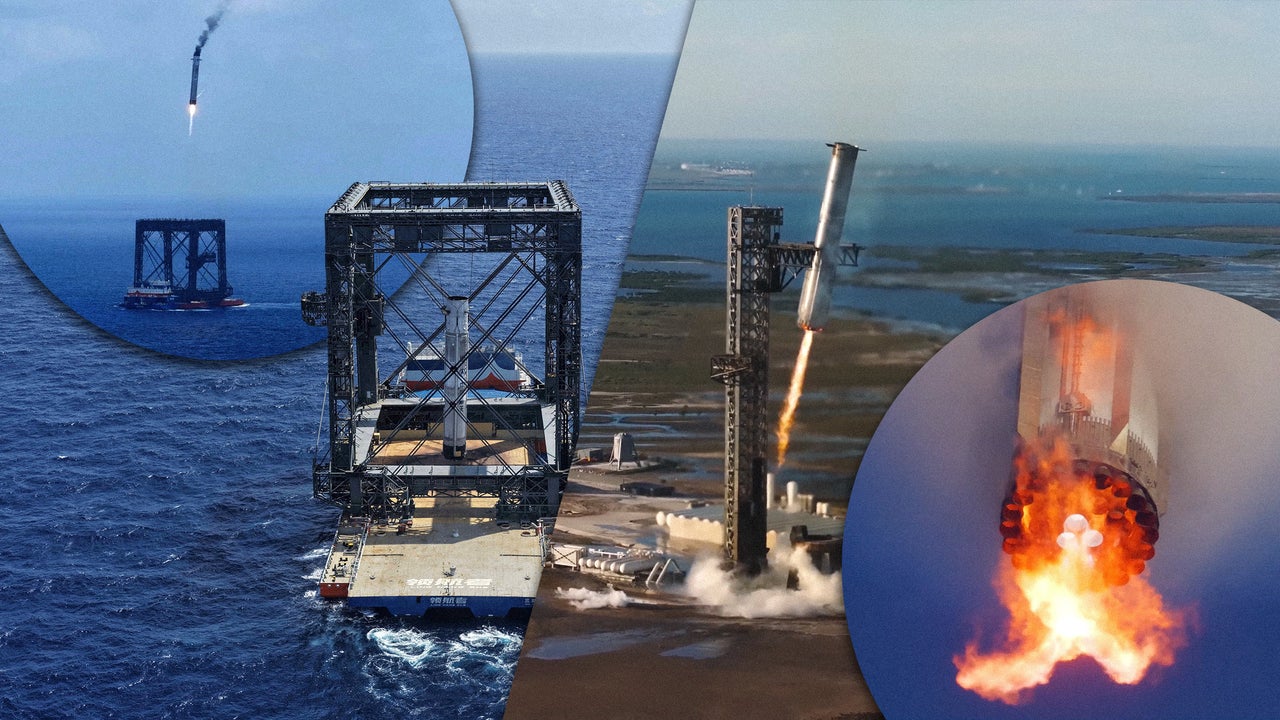
China has pulled off the world’s first sea-based net catch of an orbital rocket booster—shifting the reusable rocket race into high gear and taking direct aim at SpaceX’s dominance.
What to know
- China’s CALT caught a Long March 10B booster mid-descent using a ship-mounted net system, eliminating the need for heavy landing legs and boosting payload capacity to 17 tons.
- This novel recovery method tolerates greater landing imprecision and could lower launch costs and increase cadence by 2026, supporting China’s plans for large satellite constellations.
- Despite its historic maiden catch, China now faces the real test—refurbishing and reflighting the booster by end of 2026 to prove true, cost-effective reusability.
Sea Net Rocket Catch Debuts
China's CALT has redefined booster recovery by catching a Long March 10B mid-air with a ship-mounted net, shifting complexity from rocket to ship and setting a new global precedent in reusable launch technology.
China’s CALT pioneered a groundbreaking sea-based net-and-hooks recovery system for the Long March 10B booster, marking the world’s first successful use of this method to catch an orbital rocket stage intact on an offshore platform. Unlike SpaceX’s Falcon 9, which relies on heavy landing legs for powered touchdowns, CALT’s approach shifts the recovery hardware from the rocket to a specialized ship equipped with a large flexible net and tensioned cables, enabling the booster to be caught mid-descent using deployable hooks. This innovation not only represents a historic milestone for China’s space program but also sets a new paradigm in reusable rocket technology by simplifying the booster’s onboard structure and aiming for cost reduction through reuse by the end of 2026.
The engineering ingenuity behind China’s net recovery system lies in its ability to reduce the rocket’s weight and increase payload capacity by eliminating the need for landing legs, while simultaneously tolerating greater landing imprecision thanks to the flexible net’s dynamic buffering. As Chen Muye of CASC explained, the ship’s dynamic positioning system actively counters wind and currents to maintain net stability, and the booster’s titanium grid fins provide precise steering during descent, allowing real-time coordination between the falling rocket and the moving platform. This design contrasts with SpaceX’s rigid landing legs and Blue Origin’s mechanical arms, offering a third distinct recovery method that leverages China’s strengths in systems engineering and iterative testing.
While inspired by SpaceX’s demonstration of controlled booster recovery, China’s sea-based net system embodies an original engineering solution that redistributes the complexity from the rocket to the recovery platform. This shift allows the booster to forgo heavy landing legs and instead deploy hooks that engage with the net, which absorbs much of the kinetic energy during capture. However, this approach introduces new challenges, such as managing cable dynamics and stabilizing a 207-foot tall booster on a moving sea platform, requiring sophisticated coordination and real-time navigation data exchange between the ship and the rocket to ensure a safe and precise catch.

Payload Gains, Market Aims
By eliminating landing legs and boosting payload to 17 tons, China's net-catch system directly supports its push for large satellite constellations and intensifies competition with SpaceX in the global launch market.
China’s innovative sea-based net recovery system for the Long March 10B booster represents a strategic leap in reusable rocket technology by shifting recovery hardware from the rocket to the ship, thereby reducing onboard weight and increasing payload capacity. As CASC engineer Chen Muye explains, this design eliminates the need for heavy landing legs, freeing up valuable space that can be sold for satellites, which directly supports China’s goal to reduce launch costs and increase launch frequency. This breakthrough positions China as only the second nation after the U.S. to recover a booster intact at sea, accelerating its ability to compete in the global launch market dominated by SpaceX.
The Long March 10B’s modular and reusable design is central to China’s broader ambitions to rapidly deploy large satellite constellations essential for internet, navigation, and disaster monitoring services. With a reusable payload capacity of approximately 17 tons to low Earth orbit—slightly below SpaceX’s Falcon 9—China leverages government subsidies and technological innovation to drive down costs and increase launch cadence. This capability not only supports commercial space markets but also underpins China’s strategic objective to build extensive orbital infrastructure, marking a shift from prestige-driven missions to sustained economic and security competition in space.
By achieving successful booster recovery on its maiden flight and planning to refly the same stage within the year, China is accelerating its development curve to enhance launch reliability and cost efficiency. This rapid iteration capability is critical for expanding satellite communications and commercial space ambitions, as increased launch cadence enables faster deployment and replacement of satellites, strengthening China’s communications, Earth observation, and scientific services. However, the ultimate economic benefits hinge on maintaining refurbishment and recovery costs below new manufacturing expenses to ensure that reusability translates into meaningful cost reductions over multiple missions.

Engineering Divergence: China vs. SpaceX
China's sea-based net recovery marks a strategic shift away from SpaceX's land-based leg landings, prioritizing scalable, cost-saving infrastructure and engineering resilience over precision touchdowns.
China’s Long March 10B employs a radically different recovery method from SpaceX’s Falcon 9 and Starship boosters by using a sea-based net capture system instead of landing legs or mechanical arms. This innovative approach shifts the complexity from the rocket to the recovery platform, allowing the booster to save weight by eliminating heavy landing legs and deploying hooks to engage tensioned cables on a flexible net installed on a ship. While this method reduces the precision required during descent and increases payload capacity, it introduces unique engineering challenges related to sea conditions and platform stabilization, reflecting China’s strength in systems engineering and iterative testing rather than direct technology copying from SpaceX.
Both China and SpaceX have strategically eliminated landing legs to cut dead weight and enhance payload capacity, but they diverge sharply in their recovery technologies—SpaceX relying on leg landings and tower-arm captures, and China pioneering a net-based sea recovery. This contrast underscores differing engineering philosophies: SpaceX’s approach emphasizes precision mechanical capture on land or fixed platforms, while China prioritizes scalable, cost-effective sea-based infrastructure to support mass production and challenge SpaceX’s commercial launch dominance. By early 2026, China’s aerospace industry was poised to leverage this innovative reusable rocket technology to compete aggressively in the global market.


Modular Rockets, Strategic Vision
China's Long March 10 family leverages modular, reusable design not just for lunar ambitions but to build a robust, cost-effective orbital infrastructure for economic and strategic dominance.
China’s space ambitions extend far beyond replicating existing technologies; instead, they reflect a strategic and original approach to reusability and orbital dominance. The Long March 10B’s innovative sea-based net recovery system, which replaces traditional landing legs with hooks engaging tensioned cables on a ship, exemplifies this. This design not only reduces booster weight and increases payload capacity but also tolerates greater landing imprecision, showcasing China’s strength in systems engineering and adaptation to unique trade-offs, as highlighted by CASC’s Chen Muye and echoed in analyses emphasizing China’s engineering prowess.
By achieving successful booster recovery on the maiden flight of the Long March 10B, China demonstrated a rapid maturation of reusable rocket technology that directly supports its broader goals of deploying expansive satellite constellations and commercial payloads. This capability is central to China’s ambition to lower launch costs and increase cadence, thereby challenging SpaceX’s market dominance and enabling China to build a robust orbital infrastructure. As CASC positions the Long March 10B as a workhorse for internet constellations, this marks a pivotal shift in the global satellite launch market landscape.
China’s modular Long March 10 rocket family, designed for both crewed lunar missions and commercial orbital launches, signals a comprehensive strategy to assert leadership in deep space exploration and the emerging orbital economy. The development of a heavier variant aimed at landing astronauts on the Moon before 2030 underscores China’s long-term vision to become a major player in crewed spaceflight, while the shared modular design across variants facilitates flexibility and reusability. This dual focus reflects a nuanced understanding that future space competition hinges not only on prestige missions but also on sustained economic and strategic dominance in orbit.
The geopolitical context of China’s space program reveals a shift from traditional prestige-driven milestones to a broader contest for control over the orbital economy, where satellite networks underpin military, communication, financial, and logistical systems. Analysts note that China’s pursuit of cheaper, faster, and sustainable launch capabilities through reusability is part of a larger strategy to deploy orbital infrastructure at scale, positioning the nation to compete in an industrial-scale space economy. As one analysis puts it, the future space race will be decided less by singular achievements like moon landings and more by who manages the largest satellite networks and offers the most cost-effective orbital services.
Reuse Hurdles and Global Stakes
Despite a flawless maiden net-catch, China's challenge now is to prove rapid, reliable reusability and win trust in a market still wary of regulatory barriers and unproven turnaround times.
China’s innovative sea-based net recovery system, employed by the Long March-10B and operated from the Linghangzhe barge, represents a bold departure from traditional rocket landing legs by offloading recovery mechanisms to a moving ship. This approach, as explained by CASC engineer Chen Muye, reduces rocket weight and increases tolerance for off-target landings, potentially lowering failure rates and refurbishment costs. However, this novel method introduces significant operational complexities, such as synchronizing the descending booster with the ship’s motion and net system, which engineers must master to enable routine, reliable booster recovery and reuse.
The Long March-10B’s maiden flight recovery success, achieved on its very first attempt, marks a remarkable milestone that neither SpaceX nor Blue Origin managed initially, suggesting China may accelerate toward operational reuse and higher launch cadence. Yet, the real challenge lies ahead: engineers must rigorously assess how the booster’s engines, tanks, heat shields, and structural components withstood both flight stresses and the net capture, determining refurbishment demands and turnaround feasibility. The CASC team’s plan to refly this recovered booster by the end of 2026 underscores their commitment to rapidly validating reusability, a critical step toward competing in the growing commercial satellite launch market.
While China’s government-backed CASC can leverage subsidies to reduce launch costs, matching SpaceX’s rapid reuse cadence and building global trust remain formidable hurdles, especially given regulatory barriers like the U.S. International Traffic in Arms Regulations that exclude Chinese rockets from launching American satellite components. Establishing reliability through multiple successful reflights and demonstrating cost advantages over expendable rockets will be essential to attract satellite operators who prioritize price, schedule, and mission track records. As competition intensifies, China’s reusable rockets could expand global launch capacity and accelerate satellite constellation deployments, but only if they overcome these market and technical challenges.
Strategically, China is focusing its reusable rocket development on the Long March-10B, optimized for deploying internet constellations and large commercial payloads that require dozens or hundreds of satellites. This targeted approach aligns with the booming demand for rapid, cost-effective satellite launches, positioning China to capture a significant share of the constellation market if it can operationalize reliable booster reuse. The roadmap emphasizes not just technological breakthroughs but also scaling launch cadence to meet the growing needs of commercial space infrastructure, signaling China’s ambition to challenge established players and reshape the orbital launch landscape.