Chinese EVs surge in Europe, forcing drastic cuts at VW, BMW
The gist
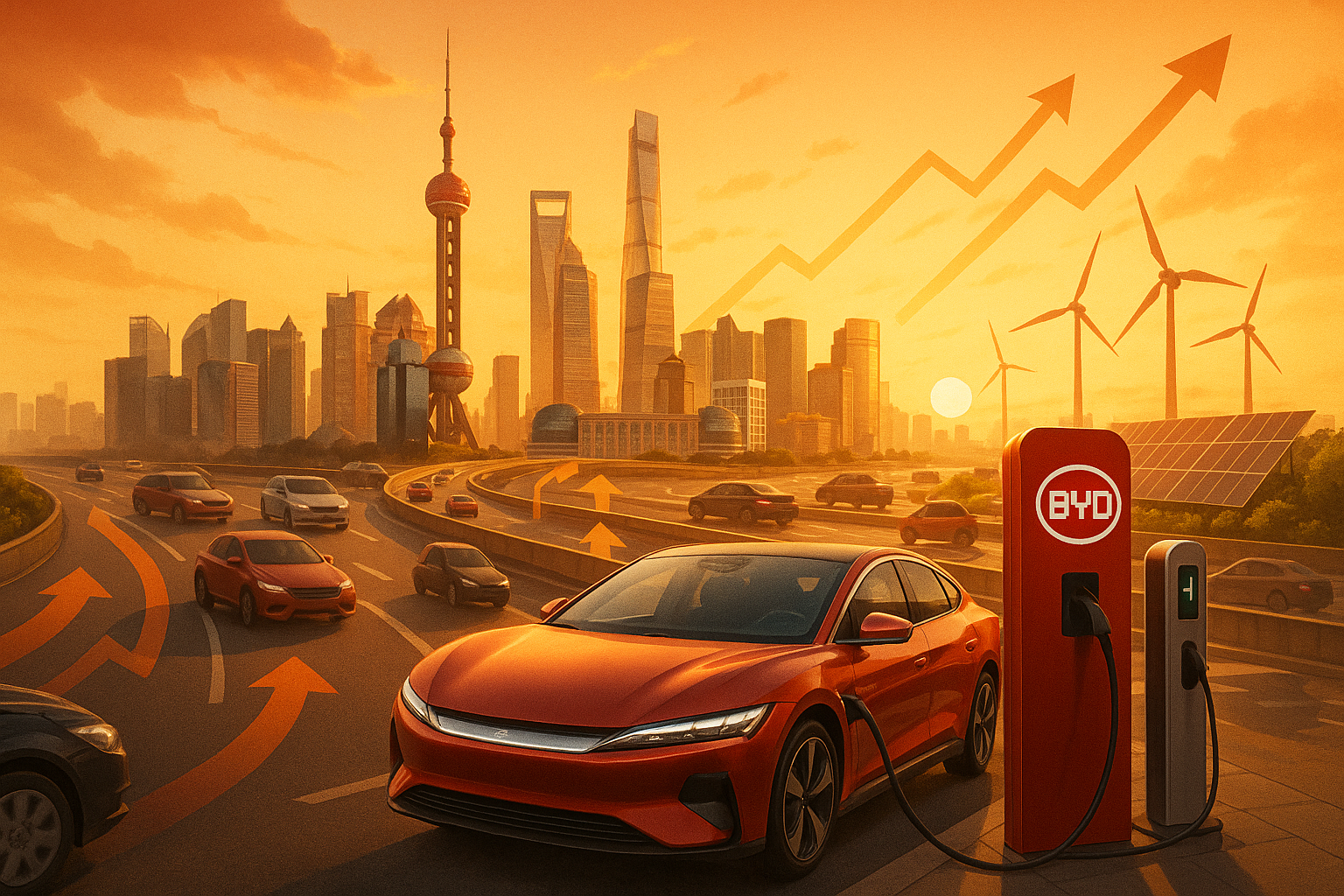
Chinese EV makers like BYD and Geely are storming Europe’s market, triggering brutal job cuts and a high-stakes reset at VW, BMW, and the rest of Europe’s automotive giants.
What to know
- Chinese brands captured 14.2% of Europe’s electric car sales in 2026, despite new EU tariffs and mounting trade barriers.
- Volkswagen is eyeing up to 100,000 job cuts and BMW plans to shed 8,000 positions as European automakers scramble to stem losses and shift production to cheaper regions.
- Chinese EV exports to Europe surged 71% in H1 2026, with projections to surpass 20% of Europe’s passenger vehicle market by 2030.
Chinese Innovation Outpaces Europe
Aggressive pricing, rapid product cycles, and global partnerships are enabling Chinese EV makers to outmaneuver legacy European automakers stuck in outdated production rhythms.
Chinese EV manufacturers are rapidly disrupting European legacy automakers by combining aggressive pricing strategies with accelerated product development cycles. Companies like Geely leverage their scale and global partnerships, such as those with Ford and chip suppliers, to push into higher-value EV segments, while brands like BYD, XPeng, and AVATR expand their footprint in Europe and beyond. This rapid innovation pace starkly contrasts with the slower refresh cycles of European firms, which still often operate on petrol-era timetables, leaving them struggling to keep up with the technologically advanced and competitively priced Chinese offerings.
The competitive pressure from Chinese EV makers is forcing European giants like Volkswagen, BMW, and Mercedes-Benz into drastic cost-cutting and strategic realignments. Volkswagen’s recent €3.8 billion loss and plans to cut up to 100,000 jobs highlight the severity of the challenge, while BMW’s intention to shed 8,000 German jobs underscores the urgent need to reset costs amid heavy investments in combustion and EV transitions. Mercedes, grappling with declining sales in China and a shrinking revenue base, is shifting production to lower-cost regions and even contemplating selling models like the electric CLA at a loss to maintain market presence, a strategy that is ultimately unsustainable.
Chinese EV brands have made significant inroads into the European market, capturing 14.2% of BEV sales in 2026, with the UK and Italy emerging as key battlegrounds due to favorable tariff conditions and government incentives. This market penetration is intensifying pricing pressure on European volume brands, prompting legacy automakers to accelerate innovation in battery technology, charging speeds, and software capabilities while developing more affordable models like the Volkswagen ID. Polo and Renault Twingo to broaden BEV adoption beyond early adopters. However, looming regulatory changes, such as potential EU tariff extensions to plug-in hybrids, could compel Chinese manufacturers to recalibrate their European strategies, adding another layer of complexity to the competitive landscape.
The global expansion of Chinese EV manufacturers is driven by a strategic necessity stemming from excess domestic production capacity and weakening home market demand, with China's domestic car sales dropping 20% in the first half of 2026 while exports surged 71%. This push includes establishing production facilities within Europe, which is projected to increase their market share to over 20% of Europe’s overall passenger vehicle market and 29% of its EV market by 2030. As Bill Russo observes, China's competitive edge now encompasses not only pricing but also electrification, batteries, software, intelligent features, and supply-chain scale, making their global incursion a highly disruptive force for European legacy automakers.
Tariffs Fail to Slow China
Chinese EVs are overcoming EU tariffs through lightning-fast development and strategic acquisitions, forcing European brands into costly efficiency drives and supply-chain overhauls.
Despite the European Union's imposition of tariffs perceived as unfair—such as the 10% duty on Chinese car imports and additional levies on manufacturers like BYD—Chinese electric vehicles continue to gain market share in Europe. This resilience is largely due to Chinese EV makers' rapid innovation cycles, exemplified by their ability to develop BEV platforms in just 21 months, enabling them to overcome tariff barriers and appeal increasingly to European consumers.
European automakers including Renault, Stellantis, and Volvo are navigating a complex tariff landscape that simultaneously pressures margins and compels strategic shifts. Renault’s Ampere EV program aims to reduce development costs in anticipation of intensified tariff competition, while Stellantis faces heavy tariff bills yet leverages shared platforms and software to cut costs. Volvo, under margin strain from tariff considerations, targets SEK5 billion in savings by 2026 through cost-cutting and an expanded electrified vehicle mix, illustrating how tariff policies are accelerating product refreshes and efficiency drives across the continent.
Beyond tariffs, the EU is grappling with the strategic challenge posed by China's deepening control over European automotive supply chains. With over 130 European parts suppliers—primarily in Germany and France—now under Chinese ownership, often obscured through offshore intermediaries and local holding companies, European policymakers are increasingly concerned about supply-chain security. This has prompted Brussels to plan stricter local-content regulations requiring European-made parts and labor, a move that Chinese firms are countering by acquiring local suppliers to secure 'made in EU' status and maintain market access.
Legacy Giants Restructure to Survive
European automakers are slashing jobs, shifting production, and prioritizing profitability over market share as relentless Chinese competition erodes sales and margins at home and abroad.
European automakers such as BMW, Mercedes, Volkswagen, Renault, and Stellantis are aggressively implementing cost-cutting measures and production realignments to withstand mounting competitive pressures from Chinese EV manufacturers. BMW’s plan to cut up to 8,000 jobs in Germany and Volkswagen’s consideration of up to 100,000 job cuts alongside halving its model lineup illustrate the scale of restructuring underway. Meanwhile, Mercedes-Benz is not only racing to reduce material and factory costs but also shifting production to lower-cost regions to preserve profitability amid heavy investments in EV and software development, despite facing thin net margins and significant losses, such as Volkswagen’s €3.8 billion loss and a mere 1.6% net margin. These efforts underscore the complex and prolonged nature of the industry reset as legacy players grapple with declining sales and margin pressures.
To counter fierce price competition and tariff-induced cost pressures, Renault and Stellantis are leveraging strategic product and operational adaptations focused on efficiency and innovation. Renault’s Ampere EV program aims to reduce development costs significantly, supporting its guidance toward a 5.5% operating margin in 2026 despite risks like debt coverage and diesel litigation. Stellantis, with its broad regional presence and shared platform strategy, is managing earnings volatility and tariff burdens by refreshing its product lineup and cutting costs through software and platform synergies, positioning itself to return to profitability over the next few years. These targeted strategies reflect a pragmatic approach to balancing investment in electrification with the imperative to maintain financial stability amid evolving market dynamics.
In China, European legacy automakers are recalibrating their market strategies to address steep challenges posed by rapid Chinese EV innovation and aggressive pricing. Mercedes’ introduction of a localized long-wheelbase CLA priced 40% cheaper than its European counterpart failed to gain traction, selling just 1,153 units in H1 2026 compared to Xiaomi’s 80,000 similarly priced SU7s, highlighting the difficulty of competing on both features and cost. Consequently, Mercedes has limited its push for the electric CLA, acknowledging that further price cuts would lead to losses on nearly every unit sold. This shift toward selective model launches and sustainable growth over volume gains, coupled with BMW’s lowered margin outlook and expectations of prolonged brutal competition, illustrates how European automakers are adapting by focusing on profitability and technological relevance rather than short-term market share in China’s fast-evolving EV landscape.
Beyond cost-cutting and market repositioning, European automakers are actively pursuing strategic partnerships and portfolio realignments to bolster competitiveness amid uncertain returns and high spending risks. Volkswagen’s collaboration with Rivian and capacity trimming, alongside Mercedes-Benz’s balancing act between cost reductions and ongoing investments, exemplify this dual approach. Additionally, Geely’s partnerships with Ford and chip suppliers underscore the intensifying competitive dynamics and the necessity for alliances to navigate supply chain complexities and technological demands. These maneuvers reflect a broader industry trend where legacy automakers seek to leverage external expertise and optimize resources to remain viable in a rapidly transforming global automotive ecosystem.
China's Global EV Blitz
Fueled by domestic overcapacity, Chinese automakers are flooding Europe and other regions with competitively priced EVs, using localized production and export surges to outpace established rivals.
Chinese electric vehicle exports have surged dramatically in the first half of 2026, with Europe emerging as a pivotal growth region alongside Brazil, Russia, and the Asia-Pacific. Notably, countries like the UK, Belgium, Italy, and Spain saw export increases ranging from 46% to over 140%, while Germany and Australia experienced NEV export growth exceeding 190%. This expansion reflects a strategic shift from sheer volume to diversified, localized market penetration, as manufacturers like Chery, Geely, and Leapmotor leverage excess domestic capacity to fuel their international ambitions.
To navigate evolving trade policies and tariff barriers, Chinese automakers are increasingly adopting refined strategies such as deploying knock-down kits and establishing localized production facilities, particularly in key markets like Brazil and Europe. This approach not only mitigates tariff impacts but also enhances competitiveness and responsiveness to regional demand fluctuations, signaling a move away from pure export volume growth toward sustainable global operations.
The global surge in Chinese EV exports is driven in part by an overbuilt and largely unprofitable domestic industry, compelling manufacturers to aggressively push vehicles abroad at competitive prices. This export-driven growth, with projections reaching 10 million units in 2026—a 41% year-on-year increase—is intensifying competition worldwide, particularly in Europe where brands like Leapmotor are already outselling established luxury automakers such as Porsche in certain segments.
Chinese EVs have rapidly penetrated emerging markets, capturing approximately 60% of EV sales compared to just 10% for traditional combustion vehicles, and driving a global acceleration in EV adoption. Supported by strengths in electrification, battery technology, software, and supply-chain scale, Chinese brands are poised to capture over 20% of Europe's passenger vehicle market by 2030, fundamentally disrupting legacy automakers and reshaping the global automotive landscape.