Class of 2026 faces AI job market squeeze
The gist
AI is slashing entry-level job prospects for the Class of 2026, intensifying anxiety, fueling inequities, and forcing grads to scramble for survival in a fiercely automated workforce.
What to know
- Graduate job opportunities have plunged 25% as tech giants like Cloudflare cut 20% of staff and AI replaces human roles, leaving computer science grads with unemployment rates as high as 8%.
- New grads are hustling to master AI tools, pivot to less automatable roles, and build side gigs as 'skill security' becomes the new job insurance.
- AI adoption is deepening generational and gender divides, with younger, AI-fluent hires getting a leg up and women and mid-career workers increasingly sidelined.
AI Squeezes Entry-Level Hires
Graduates face a brutal job market as tech layoffs and AI automation double competition for fewer roles, leaving even top majors like computer science with soaring unemployment and plunging optimism.
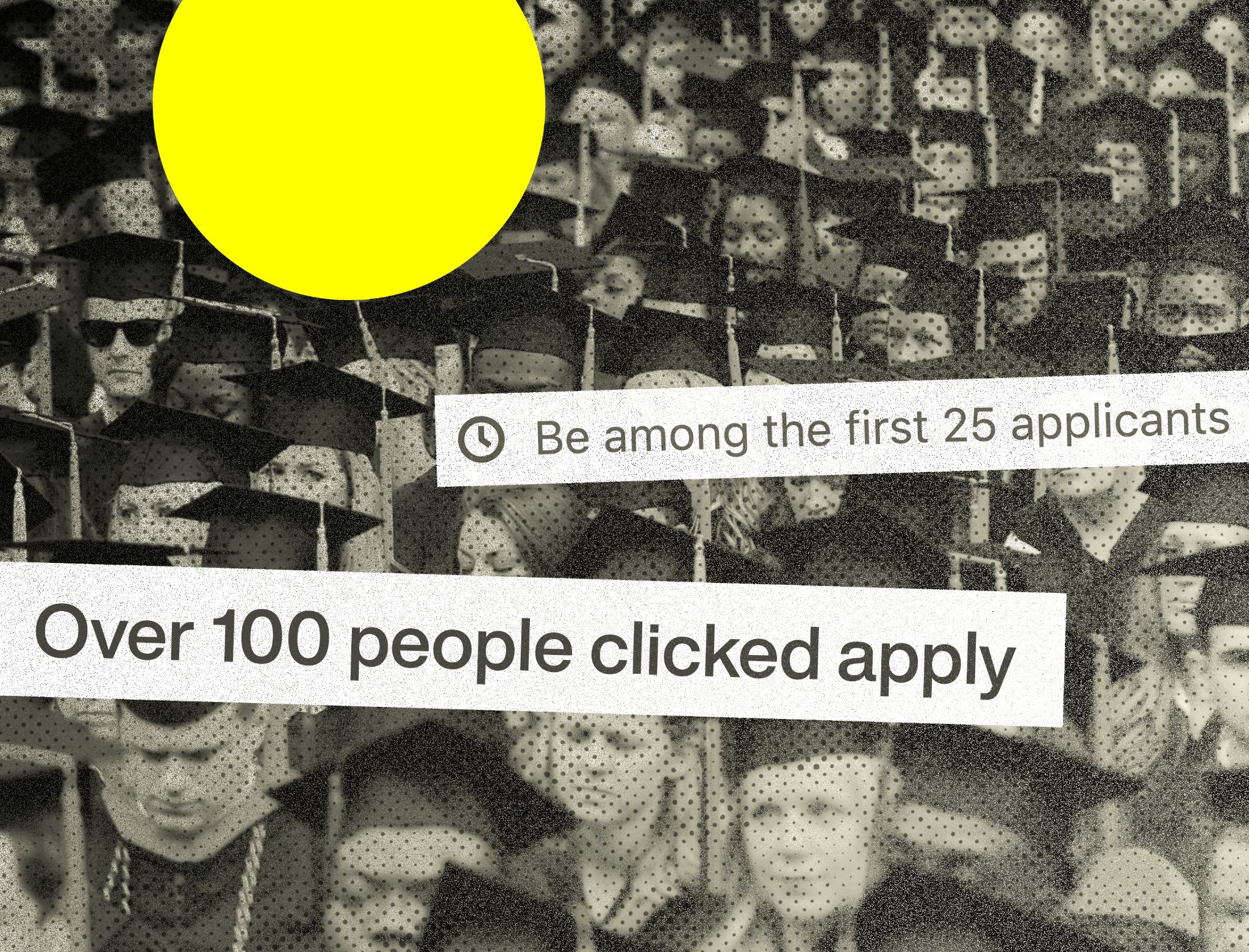
The entry-level job market for the Class of 2026 is facing unprecedented contraction due to AI-driven automation and economic shifts, with tech giants like Cloudflare and Meta cutting tens of thousands of jobs—Cloudflare alone slashed 20% of its staff—while companies increasingly rely on AI agents to perform tasks traditionally done by humans. This has led to a 25% decline in graduate job opportunities over the past year and a doubling of applications per entry-level posting on platforms like LinkedIn, intensifying competition and anxiety among new graduates who often apply to dozens or even hundreds of jobs without success, as exemplified by University of California, Davis graduate Vaishali Hireraddi’s 500 applications yielding only two unpaid offers.
Fields once considered robust, such as computer science, business, and data analytics, are now among the hardest hit by AI disruption, with unemployment rates for recent computer science graduates rising to nearly 7-8%, rivaling those of traditionally less employable majors like fine arts and anthropology. Enrollment in these programs has dropped sharply—computer science undergraduate enrollment fell 11% in 2025, and software development entry-level postings have declined by as much as 67%—reflecting a bleak outlook that has left less than 20% of the Class of 2026 optimistic about their job prospects in tech.
Beyond automation, broader economic factors such as the rise of remote work have compounded employment challenges for recent graduates, with studies attributing approximately 64% of the increase in young college graduate unemployment to remote work preferences that disincentivize hiring in remote-friendly sectors like software engineering. This dynamic, coupled with companies’ cost-driven prioritization of AI efficiency over human labor—illustrated by executives questioning the need for large engineering teams when AI code generation tools exist—has led to hiring freezes and layoffs that disproportionately impact entry-level and mid-career workers, while top AI-skilled talent continues to command premium salaries.
The erosion of traditional entry-level roles, including once-stable positions like executive assistants, is reshaping the early career landscape, as firms such as PwC and Deloitte cut support staff to maintain partner compensation amid AI adoption. This shift not only reduces immediate job availability but also threatens the future management pipeline and institutional knowledge, leaving many graduates feeling disenfranchised and anxious about their career trajectories, a sentiment echoed by Jeff DeGraff who warns that AI is eliminating the 'first staircase' for young people entering the workforce.





Skill Security Is Survival
Young professionals are racing to master AI, pivot to automation-resistant roles, and launch side hustles as traditional job security collapses under relentless technological disruption.
Graduates and early-career workers are strategically mastering AI tools to become indispensable assets in their professions, leveraging their digital native advantage to outpace peers and superiors. Eric Ryan emphasizes that embracing AI not only enhances core skills but also positions individuals as disruptors who can make their roles '10x better,' while breaking down entrepreneurship into manageable steps encourages incremental innovation and business building. This proactive approach to skill acquisition and entrepreneurial mindset serves as a critical hedge against the volatility of AI-driven job markets.
To navigate AI disruption and corporate layoffs, young professionals are advised to focus on roles less susceptible to automation, such as producer roles in sales or versatile engineering positions requiring deep AI knowledge and optimization skills. Building side hustles or businesses is increasingly viewed as essential for income diversification and career resilience, with experts highlighting the importance of owning assets, intellectual property, or audiences to create optionality beyond traditional employment. Additionally, skilled trades remain a safer harbor amid automation, underscoring the value of physical-world expertise.
In the face of a complex AI-driven hiring landscape, graduates are advised to commit to rigorous skill mastery—particularly in data structures, algorithms, and system design—and to cultivate strong professional networks via platforms like LinkedIn and GitHub to enhance visibility. The concept of 'skill security' has overtaken job security, with career coaches urging candidates to build tangible proof of impact aligned with business goals, and to engage with supportive communities such as ByteByteGo and DesignGurus for interview and layoff preparation. This comprehensive strategy is vital for thriving amid 2026’s job market volatility.
The escalating use of AI by both job seekers and employers has created a feedback loop intensifying competition, where over half of candidates use AI tools for applications while nearly 90% of companies deploy AI for screening. Although AI proficiency is becoming a hiring prerequisite across fields, experts like Jeremy Schifeling caution against overreliance on generic AI-generated content, advocating instead for authentic, human-centered communication to break through automated filters. Notably, this AI arms race has exacerbated gender disparities: women submit more applications yet receive fewer offers and lower pay, highlighting an urgent need for equitable access to AI tools and adaptive strategies.



Anxieties and Backlash on Campus
Political upheaval, economic stress, and fears of AI-driven obsolescence are fueling student protests, psychological strain, and a dramatic shift in graduates’ life choices and attitudes.
The Class of 2026 has navigated their college years amid a backdrop of intense socio-political upheaval, including campus protests following the 2023 October 7 events, the 2024 Trump reelection's impact on higher education, and 2025 political violence such as Charlie Kirk's death. These disruptions have not only shaped their political attitudes—evidenced by a UC Berkeley graduate who became more conservative due to perceived ideological imbalances on campus—but also influenced practical life decisions, with many, like a Syracuse and Duke graduate, opting to move back home to manage economic pressures and student loan burdens.
Graduates express profound psychological anxieties regarding AI's rapid integration into the workforce, grappling with moral dilemmas over reliance on AI tools and fears about job stability and personal fulfillment. A Duke graduate encapsulated this tension, stating, 'I feel like I’m losing my own ability to write well by over-reliance on AI,' while widespread student resistance manifests in protests and petitions opposing AI's encroachment on education and employment prospects. This ambivalence is further reflected in commencement ceremonies across states like Florida and Arizona, where speakers praising AI were booed, signaling deep societal unease.
The pervasive fear of AI-driven job displacement is reshaping labor market dynamics, tilting power back toward employers as workers hesitate to negotiate or assert influence, fearing replacement. This reversal contrasts with the labor leverage gains seen during COVID-19, as noted by industry analysts, and is compounded by founder-CEOs’ reluctance to share governance amid uncertainty. While AI has yet to cause widespread layoffs, companies are increasingly cautious in hiring, reflecting a climate of economic and psychological stress that colors graduates’ career outlooks.



Talent Pipeline at Risk
AI-driven layoffs and hiring freezes are hollowing out entry-level and mid-career jobs, threatening long-term organizational stability and deepening generational and gender divides in the workforce.
The AI-driven upheaval in the job market is disproportionately impacting entry-level and mid-career knowledge workers, threatening the traditional talent pipeline and economic stability of dual-income suburban communities. Major tech firms like Cloudflare and Meta have slashed tens of thousands of jobs, with Cloudflare replacing 20% of its staff with AI agents, prompting concerns about a 'catastrophic impact' on well-established knowledge worker demographics and fueling socio-political unrest reminiscent of past populist movements. As Muddy Waters Capital CEO Carson Block warns, a 15% displacement of knowledge workers is imminent within a few years, underscoring the urgency of addressing these disruptions.
Emerging gender and generational disparities in AI adoption are reshaping workforce dynamics, as younger, AI-native graduates gain preferential hiring over mid-career professionals and certain demographics lag behind. Reddit’s CEO highlights a bias toward new college grads due to their AI fluency, while Goldman Sachs data reveals rising unemployment among workers under 30 correlating with AI adoption rates. This skewed productivity gain, which academic studies peg at an average 23% uplift favoring senior workers, exacerbates inequities and risks leaving entry-level talent marginalized in an economy where AI increasingly automates routine tasks.
Automating entry-level roles and freezing junior hiring may offer short-term cost savings but jeopardizes the long-term health of organizational talent pipelines and institutional knowledge. Experts like Jeff DeGraff warn that eliminating 'the first staircase' of jobs for young people weakens future middle management and forces companies to rely on expensive external hires. This trend is compounded by the temporary nature of AI infrastructure job creation—such as the 4.7 million short-term data center construction jobs versus fewer than 700,000 permanent positions—highlighting a precarious balance between job displacement and creation amid significant occupational churn.
Despite the disruption, historical patterns and expert analysis suggest AI-driven automation will ultimately generate new, differentiated roles that augment human intelligence rather than simply replace it. Mo Gawdat emphasizes that individuals who master AI tools will enhance their unique human value by 'borrowing IQ' from AI, creating jobs that did not exist before, as MIT research cited by Goldman Sachs confirms. However, the transition remains painful for many, particularly those at the lower end of the knowledge worker spectrum, necessitating focused workforce development and inclusive strategies to ensure broad-based benefits from AI’s economic transformation.