Claude cowork turns AI into your proactive project partner—no coding required
The gist
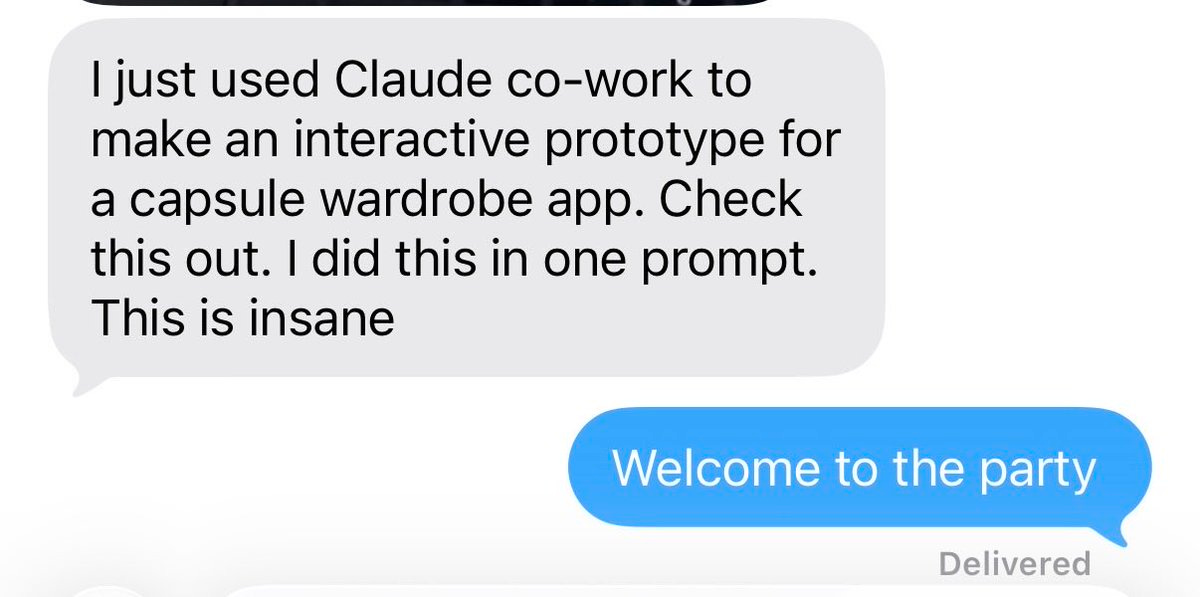
Anthropic’s Claude Cowork is turning AI into an autonomous, context-savvy project partner for non-coders—no programming required, just drop in a markdown file and watch the magic happen.
What to know
- Since late 2025, Claude Agent Skills let users build persistent, reusable AI workflows via simple markdown files across all Claude platforms.
- Launched in January 2026 for macOS at $100–$200/month, Claude Cowork empowers non-technical users to automate desktop tasks and file management through a sleek chat interface.
- By mid-2026, Cowork’s Live Artifacts transform static reports into dynamic, interactive dashboards—making AI-powered productivity accessible to everyone, despite a few early bugs and syncing issues.
Skills: AI That Remembers
Claude Agent Skills shift AI from one-off prompts to persistent, markdown-powered workflows, empowering anyone to automate complex tasks without code.
Claude Agent Skills represent a foundational evolution in AI interaction, shifting from ephemeral prompt-based commands to persistent, reusable workflows that capture user knowledge once and apply it consistently across tasks. Available on all paid plans since late 2025, these skills enable users to encode detailed instructions in structured markdown (.md) files, transforming entire workflows—from writing styles to multi-step processes—into context-aware automations that Claude executes without repeated user input. This approach not only enhances efficiency but also democratizes AI customization by requiring no coding expertise, as skills are built through conversational interfaces and seamlessly integrate with existing context files, global instructions, and projects.
By early 2026, the technical underpinnings of Claude Agent Skills matured to merge related functionalities, such as slash commands and skills, into a unified system that supports both user-invocable and agent-invocable actions. Anthropica’s announcement highlighted that skills form a superset of commands, incorporating progressive disclosure to mitigate context bloat and empowering agents to autonomously discover and execute tools based on situational relevance. This autonomy marks a significant leap toward agentic AI systems that dynamically adapt workflows, moving beyond rigid scripting paradigms toward flexible, descriptive markdown-based processes that can handle complex tasks like aggregating social media posts and formatting them intelligently.
The evolution of Claude’s capabilities since 2023, including expanded context windows and agentic functionalities, has enabled a deeper level of automation where skills do not merely instruct but embody the exact procedural knowledge needed for consistent task execution. As one explainer put it, a skill is a folder containing a SKILL.md file plus supporting assets, which Claude reads automatically when relevant tasks arise—no explicit invocation required. This layered AI interaction model, combining skills with global instructions and project contexts, allows for nuanced handling of identity, communication style, and project scope, effectively transforming AI from a reactive tool into a proactive collaborator across all Claude platforms, including Cowork, chat, Code Tab, and API.



Cowork: AI for Non-Coders
Anthropic’s Cowork transforms desktop automation by letting non-technical users deploy powerful AI agents for file and workflow management—no programming required.
In January 2026, Anthropic launched Cowork, a groundbreaking AI agent designed to democratize desktop task automation for non-coders on macOS. Available exclusively to Claude Max subscribers at a premium price of $100 to $200 per month, Cowork enables users to grant AI access to local folders for autonomous execution of complex workflows like file management and spreadsheet creation, all without requiring any programming skills. This launch strategically positions Anthropic as a formidable competitor to AI giants such as OpenAI, Google, and Microsoft in the burgeoning market for AI-powered productivity tools.
Cowork’s rapid development—completed in just over a week using Anthropic’s own Claude Code tool—exemplifies a recursive AI innovation cycle where AI builds AI. Originally launched in late 2024 as a command-line interface for developers, Claude Code unexpectedly attracted non-technical users for diverse tasks, prompting Anthropic to rebrand and evolve it into Cowork: a user-friendly chat interface that abstracts away command-line complexity while retaining powerful agentic capabilities. This evolution not only lowers the barrier for non-coders but also fosters gradual technical literacy by exposing users to underlying commands and context engineering concepts.
Cowork’s design emphasizes accessibility and workflow transparency through task-focused chats that track discrete steps, artifacts, and context, enhanced by preloaded skills especially tailored for document creation. Users can now embed CLAUDE.md files within folders to provide specific instructions, allowing Claude to autonomously execute complex, multi-step projects with personalized context—transforming AI from a reactive assistant into a proactive collaborator. Early user tests, such as Lenny Rachitsky’s podcast transcript analysis, demonstrate Cowork’s effectiveness in delivering solid results for non-technical tasks, signaling a shift toward AI automation that empowers mission-driven leaders without technical teams.
Despite its promise, Cowork remains an early-stage research preview with known quirks, including syncing issues between desktop and mobile apps, reflecting ongoing challenges in user experience and integration. Nevertheless, the growing community interest in customizing Cowork and creating personalized AI automation apps underscores a broader trend toward individualized AI workflows beyond mainstream platforms like ChatGPT and Claude. Anthropic’s strategic vision positions Cowork as a key component in unifying AI coding experiences and competing directly with OpenAI’s Codex, which is aggressively pursuing a super app approach to capture non-technical users.




Context That Follows You
Dropping a .md file into a folder gives Claude instant, reusable context, enabling seamless, personalized assistance that adapts to your unique style and projects.
By early 2026, Anthropic's Claude Cowork introduced a transformative approach to AI workflow efficiency through the seamless integration of reusable context via markdown (.md) files. Users simply drop a.md file into a project folder, and Claude automatically ingests this context whenever that folder is accessed, eliminating the need for repetitive prompting or manual re-uploading. This innovation not only streamlines user interaction but also marks a significant leap in AI automation usability by embedding personalized project knowledge directly into the workflow environment.
This integration profoundly enhances the consistency and personalization of AI outputs, as exemplified by Ilia Karelin’s experience: when opening a folder in Claude Cowork, the AI intuitively understands the user’s identity and stylistic preferences without requiring explicit reminders. Such context-aware responsiveness allows Claude to produce drafts that feel authentically aligned with the user’s voice and routine, like crafting a document that sounds as if it were written on a typical Tuesday morning. This shift from generic to deeply personalized AI assistance significantly reduces friction and elevates productivity.
Live Artifacts, Real Impact
Claude Cowork’s Live Artifacts turn static reports into dynamic, interactive dashboards that drive action and keep stakeholders engaged long after delivery.
By mid-2026, Anthropic’s Claude Cowork product pioneered the creation of Live Artifacts—interactive, continuously updated dashboards and workspaces that users can build once and revisit without any technical expertise. These artifacts integrate multiple data sources to highlight changes, blockers, and next actions, effectively transforming static reports into actionable, dynamic tools. Examples like a live AI video radar tracking YouTube content, a content ecosystem monitor aggregating Substack and LinkedIn posts, and a Skills Library with advanced filtering demonstrate the practical utility of these deliverables in real-world workflows.
This evolution from static to dynamic deliverables addresses a critical engagement gap in stakeholder interactions with traditional reports. As one user lamented, spending weeks on a journey map only to see it briefly skimmed by stakeholders underscored the need for more interactive outputs. Claude Cowork’s ability to attach real artifacts and maintain session context enables the creation of scrubbable, non-linear timelines and AI-powered journey maps that link pain points to actionable tickets, fostering deeper stakeholder involvement and ongoing use.
Claude Artifacts go beyond static interactivity by embedding live AI reasoning within the tools themselves, allowing for intelligent, real-time analysis rather than relying on pre-programmed logic. This capability enables complex tasks such as automated proposal scoring and flagging, effectively turning AI deliverables into fully functional apps and visualizations directly within chat interfaces. Such sophistication empowers users to customize AI behavior and generate continuously updated outputs without any coding knowledge.
The practical impact of these advancements is evident in tutorials demonstrating how Claude Cowork automates complex tasks like organizing 24 months of credit card statements into dynamic, actionable dashboards. Unlike traditional chatbots limited by document upload caps, Claude Cowork can process extensive datasets and even modify local files, providing real-time progress updates and allowing users to tailor AI instructions for nuanced analysis. By June 2026, Claude Opus 4.8 further cemented this paradigm shift by introducing interactive charts and dynamic workspaces that set a new enterprise standard for AI-powered productivity and data visualization.


From Manual to Autonomous
Professionals use Cowork’s skills and artifacts to automate everything from content creation to research timelines, eliminating repetitive work and boosting output quality.
By early 2026, Claude Cowork had evolved into a powerful tool enabling users to autonomously execute complex tasks such as reading local files, creating spreadsheets with real formulas, and organizing documents, allowing professionals to step away and return to fully completed work. This autonomy was further enhanced by the ability to add CLAUDE.md files to folders, providing granular instructions on handling files, which empowered users to customize task execution deeply and tailor outputs to their specific needs.
Marketers and professionals leveraged Claude Skills to build systematic AI workflows that not only automated content creation but also personalized outputs by embedding audience profiles, voice, and quality standards into reusable instructions. This modular, phased approach—from setting up audience and style profiles to enriching content with hooks and case studies—enabled users to generate consistent, post-ready materials without repeatedly explaining context, significantly streamlining content production.
Claude Cowork transformed traditionally static deliverables into dynamic, interactive artifacts, particularly benefiting researchers who could now create scrubbable, persona-driven timelines linked to actionable tickets without needing advanced design skills. This shift from static PDFs to engaging, clickable outputs not only improved stakeholder engagement but also made research findings more honest and actionable, closing a long-standing gap in user research communication.
Advanced users like Tina Huang exemplify the empowerment Claude provides by building and iterating on autonomous AI workflows that run overnight, with tools like her Mission Control Dashboard offering clear visualization and management of these builds. Meanwhile, Claude’s ability to handle large datasets locally—such as organizing hundreds of files or analyzing two years of credit card statements to produce interactive dashboards—surpasses traditional chatbot limitations, enabling professionals to automate complex data analysis and file management tasks with unprecedented ease.
Bridging Power and Usability
Claude Cowork’s chat-driven automation faces early bugs and platform gaps, but Anthropic is racing to unify the experience and outpace rivals like OpenAI’s Codex.
By early 2026, Anthropic rebranded Claude Code to Claude Cowork to bridge the gap between powerful command-line AI automation and accessibility for non-technical users, integrating a familiar chat interface that allows users to designate folders for Claude to access and manipulate files. This evolution enhances workflow efficiency by enabling Claude to plan and execute tasks with user approval at critical steps, effectively combining the robustness of coding with a more intuitive user experience, as evidenced by positive real-world tests like Lenny Rachitsky’s analysis of 320 podcast transcripts.
Despite its promise, Claude Cowork remains a research preview limited to Claude Max users on macOS, grappling with bugs, missing features, and partial adoption challenges. User feedback highlights that while the UI offers significant improvements over traditional command-line interfaces—making AI automation more interpretable for laypeople—power users are still adapting to the new interaction model, and seamless integration across platforms remains elusive, as users like Dean W. Ball and others note the lack of syncing between Cowork and the Claude mobile app.
Anthropic is actively addressing these product fragmentation issues, recognizing that the artificial separation between different interaction modes represents a 'broken abstraction' that must be fixed to deliver a truly unified AI experience. In the face of competitive pressure from OpenAI’s Codex, which is gaining traction by democratizing coding for non-coders, Anthropic envisions evolving its AI automation into a 'super app' that seamlessly combines desktop and cloud code expertise, thereby expanding accessibility and sophistication to empower a broader audience beyond traditional coders.
The introduction of first-class treatment of tasks, steps, artifacts, and context within Claude Cowork’s UI, bundled with key skills like document creation, marks a significant step forward in improving output quality and user control over AI-driven workflows. This structured approach not only elevates the quality of AI-generated results compared to standard chat but also lays the groundwork for more continuous and integrated AI automation experiences that Anthropic aims to refine in future iterations.