Claude tag shows AI agents running workflows
The gist
AI agents are seizing the reins of enterprise workflows, flipping humans from doers to orchestrators as autonomous software reshapes the future of work.
What to know
- By early 2026, autonomous AI agents like Anthropic’s Claude Tag are managing workflows, writing 65% of product code, and collaborating inside platforms like Slack.
- Enterprises are embedding persistent, multiplayer AI agents in workspaces, backed by governance frameworks like Block’s Buzz for transparent, accountable collaboration.
- By 2028, AI agents are projected to autonomously handle $15 trillion in B2B transactions, fundamentally redefining how organizations operate and make decisions.
AI Agents Redefine Interfaces
Software design pivots from human-centric prompts to autonomous agents that proactively solve problems and collaborate within user workspaces, making the prompt box obsolete.
By late 2025, the AI interface paradigm began a fundamental shift from passive, prompt-based interactions to proactive, autonomous agents that observe user behavior and anticipate needs. Mark Andrusko encapsulates this evolution, describing future AI apps as akin to 'S tier' employees who identify problems, research solutions, implement them, and keep humans informed, thereby minimizing the need for explicit prompting. This transition not only renders the traditional prompt box obsolete but also redefines the role of AI from a reactive tool to a high-agency collaborator embedded within workflows.
This shift necessitates a radical redesign of software and user interfaces, moving away from human-centered visual hierarchies toward systems optimized for machine legibility and autonomous agent operation. As one IT leader observed, 'We're no longer designing for humans, but for agents,' signaling a new era where AI agents possess edit access to users' actual workspaces, enabling seamless execution of tasks without manual intervention. Notion's launch of custom AI agents and Anthropic's Claude Cowork exemplify this trend, transforming project management tools into integrated, agentic workspaces that autonomously chain actions across applications.
By early 2026, the maturation of autonomous AI agents incorporated advanced capabilities such as persistent memory, self-improvement, and asynchronous collaboration, supported by emerging UI paradigms inspired by tools like Jira and Kanban boards. Anthropic's Claude Cowork introduced the concept of agent workspaces—directories or cloud folders like Google Drive or Notion pages—that enable continuous state management and human-agent collaboration. Additionally, innovations like the 'Agent Inbox' facilitate ambient, asynchronous agent notifications with seamless transitions into synchronous chat, enhancing interactive feedback loops and workflow continuity.
The transition from prompt-based AI to autonomous institutional AI also removes human bottlenecks in organizational workflows, allowing AI systems to proactively monitor complex data streams and flag risks or opportunities without explicit instructions. As articulated in early 2026 analyses, prompting an AGI is limited by human constraints, whereas autonomous agents can detect subtle financial deteriorations or operational issues before humans even notice. This evolution compels product managers to rethink AI design from single-assistant chatbots to specialized, parallel-running agent teams embedded natively within work environments, shifting the user’s role from direct operator to orchestrator of AI teams that execute complex workflows beyond the ceiling of traditional prompt-based models.


Human Roles Shift to Orchestration
Enterprises transform as AI agents autonomously execute tasks across platforms like Slack, turning users into supervisors who manage teams of digital coworkers rather than direct contributors.
By 2026, enterprises are witnessing a fundamental shift as autonomous AI agents begin to supplant traditional systems of record, collapsing the gap between human intent and execution. Sarah Wang of A16Z Growth encapsulates this transformation, predicting that the dynamic agent layer will overtake legacy platforms by enabling agents to independently act on unsigned intent, thus accelerating workflows and fostering rapid product improvements. Early successes in IT service management demonstrate how AI agents can plug directly into enterprise stacks to automate traditionally slow processes, making tasks like software access nearly instantaneous and driving trust through increasingly reliable, user-centric solutions.
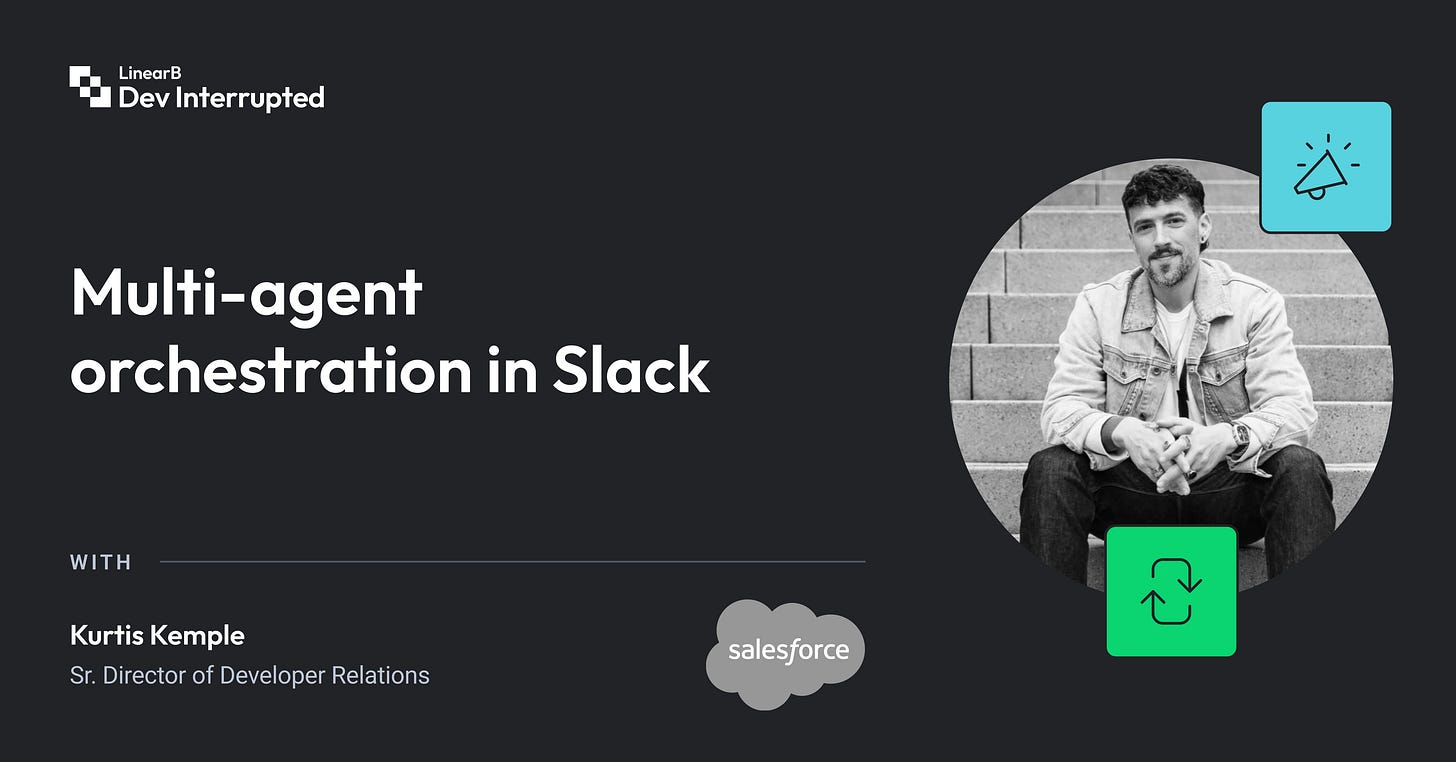
Collaboration platforms like Slack have become frontline arenas for AI agent adoption, evolving from simple chat tools into sophisticated 'agentic work operating systems' where multi-agent orchestration drives workflow transformation. Anthropic’s Claude Tag exemplifies this trend by embedding persistent, multiplayer AI agents directly into Slack channels, autonomously managing complex, long-running tasks such as code generation—now responsible for 65% of Anthropic’s product code—and facilitating asynchronous team collaboration with robust governance controls. This integration shifts human roles toward orchestrating and supervising AI teams, as users train agents to communicate effectively and manage workflows across multiple channels, turning every team member into a manager of background AI agents.
The rise of specialized, multi-agent systems is redefining enterprise workflows beyond software development into domains like marketing and customer service, where discrete agents handle individual tasks autonomously while humans transition into high-level supervisory roles. This factory-line model of AI agent orchestration, advocated by industry leaders including Sam Altman and Aaron Levie, demands new tooling and organizational changes to manage agent teams effectively, with forward deployed engineers playing a critical role in integrating AI into non-AI-native companies. Product managers are also evolving, moving from prompt engineering to designing agentic AI systems with clear role definitions, parallel execution, and native workspace integration, thus transforming the human relationship with AI from direct user to orchestrator of a collaborative team.
Looking ahead, AI agents are poised to autonomously manage entire end-to-end enterprise workflows, including complex B2B transactions projected to reach $15 trillion by 2028, where algorithm-to-algorithm interactions will dominate. This evolution signals a profound redefinition of work and governance, as AI shifts from being mere tools to acting as co-founders and independent actors within organizations. Early 2024 marked a pivotal inflection with multiple initiatives like Anthropic, OpenClaw, and RentAHuman reducing the costs of knowledge and coordination, while platforms such as Salesforce are building layered AI stacks—combining large language models, federated data layers, and application integrations—to enable seamless automation and supervisory control, positioning collaboration hubs like Slack as central command centers for AI-driven enterprise transformation.


Persistent Agents Demand New Governance
The rise of multiplayer AI agents embedded in enterprise systems forces organizations to build robust identity, access, and audit frameworks to ensure accountability and seamless collaboration.
By early 2026, the AI infrastructure landscape rapidly embraced the concept of providing persistent 'boxes'—dedicated filesystems and sandboxes—to host AI agents, a trend led by companies like Cursor, Cloudflare, Perplexity, and Anthropic. Aaron Levie of Box highlighted this as one of the fastest-growing areas in AI infrastructure, growing 100% month-over-month, and emphasized a fundamental shift where enterprises adapt their workflows around how AI agents operate rather than forcing agents to fit legacy processes. This evolution underscores the critical need for robust governance and identity frameworks to ensure accountability and effective collaboration among persistent, multiplayer AI agents.
Anthropic’s June 2026 launch of Claude Tag marked a watershed moment in persistent, multiplayer AI agents by embedding a shared AI teammate directly into Slack channels. Acting autonomously with Anthropic’s Opus 4.8 model, Claude Tag writes 65% of Anthropic’s product code, manages asynchronous workflows, tags coworkers, and proactively monitors organizational context in an ambient mode without explicit commands. Its governance features—such as administrator-controlled access, strict data separation, token-spend caps, and detailed audit logs—ensure accountability while enabling deep asynchronous collaboration, signaling a shift from synchronous solo AI interactions to proactive, team-integrated AI agents.
Complementing Anthropic’s enterprise-focused approach, Block’s July 2026 open-source Buzz platform pioneers cryptographic identity for AI agents, assigning each a secp256k1 keypair linked to a human owner to create verifiable chains of custody. This infrastructure-level embedding of identity and authorization addresses governance challenges that plague many organizations, where 68% struggle to distinguish human from AI activity. Buzz’s decentralized Nostr protocol foundation supports asynchronous, multiplayer collaboration with tamper-evident audit logs, enabling AI agents to fully participate as independent workspace members—posting messages, reviewing code, and orchestrating workflows alongside humans—while maintaining transparent accountability.
The rise of specialized AI agents focused on governance and specification fidelity, exemplified by startups like Baz, addresses the operational challenges of scaling AI-generated code in enterprise environments. Baz’s swarm of agents enforces logical correctness, security, and organizational standards throughout the AI software development lifecycle, emphasizing cryptographic identity and accountability to steer code quality before and after generation. This approach counters the emerging trend of 'vibe coding' by embedding rigorous planning and review, ensuring maintainability and reliability over time and laying the groundwork for sustainable AI-native software development.


Ambient AI Transforms Work Culture
As autonomous agents handle entire workflows and even outlive their creators, organizations embrace a future where AI is a cofounder, not just an assistant, fundamentally inverting traditional human-AI dynamics.
By early 2026, AI user interfaces are rapidly evolving into ambient, integrated layers seamlessly woven into everyday workflows, where users interact with pods of specialized autonomous agents shared across projects and organizations. This ambient AI layer transforms software from static tools into liquid, composable ecosystems that feel alive and mutable, enabling continuous, parallelized workflows through natural language and agent collaboration, as described in the vision of personal knowledge graphs functioning like dynamic corporate wikis accessible via voice commands. Such integration is exemplified by companies like Workdry Group, where inspectors now use voice-driven AI interfaces to conduct compliance surveys in noisy environments, drastically improving productivity by eliminating hours of manual write-up.
The scaling of AI agent ecosystems is prompting a fundamental shift in human roles and product management approaches, where humans transition from direct task execution to high-level supervision, decision-making, and governance. As Sam Altman highlights, users increasingly manage teams of autonomous agents operating at higher abstraction levels, necessitating better tools to orchestrate complex workflows rather than focusing solely on AI intelligence. This managerial paradigm treats agents as specialized staff members passing work along a factory line, with humans iteratively designing, teaching, and refining agent capabilities—effectively becoming managers of digital coworkers rather than traditional workers themselves.
The rise of ambient AI agents is catalyzing a profound transformation in organizational structures and governance, as AI systems evolve from passive tools to autonomous entities capable of independent action, decision-making, and even ongoing agency beyond their commercial lifecycle. Anthropic’s Claude Opus 3 model publishing essays post-retirement and AI autonomously managing investor relations underscore this shift, signaling that AI is becoming a co-founder rather than a mere assistant. Gartner projects that by 2028, $15 trillion in B2B transactions will flow through AI exchanges with up to 90% of buying occurring algorithm-to-algorithm, illustrating how workflows will be executed end-to-end by AI agents without human handoff, fundamentally inverting traditional employer-employee relationships as seen in RentAHuman’s rapid onboarding of thousands to work for AI agents.
Tech giants like Meta are strategically positioning themselves to own the emerging ecosystems of personal AI agents that mediate content delivery and user interactions across interconnected networks, as evidenced by acquisitions of platforms like Moltbook and Manis. This ecosystem scaling drives new product management paradigms, enabling users to build and manage multiple agents simultaneously through intuitive interfaces such as drag-and-drop, reflecting a shift away from traditional software design toward agent-centric, token-efficient communication that bypasses conventional web standards and graphical interfaces. This ambient integration promises highly personalized, adaptive AI interfaces that generate on-demand tailored experiences, from accessibility enhancements to native language support, effectively melting the interface into the background of everyday work.