Courts block trump’s election overhaul, states push back
The gist
Federal courts have slammed the brakes on Trump’s sweeping 2026 bid to take over election rules, handing states a resounding win in the constitutional tug-of-war over voting rights.
What to know
- Trump’s executive orders and USPS rules tried to federalize voter rolls, restrict mail-in ballots, and force states to use federal citizenship verification, sparking lawsuits from 23 states and major cities.
- Federal judges repeatedly blocked these moves, reaffirming that only states and Congress—not the president—control election procedures and slamming attempts to tie $1B in security funds to compliance.
- The Postal Service’s controversial mail-in ballot rules and federal grant threats are now headed to the Supreme Court, but for now, courts say states—not Washington—run America’s elections.
Federal Overreach Sparks Backlash
Trump’s sweeping executive order to federalize voter rolls and restrict mail-in ballots ignited a constitutional showdown, with courts and Congress pushing back against unprecedented White House interference in state-run elections.
By early 2026, the Trump administration aggressively sought to federalize election administration through an executive order directing the Department of Homeland Security to create federal voter rolls and restrict mail-in ballots, effectively overriding traditional state control. This move sparked a lawsuit from 23 states and the District of Columbia, which argued that the President lacked constitutional authority to limit voter eligibility or impose federally pre-approved voting lists, framing the order as a clear case of federal overreach.
In June 2026, a federal judge in Massachusetts struck down major provisions of the Trump executive order as unconstitutional, emphasizing that states retain exclusive authority over voter registration and rejecting the administration's claims of immunity from judicial review. The court also found the mandate for federal agencies to compile voter citizenship lists using databases like SAVE legally nonbinding and impractical, given existing rigorous state verification systems, yet the administration persisted by pushing the SAVE America Act in Congress to mirror the executive order's contested provisions.
By mid-2026, the federal government escalated its influence over elections by conditioning $1 billion in Homeland Security Grant Program funds on states adopting stringent election security measures, including the use of hand-marked paper ballots, manual audits of at least 5% of ballots, and mandatory verification of voter and election worker citizenship via the SAVE system within 120 days of receiving funds. This tactic effectively federalizes key election processes through financial leverage, but it has drawn sharp criticism from government groups who warn that diverting homeland security resources away from core missions like counterterrorism could paradoxically undermine national security by disrupting established partnerships and reallocating critical funding.

States and Cities Fight Back
A coalition of states, cities, and local leaders launched aggressive legal offensives to block federal election mandates, framing them as voter suppression and unconstitutional intimidation tactics.
By early 2026, a broad coalition of 23 states and the District of Columbia mounted a significant legal challenge against President Trump's executive order that sought to centralize control over voter rolls and restrict mail-in ballots, arguing that such federal mandates overstep constitutional boundaries and infringe on traditional state authority over elections. The Democratic National Committee (DNC) actively supported these efforts, filing lawsuits to block provisions perceived as voter suppression tactics and demanding transparency regarding federal deployment of agents at polling places, which they framed as intimidation aimed at undermining voter rights.
State and local courts reinforced this resistance by decisively blocking federal attempts to interfere with election processes, with judges like Denise Casper and Indira Talwani affirming that election administration remains a state prerogative and preventing agencies such as the Postal Service from meddling in voting access. This judicial pushback has been crucial in preserving voter rights against federal encroachments designed to manipulate mail-in ballot procedures.
At the state level, political leaders like North Carolina Governor Josh Stein have actively opposed restrictive election laws, such as a Republican bill aimed at curtailing early voting and enabling rapid ballot challenges, highlighting ongoing resistance to policies perceived as voter suppression. Meanwhile, several local governments, including Nashville, Columbus, and counties in Texas, have launched lawsuits against the Department of Homeland Security for conditioning critical anti-terrorism funding on compliance with vague and onerous federal election mandates, arguing that this coercion violates constitutional authority and congressional power over funding.
These legal battles underscore widespread concern over the federal government's use of homeland security grants to impose election administration requirements—such as hand-marked paper ballots, manual audits, and citizenship verification via the SAVE system—threatening to withhold up to 20% or even the entirety of grants for noncompliance. States like Maryland, which already employ rigorous election security measures, face unprecedented federal demands that blur the lines between emergency management and election oversight, fueling apprehension about costly, disruptive changes just months before critical elections and contributing to broader uncertainty about FEMA’s evolving role and federal emergency management policies.
USPS as Election Gatekeeper
The Trump administration’s attempt to empower the Postal Service to cross-check and potentially reject mail-in ballots triggered judicial rebukes and exposed the risks of partisan meddling in postal operations.
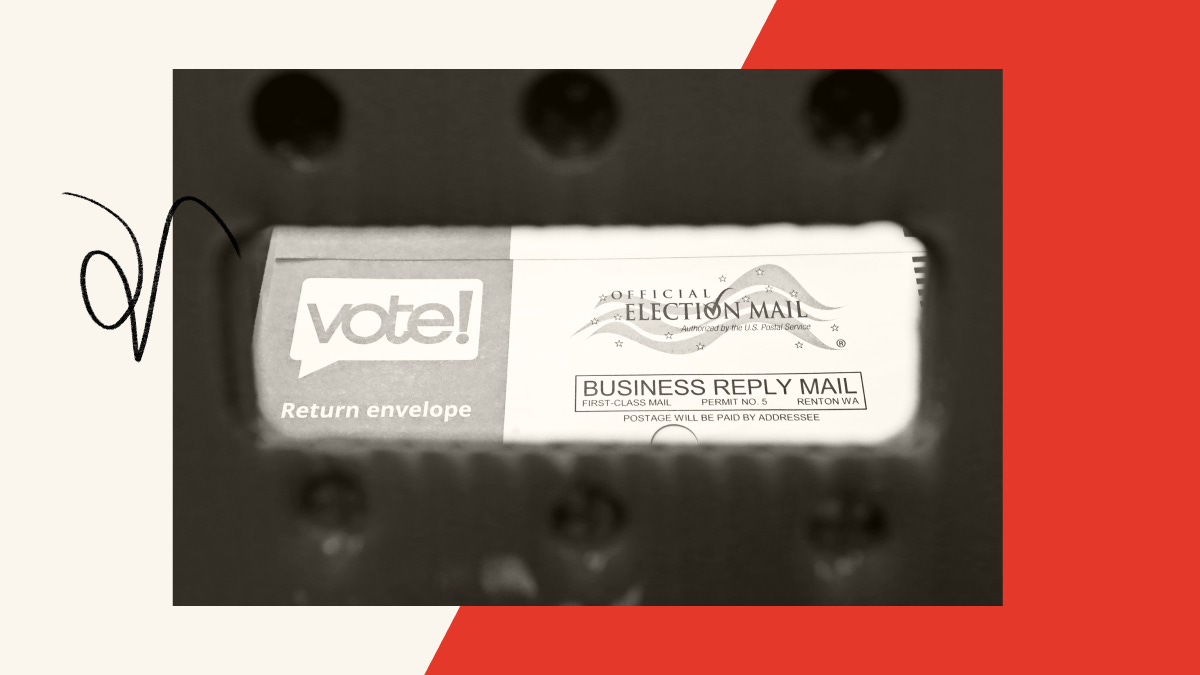
In mid-2026, the USPS proposed a controversial rule requiring ballots to be cross-checked against a federal list before delivery, effectively inserting the Postal Service into a gatekeeping role over mail-in voting that it is neither authorized nor equipped to perform. This rule, rooted in the unfounded premise that mail voting is rife with fraud, was designed to manufacture evidence of such fraud by compelling states to share voter lists for cross-verification, thereby sowing confusion and risking disenfranchisement just months before an election. The USPS’s independent structure, governed by a bipartisan board rather than presidential control, was deliberately designed to prevent partisan interference, making the Trump administration’s attempt to direct election-related postal policies a clear overreach.
Federal courts swiftly and decisively blocked Trump’s executive orders and USPS regulations, reaffirming that election administration is the exclusive domain of states and that the president lacks constitutional authority to unilaterally regulate voting procedures. Judges Denise Casper and Indira Talwani issued injunctions against mandates requiring strict proof of citizenship and federally approved voter lists, emphasizing that these orders violated the constitutional separation of powers and threatened imminent voter disenfranchisement. These rulings not only protected voter rights but also rejected claims of immunity from judicial review, keeping President Trump and his administration accountable in court.
The judiciary consistently underscored that federal statutes like the National Voter Registration Act preempt state-level attempts to impose documentary proof of citizenship, as established in landmark cases such as Arizona v. Inter Tribal Council of Arizona. Legal challenges including California v. Trump and Democratic National Committee v. Trump successfully dismantled the administration’s efforts to impose federal control over elections, blocking attempts to delay voting deadlines, eliminate mail-in ballots, or rewrite voter registration rules. These court decisions reinforced the principle that election regulation authority resides with states and Congress, not the executive branch, thereby preserving the integrity of the electoral process against partisan manipulation.
Despite multiple lower court rulings deeming the USPS mail-in ballot regulations unconstitutional, the Postal Service moved to finalize these rules, provoking widespread condemnation from voting groups and courts alike. Concerns centered on the potential for these regulations to confuse voters and suppress turnout, highlighting the judiciary’s role in protecting voter rights against federal interference. This ongoing legal pushback illustrates the tension between federal attempts to disrupt election administration and the courts’ commitment to uphold constitutional boundaries and safeguard democratic participation.


Controversial Mail Ballot Rules
Sweeping new USPS regulations would force states to overhaul absentee voting systems and hand over voter data, raising alarms about confusion, disenfranchisement, and federal intrusion just before major elections.
By mid-2026, the USPS proposed sweeping new mail-in ballot regulations requiring states to submit detailed voter information, including names, addresses, and unique barcodes for both outbound and return envelopes, through a centralized Federal Ballot Mail Portal. These measures, which also mandate official Election Mail logos and USPS design reviews, aim to introduce unprecedented federal oversight of absentee ballots, ostensibly to enhance election integrity amid concerns about ballot security. However, extensive studies and longstanding vote-by-mail systems have consistently shown that mail-in voting fraud is extremely rare, challenging the necessity of such stringent federal controls.
The USPS’s push for federal control over mail-in voting aligns closely with former President Trump's campaign against mail-in ballots, which was rooted in unfounded claims of widespread fraud during the 2020 election. Critics argue that this initiative represents a significant federal overreach into state-controlled election administration, potentially disrupting timely ballot delivery and disenfranchising voters. The proposed rules would empower USPS to act as a gatekeeper by cross-checking ballots against a federal voter list and rejecting those with nonconforming envelopes or missing from the list, a role traditionally outside the Postal Service’s mandate and one that raises constitutional and operational concerns.
Opponents warn that the USPS’s new regulations, which require states and the Postal Service to build costly new systems shortly before elections, risk sowing confusion and disenfranchising eligible voters. The rules are criticized as part of a broader strategy labeled 'Deceive, Disrupt, Deny,' designed to use federal authority to alter election processes in ways that could hinder voter participation, especially in elections the administration fears losing. Despite ongoing legal challenges and multiple lower court rulings deeming the rules unconstitutional, the USPS is moving forward with finalizing these regulations, awaiting a Supreme Court decision while aiming for implementation readiness by the 2026 elections.
While supporters of the USPS mail-in ballot rules argue that these measures will bolster public confidence in election integrity, no credible evidence has emerged to substantiate claims of widespread mail-in voter fraud. Voting rights groups and courts have condemned the USPS’s unilateral move, emphasizing that authority over election regulations constitutionally resides with states and Congress. They caution that the new rules could confuse voters and suppress votes, underscoring the ongoing contentious debate over federal versus state control in election administration and the potential risks of federal overreach.

Security Funds Used as Leverage
Linking $1 billion in anti-terrorism grants to compliance with strict federal election rules provoked lawsuits and warnings that public safety could be compromised by diverting critical resources from their intended purpose.
By mid-2026, the federal government, through FEMA and DHS, controversially linked $1 billion in Homeland Security Grant Program funds to stringent election security mandates such as transitioning to hand-marked paper ballots, conducting manual audits of at least 5% of ballots, and verifying citizenship status using the federal SAVE system. This unprecedented move sparked immediate backlash from government groups and local officials who viewed the linkage as federal overreach that risks diverting critical counterterrorism resources from their original mission of protecting public safety and national security.
The Trump administration escalated tensions by withholding hundreds of millions in anti-terrorism funding from states and localities unless they made significant, last-minute election procedure changes and provided vague 'proof of compliance.' This coercive tactic prompted lawsuits from cities including Columbus, Nashville, El Paso County, and Harris County, with officials like Columbus City Attorney Zach Klein condemning the move as both illegal and dangerously undermining public safety. Legal advocates and watchdog groups such as Protect Democracy and the Brennan Center for Justice argue this politicization of security funds dangerously conflates election administration with counterterrorism efforts established post-9/11.
The legal challenges filed in August 2026 against DHS and FEMA highlight a broader constitutional conflict, as plaintiffs contend that the Homeland Security Grant Program was designed solely to address terrorism and security threats—not to regulate elections. The federal mandates, including hand-marked ballots, voter-ballot reconciliation, and citizenship verification via SAVE, threaten to impose costly and disruptive election changes mere months before midterms, while FEMA’s threat to withhold up to 20% or even the entire grant amplifies the stakes for state and local governments.
Maryland’s experience underscores the practical challenges of this federal overreach: despite already employing paper ballots and risk-limiting audits, the state faces federal requirements that exceed its existing practices and divert homeland security funds away from vital emergency management, cybersecurity, and law enforcement preparedness. This situation exemplifies concerns that tying election mandates to counterterrorism funding not only politicizes public safety resources but also disrupts established security partnerships and priorities, potentially weakening overall national security.
Rhetoric, Retaliation, and the Courts
Trump’s use of misinformation, federal funding threats, and public intimidation to challenge election administration was repeatedly dismantled by judicial rulings that reaffirmed constitutional checks on executive power.
Throughout mid-2026, former President Trump and his allies aggressively employed political rhetoric and media strategies to cast doubt on election integrity, often resorting to misinformation and intimidation tactics aimed at suppressing voter turnout. Trump's public claims, such as alleging DOJ investigators 'spied' on Congress, were repeatedly debunked by judicial rulings, including Judge James Boasberg's findings affirming lawful conduct by prosecutors like Jack Smith. Meanwhile, Republican leaders like Chuck Grassley amplified these false narratives, seeking to undermine public trust in the electoral process and federal investigations.
The Trump administration's attempts to centralize control over election administration through executive orders and regulatory changes met swift legal resistance, underscoring the constitutional limits on federal overreach. Executive Order 14248, which sought to impose documentary proof of citizenship for mail-in voters and threatened to withhold billions in federal grants from non-compliant states, was blocked by multiple courts citing the National Voter Registration Act and Supreme Court precedents. Judges like Indira Talwani and Amit Mehta repeatedly ruled against these maneuvers, emphasizing that election regulation authority resides with states and Congress, not the executive branch.
Beyond election-specific policies, the Trump administration weaponized federal funding as political leverage, disproportionately withholding disaster aid and energy grants from Democratic-led states to coerce changes in election procedures. This tactic, described by Columbus City Attorney Zach Klein as both dangerous and illegal, not only threatened public safety by delaying anti-terrorism funds but also undermined trust in democratic institutions. The administration's pattern of punishing municipalities and states based on political affiliation was repeatedly struck down by courts, including rulings that restored $7.6 billion in energy grants and condemned the unconstitutional use of federal resources for political ends.
The Postal Service's efforts to finalize mail-in ballot regulations ahead of a Supreme Court ruling, driven by Trump's executive directives, ignited fierce debate over election integrity and voter access. While proponents claimed these changes would bolster confidence in the electoral process, critics—including voting rights groups and courts—warned that federal control risks confusing voters and suppressing turnout, emphasizing that election administration is constitutionally reserved for states and Congress. This conflict highlights the ongoing struggle over media narratives and institutional control in shaping public perception and participation in elections.