Creators double down on email and owned communities
The gist
Creators are ditching social media’s algorithm roulette, doubling down on email lists and private communities to take back control from fickle platforms and secure sustainable revenue.
What to know
- By early 2026, creators saw organic reach on social media drop by up to 50% per year, pushing a mass migration to owned channels like Substack and Mighty Networks.
- Social media is now just a discovery funnel, with savvy creators capturing emails and building private membership spaces to weather unpredictable algorithm changes.
- Platforms like Beehiiv and Substack are winning favor by letting creators own their audience data, tap into new monetization streams, and maintain direct relationships—even if the platform shifts beneath their feet.
From Sharecroppers to Owners
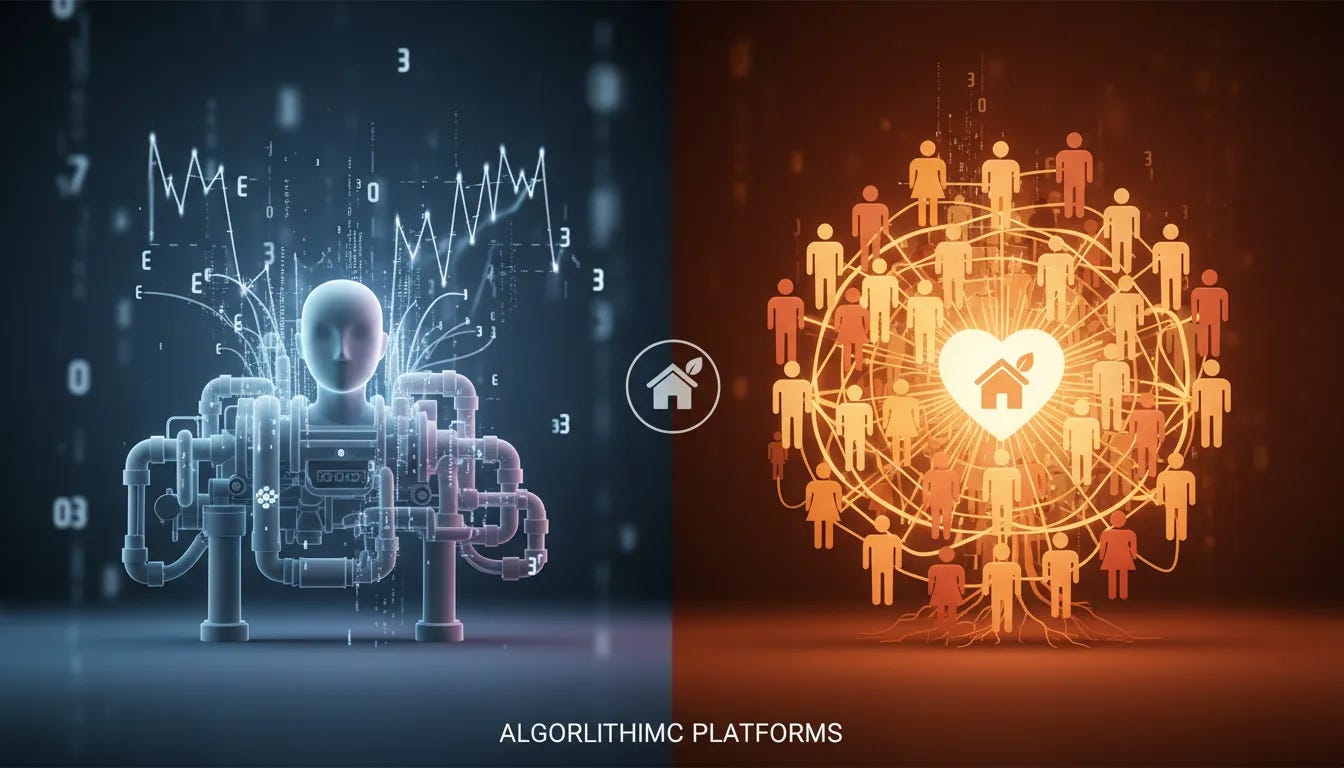
Creators are abandoning risky algorithm-driven platforms and investing in data sovereignty, treating audience ownership as the new survival strategy.
By early 2026, creators faced a relentless decline in organic reach on social media platforms, with some reporting losses of up to 50% annually, starkly illustrating the precariousness of 'renting' audience attention rather than owning it outright. This erosion of visibility, compounded by algorithmic prioritization of content relevance over sheer audience size—as one analysis put it, 'It really doesn't matter how much of an audience you have... it matters what I posted today'—has driven creators to seek refuge in owned platforms like Substack. Hiring chief data officers to build proprietary data warehouses exemplifies this strategic pivot toward data sovereignty, enabling creators to bypass algorithmic gatekeepers and maintain direct, unmediated relationships with their followers.
The shift from social media to owned channels such as email lists, communities, and podcasts is not merely a trend but a survival tactic against the capriciousness of algorithm-driven platforms. Despite LinkedIn remaining a primary revenue source for 36% of solopreneurs, the majority plan to double down on owned environments that guarantee direct audience access without the risk of being buried by opaque algorithms. Creators increasingly use social media as a mere discovery funnel, funneling audiences into these owned spaces to escape the 'borrowed time' imposed by algorithmic shifts, thereby securing sustainable, controllable engagement.
The metaphor of 'digital sharecropping' vividly captures the existential risk creators face when building businesses on platforms they do not control. As one analysis warns, creators often invest significant time and energy into content on infrastructures governed by landlords—platforms—that can change rules, monetization policies, or even suspend accounts without warning. This dynamic reduces impressive metrics like views and subscriber counts to vanity statistics if they do not translate into direct audience access, underscoring the necessity of a mindset shift from tenant to owner, where creators control distribution, monetization, and audience relationships.
The contemporary internet landscape has morphed into a pay-to-play labyrinth designed to maximize gatekeeper profits rather than foster genuine creator-audience connections. As noted in 2026, discoverability now often requires cold hard cash, with platforms prioritizing addictive user experiences and monetization strategies that squeeze users to their financial limits—a phenomenon dubbed 'enshittification.' This environment entrenches digital sharecropping further, as creators without sufficient funds lose the ability to reach customers and communities, making direct audience ownership not just preferable but essential for creative and economic survival.



Mindset Shift: Platform as Funnel
Sustainable creators treat platforms as mere entry points, prioritizing email ownership and portable monetization to escape algorithmic dependence.
By early 2026, creators like Alicia exemplify a critical mindset shift from mere content production to strategic audience management, emphasizing diversification and direct audience ownership to mitigate platform risks. Alicia’s move from LinkedIn to Substack highlights the importance of controlling subscriber email addresses, which serve as a safety net against algorithmic unpredictability—a sentiment echoed by experts who stress regularly backing up email lists to safeguard against platform volatility.
Selecting platforms that prioritize audience portability and monetization is foundational for sustainable growth, with Substack emerging as a favored choice due to its model where creators earn revenue only when subscribers pay, aligning platform incentives with creator success. Unlike traditional social media, Substack provides true ownership by granting access to subscriber emails, enabling creators to maintain their audience even if the platform changes or disappears, a feature that fosters trust and long-term engagement through strategies like promoting annual subscription plans.
A strategic creator mindset involves treating platforms as tools to funnel audiences into owned channels rather than relying on them as primary revenue sources, recognizing that dependence on any single platform for over 30% of income is precarious. This approach requires monitoring platform health signals—such as declining organic reach and rising paid promotion costs—and understanding platform economics revealed in earnings calls and fee schedules, thereby positioning creators as savvy operators managing their own tech stacks rather than passive content producers vulnerable to algorithmic whims.
Transparency and public accountability are strategic tools for building authentic audience relationships, as demonstrated by Alicia’s public goal to grow from zero to 10,000 followers in 90 days, which underscores that starting from scratch is not a liability but a relatable narrative that fosters trust. This openness complements the broader strategic shift where creators leverage social media primarily for discovery and relationship-building before migrating audiences to owned platforms where monetization and control are more sustainable.

Community Over Clout
Creators are building private, actionable spaces and using email as their core asset, trading vanity metrics for deep engagement and durable revenue.
By early 2026, creators increasingly recognized that platforms like YouTube, while valuable for reach, fall short in fostering true community and reliable revenue due to lack of direct audience data such as email addresses. To overcome this, many turned to private membership platforms like Mighty Networks and Skool, which enable creators to offer specialized, actionable programs and create spaces where fans on similar journeys can connect deeply. These owned communities not only diversify income streams beyond ad-dependent models but also provide richer member insights and foster genuine engagement beyond superficial metrics like subscriber counts.
Email remains the cornerstone of owned audience strategies, with creators planning to increase investment in newsletters and long-form content despite evolving digital trends. Effective audience building balances volume and depth: while lead magnets—especially targeted, problem-specific resources—drive subscriber growth, sustained trust and conversion hinge on regular, authentic email engagement that showcases the creator’s unique thinking. This approach is bolstered by renewed interest in blogs and SEO for evergreen discovery, as creators seek to build durable relationships that transcend the fleeting nature of social media algorithms.
Optimizing owned channels for maximum conversion involves strategic naming and messaging that clearly articulate the problems solved, as demonstrated by Substack best practices where newsletter titles and about pages function as sales pages focused on reader needs. The welcome email, boasting open rates between 50–80%, is a critical touchpoint to set expectations and introduce paid tiers, while pinned ‘Start Here’ guides serve as evergreen gateways nudging subscribers toward premium content. These tactics transform newsletters from mere information streams into powerful, conversion-optimized platforms.
Lead magnets, when designed as targeted, high-value resources rather than generic freebies, become foundational tools for building reliable pipelines and deepening audience relationships. The most effective lead magnets solve specific local or niche problems, are tailored to well-defined personas, and are integrated into multi-channel distribution systems—including paid traffic, local business collaborations, and nurture sequences—to maximize reach and trust. As emphasized, treating lead magnets as ongoing engagement engines rather than one-off posts is essential to sustain warm leads and convert them into meaningful conversations and sales.

Monetization Evolves, Platforms Adapt
Platforms like Beehiiv and Substack are reshaping creator economics with new discovery engines and ad networks, but platform dependency remains a double-edged sword.
By early 2026, creators are decisively shifting their focus from algorithm-dependent social media platforms to owned channels such as email lists, communities, and podcasts, recognizing these as more sustainable avenues for direct audience relationships. Although 36% still cite LinkedIn as a primary revenue source, the majority plan to double down on owned platforms to mitigate the unpredictability of algorithm changes, signaling a maturation in creator marketing strategies that prioritize long-term control over audience access.
Beehiiv exemplifies the evolving creator economy by transforming from a newsletter platform into a multifaceted monetization ecosystem that empowers creators to diversify income streams beyond subscriptions. Its free-to-start model lowers barriers for emerging creators aiming to go full-time, while the Beehiiv ad network connects them with thousands of premium brands, addressing the critical challenge of sustainable monetization and enabling creators to leverage their engaged audiences more effectively.
Platform-specific dynamics illustrate the nuanced shifts in creator economics: LinkedIn’s 360Brew algorithm now favors authentic, industry-specific engagement over viral content, reducing organic reach and compelling creators to adapt their strategies for visibility and monetization. Meanwhile, Substack has evolved into a powerful discovery engine, with its recommendation network driving up to half of new subscriptions by 2025, enhancing creator economics but simultaneously increasing dependency on the platform’s ecosystem.
Beyond content platforms, Amazon’s increasingly complex multi-layered algorithms—spanning A9/A10 keyword optimization, COSMO semantic understanding, and the Rufus conversational layer—exemplify advanced rent-seeking behavior that intensifies information asymmetry. This opacity enables Amazon to prioritize its own products over sellers’, highlighting how platform control can undermine creators’ or sellers’ ability to maintain autonomy and economic leverage in the ownership era.