CTV ad boom faces AI hype, trust gaps, and sports surge
The gist
Netflix is shaking up streaming ads by dropping spend minimums on its 250 million-user inventory, unleashing a programmatic gold rush—but trust, measurement woes, and a live sports arms race are raising the stakes.
What to know
- Netflix just made its entire ad inventory available to all buyers on The Trade Desk, no minimum spend required, democratizing access to premium streaming audiences.
- AI is driving a 30% spike in CTV ad growth and a 92% surge in verification services, but nearly half of marketers still call CTV an 'attribution black hole.'
- Live sports like the NBA Finals and World Cup are the hottest tickets for advertisers, even as 43% of buyers distrust CTV ad placement and industry giants like Roku and Fox bet big on premium sports to restore confidence.
Programmatic Takes Center Stage
Samsung and Netflix are reshaping CTV by unlocking massive, data-rich audiences through home screen targeting and open programmatic access, setting new standards for scalable, democratized ad delivery.
Samsung Electronics is pioneering programmatic advertising on Connected TV by harnessing home screen ad data across an impressive network of over 70 million European devices. As Alex Hole of Samsung underscores, this approach positions programmatic as the future of CTV, enabling highly targeted and scalable ad delivery directly on the most prominent screen real estate of the TV experience.
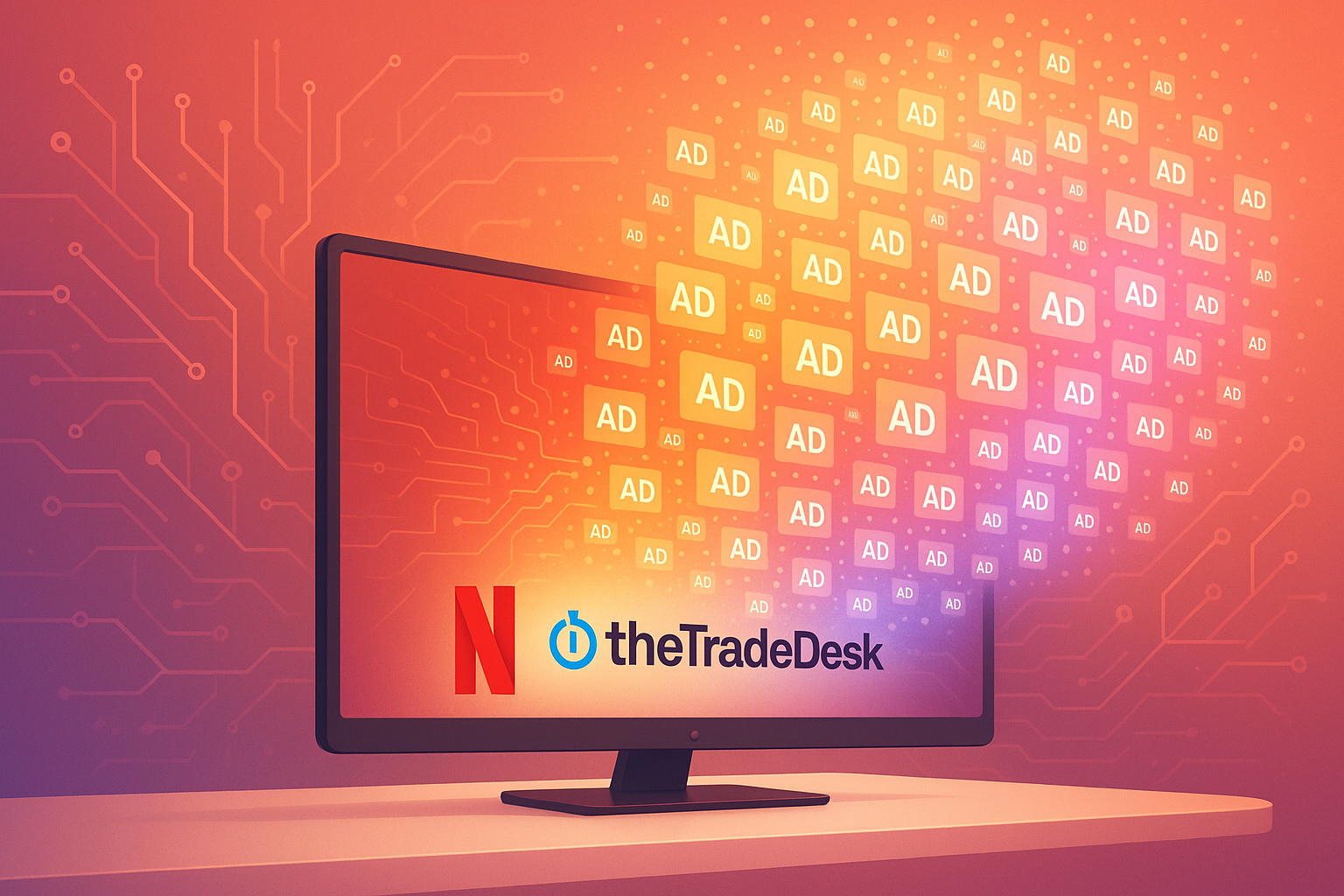
Netflix has dramatically expanded programmatic accessibility by opening its vast 250 million-user ad inventory to all buyers on The Trade Desk without imposing any spend minimums. This democratization of premium streaming inventory signals a major shift in the CTV ecosystem, allowing advertisers of all sizes to tap into Netflix’s engaged audience through streamlined, data-driven buying.
AI’s Double-Edged Impact
AI is fueling explosive ad growth and verification in CTV, but persistent measurement blind spots and fragmented standards are leaving nearly half of marketers in the dark on true campaign performance.
AI has become a pivotal engine driving the rapid 30% growth in Connected TV advertising, as highlighted by Magnite CEO Michael Barrett, who credits AI for significant productivity gains despite some financial headwinds like a 5.5% revenue miss in Q1. This surge is mirrored in verification technologies, with DoubleVerify reporting a remarkable 92% growth fueled by its AI-enhanced CTV offerings, underscoring how advanced technologies are shaping both growth and the critical need for reliable ad verification amid pricing pressures.
Measurement challenges remain a major bottleneck for CTV advertising’s full potential, with 58.6% of marketers admitting they underinvest in channels lacking robust AI-driven measurement, and CTV scoring lowest in attribution confidence at just 3.1 on a confidence scale. This gap creates significant blind spots—47.1% of marketers identify CTV as a key attribution black hole—prompting the industry to look toward mobile advertising’s 'mobile-grade measurement' standards as a blueprint to enhance privacy-safe attribution, fraud validation, and cross-device identity solutions.
Nielsen’s $2.15 billion acquisition of DoubleVerify epitomizes the industry’s drive toward consolidating AI-powered measurement and verification capabilities to bolster transparency and trust in an increasingly fragmented media ecosystem. As Nielsen CTO Anil Goel explains, the future hinges on 'trusted, independent and AI-enabled measurement' that can unify cross-platform audiences in real time, shifting the focus from mere exposure metrics to tangible business outcomes like sales and customer acquisition, even as only 32% of marketers currently achieve holistic cross-media measurement.
The rapid infusion of AI into advertising decision-making is reshaping the landscape, with platforms like Google deploying AI-driven upgrades and enabling AI agents to participate in live auctions, thereby accelerating automation but complicating traditional verification paradigms. This convergence—where the company that counts audiences absorbs the one that verifies ads, just as automated buying systems generate complex traffic patterns—raises profound challenges for transparency and trust, highlighting a structural shift where automation outpaces human judgment and verification intermediaries struggle to keep pace.

Sports: The Unmatched Magnet
Live sports continue to command premium ad dollars and unrivaled engagement, cutting through content overload with communal, real-time experiences that streaming platforms can’t replicate elsewhere.
By 2026, live sports on big-screen TVs continue to dominate audience engagement and remain central to digital entertainment strategies, despite the surge in AI-driven content creation and ad tech innovations. The emotional intensity and fan loyalty, exemplified by events like the NBA Finals where the New York Knicks set records with 14 three-pointers, underscore why sports command premium advertising value despite costly rights fees. This passionate connection ensures sports content consistently over-indexes in ad spend, making it indispensable for platforms seeking to cut through the clutter.
As streaming services grapple with commoditized entertainment marked by content overload and diminishing differentiation, live sports stand out as the best unscripted programming that naturally captivates viewers. The global scale of events such as the World Cup, watched by 1.5 billion people for the final alone, reinforces sports’ unique ability to unite fragmented audiences around compelling narratives of winners, losers, and rivalries, offering advertisers a rare opportunity to engage consumers deeply.
In an increasingly fragmented media landscape, live sports events create a sense of urgency and communal experience that significantly boosts viewer engagement with advertisements. This immediacy attracts escalating brand investments, as marketers recognize that live moments—unlike on-demand content—can gather massive, attentive audiences simultaneously, enhancing ad recall and effectiveness in ways that other programming struggles to replicate.

Trust Crisis Spurs Shakeup
Surging distrust, ad fraud, and industry consolidation are forcing CTV giants to double down on live sports and verification, but new risks to transparency and independent oversight threaten advertiser confidence.
By mid-2026, advertiser distrust in Connected TV ad placement has surged, with the Interactive Advertising Bureau reporting that 43% of CTV buyers harbor skepticism about the reliability and transparency of their ad environments. This growing wariness is compounded by persistent targeting challenges and brand safety liabilities, prompting industry leaders like IAB CEO David Cohen to highlight the cautious stance buyers are taking, especially as digital video ad spend continues to rise amid these unresolved trust issues.
The $22 billion partnership between Fox and Roku exemplifies the industry's strategic pivot toward premium live sports content as a bulwark against escalating CTV ad fraud. This move underscores a broader trend where high-value, live programming is leveraged to restore advertiser confidence, even as the ecosystem grapples with verification complexities intensified by AI-driven automated buying systems that blur the lines between genuine and fraudulent traffic patterns.
Amid rising concerns over transparency and fraud, the ad tech sector is undergoing significant restructuring, marked by major verification firms like Nielsen acquiring DoubleVerify for $2.15 billion and others like Criteo and Integral Ad Science transitioning to private equity ownership. This consolidation away from public markets raises alarms about independent oversight, as the very entities responsible for measurement and verification become entwined, potentially undermining advertiser trust during a period of heightened industry upheaval and costly fraud litigation.
While AI is increasingly viewed by investors as a promising avenue for value creation, its adoption in CTV advertising remains cautious due to persistent measurement challenges and advertiser skepticism about return on ad spend, as evidenced by OpenAI's underwhelming ad revenue performance. Companies like Google have responded with rare concessions—such as allowing media buyers to opt out of certain third-party placements in Performance Max campaigns—reflecting a delicate balance between innovation and the urgent need for transparency and control in AI-powered ad platforms.