Debt, power, and the fracturing of trust
The gist
America’s trust is on life support as economic despair, executive overreach, and algorithm-fueled reality splits push institutions and social cohesion to the brink.
What to know
- By early 2026, U.S. household debt has soared to $18.6 trillion and essential services are unaffordable, fueling youth nihilism and deepening generational divides.
- The Trump administration’s unchecked power—including a $1.776 billion fund for January 6 rioters and unilateral military actions—has normalized corruption and intensified political polarization.
- Social media algorithms and AI-driven information control have shattered shared reality, amplifying misinformation and tribalism while grassroots activism and revived religious institutions fight to rebuild trust.
Broken Promises, Bitter Divides
The collapse of economic security and skyrocketing debt have left even the most privileged young Americans adrift, fueling intergenerational resentment and a pervasive sense of betrayal.
By late 2025, economic insecurity had deepened significantly, with U.S. layoffs surpassing Great Recession levels and small-business sentiment sinking to recessionary lows, while full-time employment contracted and part-time work reached record highs. This economic distress was compounded by soaring household debt—reaching approximately $18.6 trillion—and credit card delinquencies hitting 14-year highs, signaling widespread financial strain that undercut social cohesion and trust in institutions. The traditional promise that a good education guarantees economic security quietly expired around 2021, as even Ivy League graduates struggled to find stable employment, fueling generational tensions and a growing sense of economic nihilism among youth.
The affordability crisis, driven in part by Baumol’s Cost Disease, has made essential in-person services like healthcare, education, and childcare increasingly unaffordable, squeezing the middle class and eroding economic stability. John Burn Murdoch highlights how productivity gains in tradeable goods paradoxically inflate costs for these core services faster than wages rise, while Paul Starr documents the rollback of public subsidies that once made education and cultural resources accessible. This economic pressure traps younger generations in a prolonged adolescence—unable to afford independent living or traditional markers of adulthood—exacerbating resentment and undermining trust in societal institutions.
Social fragmentation and declining trust are intensified by widening wealth gaps and generational divides, as older voters prioritize policies benefiting themselves at the expense of younger generations, perpetuating a systemic transfer of wealth from young to old. This dynamic fuels political disillusionment, with only 30% of young Americans believing they will be better off financially than their parents, and just 35% trusting those with opposing views to want the country's best. The rise of social media since 2013 has amplified polarization and conspiracy theories, distorting national narratives and deepening identity-based divisions, as evidenced by over a third of employees admitting they would reduce effort if their manager held different political beliefs.
By early 2026, trust erosion had become a pervasive societal malaise, with low-income Americans exhibiting a 29-point trust deficit compared to high-income peers—the widest gap globally—and nearly 60% of respondents expressing feelings of grievance. This distrust extends beyond institutions into everyday economic interactions, where policies such as 'defund the police' experiments and rising retail theft have disrupted community trust and market functioning, prompting policy rollbacks and consumer disengagement. As Scott Galloway warns, trust operates as invisible infrastructure; its failure, fueled by a K-shaped economy and declining empathy, risks societal catastrophe unless the cracks are acknowledged and addressed.





Corruption as the New Normal
Unchecked executive power and elite impunity have transformed U.S. governance into a spectacle of systemic grift, eroding faith in democracy and legitimizing authoritarian alternatives.
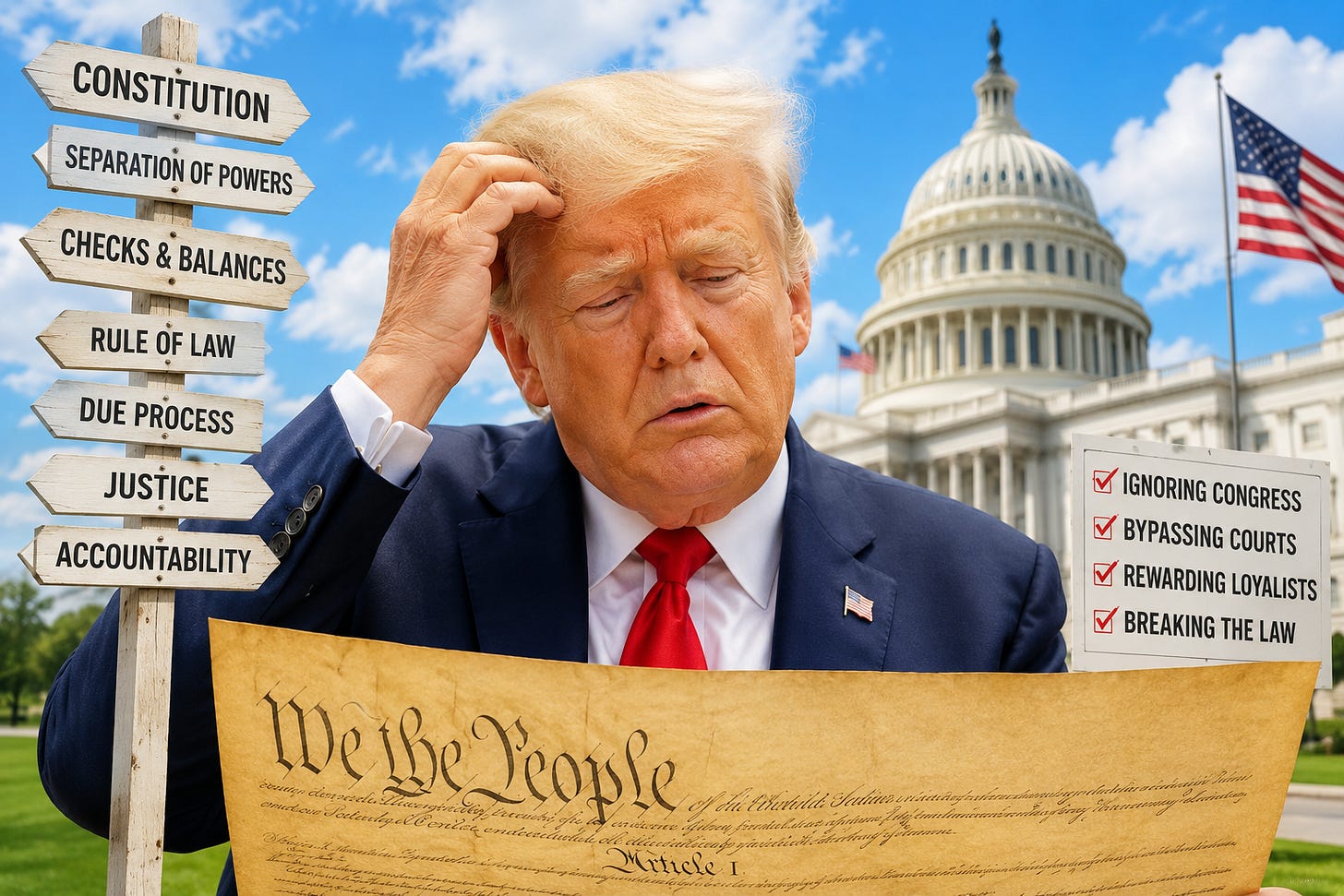
By early 2026, unchecked executive power and elite impunity have deeply eroded democratic norms and governance, as exemplified by the Trump administration’s brazen overreach and normalization of corruption. The creation of a $1.776 billion fund by the Justice Department to compensate January 6 rioters, described by Representative Jamie Raskin as 'a political grievance fund Trump can use to pay off his friends,' alongside unilateral military actions such as the bombing of Iran without Congressional approval, highlight a blatant disregard for constitutional checks and accountability. Senator Chris Murphy’s characterization of this administration as a '247 grift machine' underscores how political corruption has become systemic, with a culture rewarding winners regardless of ethics, further undermining public trust and institutional legitimacy.
Political polarization has fractured societal cohesion and institutional trust, creating a landscape where governance is hampered by tribalism, performative outrage, and competing realities. Analyses reveal that institutions once trusted as referees have become players in the political game, eroding legitimacy and accountability as citizens inhabit 'a thousand stories, none of them shared.' This fragmentation is exacerbated by algorithm-driven echo chambers that deepen divides, with 70% of respondents globally hesitant to trust those with differing views, and over a third of employees admitting they would reduce effort if their manager held opposing political beliefs. Such dynamics fuel public disengagement and create fertile ground for authoritarian alternatives, as people 'stop believing the system is for them' and consequently 'check out, numb out, drop out.'
The interplay of economic disruption, shifting global power, and elite narratives has intensified political polarization and institutional decay. The fracturing of traditional political coalitions in the US, driven by pressures from China’s economic rise and technological upheaval, has led to populist backlashes that challenge democratic norms. Meanwhile, elite acknowledgment of systemic failures—such as Mike Green’s viral assertion that a comfortable US family income is $140,000, far above the poverty line—often serves to absorb dissent without enacting meaningful change. This convergence of extreme right and left critiques, as seen in figures like Tucker Carlson and JD Vance, masks a shared elite failure to address inequality and governance issues, perpetuating a system where 'enough accountability theater' preserves institutional dignity but not real accountability.
The weaponization of political institutions and the erosion of shared moral standards have transformed governance into a zero-sum, partisan spectacle that undermines democratic accountability. The normalization of insider trading and corruption, justified variably depending on partisan allegiance, reflects a broader decline in universal ethical norms, with political actors treating oversight as a 'sword that I get to wield when I'm in office.' This dynamic is compounded by the fragmentation of discourse, where intellectual elites on both sides adopt a 'speaking truth to power' ethos that often devolves into motivated reasoning rather than rigorous inquiry. The resulting environment fosters elite impunity, executive overreach, and a pervasive sense that 'the only story we could plausibly tell ourselves right now is I hate you, you hate me,' deepening institutional decay and governance paralysis.



Truth Fractured by Algorithms
AI-driven platforms and polarized media ecosystems have shattered shared reality, making consensus impossible and leaving the public vulnerable to manufactured narratives.
By early 2026, ideological battles over free speech on digital platforms, epitomized by figures like Sarah Rogers within the Trump administration, have intensified societal fragmentation. Rogers’ radical defense of unmoderated internet speech, particularly opposition to account bans, clashes sharply with European diplomats who view such policies as reckless provocations that flood discourse with far-right extremism. This transatlantic mistrust underscores how personal experiences with platform moderation and divergent political cultures have fractured any consensus on misinformation and speech regulation, deepening the divide over what constitutes truth online.
The erosion of trust in legacy media, once seen as a public trust exemplified by CBS News during the OJ Simpson trial era, has accelerated as profit motives drove sensationalism and clickbait, fracturing the shared factual basis that underpinned American discourse. As one analyst lamented, the country has shifted from 'one set of facts and 100 opinions' to '20 sets of facts about the same thing and a million opinions,' creating a vacuum swiftly filled by social media platforms. These platforms, driven by algorithms that reward outrage and emotional engagement, have become the new arbiters of truth, often amplifying misinformation and tribal divisions rather than fostering understanding.
The rise of AI firms controlling the infrastructure of information production marks a new form of epistemic domination, where a handful of companies shape not only what citizens know but how they interpret knowledge itself. This unprecedented private power challenges traditional democratic theory, which has not fully accounted for the influence of algorithmic curation and synthetic media on public belief formation. Compounding this, covert advertising tactics—such as 'clipping' viral videos and paid Wikipedia edits—blur the lines between authentic discourse and manufactured consensus, leaving consumers reliant on a 'wisdom of the crowd' that may be artificially engineered.
Efforts to rebuild trust in media and institutions face daunting obstacles as public skepticism has become corrosive, fueled by a legacy of institutional disappointments and vilification. Transparent, accountable journalism that investigates rather than adjudicates identity is urgently needed to restore a shared factual foundation, yet economic incentives continue to favor politically biased content that garners higher engagement. Independent outlets like Raw America strive to counteract corporate media manipulation by relying solely on reader support, emphasizing unbought reporting amid increasing censorship and political pressure. Meanwhile, the UK’s media landscape exemplifies these challenges, with 80% of mainstream press owned by right-leaning oligarchs, regulatory ineffectiveness, and historic lows in public trust—only 30% trust news overall—highlighting the global scale of this crisis.





Technology’s Identity Crisis
AI, global labor platforms, and virtual economies are dissolving traditional communities and political alliances, creating new identities—and new resentments—beyond national borders.
By early 2026, technological advances such as AI, the Internet, and robotics have profoundly disrupted traditional labor markets and political coalitions, unevenly impacting demographic groups across the globe. For instance, the Internet's erosion of ad revenue and classified ads destabilized 'blue America,' fueling cultural shifts like wokeness and Tech Lash, while China's manufacturing ascent pressured 'red America,' contributing to political realignments exemplified by the Trump trade war. Simultaneously, global labor arbitrage enabled by remote work platforms has allowed workers in India and Vietnam to perform tasks once protected by Western licensure, driving down costs but igniting resentment among displaced Western workers and fracturing long-standing political coalitions such as urban progressives and blue-collar workers alike.
Technological platforms have evolved into potent geopolitical instruments that extend influence beyond traditional state actors, with AI and data surveillance companies reshaping power dynamics worldwide. Algorithms on digital platforms exacerbate societal polarization by steering users toward ideological extremes, a phenomenon that entrenched power structures exploit to maintain control, thereby corroding authentic community trust. Meanwhile, innovations like Bitcoin offer a technological 'exit' from centralized financial systems, granting individuals sovereignty through self-custody and permissionless transfers, signaling a parallel quest for autonomy amid growing institutional distrust.
Digital technologies, including blockchain-based gaming and AI, are dismantling the traditional machinery of community and identity formation historically anchored in nation-states and institutional infrastructures. In economically challenged regions, platforms like Axie Infinity and RuneScape enable individuals to forge new economic and social identities outside state control, as exemplified by Filipinos earning $300 monthly through gaming—surpassing the national minimum wage. However, as Marko insightfully observes, the 'parent-state duopoly over young minds' is being severed by screens and virtual worlds, with AI emerging as an even more powerful force than VR in dissolving identity structures and accelerating the crisis of belonging.
The intersection of social media, AI, and economic pressures is reshaping traditional life milestones and social bonds, contributing to a crisis of adulthood and complicating efforts to rebuild authentic community trust. Rising housing costs, remote work, and financial nihilism are fragmenting social cohesion, particularly between young men and women. Concurrently, AI and social media platforms undermine community trust by facilitating misinformation, censorship debates, and threats to whistleblower anonymity—highlighted by Joe Rogan’s stance that 'you don't counter hate speech with censorship. You counter it with better speech.' The proliferation of deepfakes and harmful chatbot interactions further erodes public confidence, while users’ adoption of coded language like emojis to evade moderation signals a cultural shift complicating online discourse and community resilience.




The Imperial Presidency Rises
Trump’s return unleashed a presidency unbound by legal norms, weaponizing state power and fear to silence opposition as grassroots resistance becomes democracy’s last line of defense.
By early 2026, the return of Donald Trump to the Oval Office with fewer constraints and a more loyal team marked a significant erosion of legal and democratic norms, signaling the rise of an imperial presidency willing to aggressively expand executive power. This shift was underscored by his open assault on truth and democratic institutions, exemplified by policies such as indefinite detention of immigrant families as a deliberate act of cruelty and the weaponization of the Justice Department against political opponents, including baseless investigations targeting figures like the Federal Reserve Chair. Trump's transformation from an anti-globalist firebrand to a guest of honor at Davos further reflects broader global realignments that complicate democratic resistance and institutional accountability.
The administration's embrace of fear-based governance and militarized state power normalizes authoritarian tactics both abroad and at home, with aggressive foreign interventions like the January 3rd Venezuela operation framed as resource acquisition devoid of American casualties, and unprecedented militarization of immigration enforcement involving $170.1 billion in funding for ICE and National Guard deployments. This militarization, combined with rhetoric portraying multilateral organizations as ideological threats, erodes public trust in institutions and expands executive overreach, creating a unique ecosystem where traditional checks and balances are openly undermined.
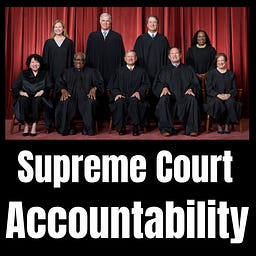
Despite a conservative 6-3 Supreme Court majority, engineered by the Federalist Society and dark money campaigns to endorse expansive executive power, judicial checks have occasionally pushed back against executive overreach, a resistance largely sustained by grassroots civic engagement and movements like No Kings. This bottom-up civic activism remains crucial as formal institutions falter, emphasizing that meaningful democratic reform historically arises from collective public pressure rather than top-down mandates. As noted, 'People Power is the wall that stops this slide toward authoritarianism,' highlighting the indispensable role of organized, visible resistance in defending democratic norms.
The normalization of authoritarian governance represents a systemic transformation that outlasts individual leaders, embedding loyalty, retaliation, and ideological enforcement into institutions while eroding public confidence through constant instability in national security leadership and blatant disregard for constitutional limits. This phase is particularly dangerous as citizens begin to accept authoritarian shifts as the new normal, encapsulated in the resigned mindset, 'Well…this is just how things are now.' The creation of a $1.776 billion fund to compensate January 6 rioters, despite clear constitutional prohibitions, exemplifies the erosion of accountability and the weaponization of government funds to reward insurrectionists, deepening institutional fragmentation and distrust.



Grassroots Rebuild the Commons
Revived religious institutions and bottom-up activism are restoring trust and social capital from the ground up, proving that only visible, collective action can reverse America’s civic unraveling.
Revitalizing institutions to restore social cohesion hinges on rebuilding their capacity to serve as role models and hubs of social capital, as evidenced by the resurgence of religious institutions which now foster moral communities that protect mental health and promote prosperity. By early 2026, America was witnessing a rebound in demand for churches, mosques, and synagogues, with religious 12th-graders reporting significantly less existential despair than their secular peers. Moreover, investing in better management tools for fragile but surviving institutions like churches and civic groups preserves decades of accumulated social capital, enabling these entities to become innovation sandboxes that spawn businesses addressing urgent societal problems.
Grassroots activism and sustained public engagement have emerged as indispensable engines for institutional renewal and democratic resilience, underscoring that meaningful reform is demanded from below rather than imposed from above. Movements such as the No Kings coalition, which advocates for term limits and ethics codes, exemplify how persistent civic pressure can build accountability infrastructure even amid a politically charged judicial landscape shaped by the Federalist Society and dark money campaigns. Mass nonviolent rallies and local organizing efforts not only break the spell of fear but also cultivate community solidarity essential for resisting authoritarianism and restoring trust in public institutions like schools, libraries, and election systems.
Restoring trust in institutions demands transparent accountability and inclusive civic engagement that transcends elite participation, fostering a political culture where government actions are personally relevant and visibly accountable to everyday citizens. Analyses highlight the failure of fragmented governance structures lacking a singular accountable figure, as seen in the congestion pricing stalemate, and contrast this with successful programs like RhodeWorks that use clear communication to make government projects tangible to the public. Simultaneously, independent journalism—such as Raw America’s unfiltered reporting—plays a critical role in exposing corruption and regulatory capture, thereby reinforcing transparent governance and empowering communities to participate fully in democratic processes.
The fight to protect independent media and understand the influence of digital platforms is central to institutional renewal and social cohesion, as these media provide unfiltered analysis and accountability often absent in corporate-controlled outlets. By mid-2026, shows like 'Pay Attention' gained influence by dissecting how algorithms shape beliefs and political behavior, countering authoritarian efforts to narrow the marketplace of ideas and suppress dissenting voices. Safeguarding diverse media voices is thus essential to fostering inclusive communities and transparent governance, ensuring democracy remains vibrant amid technological and political pressures.