Democratic Congress puts venezuela oil deals under microscope
The gist
Democratic control of Congress after the 2026 midterms has put Venezuela’s $100 billion oil deals—and the authority behind them—under an unforgiving political microscope.
What to know
- Democrats now hold both chambers of Congress, triggering aggressive hearings and subpoenas into Venezuela’s interim government and its oil contracts.
- Venezuela’s oil production has climbed to 1.2 million barrels a day, but analysts warn any legitimacy dispute could scare off investors for years.
- Headlines are swirling after reports that $500 million from seized-oil sales landed in a Qatar bank account, stoking fears for banks, traders, and dealmakers.
Oversight Hinges on Legitimacy
Democrats are leveraging questions about Venezuela’s interim government’s legal authority to intensify scrutiny of long-term oil deals and transition policies.
By November 2026, the political ground for U.S. oversight was already defined by a legitimacy test that Democrats in Congress could readily sharpen: whether Venezuela’s interim authorities had any lawful basis to commit the country to long-duration oil agreements. Big Take had already framed the core question around whether Delsy Rodriguez could bind Venezuela at all, especially after Washington had previously called Maduro illegitimate and the 2024 election “completely fraudulent,” while noting she was declared vice president “under the same election,” making any post-midterm review of transition policy and oil accords almost inevitable.
What changed after the midterms was not the existence of U.S. concerns, but the institutional capacity to press them harder through Congress. The October analyses tied U.S. action to the creation of Venezuela’s interim leadership structure, but they did not mention the November 2026 U.S. midterms or any Democratic takeover of Congress; likewise, they described conditions and calls for interim leadership changes, and officials conditioning elections on electoral-system reorganization because of corruption and rigging, as ongoing legitimacy concerns rather than consequences of the election result—underscoring that the Democratic shift supplied the trigger for intensified oversight rather than inventing the issue itself.

Investors Balk at Political Uncertainty
Fragile investor confidence in Venezuela’s oil sector is eroding as U.S. political disputes make commercial returns riskier and timelines more uncertain.
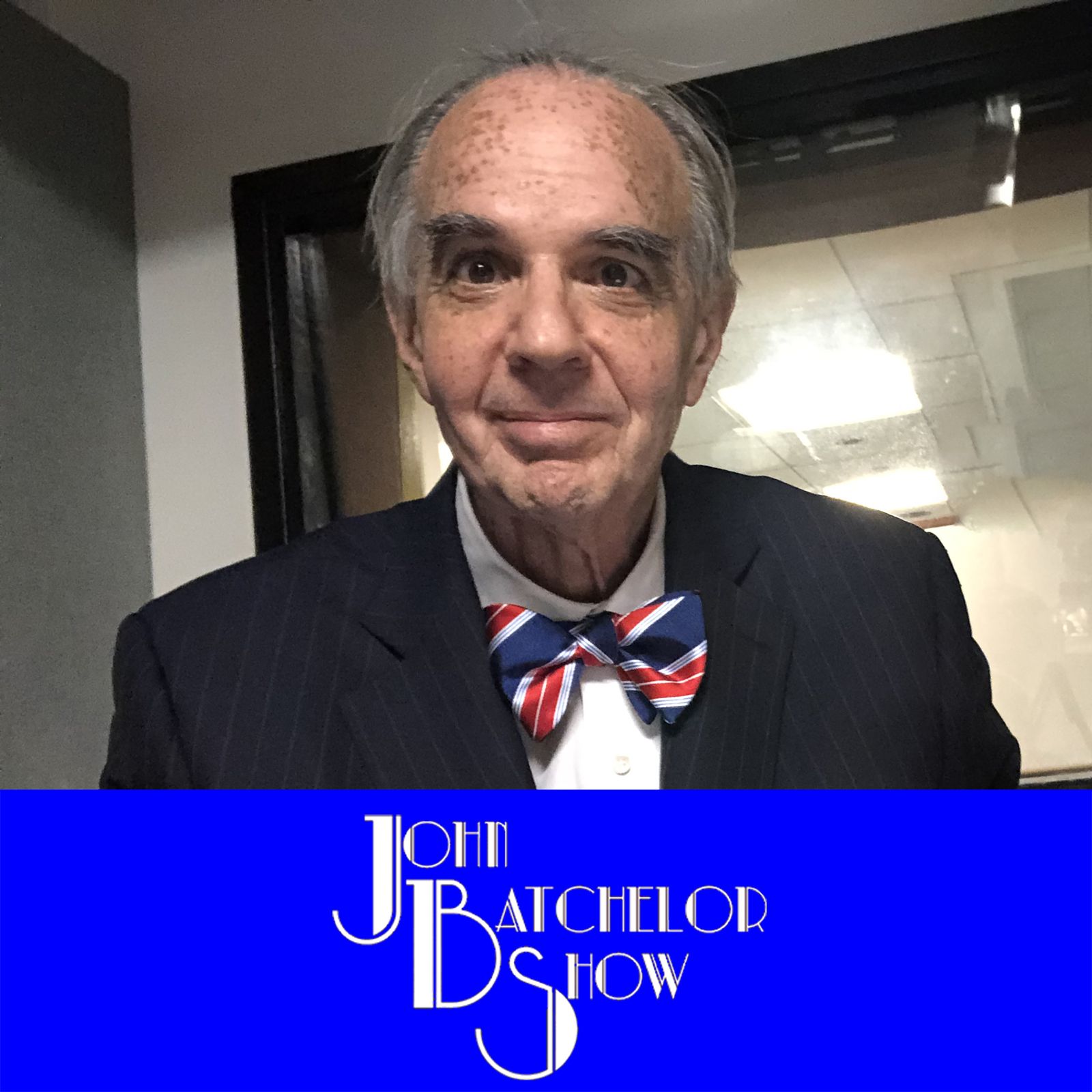
Political pressure matters because Venezuela’s oil recovery already rests on a weak commercial case, so any added legitimacy dispute quickly becomes investment risk. As The John Batchelor Show put it, “production is up a few hundred thousand barrels a day… up to 1.2… Not up 1.2 from about 800,000 before,” and “it's going to pay off, but it's not going to be for another five to ten years or so,” meaning investors are being asked to tolerate years of governance uncertainty before seeing returns.
That long wait becomes harder to finance when Washington’s own posture makes the governing framework look contested rather than settled. The analysis says, “One week after Nicolás Maduro’s capture in January, ExxonMobil CEO Darren Woods told President Trump that Venezuela was ‘uninvestable.’ Treasury Secretary Scott Bessent conceded much the same point,” while the White House touted “hundred-year concessions” even as Rodríguez described “a twenty-five-year bilateral project,” leaving investors to question whether rights, authority and enforcement will survive the political scrutiny now surrounding the interim authorities.

Democratic Wins Shift the Agenda
Democratic control of Congress has transformed Venezuela oversight from speculation to action, with new powers to probe billion-dollar oil contracts and reset priorities.
Before the vote, the stakes were explicitly defined as “the battle for the control of Congress,” with the Senate math spelled out clearly: Republicans held a narrow majority, Democrats needed roughly four Senate flips to take control, and in the House all 435 seats were up, with Democrats needing three seats to take power. That framing underscored that November 2026 was not a routine midterm but a control election. Within days, that uncertainty resolved: commentary recorded on Nov. 6, 2026, confirmed Democrats had won majorities in both chambers, turning a previously speculative oversight shift into an institutional reality with the authority to reset hearing agendas, subpoena priorities, and committee scrutiny.
That new posture toward Venezuela was quickly described in Washington terms as more than symbolic: The John Batchelor Show said the post-midterm environment meant “a lot more pressure from the Congress,” while a CSIS interview directly linked the November 2026 U.S. midterm results to Democratic control of both chambers. The practical implication was committee-driven oversight after January 3, including, as one analysis put it, increased questioning “about the structure of some of these oil deals, especially the enormous new $100 billion deal giving through a Pentagon organized entity to something called North American Blue Energy Partners.”



Money Trails Fuel Market Jitters
Conflicting reports and unresolved questions about the flow of seized oil funds are amplifying headline risk, making banks and traders increasingly wary of Venezuelan deals.
Congressional scrutiny is turning Venezuela-linked oil transactions into a headline-risk problem, because lawmakers are not just questioning policy but the chain of custody for the money itself. The content says Trump’s executive order described a specific Treasury account, but the first load of seized oil, reported by Reuters and Semafor as sold to Vitol and Trafigura for about $500 million, had proceeds instead routed to a bank account in Qatar, creating the kind of unresolved governance discrepancy that makes traders, banks, and other counterparties more wary of touching follow-on deals.
That caution deepens when the story stays alive through contradictory official testimony and the prospect of broader Capitol Hill probes. Secretary of State Marco Rubio testified that $300 million had been sent to Venezuela for payroll and another $200 million was still sitting in Doha, while later Energy Secretary Chris Wright said on CNBC that the Qatar account had been closed; CSIS argues this kind of unresolved public questioning creates “political headline risk,” especially given that “we now have the Department of War invested in companies that are trying to develop and redevelop fields in Venezuela,” leaving near-term risk “quite large.”