Democrats ride turnout surge, expanding 2026 battleground map
The gist
Democrats are riding a wave of surging turnout and shifting demographics, expanding the 2026 battleground map into once-solid GOP territory.
What to know
- Democrats lead Republicans in 2026 House polls, with a 53%-45% edge among voters 'absolutely certain' to vote and 91% of registered Democrats saying they'll definitely turn out.
- Latino voters are swinging Democratic in Texas, with Gina Hinojosa tied statewide but leading Latinos 54%-42%, and James Talarico winning Hispanic voters 56%-37%.
- Young voters are breaking hard for Democrats (51%-23% among ages 18-29), putting GOP seats from Texas border districts to Kansas and Nebraska in play.
Democrats Outpace GOP in Turnout
Democrats are not just leading in polls—they're dominating among the most committed voters, with a widening enthusiasm gap translating into record primary participation and a 10-point edge in voter certainty over Republicans.
The clearest sign that Democratic strength is not just soft preference but turnout power is the widening gap between the overall ballot and the ballot among people most likely to cast one. In the Washington Post-Ipsos poll conducted July 8-13 among 2,648 U.S. adults, Democrats led Republicans 48%-45% on House control overall, but that edge expanded to 53%-45% among voters “absolutely certain” to vote, a measurable enthusiasm gap favoring Democrats among the voters most likely to participate and implying higher Democratic turnout probabilities in the 2026 House race; Democrats were also “10 points more likely than Republicans to say they are ‘certain’ to vote this year,” directly tying enthusiasm to higher turnout probability.
That pattern is showing up in actual participation as well as survey intent, which is why the enthusiasm gap matters more than a generic-ballot snapshot alone. CNN found that 57% of primary voters cast ballots in Democratic rather than Republican primaries, up 10 percentage points from earlier cycles in select states, and Democratic voter turnout has already surged compared with the 2022 midterms; YouGov likewise found Democrats ahead by 46%-40% among all registered voters but by 52%-40% among those who say they will definitely vote, with 91% of registered Democrats saying they will definitely vote versus 79% of Republicans and 63% of independents.
Latina Women Anchor Democratic Gains
Latina women are driving a decisive Democratic edge among Texas Hispanics, while cracks emerge in GOP Latino support as regret and concerns about discrimination reshape the electorate.
The Latino electorate is giving Democrats a measurable coalition boost, not just a symbolic one. Univision’s Texas polling shows Democrat Gina Hinojosa and Greg Abbott tied statewide at 47% each, yet Latino voters back Hinojosa 54% to 42%; in the Senate race, James Talarico leads Ken Paxton 48% to 43% statewide while winning Hispanic voters 56% to 37%, and on the generic U.S. House ballot Democrats edge ahead 48% to 46% statewide but widen that to 54% to 41% among Latino voters.
That movement is real but uneven, which is precisely why it matters electorally: Univision found Hinojosa’s Hispanic edge is “held together almost entirely by Latina women,” who favor her 57% to 39%, while Latino men are nearly split at 49% to 47%. The same survey also found a softening among prior Republican backers, with roughly one in three Latino Trump voters expressing doubt or regret over their 2024 vote, and among those whose views shifted, Trump’s actions in office ranked as the top catalyst at 24%, while 44% of Texas Latino voters said they are more concerned about being stopped or detained because of their appearance.
Youth Surge Reshapes Age Divide
Democrats’ advantage isn’t limited to college campuses—voters under 50 are shifting blue in historic numbers, fueling the party’s gains well beyond the youngest cohort.
October data suggest Democrats are not just holding a generic edge; they are running up a pronounced advantage with younger voters that directly affects the congressional vote. Pew Research Center found that voters ages 18 to 29 “prefer Democrats over Republicans by a two-to-one margin: 51% to 23%,” with “a quarter” saying they are not sure or would support another candidate, and that measure was tied to the actual House ballot in respondents’ districts rather than a broad ideological question.
That youth edge also extends beyond the very youngest voters, making it a broader age-based support pool rather than a narrow campus phenomenon. The same October Pew breakdown found voters “30 to 49 tilt toward Democrats – 43% vs. 31% for Republicans,” with “26% backing another candidate or saying they’re not sure,” while Trends reported that some of the cycle’s “biggest shifts” toward Democrats are showing up among young voters, underscoring why this age cohort can add meaningful vote-share gains alongside other demographic movement.


Red States Face Democratic Wave
Once-safe Republican districts from the Texas border to Kansas and Nebraska are now battlegrounds as Democratic momentum puts even deep-red strongholds at risk in 2026.
The clearest sign of map expansion is that places Republicans recently treated as proof of Democratic erosion are again looking contestable. The Oracle by Polymarket argued four GOP-held Texas border seats — TX-15, TX-28, TX-34 and TX-23 — may be “snapping back,” and the underlying voting pattern supports that: a Texas Tribune study found Trump won 55% of the border vote in 2024, up from 41% in 2022, yet Ted Cruz managed only 45% that same year while Democratic incumbents Henry Cuellar and Vincente Gonzalez still won reelection, suggesting Republican gains there were broad but not fully durable down ballot.
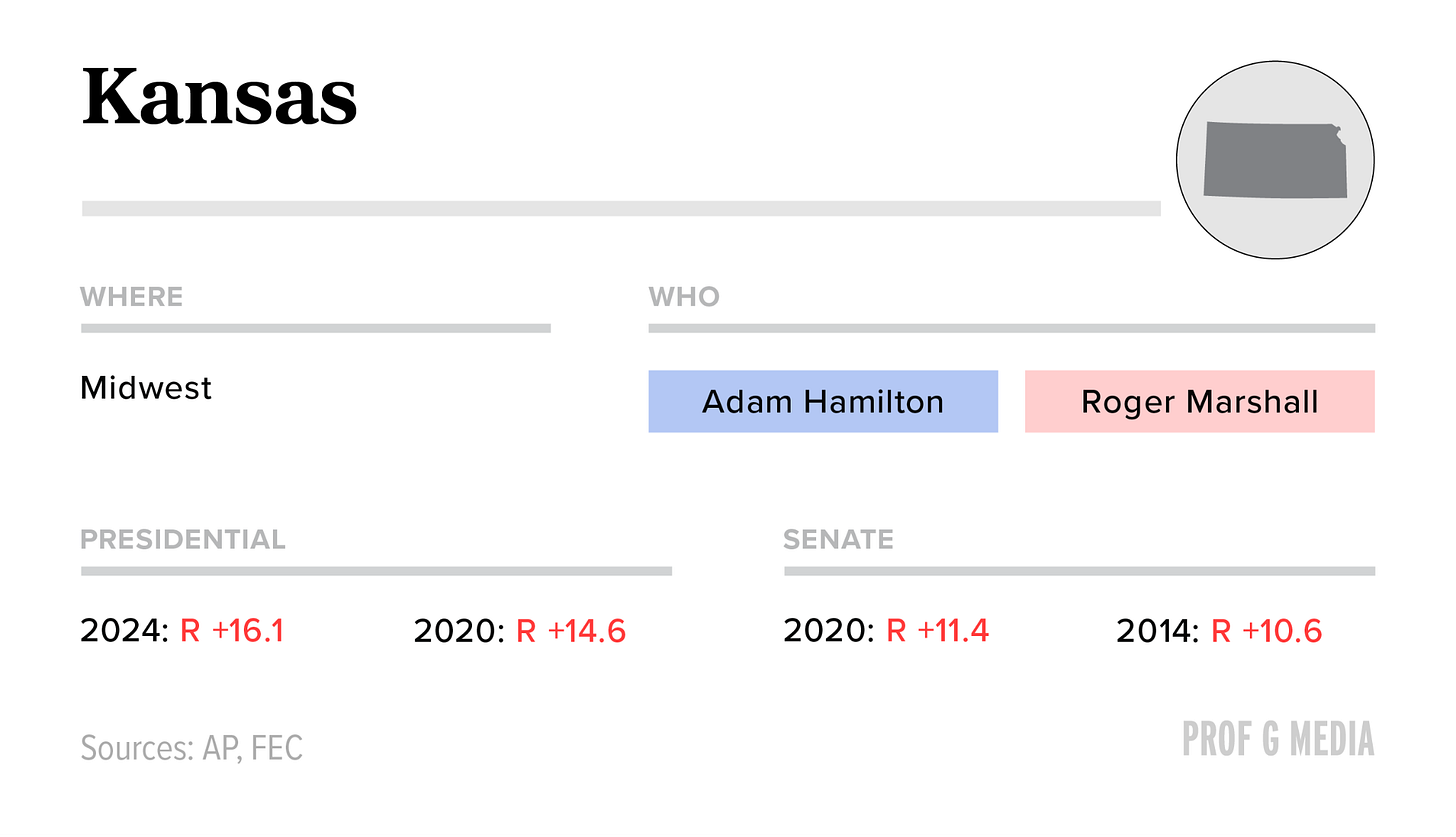
That same logic now reaches well beyond South Texas, because what Prof G Media described as a climate “deeply into wave territory,” citing Nate Silver saying the latest polls show that “at least with six weeks left until election day” Democrats are “deeply into wave territory,” makes long-shot states newly plausible rather than merely symbolic. Kansas hasn’t elected a Democratic senator since 1932 and Trump won it by 16 points, yet it also reelected Democratic Governor Laura Kelly; Nebraska looks live after Dan Osborn got a Senate race to 6.7 points even as Trump won by 20.5 and is back in 2026; and Florida remains imaginable after Rick Scott’s 10,033-vote Senate win and a later presidential margin of just 3.4 points.