Denver’s home values plunge as midwest and south suburbs steal the spotlight
The gist
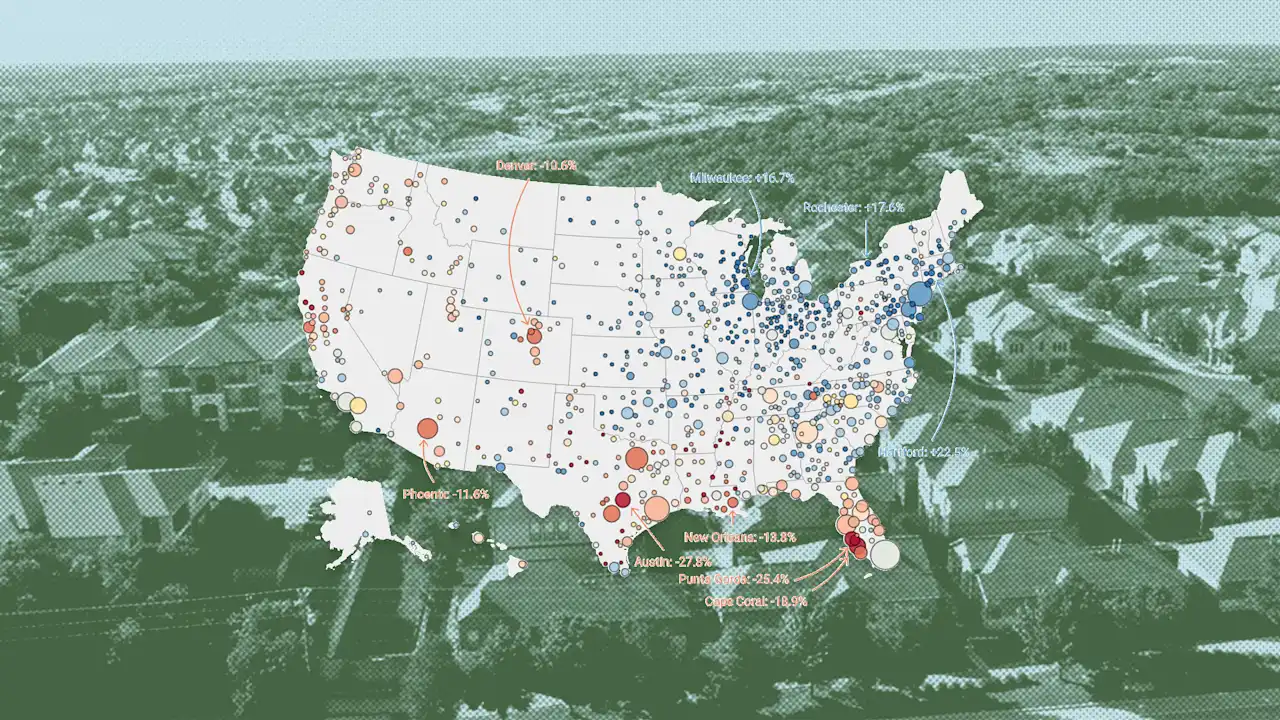
Denver's home values have plunged over 10% below their 2022 peaks, making it the poster child for the sharpest post-pandemic correction as buyers and sellers across the country scramble to adjust.
What to know
- Denver leads all U.S. metros in home value drops, falling at least 10% since mid-2022 while cities in California, Texas, and Florida also see sharp corrections.
- Northeastern markets like Northern Virginia defy the downturn with median prices rising to $815,000 and inventory shortages over 50% below 2019 levels fueling fierce bidding wars.
- Midsized suburbs in the Midwest and South are booming—Fort Worth and Charlotte are growing at 1.2%, while hotspots like Fort Mill, SC are outpacing big cities with population surges.
Denver’s Price Plunge Unpacked
Denver’s once red-hot housing market now leads the nation in price drops as sellers finally accept lower offers and the post-pandemic boom unravels.
Denver stands out as the epicenter of post-pandemic home value declines, leading the nation with prices now at least 10% below their mid-2022 peaks, according to ResiClub’s analysis of the Zillow Home Value Index. This sharp correction follows an intense surge during the pandemic when limited housing stock and soaring demand pushed prices dramatically higher, with some metros like Austin and Naples experiencing increases over 70%. However, Denver’s market has cooled more significantly, reflecting a broader recalibration as sellers adjust to new realities.
The broader national trend reveals a shift from the pandemic-fueled boom to a more balanced, and in some cases declining, housing market. Volatile markets such as California, Texas, Florida, and Idaho are witnessing notable price drops, with luxury areas like Malibu seeing multi-million-dollar markdowns. This signals that sellers are finally accepting lower asking prices, as evidenced by increased days on market and negotiations where a 3% price reduction can facilitate a sale, marking a move toward healthier market conditions after years of flat nominal growth.


Northeast’s Relentless Seller’s Market
Severe inventory shortages in the Northeast are fueling bidding wars and record-high prices, with buyers forced to compete fiercely for scarce listings.
Northeastern housing markets such as Connecticut, Rhode Island, New Jersey, New York, and Chicago continue to grapple with severe inventory shortages that have driven home prices upward and intensified competition among buyers. Active listings in these metros remain more than 50% below 2019 levels, creating a 'savagely unhealthy' market dynamic as described in recent analyses, where demand persistently outstrips supply despite national trends toward market balance. This scarcity fundamentally differentiates these regions from others, sustaining price growth and steady buyer interest even amid broader market headwinds.
Northern Virginia exemplifies this Northeastern trend with its housing market posting steady gains in April 2026, including a 4.2% increase in closed sales and a 4.6% rise in median sold price to $815,000. Despite a modest 1.9% increase in active listings to 2,556 units, inventory remains critically tight with just 1.83 months of supply—well below the balanced market benchmark of 5-6 months—maintaining a fiercely competitive seller’s market. As NVAR CEO Ryan McLaughlin highlights, demand remains remarkably steady, particularly in areas offering strong connectivity to employment hubs and community amenities, underscoring the region’s resilience amid constrained supply.
While homes in Northern Virginia are selling quickly, with an average of just 18 days on market in April 2026, this represents a 28.6% increase from the previous year, suggesting buyers are becoming more deliberate in their search. This subtle shift indicates that although the market remains highly competitive, prospective buyers are taking additional time to evaluate limited options carefully, reflecting a nuanced balance between urgency and caution in a persistently tight inventory environment.



Suburbs Surge Past Big Cities
Midsized Midwest and Southern suburbs are outpacing urban centers in both population growth and housing demand, as affordability and new construction drive buyers outward.
By early 2026, midsized suburbs in the Midwest have emerged as vibrant hubs of buyer interest, with six such communities earning spots on Redfin’s hottest-neighborhood list, underscoring a notable surge in demand. This trend reflects a broader pattern where these suburbs, typically housing between 5,000 and 49,999 residents, have demonstrated resilience with steady population gains averaging 121 new residents annually and maintaining a 0.7% growth rate, even as larger cities face significant slowdowns.
The Southern region, particularly its midsized cities, leads the nation in growth rates fueled by a potent combination of affordability and robust new housing availability. Cities like Fort Worth and Charlotte have added tens of thousands of residents, with growth rates only slightly dipping from 1.6% to 1.2%, the highest among all city-size and regional categories. This expansion is reinforced by ongoing housing construction, especially in Texas metros with populations between 30,000 and 65,000, where homebuilders find ample opportunity to meet rising demand.
Buyers are increasingly favoring outer-ring suburbs over traditional urban cores, driven by a desire for affordable living spaces that remain close to jobs and amenities. In the Charlotte metro area, for example, seven midsized cities have outpaced the core city’s growth, with Fort Mill, SC, expanding by 6.8%. Similarly, while New York City experienced population losses, nearby suburbs like Port Chester grew by 4.1%, illustrating a clear shift in residential preferences toward accessible yet less dense communities.