DHL and vinted turbocharge locker shipping for resale boom
The gist
DHL and Vinted are supercharging Germany’s second-hand fashion boom with 24/7 locker shipping that’s as seamless as it is sustainable.
What to know
- DHL and Vinted have linked up over 18,500 automated parcel lockers across Germany, letting resellers skip the meet-up and ship peer-to-peer around the clock.
- Sellers use Vinted’s app to create QR-coded shipping labels and buyers get digital collection codes—no registration, no hassle, just scan, drop, and go.
- With plans to grow its locker network by 60% by 2030, DHL is betting big on eco-friendly fashion, as 67% of online shoppers in Germany and the Netherlands have sold items on platforms like Vinted.
Locker-to-Locker Resale Revolution
DHL and Vinted’s integration of 18,500 automated lockers is transforming second-hand fashion into a seamless, tech-driven, 24/7 experience—eliminating in-person meetups and putting digital convenience at the center of peer-to-peer shipping.
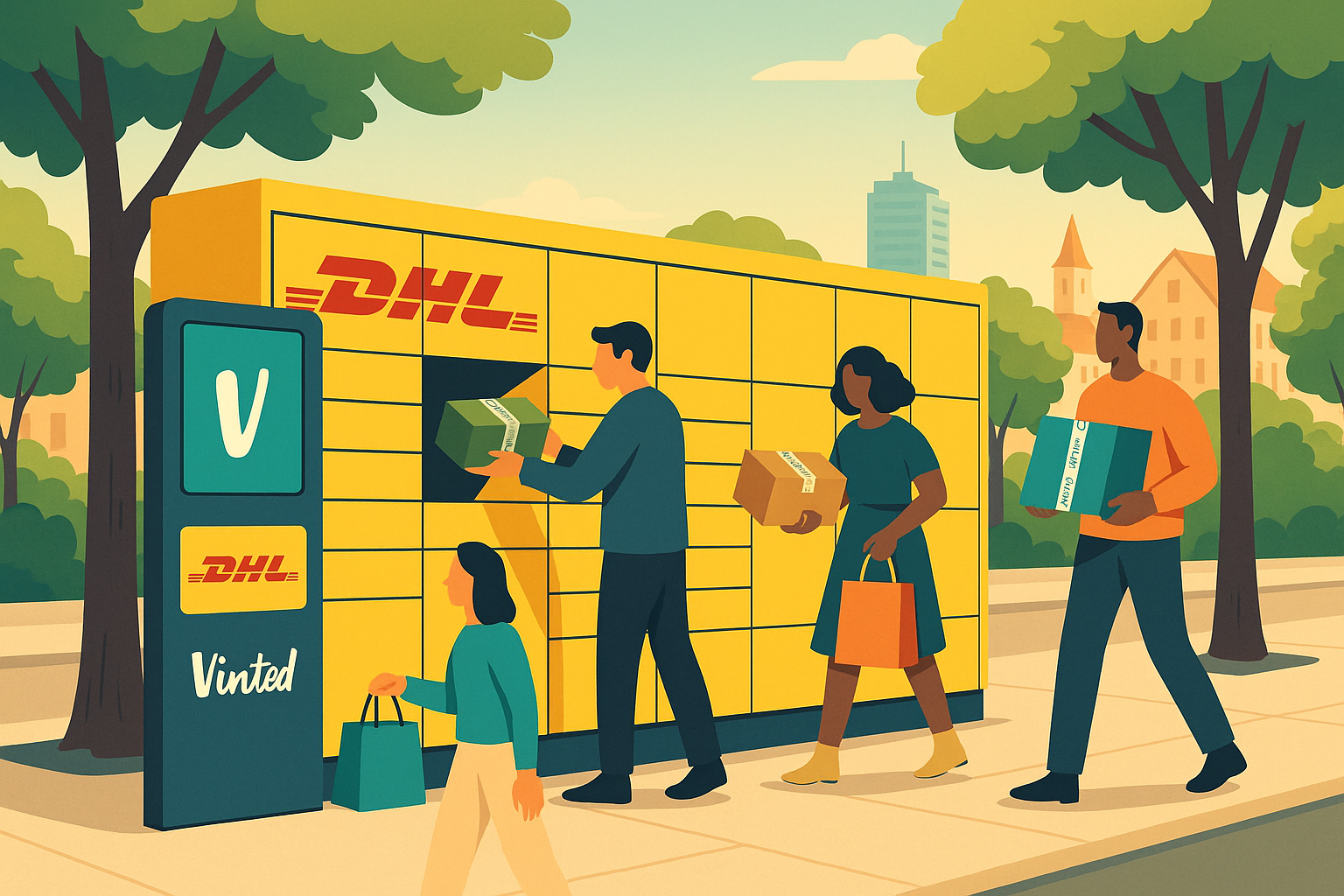
The expanded partnership between DHL and Vinted in Germany revolutionizes second-hand fashion logistics by integrating DHL’s vast parcel locker network, which includes approximately 18,500 automated Packstations, Poststations, and DeinFach lockers. This integration enables seamless, 24/7 peer-to-peer shipping without the need for in-person handovers, reflecting a significant shift in consumer behavior where 70% of resellers now prefer locker-to-locker exchanges. By leveraging this infrastructure, Vinted sellers and buyers benefit from a streamlined, contactless process that enhances convenience and accessibility across the country.
Central to this logistics innovation is the use of digital kiosks and app integration that empower users to manage shipments autonomously at any time. Sellers receive QR-coded digital shipping labels within the Vinted app, which they scan at DHL Packstations to deposit parcels without prior registration, while buyers receive collection codes via email or directly through the app to retrieve items within a seven-day window. This seamless digital orchestration not only simplifies the shipping experience but also aligns with evolving consumer expectations for flexible, technology-driven solutions in peer-to-peer commerce.
Looking ahead, DHL plans to expand its automated locker network in Germany by over 60%, growing from roughly 18,500 to more than 30,000 locations by 2030. This ambitious scaling effort underscores DHL’s commitment to supporting the burgeoning second-hand fashion market and anticipates increased demand for locker-to-locker parcel handling. The expansion will further enhance the partnership’s capacity to deliver convenient, round-the-clock logistics solutions that cater to sustainability-conscious and cost-aware consumers driving the sector’s growth.
Second-Hand Goes Mainstream
Sustainability and inflation are fueling a boom in circular fashion, with nearly 70% of German resellers now choosing automated lockers and younger consumers driving resale from a niche trend to a market norm.
The partnership between DHL and Vinted is fundamentally reshaping consumer behavior in Germany's second-hand fashion market by enabling a decisive move away from traditional in-person handovers toward automated, 24/7 parcel locker exchanges. With around 70 percent of resellers now opting for DHL's parcel shops or automated lockers, this shift dramatically enhances convenience and accessibility, allowing sellers to generate digital QR-coded shipping labels within Vinted and buyers to collect items without prior registration or time constraints. This seamless integration not only reduces friction in peer-to-peer transactions but also supports the rapid growth of circular fashion commerce.
Consumer demand for second-hand fashion in Germany is surging, driven by a potent combination of sustainability concerns and heightened cost-consciousness amid rising inflation. According to the DHL E-Commerce Trends Report, 67 percent of online shoppers in Germany and the Netherlands have sold items via marketplaces, with millennials and younger sellers particularly engaged—three in five among these groups participate actively. This trend is echoed by Barclays research showing that one in four 16-24 year olds use resale platforms like Vinted to both save money and reduce clothing waste, signaling that second-hand fashion is transitioning from niche to mainstream as consumers increasingly prioritize eco-friendly and budget-savvy wardrobe choices.
Circular Fashion Reshapes Retail
A new generation of shoppers and major brands are pushing the global second-hand market past $210 billion, as resale, upcycling, and repair redefine the fashion industry’s approach to value and sustainability.
The expansion of DHL and Vinted's partnership in Germany reflects a broader shift driven by rising consumer sustainability concerns and inflationary pressures, which are reshaping fashion consumption habits. As inflation tightens budgets, consumers are becoming more deliberate with spending, increasingly turning to resale, rental, and repair options to extend garment lifecycles and reduce waste. This dual motivation—economic and environmental—is fueling the growth of the circular fashion economy both locally and globally, transforming what was once a niche market into a mainstream movement.
Young consumers, particularly those aged 18 to 34, are at the forefront of this circular fashion revolution, embracing thrift shopping and resale platforms like Vinted as primary channels for wardrobe refreshment. With one in four 16-24 year olds actively using resale platforms to save money, the global second-hand market has surged to a valuation of over US$210 billion, growing at an impressive 10% annually—three times faster than the traditional fashion market. This demographic shift underscores a preference for access and sustainability over ownership, accelerating the maturation of digital peer-to-peer resale ecosystems.
Established fashion retailers are responding to evolving consumer expectations by integrating circular practices such as upcycling and resale partnerships, signaling a significant industry transformation. Companies like Urban Outfitters and Patagonia now offer upcycling services, while Marks & Spencer collaborates with eBay to extend product lifecycles through resale, illustrating how sustainability is becoming embedded in mainstream retail strategies. This alignment between consumer demand and corporate innovation reinforces the momentum behind circular fashion's expansion.