Disclosure gridlock: UAP whistleblowers, redacted files, and the battle for cosmic truth
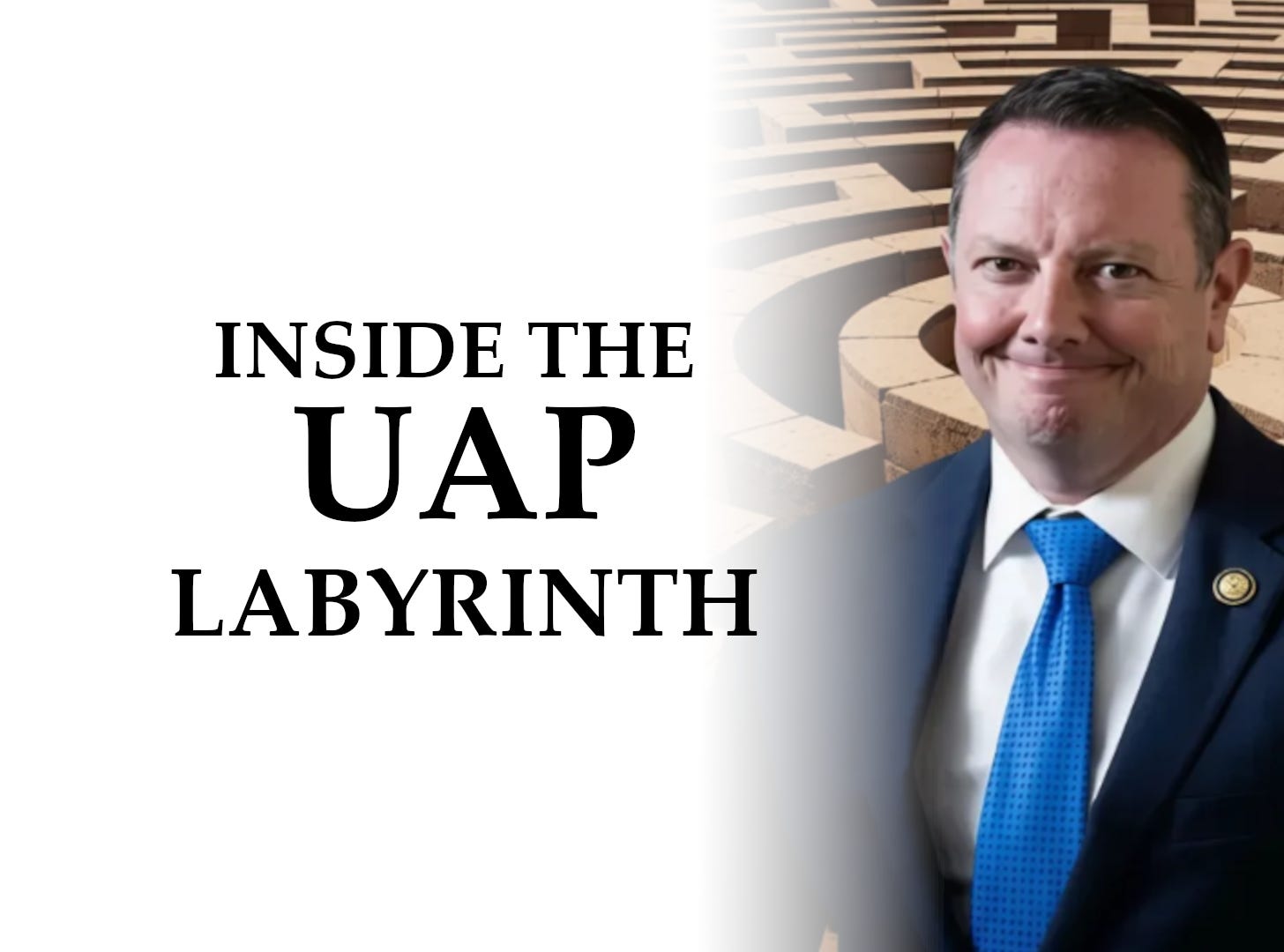
The gist
A historic clash over UAP disclosure is pitting whistleblowers, physicists, and bipartisan lawmakers against decades-old secrecy, institutional gridlock, and legal barriers as the U.S. government faces mounting pressure to reveal what it knows about non-human intelligences.
What to know
- Astronaut J.F. Clervoy and physicists like Michio Kaku confirm UAP reality with evidence beyond human tech, but NASA and contractors like Lockheed Martin resist full disclosure.
- Bipartisan momentum—led by Eric Burlison and Anna Paulina Luna—pushes for new laws and whistleblower protections, yet the Atomic Energy Act and agency stonewalling keep key files redacted.
- Recent PURSUE program releases offer glimpses of military encounters with UAPs, but heavy redactions and legal loopholes mean the 'cosmic truth' remains just out of reach.
Inside NASA’s UAP Dilemma
Astronaut testimony and deep-rooted institutional fears reveal NASA’s reluctance to confront UAPs, as private discussions and historical policies perpetuate a culture of silence even amid mounting evidence.
By early 2026, astronaut J.F. Clervoy emphatically confirmed the reality of UAP phenomena, citing a convergence of eyewitness accounts, radar data, and astronaut sightings as irrefutable evidence that UFOs indisputably exist. Yet, he cautions against simplistic explanations, noting that while extraterrestrial intelligence is the easiest hypothesis, it is paradoxically the least likely, urging a broader consideration of origins. Clervoy also exposes an institutional conflict of interest within NASA, where definitive proof of extraterrestrial craft could undermine the agency's scientific missions and budget, explaining NASA’s reluctance to finance research that might render its current activities obsolete. This institutional reticence echoes historical suppression dating back to NACA policies that denied flying saucers’ existence and restricted personnel from engaging with such phenomena, underscoring a persistent culture of silence despite ongoing private discussions among astronauts.
Whitley Strieber’s extensive firsthand experiences provide a profound and nuanced human dimension to UAP phenomena, revealing encounters that blend physical and psychic elements and profoundly alter consciousness and reality. He describes these non-human intelligences as multifaceted entities—some seemingly manufactured, telepathic, and highly intelligent—challenging conventional skepticism and suggesting a phenomenon that transcends simple physical presence. Strieber further posits that these beings may be engaged in intentional genetic or social manipulation aimed at impeding human progress and space exploration, framing UAP encounters as part of a complex, long-term interaction with humanity that carries deep psychological and existential implications.
Strieber also highlights the societal and psychological barriers to acknowledging the presence of occupants within UAPs, linking widespread resistance to military secrecy, cultural fears rooted in early personal experiences, and the enduring impact of his seminal work, Communion. This resistance reflects a broader reluctance to confront the unsettling possibility that these phenomena involve sentient beings with motives and a longstanding relationship with humanity, complicating public discourse and perpetuating cycles of sensational but ultimately inconclusive revelations.


Physics Meets the Unexplained
Leading physicists dissect the 5% of UAP cases that defy conventional science, raising alarms about secret reverse engineering programs and their impact on the future of artificial intelligence.
By mid-2026, leading physicists like Hal Puthoff and Michio Kaku have provided nuanced scientific perspectives on UAP phenomena, distinguishing credible physical evidence from cultural or fabricated reports. Puthoff emphasizes that certain advanced UAP technologies, such as a classified triangle craft filmed hovering over a nuclear weapons site, surpass any known human or adversary capabilities, implying an origin with superior physics knowledge. Meanwhile, Kaku remains cautiously skeptical, noting that while 95% of sightings can be explained by known physics, a small fraction—about 5%—remain unexplained and could represent genuine extraterrestrial visitation, especially if physical artifacts were ever recovered.
Kaku further elaborates that these UAPs are likely robotic constructs rather than biological entities, capable of extreme maneuvers impossible for organic life due to intense physical stresses. This machine intelligence hypothesis explains their elusive behavior and lack of direct contact, suggesting a non-hostile, observational role akin to animals in a zoo. Such interpretations move the discourse beyond sensationalism toward rigorous scientific evaluation, as physicists actively analyze sightings to discern authentic phenomena from misidentifications or military technology cover-ups.
Institutionally, 2026 marks a pivotal year with intensified government efforts to declassify UAP-related materials, driven by Congressional and Presidential mandates aiming for completion by January 2027. This unprecedented transparency is coupled with grave concerns about decades-long secret programs allegedly reverse engineering UAP technology—programs that some experts label a 'crime against humanity' for potentially stalling technological progress by a century. Moreover, the intersection of UAP revelations with the rapid advancement of artificial superintelligence (ASI) introduces profound implications, as breakthroughs in AI could be either accelerated or disrupted by the disclosure of non-human intelligences and their technologies.
The sensitivity of UAP information is underscored by high-level officials like Representative Ogles, who reveal that some evidence is so classified that mere awareness of its existence could render individuals targets. This highlights the extraordinary secrecy enveloping certain UAP data and the potential risks faced by those involved in disclosure efforts, reflecting the complex balance between national security, scientific inquiry, and public transparency.


Congress vs. the Secrecy Machine
Bipartisan lawmakers, facing entrenched bureaucratic resistance and personal risks, struggle to break through a web of classified silos and political inertia that shields UAP truths from public view.
By early 2026, Congress had significantly ramped up bipartisan efforts to push for UAP transparency, exemplified by Missouri Congressman Eric Burlison's introduction of the UAP Disclosure Act of 2025 as an amendment to the NDAA and his appointment of whistleblower David Grusch as a special advisor. This legislative momentum is underscored by high-profile advocates like Representatives Jared Moskowitz and Anna Paulina Luna, who condemn government withholding of critical UAP information and the severe risks whistleblowers face, including retaliation and threats to their lives. Despite these efforts, institutional disclosure remains hampered by entrenched bureaucratic challenges, inter-agency fragmentation, and political reluctance rooted in the profound implications UAP phenomena pose to sovereignty and governmental authority, as noted by political scientist Alexander Wendt.
The political dynamics surrounding UAP disclosure reveal a rare bipartisan consensus transcending typical partisan divides, with influential figures such as Senators Chuck Schumer and Mike Rounds collaborating closely on legislative provisions within the National Defense Authorization Act. This unity reflects a shared recognition of the legitimacy and urgency of the UAP issue, even as congressional investigations uncover unaccounted Pentagon funds and credible whistleblower testimonies under oath, highlighting both bureaucratic opacity and the personal risks involved. Congressional outreach extends to defense contractors like Lockheed Martin to seek hard evidence, while vigilance against disinformation campaigns within the investigative community remains a critical concern to preserve credibility.
Institutional disclosure efforts are further complicated by the labyrinthine nature of classified information management, where no single individual—including presidents—has full access to all UAP-related data, as former President Barack Obama observed. Access to sensitive materials requires secure environments such as 'skiffs,' and congressional committees rely heavily on bipartisan groups of former intelligence whistleblowers to identify and verify files prior to declassification and public release. Despite some videos being debunked, others remain unexplained, underscoring the ongoing investigative challenges amid bureaucratic stonewalling and political resistance that necessitate pragmatic approaches focused on verifying testimonies rather than prematurely endorsing specific origin theories.
The broader institutional and political framework governing UAP disclosure is marked by a tension between national security justifications—such as concealing experimental military technologies—and mounting public and political pressure for transparency. Experts like Michio Kaku note that secrecy often serves to protect stealth programs rather than extraterrestrial evidence, yet the President and Congress have issued historic directives aiming to declassify files by early 2027. Meanwhile, allegations of an illegal, decades-long campaign to reverse engineer UAP technology raise profound ethical and legal questions, suggesting potential crimes against humanity by suppressing technologies that could propel civilization forward. This evolving landscape reflects a growing institutional accountability despite persistent bureaucratic inertia and a highly politicized public climate that may hinder full acceptance of official disclosures.


Law, Loopholes, and Locked Files
The Atomic Energy Act’s ‘born secret’ doctrine and agency compartmentalization create legal dead ends, blocking even the President and Congress from accessing the full UAP archive.
The legal framework governing UAP disclosure is deeply entangled with the 'born secret' doctrine established by the Atomic Energy Act of 1954, which automatically classifies nuclear-related information as 'restricted data' beyond the executive branch's unilateral declassification powers. As Sam Gerb emphasized, this statutory protection, combined with the Department of Energy's control over document classification and the All-domain Anomaly Resolution Office's (AARO) gatekeeping role, structurally limits transparency despite presidential directives. This legal architecture creates a constitutional tension between Congress and the executive, as even presidents like Trump cannot override these protections without legislative action, underscoring the complex interplay between statutory law and executive authority in UAP information control.
Institutional fragmentation and compartmentalization further complicate UAP disclosure, as knowledge is siloed across agencies and private contractors, with no single entity—including the President—having comprehensive access. Barack Obama’s reflection that information might be withheld even from the presidency, coupled with Missouri Congressman Eric Burlison’s experiences viewing unexplained recordings and his introduction of the UAP Disclosure Act of 2025, highlight the labyrinthine nature of oversight. Key players such as the Department of Energy, NRO, NSA, CIA, and major aerospace contractors like Lockheed Martin and Northrop Grumman remain conspicuously absent from disclosures, reflecting legal asymmetries and bureaucratic red tape that stymie congressional efforts and perpetuate secrecy.
Legal protections extend beyond classification statutes to shield covert operations and whistleblowers, creating formidable barriers to transparency. Luis Elizondo underscored that certain covert actions are legally impervious to disclosure—even presidential declassification cannot penetrate these constraints. Meanwhile, whistleblowers face retribution and fear for their safety under laws like the Espionage Act, prompting advocates such as Congresswoman Anna Paulina Luna to push for explicit whistleblower protections through legislation or executive orders. Despite bipartisan support from senators like Chuck Schumer and Mike Rounds, efforts to embed these protections in the National Defense Authorization Act encounter persistent internal resistance, described by Luna as 'legislation goblins' obstructing progress.
The evidentiary value of sworn testimonies and the nature of released UAP data reveal a paradox within the classification regime: while some government sectors acknowledge non-anthropogenic origins of certain UAPs, legal and bureaucratic frameworks restrict broader disclosure. Retired Rear Admiral Tim Gallaudet highlighted the judicial weight of sworn statements and noted that releases occur only when phenomena cannot be attributed to known foreign or domestic technologies, reinforcing the anomalous character of these objects. Yet, the persistent absence of critical agencies and private aerospace contractors from disclosures, coupled with the legal asymmetry surrounding Freedom of Information Act applicability and the removal of eminent domain clauses from the NDAA 2024, perpetuates an uneven landscape of access and transparency.

Redacted Revelations and Roadblocks
Despite unprecedented congressional pushes, most newly released UAP files remain heavily censored, with key agencies and contractors strategically withholding evidence behind layers of legal protection.
The recent disclosure efforts around UAP phenomena have been marked by a historic push led by US Congress, notably Representative Anna Paulina Luna, who spearheaded a federal task force demanding the declassification of numerous UAP videos and related documents. These releases, including standardized military intelligence reports (IIRs) and sensor data from platforms such as MQ-9 Reaper drones and F/A-18 Hornet fighters, illustrate a structured yet complex approach to documenting UAP encounters across multiple military branches. However, much of this information remains heavily classified or redacted, reflecting ongoing challenges in achieving full transparency despite the formal requests and presidential directives.
The initial tranche of UAP documents released under the PURSUE program revealed significant limitations in transparency, with 108 of 162 files heavily redacted due to legal constraints such as witness protection and sensitive military site concerns. Key agencies and contractors—including the Department of Energy, NRO, NGA, NSA, CIA, and major aerospace firms like Lockheed Martin and Northrop Grumman—have notably withheld contributions, underscoring structural legal barriers like FOIA exemptions and classification under the Atomic Energy Act that continue to restrict comprehensive disclosure. These gaps highlight the institutional and legal complexities that hinder a fully open UAP narrative.
Subsequent releases expanded agency participation to include the DOE, CIA, ODNI, and Sandia National Laboratories, partially addressing earlier omissions and introducing new materials such as a compelling 2025 helicopter mission account describing ‘super-hot’ objects and T-shaped formations of glowing orbs. Retired Rear Admiral Tim Gallaudet emphasized the evidentiary weight of sworn testimonies within these disclosures, asserting that the phenomena documented are genuinely anomalous and not attributable to known drone technologies or adversary capabilities. This shift from skepticism to recognition within some intelligence circles marks a significant evolution in the discourse surrounding UAPs.
Technical analyses of the released videos reveal a nuanced landscape where some footage, such as the PR-38 and PR-83 videos, are identified as optical artifacts or mundane objects like Mylar balloons, while others display unusual maneuvering that defies conventional explanation. This complexity fuels ongoing debates about the credibility and interpretation of the evidence, as noted by experts like Billy Kryzak and reinforced by Luna’s acknowledgment that although some videos have been debunked, others remain unexplained and challenge current understanding. Transparency efforts continue to face bureaucratic resistance and whistleblower fears of retaliation, complicating the path toward fuller disclosure despite bipartisan momentum and institutional investigations, including those by the FBI.
The Paradigm Shift and Its Price
The acknowledgment of non-human intelligence unsettles political foundations, as suppressed programs and AI fears ignite a crisis of sovereignty, ethics, and global transparency.
By early 2026, American institutions had begun to formally acknowledge the UAP phenomenon not merely as unexplained aerial events but as interactions with potentially conscious, technologically advanced non-human intelligences (NHI), a conceptual leap that challenges foundational political frameworks such as sovereignty and anthropocentrism. Political scientist Alexander Wendt highlights that this paradigm shift unsettles the modern political order, contributing to governmental hesitancy in full disclosure, while legislative efforts like the UAP Disclosure Act and whistleblower protections remain stalled, as noted by Representative Anna Paulina Luna, who warns that without these safeguards, transparency is severely hampered and the phenomenon remains vulnerable to exploitation by foreign intelligence agencies.
The sociopolitical landscape surrounding UAP disclosure is further complicated by high-level ambiguity and secrecy, with former Presidents Obama and Trump making cryptic public remarks hinting at classified knowledge, underscoring the tension between executive secrecy and public right to know. Congressional leaders, including Representative Ogles, have revealed the existence of evidence so sensitive that mere awareness could pose personal risks, while ongoing declassification efforts mandated by a presidential executive order aim to conclude by January 2027, signaling a tentative but significant shift toward governmental transparency despite the prevailing climate of political polarization and public skepticism.
If allegations of an 80-plus-year secret program to reverse engineer UAP technology bear out, as some analysts suggest, this represents a profound ethical and sociopolitical crisis—a 'crime against humanity' that weaponized advanced technologies while suppressing their potential to accelerate human progress by decades. This dark history intertwines with emerging concerns about artificial superintelligence (ASI), where the disclosure of UAP phenomena could dramatically alter humanity’s trajectory toward a technological singularity, raising existential questions about the motives of NHIs and their possible strategic efforts to impede or shape human development, as explored in Whitley Strieber’s accounts of long-term contact and telepathic influence.
The broader societal implications of UAP phenomena extend beyond security risks to challenge human self-understanding and worldview, as disclosure forces acknowledgment of occupants within UAP craft and their complex motives, which may include deliberate interference with human progress. Strieber’s reflections on military secrecy, disinformation campaigns symbolized by crop circle warnings, and the blending of genetic manipulation with AI-like intelligence highlight a multifaceted existential challenge that complicates public discourse and fuels institutional resistance, underscoring the need for nuanced transparency and scientific inquiry to navigate this unprecedented sociopolitical terrain.