EasyJet takeover doubts soar amid £700m valuation gap
The gist
A £700 million gap between easyJet’s share price and Castlelake’s takeover bid has thrown the airline’s true value and deal prospects into fierce debate, with regulatory roadblocks and boardroom controversy fueling the turbulence.
What to know
- Castlelake’s £6.90-per-share offer—a 75% premium—faces deep market skepticism, with easyJet shares hovering nearly 100p lower despite a recent rally.
- EU ownership rules threaten to ground the US-backed deal, forcing easyJet to stay majority EU-controlled or risk losing its operating license.
- Critics say the board sold out too soon, undervaluing easyJet’s £6.6 billion aircraft fleet, prime airport slots, and rising holiday business.
Market Doubts vs. Takeover Premium
Despite a hefty bid, easyJet’s share price stays stubbornly below the offer, exposing a £700 million confidence gap as investors question whether the airline’s true value is being recognized or overlooked.
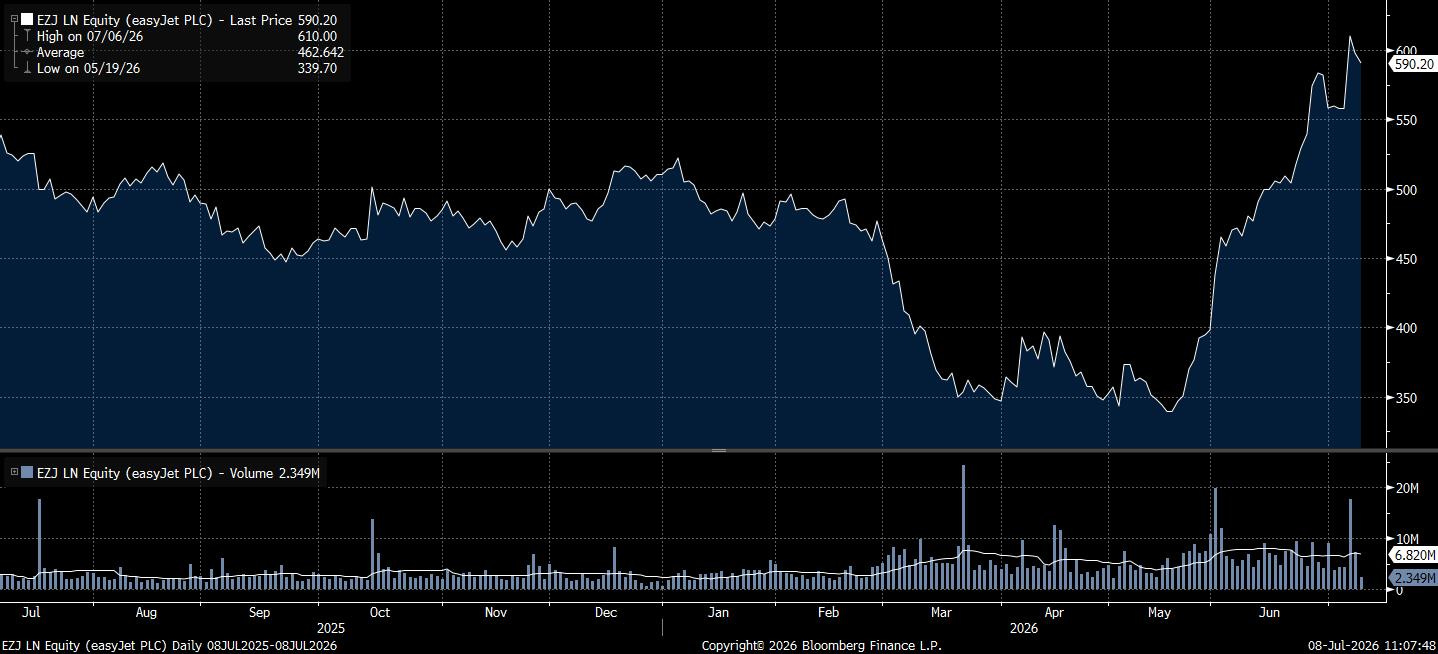
The EasyJet takeover saga is underscored by a striking £700 million spread between the current share price and the takeover bids, reflecting deep market uncertainty about the airline's true valuation. While the company agreed in principle to a sweetened 690p-per-share offer from Castlelake, the prevailing share price lingered around 603p, illustrating persistent investor skepticism despite the premium. This divergence keeps the weekend deadline for the takeover in sharp focus, as market participants weigh the competing signals from share price momentum and bid valuations.
EasyJet shares have surged nearly 100% over two months, breaking a resistance level that had held since 2024, a rally largely attributed to Castlelake’s acquisition offer. Analyst José María Lerma highlighted this strong upward movement and recommended holding the stock amid the takeover developments, signaling confidence in the positive momentum despite broader market volatility. This shift underscores how takeover bids can catalyze renewed investor interest and re-rating in a previously range-bound stock.
Despite some broker downgrades, a compelling asset-backed investment thesis fuels speculation that EasyJet remains undervalued, with Citi analysts arguing the airline’s fleet alone could be worth double the current share price. This perspective aligns with a broader UK equity market dynamic where cash-generative companies like EasyJet trade at significant discounts—FTSE 100 earnings multiples hover around 16x versus 27.7x for the S&P 500—creating arbitrage opportunities for strategic buyers who can unlock hidden value beyond headline share prices.


Regulatory Roadblocks Intensify
EU ownership rules and post-Brexit complexities have turned easyJet’s takeover into a precedent-setting test case, with regulatory approval now as critical as price in determining the deal’s fate.
The EU’s stringent ownership and control rules under Regulation 1008/2008 present formidable regulatory barriers for US-backed bids for EasyJet, as the airline must remain over 50% owned and effectively controlled by EU nationals to retain its operating license. Brussels’ focus on strategic autonomy underscores the importance of airlines as critical national infrastructure, where control extends beyond shareholding to encompass route rights, airport slots, and safety approvals, making the identity of controlling parties a matter of broader EU policy concern.
The ongoing EU review injects significant uncertainty into the EasyJet takeover race, threatening to force bidders like Apollo and Castlelake to overhaul their offers amid fears that a stricter autumn interpretation could reshape financing structures, shareholder backing, and deal timelines. This regulatory ambiguity has elevated deliverability to a status equal to price in shareholder considerations, as a higher bid lacking credible regulatory approval risks being less valuable than a lower, compliant offer.
EasyJet’s complex post-Brexit corporate footprint—UK-listed yet operating through an Austrian entity—positions it as a pivotal test case for how EU ownership rules apply in a layered, multinational aviation landscape. The outcome of this review could set a precedent, with Brussels potentially tightening its interpretation of effective control, triggering wider repercussions across European airlines that may include enhanced scrutiny of ownership structures, voting rights, and governance arrangements beyond just takeover bids.
Asset Value Sparks Board Backlash
Castlelake’s bid spotlights easyJet’s underappreciated fleet and holiday business, igniting criticism that the board gave up too soon on unlocking the airline’s full strategic and financial potential.
Castlelake’s acquisition of easyJet is driven by a strategic asset-backed rationale that leverages the airline’s extensive Airbus A320 fleet and integrated aviation platform to create long-term value beyond typical private equity cost-cutting. With approximately 206 of easyJet’s 369 aircraft owned outright—valued at around US$6.6 billion—alongside valuable airport slots at capacity-constrained European hubs and a growing holiday business contributing nearly 20% of revenue, Castlelake aims to transform from an aviation asset investor into an owner of a fully integrated airline platform combining aircraft capacity, operations, and brand recognition. As Nic Karagiannis of IBA highlights, the challenge lies in unlocking further value while maintaining financial discipline and operational efficiency.
The easyJet board’s acceptance of Castlelake’s £6.90 per share offer, representing a 75% premium over the pre-rumour price of £3.94, reflects a negotiation strategy acknowledging that the market undervalued the airline’s strategic assets. However, this decision has drawn criticism, notably from Nils Pratley, who argues that the board, led by Sir Stephen Hester, surrendered too easily despite easyJet’s strong profitability trajectory and asset base—including 208 owned aircraft and valuable landing slots. Pratley contends the board accepted a bid only marginally above what it previously deemed a 'fundamental' undervaluation, potentially missing out on the airline’s credible path to £1 billion profitability and operational improvements.