Egypt fast-tracks local clean energy manufacturing push
The gist
Egypt is turbocharging its clean energy ambitions with major new manufacturing plants, massive renewable projects, and bold financing models to become the region's next green powerhouse.
What to know
- Siemens and Sungrow are investing $6.9 million and $50 million, respectively, in Egypt’s first local renewable tech and battery storage factories to slash import reliance.
- Mega-projects like the 1.1 GW Obelisk solar-battery facility (operational by 2026) and 869 MW Zafarana wind farm (by 2028) anchor Egypt’s push for a balanced energy mix.
- With $192 million in EBRD financing for the Shadwan wind farm and innovative blended finance, Egypt is fast-tracking its goal of 10 GW renewables by 2028 while boosting local jobs and exports.
Egypt’s Clean Tech Factories Surge
A wave of foreign investment is turning Egypt into a regional manufacturing powerhouse for solar panels, battery storage, and grid automation, slashing import costs and building export capacity.
Siemens' $6.9 million investment in its first wholly owned manufacturing facility in Egypt represents a strategic leap toward localizing advanced electrification and automation equipment production, including medium-voltage switchboards and cybersecurity solutions. This initiative aligns closely with Egypt’s National Industry Strategy 2024–2030, aiming to boost local content, strengthen supply chains, and position the country as a regional industrial and export hub. Complementing this, Siemens launched a Power Academy and Customer Experience Center to foster technology transfer and upskill the local workforce, reinforcing the ecosystem needed for sustainable renewable energy manufacturing.
Egypt is aggressively advancing solar panel manufacturing localization through a proposed $1 billion integrated quartz-to-panel plant in Zafarana, designed to cover the entire value chain from raw quartz ore to finished panels. This ambitious project seeks to slash the current heavy reliance on imported solar panels, which account for about 70% of solar project costs in USD, thereby reducing costs and enhancing supply chain resilience. The Suez Canal Economic Zone is emerging as a hotspot for foreign investments, particularly from Chinese firms, which are developing multiple solar component factories and manufacturing complexes, signaling Egypt’s strategic intent to become a renewable energy export hub targeting Europe and the Gulf markets.
Sungrow’s groundbreaking of the Middle East and Africa’s first specialized 10 GWh battery energy storage system (BESS) manufacturing facility in Egypt marks a pivotal step in localizing renewable energy component production. With a $50 million investment in the Suez Canal Economic Zone, the factory is set to create over 100 direct jobs and supply storage equipment for major projects like Scatec’s Energy Valley, exemplifying a seamless integration of local manufacturing with large-scale renewable deployments. This move not only underscores Egypt’s commitment to job creation and technology transfer but also reduces Sungrow’s reliance on China, positioning Egypt as a strategic manufacturing hub to serve the accelerating utility-scale battery market in the Middle East.
Mega Solar and Wind Projects
Landmark solar-battery and wind farms, backed by robust public-private financing, are reshaping Egypt’s energy mix and securing long-term clean electricity supply.
By mid-2026, Egypt marked a significant milestone in renewable energy with the full commercial commissioning of the Obelisk project, Africa's largest hybrid solar-and-battery facility. Developed by Norwegian firm Scatec, this 1.1 GW installation in Nagaa Hammadi integrates 1,125 MW of solar capacity with 100 MW/200 MWh of battery storage, feeding over 3 TWh of clean electricity annually into the national grid. The project's robust financing—80% non-recourse debt—and a 25-year power purchase agreement with the Egyptian Electricity Transmission Company underscore a strong public-private partnership driving Egypt’s energy transition.
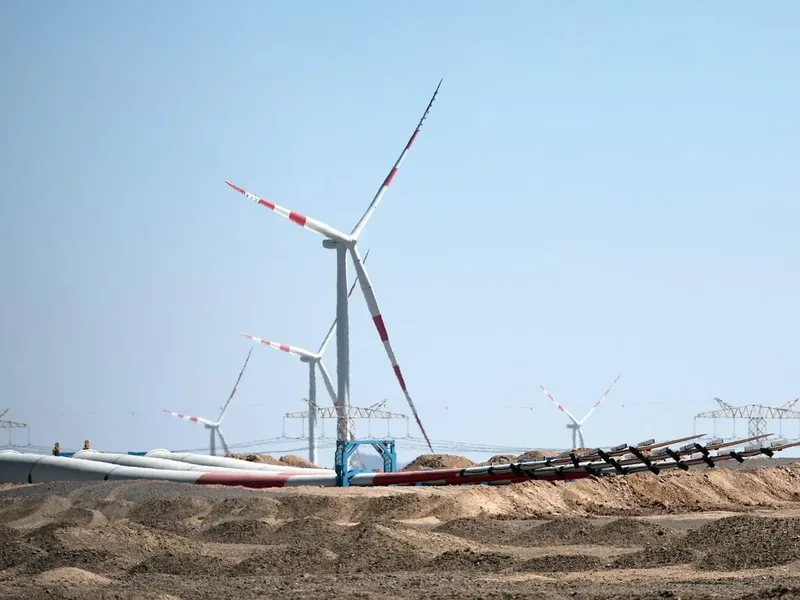
Complementing Egypt’s solar advancements, French developer Voltalia is advancing the 869 MW Zafarana wind farm along the Red Sea coast, targeting operational status by 2028. This project, secured under a 20-year power purchase agreement with the Egyptian Electricity Transmission Company, exemplifies the country’s strategic diversification into wind energy, reinforcing its commitment to expanding a balanced and resilient renewable energy mix.

Hydro and Battery Storage Leap
Egypt is pairing pumped-storage hydro and locally made battery systems to boost grid stability and accelerate the integration of renewable power.
Egypt is strategically leveraging its unique geographical advantages to develop large-scale pumped-storage hydroelectric projects, such as the El Tor integrated renewable energy project in Sinai, which boasts a substantial 250 GWh capacity. This initiative, part of a broader 3.1 GW renewable capacity plan, underscores the country's commitment to enhancing grid stability and facilitating the integration of variable renewable energy sources while reducing reliance on fossil fuels.
Complementing its hydroelectric storage ambitions, Egypt is making a significant leap in battery energy storage technology by hosting the Middle East and Africa’s first specialized BESS manufacturing facility, established by Sungrow in the Suez Canal Economic Zone. This $50 million investment, with an anticipated 10 GWh annual production capacity starting April 2027, not only supports local renewable projects like the 1.95 GW Energy Valley solar initiative but also positions Egypt as a regional hub for energy storage manufacturing, reducing dependence on imports and aligning with broader regional efforts including Saudi Arabia’s battery plant developments.
The collaboration between international players such as Sungrow and Norwegian independent power producer Scatec on Egypt’s Energy Valley project exemplifies the country’s integrated approach to renewable energy expansion, combining large-scale solar power with advanced battery storage solutions. This partnership highlights Egypt’s strategic focus on deploying cutting-edge storage technologies to maintain grid reliability and support its ambitious energy transition goals.
EBRD Fuels Green Expansion
Innovative financing models and rigorous risk management from European lenders are de-risking Egypt’s renewables boom and ensuring environmental safeguards.
The European Bank for Reconstruction and Development (EBRD) has emerged as a cornerstone financier in Egypt’s renewable energy expansion, exemplified by its USD 192 million senior debt support for Scatec’s 900 MW Shadwan wind farm. This financing is part of a broader USD 4 billion mobilization effort under the Nexus of Water, Food, and Energy program, targeting 10 GW of renewable capacity by 2028. Beyond Shadwan, the EBRD is actively considering additional investments, including a potential USD 200 million loan for Alcazar Energy Partners’ 500 MW wind complex and prior backing of Scatec’s 1.1 GW Obelisk solar-and-battery project, underscoring its commitment to a diversified renewable portfolio in Egypt.
The Shadwan project exemplifies a sophisticated public-private partnership model that blends development finance with private capital to de-risk investments and accelerate project delivery. Supported by a 25-year power purchase agreement and a European first-loss guarantee under the Hi-Bar programme, this approach aims to attract large-scale private investment while managing critical challenges such as grid capacity constraints, utility financial health, and environmental safeguards. By aligning project timelines with grid reinforcement and the financial capacity of the electricity offtaker, this model seeks to ensure sustainable integration of renewables into Egypt’s energy system.
Transparent and rigorous management of financial and environmental risks is central to maintaining the credibility and sustainability of these partnerships. While dollar-linked long-term PPAs appeal to international lenders, they introduce foreign-exchange exposure risks that must be carefully managed within Egypt’s electricity system. The EBRD’s classification of Shadwan as a Category A project, accompanied by comprehensive environmental and social impact assessments, biodiversity plans, and stakeholder engagement, reflects a commitment to uphold stringent safeguards that balance rapid renewable deployment with ecological and social responsibility.
Economic Powerhouse in the Making
Egypt’s renewable mega-projects and blended finance strategies are reducing fuel import bills, creating skilled jobs, and elevating the country as a clean energy hub for Africa and beyond.
Egypt’s ambitious renewable energy projects, exemplified by the 900MW Shadwan wind farm and the 1.1GW Obelisk solar and battery initiative, are strategically designed to reduce the nation’s reliance on costly fuel imports and alleviate foreign exchange constraints. Beyond immediate economic relief, these projects bolster Egypt’s stature in African and Mediterranean power markets, aligning with its vision to become a regional clean energy hub. This shift not only supports Egypt’s green-industry ambitions but also fosters local economic empowerment by integrating construction contracts and technical training that cultivate skilled jobs and enhance domestic capabilities in renewable energy manufacturing and infrastructure development.
The Shadwan project also illustrates how innovative blended finance mechanisms, including a $192 million senior debt facility from the European Bank for Reconstruction and Development (EBRD) coupled with a pioneering European first-loss guarantee under the Hi-Bar programme, can effectively mobilize large-scale private investment in Egypt’s renewable sector. By mitigating investment risks that typically deter long-duration energy-transition projects, this financial architecture not only accelerates project realization but also positions Egypt as a credible and attractive destination for sustainable energy capital, reinforcing its strategic economic and technological ambitions.