Egypt powers up: mega renewables, grid storage take center stage
The gist
Egypt is supercharging its energy future with mega-scale solar, wind, and battery projects that are setting new benchmarks for renewables—and the grid is finally catching up.
What to know
- Scatec’s 1.1 GW Obelisk solar-battery hybrid, now fully online, is Africa’s largest and a milestone for integrating renewables into Egypt’s grid.
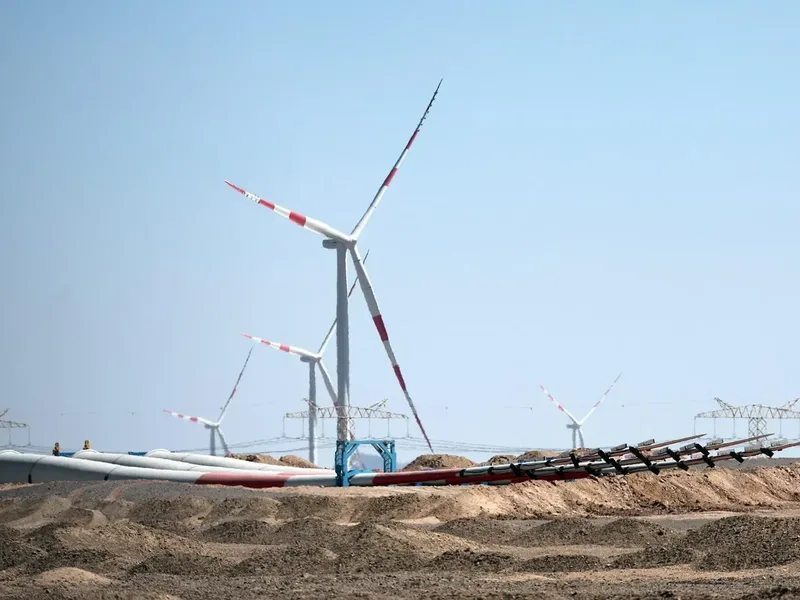
- Scatec’s 900 MW Shadwan wind farm just locked in $192 million from EBRD, with top-tier environmental and social safeguards to match its 25-year power deal.
- Egypt’s 4,000 MWh battery rollout with Huawei aims to hit 45% renewables by 2028, blending local manufacturing with grid-scale storage for peak power play.
Obelisk: Hybrid Power Milestone
Egypt’s grid reliability gets a boost as Scatec’s 1.1 GW Obelisk project fuses solar generation and battery storage at unprecedented scale.
Scatec has reached a significant milestone with the full commercial commissioning of the Obelisk hybrid solar-battery project, boasting a substantial capacity of 1.1 GW. This large-scale facility not only underscores Scatec's leadership in renewable energy development but also marks a pivotal advancement in Egypt's clean energy landscape by integrating solar power generation with battery storage to enhance grid reliability and renewable integration.

Shadwan’s High-Stakes Wind Gamble
EBRD’s $192 million bet on Shadwan tests whether Egypt can scale renewables with strict environmental safeguards and manage currency risks in long-term power deals.
The European Bank for Reconstruction and Development (EBRD) is spearheading a pivotal $192 million senior debt financing package for Scatec’s 900 MW Shadwan wind farm, underpinned by a 25-year power purchase agreement with the Egyptian Electricity Transmission Company. This financial backing not only underscores the project's strategic role in Egypt’s renewable energy expansion but also serves as a litmus test for whether blended finance can successfully scale large renewable assets without overwhelming the national grid, utility finances, or biodiversity safeguards.
Environmental and social safeguards are central to Shadwan’s development, with the project classified as Category A by the EBRD, necessitating comprehensive impact assessments including critical-habitat and cumulative-effects evaluations alongside robust biodiversity and stakeholder engagement plans. This rigorous framework aims to ensure that the wind farm’s expansion harmonizes with ecological preservation and community interests, setting a high standard for sustainable renewable infrastructure in Egypt.
Financial sustainability and risk transparency are critical to Shadwan’s long-term viability, as the dollar-linked long-term PPA, while attractive to lenders, introduces foreign-exchange exposure risks into Egypt’s electricity system. Transparent management of guarantees, tariffs, and contingent liabilities is essential to maintain investor confidence and safeguard the project’s financial health, highlighting the intricate balance between attracting capital and managing systemic risk in emerging markets.
The successful realization of the Shadwan wind farm hinges on meticulous coordination between project timelines, grid reinforcement efforts, and the financial capacity of the offtaker, ensuring an integrated approach to infrastructure, finance, and environmental safeguards. Moreover, Shadwan is poised to become a benchmark for how development finance can effectively catalyze private capital investment in large-scale renewables across African markets, contingent on demonstrable risk-sharing, affordable power delivery, and verifiable environmental stewardship.

Battery Storage Goes National
Egypt’s 4,000 MWh battery rollout with Huawei marks a leap from pilot projects to grid-wide storage, pairing local manufacturing with a push for round-the-clock renewables.
Egypt's ambitious 4,000 MWh battery storage initiative with Huawei represents a pivotal shift from isolated experimental projects to a core component of national grid modernization and renewable integration. By enabling the storage and strategic release of solar energy from daytime production to evening peak demand, this program directly addresses the intermittency challenges of solar and wind power, supporting Egypt’s target of achieving 45% renewable energy in its mix by 2028.
Beyond enhancing grid flexibility and stability, the initiative aims to improve electricity supply quality and maximize the value extracted from renewable projects, reflecting a holistic approach to energy transition. Integral to this plan is the establishment of local manufacturing facilities for battery energy storage systems and deployment of standalone utility-scale storage plants across Egypt’s national grid, signaling a commitment to both technological self-reliance and widespread infrastructure development.