Elite impunity and grassroots fury: america’s democracy faces its stress test

The gist
America’s democracy is being stress-tested as entrenched elites dodge accountability and grassroots movements fight to restore integrity and justice.
What to know
- By 2026, bipartisan obstruction and 'High Priests of the Rule-Book' render subpoenas toothless, shielding political corruption at the highest levels.
- A conservative 6-3 Supreme Court supermajority, fueled by dark money and the Federalist Society, is expanding executive power and gutting voting rights, while state courts and citizen coalitions mount resistance.
- Grassroots groups like No Kings are mobilizing thousands nationwide for term limits, ethics reforms, and the defense of democratic institutions against censorship, voter suppression, and elite impunity.
Corruption’s Invisible Fortress
A bipartisan web of mutual blackmail and financial influence has turned courts into no-go zones, letting elite misconduct thrive while public trust collapses.
By early 2026, entrenched institutional elites, dubbed the 'High Priests of the Rule-Book,' have entrenched their power through a mutual assured destruction pact, where political actors hold compromising dossiers on one another, effectively turning courts into battlegrounds no one dares enter. This complex web of bipartisan obstruction ensures that subpoenas—whether for immigration records or Epstein files—vanish without consequence, illustrating a fundamental conflict between elites who cling to procedural norms to preserve the status quo and populist movements demanding transparency and sovereignty.
Financial corruption deeply entwines with political power, as highlighted by Mayor Paige Cognetti’s critique of elected officials leveraging policy votes for personal gain, a practice that severely undermines public trust. The infusion of over $50 million in dark money into Chicago primaries, noted by Lorraine Forte, exemplifies how elections increasingly resemble auctions, further eroding democratic legitimacy and fueling public cynicism about the fairness of political processes.
The United States has normalized elite impunity through a carefully choreographed accountability theater that preserves institutional dignity without threatening powerful networks, as seen in the Epstein case which serves as a Rosetta Stone for superficial justice. Despite clear patterns of suspiciously timed trades linked to political access, high evidentiary standards prevent meaningful prosecution, creating an epistemic trap where the gap between observable misconduct and legal enforcement undermines the rule of law and risks fracturing both domestic cohesion and international legitimacy.
While lower-level officials and ordinary citizens face swift consequences for corruption, the most consequential elite abuses—channeled through foundations, consulting retainers, and corporate boards—remain effectively immune from scrutiny. This stark disparity deepens public distrust, as a contractor mis-billing a government program is quickly audited, yet systemic elite corruption persists beyond reach, reinforcing the perception of a rigged system that shields the powerful at the expense of democratic accountability.



Weaponizing Law and Cruelty
Indefinite detentions and politicized prosecutions reveal how dehumanization and legal overreach have become strategic tools to silence dissent and erode empathy.
By early 2026, authoritarian tactics had evolved into a chilling blend of cruelty and legal manipulation designed to erode democratic norms and human empathy. The indefinite detention of vetted immigrant families from Afghanistan and Somalia by ICE, justified openly as a feature rather than a flaw of the administration, exemplifies how dehumanization is weaponized to consolidate power. Simultaneously, the justice system's independence was compromised when a federal judge publicly denounced the Justice Department's baseless criminal probe into Federal Reserve Chair Jerome Powell as a political tool aimed solely at punishing dissent, illustrating how legal overreach serves to intimidate and silence opposition. This strategic degradation of empathy transforms grave issues like war and refugee crises into mere entertainment or statistics, masking profound moral decay behind rhetoric and memes, and signaling a disturbing shift where those in power no longer regard the populace as fully human.

Supreme Court: Power Unchecked
A conservative supermajority, shielded by dark money, is dismantling voting rights and civil liberties while state courts and grassroots coalitions scramble to defend democracy.
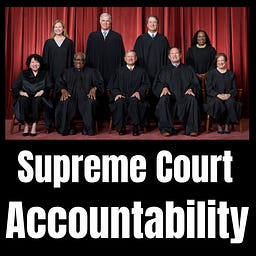
By early 2026, the Supreme Court’s conservative 6-3 supermajority, heavily influenced by the Federalist Society and dark money campaigns, has systematically expanded executive power and undermined democratic checks and balances. Chief Justice John Roberts notably led rulings that granted former President Trump near-criminal immunity, effectively politicizing the Department of Justice and enabling prosecutions driven by partisan motives, as seen with Acting Attorney General Todd Blanche’s defense of targeting political opponents. This judicial empowerment has also facilitated the revival of debunked voter fraud claims, further eroding civil liberties and democratic accountability.
The Court’s conservative majority is actively dismantling key democratic protections, particularly targeting voting rights and civil liberties. Analyses warn that further weakening of the Voting Rights Act threatens safeguards against racial discrimination and absentee ballot access, disproportionately impacting marginalized communities. John Roberts has been characterized as making the destruction of Black voting power his life’s work, enforcing a constitutional interpretation that privileges white, wealthy men and obstructs reforms like DC enfranchisement and anti-gerrymandering legislation, thereby entrenching far-right minority rule.
Despite the Court’s conservative dominance, lower courts and state supreme courts in Wisconsin and California have played crucial roles in resisting federal judicial trends by protecting voting rights and election integrity. Grassroots movements, such as the No Kings campaign advocating for term limits and binding ethics codes, are building accountability infrastructures absent from the Court itself. This bottom-up pressure is essential, as meaningful reform is unlikely to originate from the Supreme Court, which remains insulated from democratic accountability and continues to function as an anti-majoritarian institution designed to resist political and cultural pressures.
Debates over Supreme Court reform reveal deep tensions about preserving judicial independence versus addressing unchecked power. While some call for legislative reforms like the Supreme Court Ethics, Recusal, and Transparency Act, others warn that changes such as term limits could undermine the Court’s counter-majoritarian role and lead to unintended consequences. Skepticism about ambitious reforms like court expansion or constitutional amendments persists, with experts anticipating a looming constitutional crisis arising from the collision of an imperial presidency, a powerful Court, and a weakened Congress. Nonetheless, historical resilience suggests the institution may endure if its role is better understood.



Grassroots: Democracy’s Last Line
From mass rallies to fighting book bans, ordinary citizens are building new accountability structures and defending rights as institutions falter.
By early 2026, grassroots movements like the No Kings coalition exemplify how sustained, collective nonviolent action is vital in resisting authoritarianism and building democratic resilience when formal institutions falter. With over 2,000 events nationwide on March 28 alone, these mass rallies and ongoing community organizing efforts underscore the power of people demanding term limits, ethics reforms, and accountability infrastructure that courts have yet to provide. As advocates remind us, 'Reform doesn’t come from the top. It is demanded from below,' highlighting that democracy’s survival hinges on ordinary citizens showing up week after week to defend their rights and institutions.
Grassroots resistance extends beyond protests into proactive defense of democratic pillars such as public schools, libraries, and election workers, while combating disinformation in everyday spaces to uphold truth as democracy’s first line of defense. The alarming rise of 6,870 book bans documented by PEN America and 31 restrictive voting laws enacted in 2025, as reported by the Brennan Center, serve as urgent calls for community pushback against censorship and voter suppression. This multifaceted activism not only challenges authoritarian overreach but also protects vulnerable groups, demonstrating that 'power to the people is not symbolic language' but a lived practice of mutual defense.
The effectiveness of grassroots advocacy is tangible, as seen when 67,000 petition signatures led Governor Kay Ivey to commute Charles 'Sonny' Burton’s death sentence, illustrating how collective action can yield concrete policy outcomes. Moreover, these movements interconnect across diverse issues—from environmental campaigns against the Warner-Paramount mega-merger to anti-war efforts opposing illegal conflicts—emphasizing that democratic accountability and ethics reforms are inseparable from broader social justice struggles. Voter engagement remains a cornerstone of this resistance, with calls to 'register to vote, vote in every election, and help your community do the same,' recognizing that rights like reproductive freedom are won and lost at the ballot box.
Ultimately, millions of Americans are rising to the moment with sustained grassroots organizing that transforms public demonstrations into enduring community defense against authoritarianism. From Quakertown to Detroit, ordinary people—scientists, workers, and residents alike—are refusing to accept rights erosion quietly, embodying the urgent truth that 'democracy does not sustain itself. It is sustained by people who treat it as something worth defending.' This collective resolve, fueled by anger and organization, is the linchpin for holding leaders accountable and reclaiming democratic governance in an era of escalating power abuses.

Judicial Reform at a Crossroads
Bold proposals for Supreme Court expansion and term limits face fierce resistance, exposing deep tensions between judicial independence and urgent demands for accountability.
By early 2026, a suite of institutional reforms aimed at restoring democratic accountability has crystallized around Supreme Court expansion, imposing 18-year term limits, and adopting a binding ethics code with real enforcement mechanisms. Advocates emphasize that these changes are not radical but necessary to reestablish a judiciary capable of delivering equal justice under law. Grassroots activism and citizen engagement are seen as vital drivers to hold leaders accountable and foster an inclusive democratic vision that actively combats various forms of bigotry, from racism to misogyny, underscoring the movement's broad social justice commitments.
The political landscape reveals deep challenges to these reforms, as the Supreme Court continues to influence critical issues like voting rights and health care protections, often in ways that exacerbate constitutional crises. For example, Wisconsin’s Supreme Court liberal majority expansion to 5-2 has shifted rulings on redistricting and election laws, while California’s Supreme Court intervened to protect ballot integrity amid contentious investigations. These state-level judicial battles highlight the Court’s pivotal role in shaping democratic governance and the persistent tension between judicial independence and political accountability.
Debates over Supreme Court reform expose a fundamental tension between preserving judicial independence and addressing the Court’s perceived partisan overreach. Critics warn that proposals like holding cases until a new justice is appointed or imposing term limits risk undermining public trust and the Court’s counter-majoritarian role in safeguarding constitutional rights. Simultaneously, concerns about an impending constitutional crisis loom, fueled by clashes between an elected presidency and an unelected judiciary, though historical precedents suggest the Court’s institutional resilience if its role is better understood. Optimism remains that a shift toward more traditional political processes could restore Congressional functionality and reduce the Court’s outsized political influence.
Calls for Supreme Court expansion and filibuster elimination have intensified as urgent reforms to counteract what critics label a 'brutal Christofascist majority' wielding the Court as an all-powerful legislature blocking progressive policies. Analysts argue that moderate strategies, such as President Biden’s cautious approach, have failed to stem the tide of constitutional assaults, necessitating bold institutional changes to enable reforms like voting rights protections, gun control, and abortion rights. Yet political obstacles remain significant, with many Americans wary of partisan radicalism and the complexities of Court dynamics, complicating efforts to build broad support for these transformative measures.