Enterprises slash AI bills with smart model routing
The gist
Enterprises are slashing AI bills by up to 85%—without sacrificing output quality—by routing tasks to the smartest, cheapest model for the job.
What to know
- Tiered model routing lets companies like Coinbase and Kilo cut AI costs by up to 97%, using distilled models for simple tasks and reserving premium models for complex queries.
- Multi-provider platforms such as OpenRouter enable dynamic switching among 300+ models, boosting resilience and slashing monthly AI expenses from hundreds to mere tens of dollars.
- Operational tactics like prompt caching and session affinity have pushed cache hit rates from 5% to 60%, chopping token costs by as much as 63% without hurting performance.
Token Economics Drive Strategy
Enterprises are surgically matching AI model selection to workload complexity, exploiting steep token price differentials to turn daily AI spend from a budget risk into a competitive advantage.
By early 2026, rising token costs and impending price hikes prompted enterprises to adopt cost-aware AI model selection strategies, leveraging smaller distilled models like OpenAI's GPT 5.4 Mini and Nano to delegate simpler tasks and reduce expensive token consumption. This approach is especially critical for small businesses with tight margins, where efficient token use can mean the difference between spending $10 versus $200 daily on uncertain AI-driven projects, underscoring the economic imperative to optimize token expenditure.
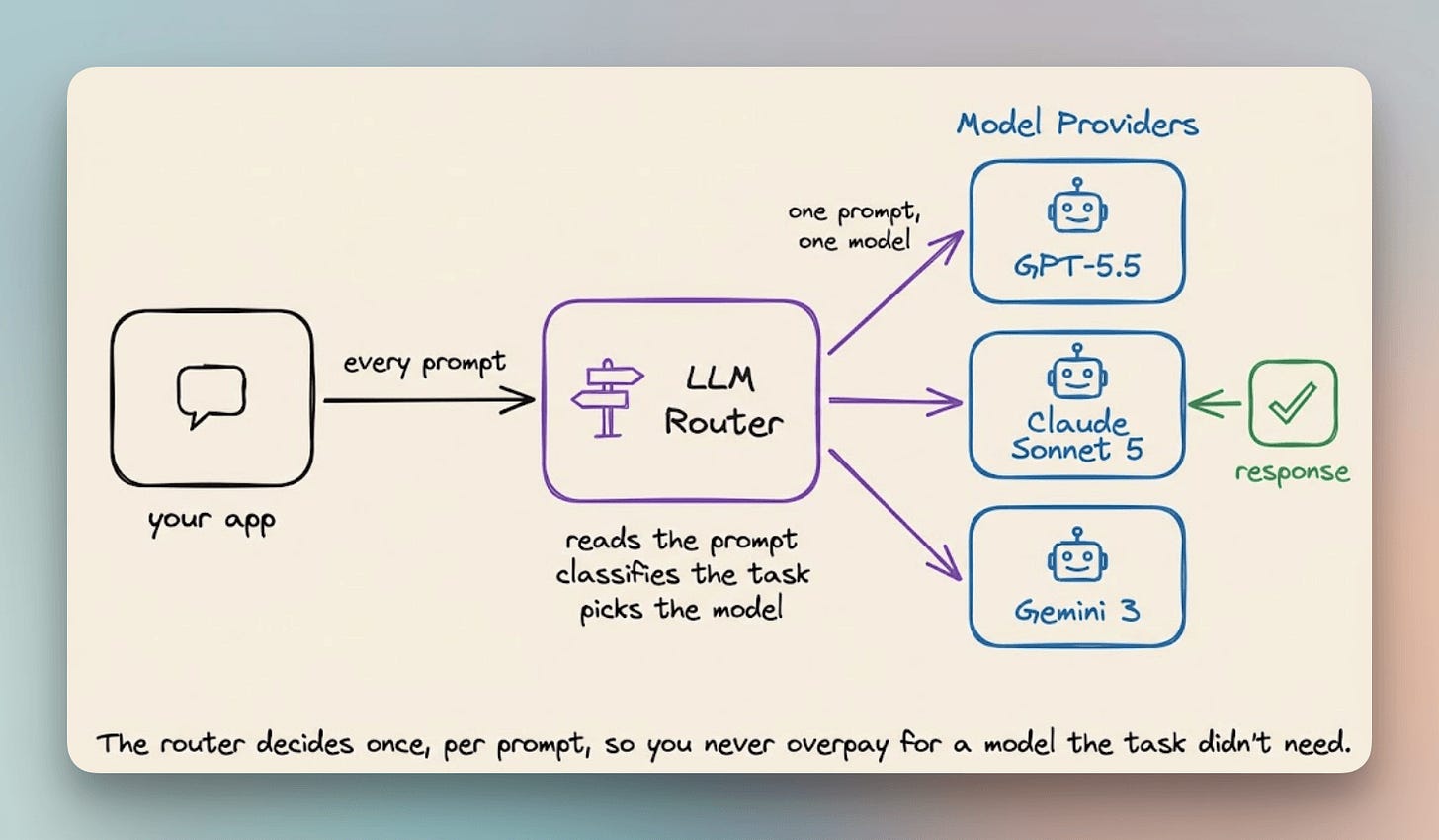
Enterprises are increasingly embracing strategic routing of AI prompts to models that balance price and performance, as token costs remain uniform regardless of prompt complexity. Jensen’s emphasis on understanding one’s position on price-performance curves highlights the necessity of avoiding expensive frontier models for trivial queries, such as weather checks, where cheaper models suffice. This tiered routing, supported by policy-driven frameworks, enables organizations to optimize AI spending by reserving high-cost models for genuinely complex tasks while scaling repetitive or simple workloads on cost-effective alternatives.
The economics of AI token usage are further complicated by the disproportionate cost of output tokens, which can be 3 to 12 times more expensive than input tokens, and the exponential growth of token consumption in ongoing conversations due to context retention. For instance, Fable’s frontier model charges $50 per million output tokens compared to $6 for cheaper models, making it financially prudent to use expensive models during low-output phases like planning and switch to cheaper ones during high-output phases such as coding. This nuanced understanding of token cost dynamics drives enterprises to implement fine-grained model orchestration to maximize cost efficiency without sacrificing quality.
Recent analyses underscore that enterprise AI costs are predominantly an inference problem rather than a training one, with the critical cost driver being the routing decision of which model handles each request. Deploying a single frontier model for all queries leads to linear and unsustainable cost scaling, whereas implementing tiered, per-request routing architectures can reduce AI infrastructure expenses by 42% to as much as 80% in agent-heavy workloads. This shift reframes cost management as an engineering and observability challenge, where tuning escalation thresholds and selecting a diverse mix of models and providers become competitive differentiators in controlling token expenditures and ensuring economic sustainability.




Intelligent Brokers Reshape Routing
Dynamic, policy-driven model brokers are transforming enterprise AI by automating model selection and session consistency, ensuring high performance at a fraction of legacy costs.
By early 2026, enterprises recognized that tiered routing architectures assigning AI tasks to models based on complexity and cost-effectiveness were essential for controlling AI expenses. This approach ensures that simpler tasks leverage smaller or mid-tier models like GPT-4.1 Mini or open-source equivalents, reserving expensive frontier models for complex reasoning or high-stakes outputs. Jensen’s presentation of price-performance curves underscored the strategic importance of understanding where workloads fall on these curves to optimize routing policies effectively.
Intelligent model brokers and multi-model platforms have emerged as critical enablers of dynamic task routing, allowing enterprises to flexibly switch between providers and models to optimize costs while balancing compliance and security concerns. Solutions like Kilo Gateway exemplify this by using explicit task mode signals to route requests accurately and dynamically update routing maps, achieving cost reductions of about one-third and demonstrating that 80-90% of requests do not require top-tier models. Similarly, OpenRouter’s API access to over 300 models facilitates seamless multi-model routing, reflecting a growing industry trend toward brokered, tiered architectures.
Effective tiered routing strategies emphasize session affinity and routing policies that maintain model consistency within sessions to preserve cache warmth and context coherence, thereby maximizing cost savings and reducing latency. Plano’s open-source orchestrator exemplifies this by pinning sessions to a single model after the initial call, preventing cache invalidation and enabling flexible routing methods including model-based, alias-based, and preference-aligned approaches. This nuanced control over routing not only enhances efficiency but also improves user experience by avoiding unnecessary latency and output variability.
The most successful enterprises adopt a multi-tiered routing framework that balances cost and quality by defining clear quality thresholds and dynamically escalating tasks only when cheaper models fail validation. This approach, recommended by OpenAI and demonstrated in production, involves using inexpensive models for high-volume, measurable tasks, specialized models for domain-specific strengths, and reserving frontier models for the hardest 10-20% of tasks requiring complex reasoning or sensitive outputs. Microsoft’s three-layer LLM routing architecture and Stanford’s RouteLLM research confirm that such strategies can reduce AI costs by up to 85% while maintaining over 95% of top-model quality, transforming AI from a costly burden into a scalable enterprise asset.






Cache Efficiency Powers Savings
Advanced cache management and session pinning let companies like Coinbase nearly eliminate redundant token spend, slashing costs even as AI usage soars.
By mid-2026, leading enterprises like Coinbase and Plano demonstrated that integrating AI-driven model routing layers significantly enhances cache efficiency and reduces costs. Coinbase's routing system increased cache hit rates from 5% to 60%, nearly halving expenses despite growing usage, while Plano’s flexible routing methods—including model-based, alias-based, and preference-aligned routing—enable seamless model switching without app code changes. Crucially, maintaining model affinity within user sessions preserves context consistency and cache validity, preventing costly cache invalidations during multi-step tasks.
Prompt caching emerged as a cornerstone tactic for slashing token costs, especially in high context-reuse scenarios like customer support and code generation, with reductions of 40 to 60 percent in input token expenses reported. However, because caches are model-specific, switching models mid-task forces cold cache reloads and full context re-billing, negating savings. Production systems mitigate this by pinning all calls within a task to a single model, preserving cache warmth and coherent context, as underscored by Coinbase’s experience where total token usage rose but overall AI costs remained flat or declined.
Operational best practices emphasize prompt compression, semantic caching, and context optimization to reduce token usage without sacrificing output quality. Techniques such as removing redundant system prompt bloat, pruning chain-of-thought reasoning, and constraining output length have been shown to cut API costs by up to 63%. Leveraging semantic caching with embedding similarity and provider-native prompt caching discounts—like OpenAI’s 50% off cached input tokens and Anthropic’s 90% discount on cache reads—further amplifies savings while maintaining response accuracy.
Advanced context management strategies, including selective retention and semantic compression, are vital to controlling token consumption and inference costs. Enterprises benefit from balancing exact detail preservation with summarization of less critical history, avoiding unnecessary repeated context that inflates token counts. Additionally, batching techniques—especially continuous batching as implemented in frameworks like vLLM and TensorRT-LLM—optimize GPU utilization and throughput, reducing latency and inference expenses. These layered tactics, combined with vigilant latency tracking and cost attribution, form the operational backbone for scaling AI affordably without compromising performance.
Multi-Provider Platforms Cut Risk
Unified routing across hundreds of models shields enterprises from vendor outages and price shocks, while unlocking massive cost reductions and operational flexibility.
Enterprises are increasingly adopting multi-provider and multi-model AI platforms to strategically allocate workloads based on task complexity and cost efficiency, significantly reducing token expenses while maintaining output quality. Platforms like OpenRouter, which processes 25 trillion tokens weekly and offers unified access to over 300 models from Anthropic, OpenAI, Google, and others, exemplify this trend by enabling seamless routing to cheaper or more capable models without disrupting workflows. This approach allows organizations to match high-cost frontier models such as Claude Opus for complex reasoning with affordable open-source alternatives like DeepSeek or Qwen for routine tasks, slashing monthly AI costs from hundreds to mere tens of dollars.
Multi-LLM platforms not only optimize costs but also enhance resilience and operational reliability by mitigating vendor risks such as unexpected price hikes, outages, and model deprecations. As Monti Saroya highlights, intelligent routing that dynamically directs requests to the most suitable model can achieve up to 85% cost savings while preserving 95% of GPT-4’s quality, turning potential service disruptions into manageable routing decisions. This multi-provider strategy also supports compliance and latency requirements by enabling failover and jurisdiction-specific processing, crucial for sectors like finance and healthcare.
The architecture of multi-model AI platforms is evolving toward flexible, layered routing systems that integrate open-source components and support self-hosting, allowing organizations to incrementally adopt complexity and governance. Microsoft’s three-layer routing on AKS, combining tools like RouteLLM and agentgateway, demonstrates how semantic routing and GPU-aware load balancing can reduce reliance on expensive models to about 26% of calls, yielding substantial cost savings. Additionally, serverless GPU-time pricing models, as offered by Modal, align costs with actual compute demand rather than token volume, further optimizing expenses for bursty workloads.
While self-hosting open-source models offers tailored workload optimization and potential cost advantages, especially at high token volumes, it demands careful timing and operational maturity. Total cost of ownership analyses reveal that break-even points for local deployments have dropped by 40% since 2024, making on-premises models viable for users exceeding 50 million tokens daily, but smaller projects still benefit from cloud APIs due to fixed infrastructure costs. Furthermore, extending cache durations and purchasing compute capacity directly, as Cognition did, can significantly reduce inference costs, though teams must also consider overheads like electricity, labor, and hardware depreciation in their cost-benefit calculations.


Governance and Modularity Win
Enterprises are maximizing AI ROI by combining rigorous governance, modular agentic frameworks, and context-aware routing—reducing technical debt and the 'LLM tax' while scaling responsibly.
By mid-2026, enterprises like Kilo demonstrated that implementing centralized AI model routing layers can slash AI usage costs by roughly one-third to over 70 percent, primarily by intelligently directing tasks based on workload complexity and mode. This tiered routing approach assigns routine or low-risk tasks to cheaper or open-source models, reserving premium models for complex or high-stakes outputs, thereby achieving cost differences of up to tenfold per request without sacrificing quality. Companies such as Palantir and Coinbase have reported dramatic cost reductions—up to 97 percent in some cases—by automating model selection and preventing redundant requests, underscoring the operational and economic benefits of dynamic, task-aware routing frameworks.
Sustainable AI ROI hinges not merely on minimizing token usage but on optimizing the cost of successful outcomes through continuous measurement, governance, and adaptive architectural decisions. Leading enterprises employ internal evaluation datasets tailored to specific workloads to set clear quality targets, ensuring cheaper models are only deployed when they meet these standards, as OpenAI’s guidance suggests. This disciplined approach—prioritizing 'intelligence per dollar' over 'intelligence at any price'—is complemented by governance frameworks that integrate policy-aligned model subsets and budget controls, enabling organizations to scale AI responsibly while maintaining compliance and operational resilience.
Emerging best practices emphasize the use of modular, agentic AI frameworks that reduce reliance on costly fine-tuning, which can create technical debt and operational rigidity. Instead, enterprises like Lease End leverage prompt engineering, dynamic context management, and modular skills to achieve high ROI—up to 50x—while maintaining flexibility and reducing maintenance overhead. Additionally, intelligent context-aware AI agents that incorporate internal business logic and digital twins of operations help minimize unnecessary LLM calls, cutting the so-called 'LLM tax' and further improving cost-efficiency and operational clarity.
The rapid expansion of the AI model routing market, with significant investments such as OpenRouter’s $120 million funding round and adoption by major players like Databricks and Palantir, reflects growing corporate confidence in these technologies as critical levers for sustainable AI scaling. Enterprises benefit from a spectrum of solutions—from commercial platforms offering unified multi-model access and aggregated pricing discounts to DIY routing layers powered by open-source tools like Plano and Claude Code—enabling tailored, cost-effective AI management that aligns with diverse organizational needs and evolving workload profiles.