EU ban spurs fashion’s circular shift—resale and AI take lead
The gist
Europe’s 2026 ban on destroying unsold fashion is forcing global brands to turn excess inventory into opportunity—fueling a secondhand boom and making AI-powered circularity the industry’s hottest accessory.
What to know
- Starting July 2026, the EU will fine large fashion brands for destroying unsold apparel, compelling full transparency and a shift to circular business models.
- The global secondhand market doubled by mid-2026—with Zara and H&M leading the resale charge as Gen Z shoppers treat clothes like assets, not landfill.
- AI-driven platforms and upcycling tech are helping brands—from Portugal to Patagonia—turn regulatory headaches into resale revenues and design gold.
Regulation Redefines Inventory Risk
The EU’s groundbreaking 2026 ban turns excess inventory into a high-stakes compliance challenge, forcing brands to overhaul supply chains and embed circularity at the core of operations.
The EU's 2026 ban on destroying unsold apparel, footwear, and accessories under the Ecodesign for Sustainable Products Regulation (ESPR) represents a landmark regulatory shift that transforms excess inventory from a hidden cost into a clearly auditable compliance and financial risk. Effective July 19, 2026, large companies must not only cease destruction but also comply with stringent disclosure obligations and standardized reporting formats introduced earlier in February, increasing transparency and accountability across the industry. This phased enforcement approach, extending to medium-sized companies by 2030, compels brands to embed circularity operationally rather than as a mere reporting formality, fundamentally altering how they approach inventory management, forecasting, and supply chain planning.
By outlawing destruction as a default solution—even recycling is classified as a form of destruction under ESPR—retailers are forced to prioritize higher-value circular strategies such as resale, repair, donation, and refurbishment. This regulatory stance signals a strategic push by Europe to internalize the environmental costs of overproduction at the earliest stages of design and sourcing, compelling companies to rethink their entire supply chain from near-shoring fabric sourcing to shortening lead times. Consequently, brands like Patagonia, Zara, and H&M have accelerated their adoption of circular initiatives, turning unsold stock from a compliance headache into a solvable business challenge that can confer competitive advantage through improved forecasting and reverse logistics.
The enforcement of the ban is backed by national authorities empowered to impose fines for non-compliance, including failure to maintain detailed records for at least five years, underscoring the seriousness of the regulatory regime. Destruction is now strictly limited to exceptional cases such as unsafe, contaminated, or counterfeit goods, explicitly excluding economic reasons like high storage costs or weak demand. This has driven fashion companies to invest heavily in inventory transparency, reporting systems, and circular business models, making inventory planning not just a compliance necessity but a strategic lever for sustainability and economic resilience.

Resale Becomes Core Strategy
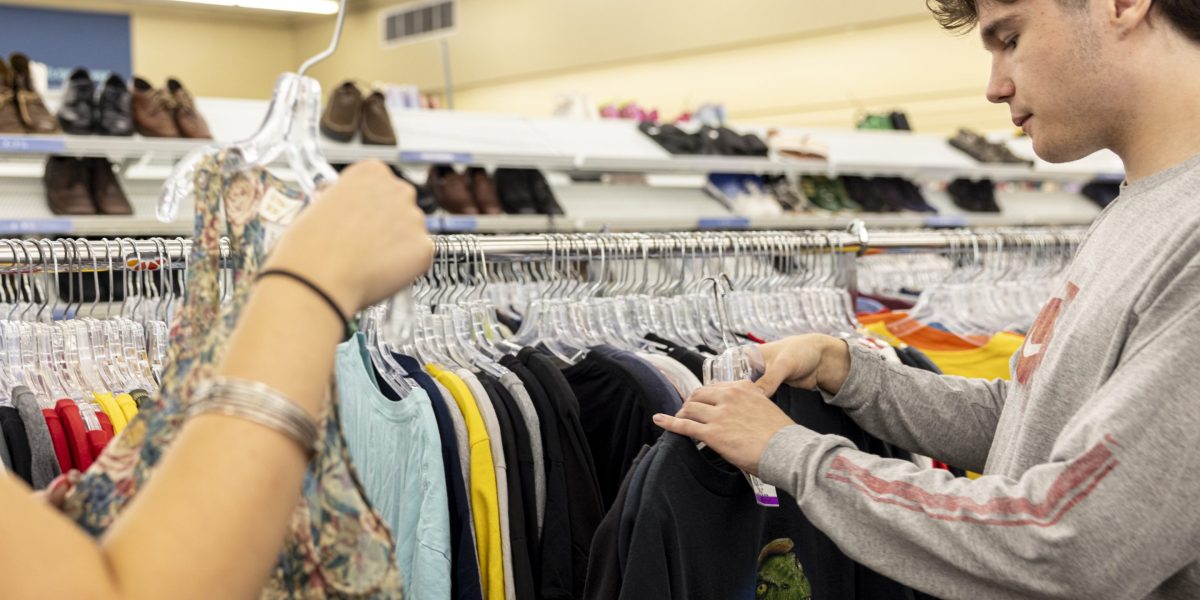
Major brands like Zara and H&M are transforming resale from a side project into a primary revenue engine, as Gen Z treats clothing as tradable assets and retailers race to control the entire lifecycle.
By mid-2026, the global second-hand apparel market had doubled in size over five years and was projected to grow another 40% by 2030, potentially accounting for up to 13% of all clothing sales. Major fashion retailers like Zara, H&M, Zalando, and ASOS have actively embraced this shift, with Zara becoming the second most-shopped brand globally in resale, illustrating how established players are strategically positioning themselves to capitalize on this rapidly expanding segment.
Younger consumers, particularly Gen Z and younger millennials, have been pivotal in driving the resale boom, motivated by sustainability values and economic pressures such as rising living costs. Platforms like Vinted, Depop, and Poshmark have become central to their shopping habits, with many purchasing clothing with resale value in mind, effectively creating an apparel 'flywheel' where clothing is increasingly seen as an asset rather than a disposable good.
In response to both regulatory pressures, such as the EU ban on destroying unsold apparel effective in 2026, and the lucrative growth of resale markets, brands are evolving resale from a sustainability experiment into a core business strategy. Companies like H&M have reported significant revenue growth from resale channels—H&M’s Pre-Loved initiative generated $194.4 million in 2025—and are now launching their own resale platforms to capture revenue previously lost to third-party marketplaces, aiming to 'own the entire fashion life cycle' including resale, repair, and recycling.
Despite recognizing resale as a critical response to regulatory demands and a competitive necessity—66% of retailers see it as a 'regulation solution' and 32% as essential to competitiveness—many brands face operational hurdles, with only 16% ready to scale resale immediately. However, resale-as-a-service (RaaS) models and technological partnerships with companies like Trove and Reflaunt are helping brands overcome logistical challenges, enabling rapid program launches and integration into physical retail, while consumer demand continues to rise, especially among Gen Z who prioritize secondhand apparel and trust brands that offer resale options.


Upcycling Goes Mainstream
Industry giants and emerging designers are driving upcycling from fringe to fashion centerpiece, leveraging design competitions, AI, and deadstock platforms to turn waste into sought-after collections.
By mid-2026, upcycling has surged from a niche sustainability practice to a mainstream fashion strategy embraced by major brands and industry leaders, catalyzed by initiatives like the R|Elan™ Circular Design Challenge. This platform spotlighted innovations such as Tommy Tedji's BYO, which transforms leather waste into modular designs, illustrating how design competitions foster collaboration by connecting innovators with global mentors, investors, and market leaders. Endorsements from heavyweights like Reliance Industries and the United Nations in India underscore the growing institutional support for regenerative and circular fashion across the Asia-Pacific region.
Advancements in supply chain infrastructure, propelled by regulatory pressures—especially in Europe—and technological innovations like AI-assisted sorting, have significantly streamlined the sourcing and collection of materials suitable for upcycling. Platforms such as LVMH-backed Nona Source and London-based The Materialist now facilitate access to deadstock fabrics by connecting brands with excess materials at reduced costs, making upcycling economically viable and attracting increased design interest. This evolution has shifted upcycling from a fringe activity to a widely adopted practice, with brands like Coach, Uniqlo, and Swiss designer Kevin Germanier integrating upcycled materials into high-profile collections.
The perception of upcycling has evolved beyond environmental sustainability to emphasize creativity, individuality, and provenance, broadening its consumer appeal. Collaborations between niche upcycling brands like ELV Denim and industry giants such as Nike and Patagonia have normalized the term 'upcycling' in mainstream marketing, attracting consumers who value both fashion innovation and the story behind their garments. This shift is exemplified by consumers who view an upcycled Miu Miu product as a dual signal of style and ethical awareness, reflecting a more sophisticated and design-driven market for circular fashion.
Despite its momentum, scaling upcycling faces practical and systemic challenges including inconsistencies in sizing and color, slower production timelines, export bans on used textiles, and the marginalization of established upcyclers in the Global South, such as those operating in Ghana's Kantamanto market. Furthermore, the future of upcycling is increasingly shaped by legislation and financial incentives rather than purely moral imperatives; for example, the EU's ban on destroying unsold goods has pushed brands to repurpose deadstock and unsold inventory as a compliance strategy. This regulatory landscape, combined with economic drivers, suggests that upcycling will become a standard industry practice within five years, though overcoming these operational hurdles remains critical.

AI Supercharges Circular Commerce
AI-powered tools are revolutionizing everything from inventory forecasting to secondhand shopping, enabling brands to optimize reverse logistics and personalize resale at scale.
By mid-2026, the EU’s Ecodesign for Sustainable Products Regulation, which banned the destruction of unsold clothing, has accelerated investments in advanced inventory forecasting and reverse logistics systems. This regulatory push coincides with a transformative shift in AI-powered product discovery, where ecommerce brands move beyond simple keyword searches to intent matching, enabling shoppers to use detailed conversational prompts. To capitalize on this, brands are developing product intent clusters—rich, scenario-specific content collections—that enhance AI recommendation accuracy and better align with consumer needs, thus supporting circularity by optimizing product visibility and reducing waste.
Technological advances in supply chain infrastructure, particularly AI-driven sorting and collecting, have made upcycling more feasible by improving the precise identification and separation of materials suitable for reuse versus resale. Companies like LVMH-backed Nona Source and London-based The Materialist are pioneering deadstock fabric redistribution, connecting brands with excess materials at lower costs and sparking unprecedented design interest. This synergy of AI and improved material access is not only responding to regulatory pressures but also creating economic incentives that embed circularity deeper into fashion production.
AI integration is revolutionizing resale markets by automating complex tasks such as 24/7 item monitoring and price negotiation, with 69 percent of shoppers willing to delegate these functions to AI agents. Gen Z leads this trend, with 63 percent comfortable with agentic buying and over half using AI-powered visual search tools, signaling a generational shift toward frictionless secondhand shopping. However, brands still face operational hurdles; resale-as-a-service platforms are emerging as critical enablers, helping 32 percent of respondents overcome logistics challenges and scale resale initiatives effectively, thus reinforcing circular fashion ecosystems.
Local Leaders Shape Circular Future
Portugal’s agile manufacturers and North American innovators like Patagonia and Arc’teryx are setting new standards for circularity, integrating repair, resale, and sustainability directly into product design and business models.
Portugal’s footwear industry is strategically capitalizing on the EU’s ban on destroying unsold products and the Ecodesign for Sustainable Products Regulation by emphasizing agile, local supply chains that reduce overproduction and waste. APICCAPS president Luís Onofre highlights how this regulatory push reinforces the value of Portugal’s high-quality, flexible manufacturing, which aligns with brands’ increasing demand for smaller, more frequent orders and sustainability as a competitive edge rather than just an environmental obligation.
In North America, leading Canadian brands such as Anián, Hoi Bo, and Canada Goose are innovating circular business models through resale programs that facilitate consumer participation in secondhand markets, enhancing their sustainability credentials. Meanwhile, Arc’teryx is pioneering product-level circularity with its Sperro SV hardshell jacket, designed explicitly for repairability and chemical recycling via Aquafil, signaling a shift toward integrating circular economy principles directly into product development.
Patagonia’s decade-old Worn Wear initiative exemplifies operational adaptation to circularity by managing complex resale logistics like authentication and inspection, and is now evolving by integrating used products alongside new items on its main website. This move not only streamlines consumer access to circular offerings but also reflects a broader industry trend of embedding circularity into core business models rather than treating it as a separate channel.