EU fractures deepen as china’s export curbs hit defense firms
The gist
China’s export crackdown on 14 major European defense firms has exposed—and deepened—the EU’s bitter divisions over how to defend its industries without sparking a full-blown trade war.
What to know
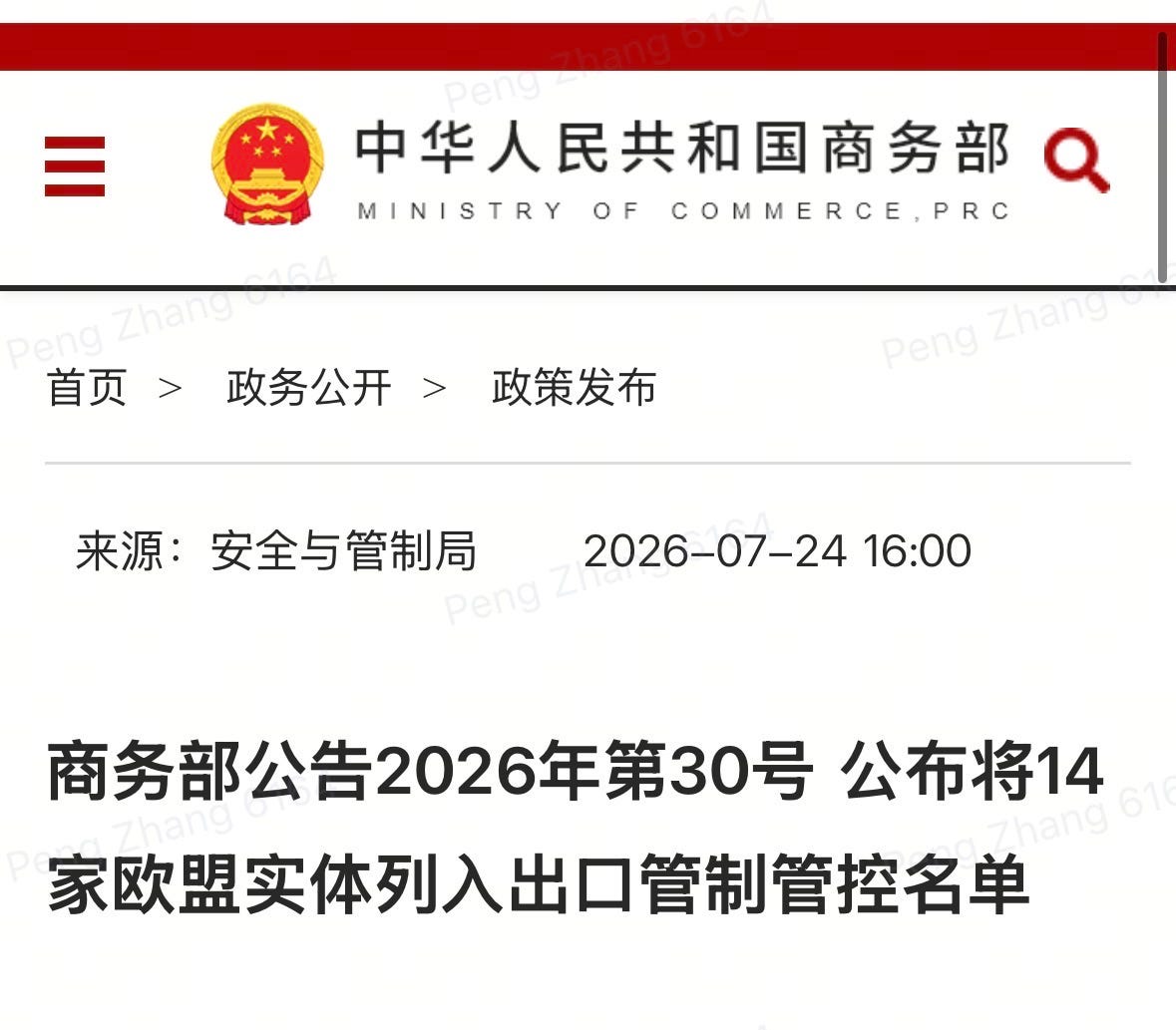
- On July 24, 2026, China hit EU defense giants like Rheinmetall and Vigo Photonics with export controls on critical materials, directly retaliating against European sanctions.
- A French-led coalition is pushing for tough tariffs, but Germany’s industrial lobby is digging in to protect access to the lucrative Chinese market.
- The EU is scrambling to secure alternative suppliers and beef up industrial resilience as Beijing’s targeted restrictions disrupt defense supply chains and expose Europe’s vulnerabilities.
EU Unity Splinters on China
Deep divides between France's protectionist push and Germany's market-driven caution are paralyzing the EU’s response to Beijing, as China exploits these rifts to target iconic industries and maintain its grip on critical resources.
By mid-2026, the EU’s internal divisions on responding to China’s trade practices have become starkly evident, with a French-led coalition—including Italy, Spain, the Netherlands, and Lithuania—advocating for stronger tariffs and defensive trade tools, while Germany’s powerful industrial lobby, particularly in the automotive and machinery sectors, pushes back to avoid escalating tensions that could jeopardize their significant market interests in China. This divide is compounded by the European Commission’s efforts to draft more assertive trade defense policies, which face skepticism due to Germany’s reluctance and the complexity of balancing industrial protection with maintaining access to the Chinese market.
The political landscape within the EU further complicates consensus, as member states pursue divergent priorities: France, led by President Emmanuel Macron’s stark warning that 'China is literally killing a large part of European industry,' pushes for protectionism inspired by U.S. strategies; Germany remains torn between interventionist Social Democrats and free-market Christian Democrats; Southern Europe seeks jobs and investment; Eastern Europe may welcome Chinese factories; and Brussels aims for strategic autonomy. Yet, as one analyst put it, 'Everyone agrees Europe needs to become stronger. Nobody wants to pay the transition cost,' highlighting the political and economic friction underlying trade policy debates.
China skillfully exploits these EU fractures by targeting sensitive sectors such as brandy and pork with temporary anti-dumping measures, hitting iconic French brands like Hennessy and Rémy Martin, thereby intensifying domestic disputes over who should bear the brunt of trade retaliation. Moreover, the EU’s critical dependency on China for 100% of its heavy rare earth elements supply acts as a strategic leash, complicating the bloc’s ability to mount effective trade defenses without risking industrial resilience and economic security.
Despite delays and internal conflicts, there is a nascent sense of momentum within the EU toward reclaiming a unified and assertive trade policy stance on China. The European Commission’s push for preemptive safeguards—measures applied 'even without feeling the damage'—signals a strategic shift, though Germany’s internal splits continue to slow decisive action. This evolving dynamic suggests that while the EU remains fractured, it is gradually organizing itself to better confront the challenges posed by China’s trade practices.


China’s Surgical Retaliation
Beijing’s precisely targeted export controls on European defense firms mark a new phase in tit-for-tat sanctions, signaling China’s willingness to escalate without triggering all-out economic warfare.
On July 24, 2026, China launched a precise and calibrated retaliation against the EU by imposing export controls on 14 European entities, including prominent defense and dual-use technology firms such as Germany's Rheinmetall, Poland's Vigo Photonics, and Tatra Trucks. This move directly responded to the EU’s sanctions targeting 14 Chinese companies accused of aiding Russia’s sanctions circumvention, marking a notable shift as China applied its export control regime symmetrically against European firms for the first time, contrasting its prior focus on US and Taiwan-related entities. By restricting access to critical Chinese materials like gallium, germanium, and rare-earth elements essential to Europe’s defense-industrial base, Beijing aimed to disrupt supply chains supporting Ukraine while framing the measures as necessary to safeguard national security and fulfill non-proliferation obligations.
While these export controls escalate trade tensions amid a backdrop of EU investigations into Chinese subsidies and anti-dumping duties on Chinese tyres, China carefully calibrated its response to serve as a 'surgical warning' rather than an all-out trade war. Beijing emphasized that its actions are lawful under its export control regulations and designed to minimize collateral damage, signaling a strategic escalation mechanism that pushes back against expanding EU sanctions without triggering broader economic fallout. This approach reflects a pattern of swift, proportionate reciprocal measures, as seen previously when China blacklisted seven EU defense contractors within 24 hours of Brussels sanctioning 27 Chinese firms in April 2026.


Supply Chains Under Siege
Chinese export restrictions on vital materials are forcing European defense manufacturers into costly overhauls and exposing the continent’s dangerous reliance on Chinese components for security-critical technologies.
China's strategic export restrictions, targeting 14 key European defense contractors and dual-use research organizations such as Rheinmetall, TATRA, and Cavok UAS, have significantly disrupted critical supply chains essential for Europe's defense-industrial base. By controlling vital raw materials and components like gallium, germanium, rare-earth products, and nonlinear optical crystals—resources regulated since 2023—China has leveraged its dominance to increase production costs and delays, thereby exposing Europe's industrial vulnerabilities and challenging its strategic security.
The immediate operational impact on European defense manufacturers is profound, as firms like Rheinmetall face the arduous task of redesigning procurement processes and qualifying new suppliers, a time-consuming endeavor that risks delaying defense programs. Moreover, the export controls introduce broader compliance uncertainties, prompting suppliers to suspend lawful trade to avoid risks and causing investors to factor in delivery unpredictability, which collectively amplifies disruptions across defense supply chains.
Europe's heavy reliance on Chinese components for critical defense items—ranging from drones and magnets to batteries and semiconductors—has laid bare systemic vulnerabilities that demand urgent industrial resilience. As documented by Defence Matters, this exposure necessitates a strategic pivot towards alternative sourcing, domestic capacity building, and enhanced recycling efforts to safeguard production continuity amid escalating geopolitical tensions.
In response, the EU’s strategic imperative centers on fostering resilience by meticulously identifying critical inputs whose disruption would halt production and proactively developing alternatives before crises emerge. This approach emphasizes supporting domestic processing, component manufacturing, supplier qualification, and coordinated purchasing, while cautioning against indiscriminate protectionism to preserve both industrial autonomy and strategic security in a complex global trade environment.
Brussels Weighs Risky Trade Balancing
The EU faces a high-stakes dilemma: how to shore up industrial resilience and safeguard defense supply chains without provoking an uncontrollable spiral of trade conflict with China.
The EU confronts a multifaceted strategic dilemma as China escalates trade retaliation by imposing export restrictions on 14 European entities, including defense giant Rheinmetall, in response to EU sanctions on Russia. This targeted approach marks a departure from broad product-category leverage to pinpointing specific European end users, intensifying operational pressures and complicating Brussels’ efforts to balance economic security with maintaining stable trade relations. Consequently, the EU must tread carefully to avoid indiscriminate protectionism that could further politicize trade conflicts, while sustaining dialogue and cooperation to prevent escalation.
Ensuring resilience in European defense supply chains amid these Chinese export controls demands a strategic pivot beyond mere stockpiling. The EU needs to proactively identify critical inputs whose disruption would halt production and develop alternative suppliers, processing capacities, and coordinated purchasing mechanisms ahead of crises. This comprehensive approach aims to mitigate vulnerabilities exposed by China’s targeted restrictions and safeguard operational continuity for firms like Rheinmetall, underscoring the necessity of forward-looking economic-security policies.