Europe’s defense awakening hits the factory floor: spending soars, output stalls
The gist
Europe is spending record billions on defense autonomy but keeps tripping over its own factory floors, with new money outpacing actual firepower.
What to know
- NATO members have ramped up defense budgets to €380-400 billion, with some eyeing 5% of GDP, but production bottlenecks mean little new kit is rolling out.
- Poland is ditching US hardware for a $16 billion South Korea tank partnership, while startups like Helsing ride a defense-tech investment wave that hit $1.5 billion in 2025.
- A $2.6 trillion rearmament push is on, but stubborn supply chain snags—think TNT shortages—show Europe’s defense might is still more promise than production.
Europe's Strategic Breakaway
European leaders are forging defense autonomy as trust in U.S. security guarantees fades, but entrenched procurement obstacles and fragmented sovereignty threaten to stall real capability gains.
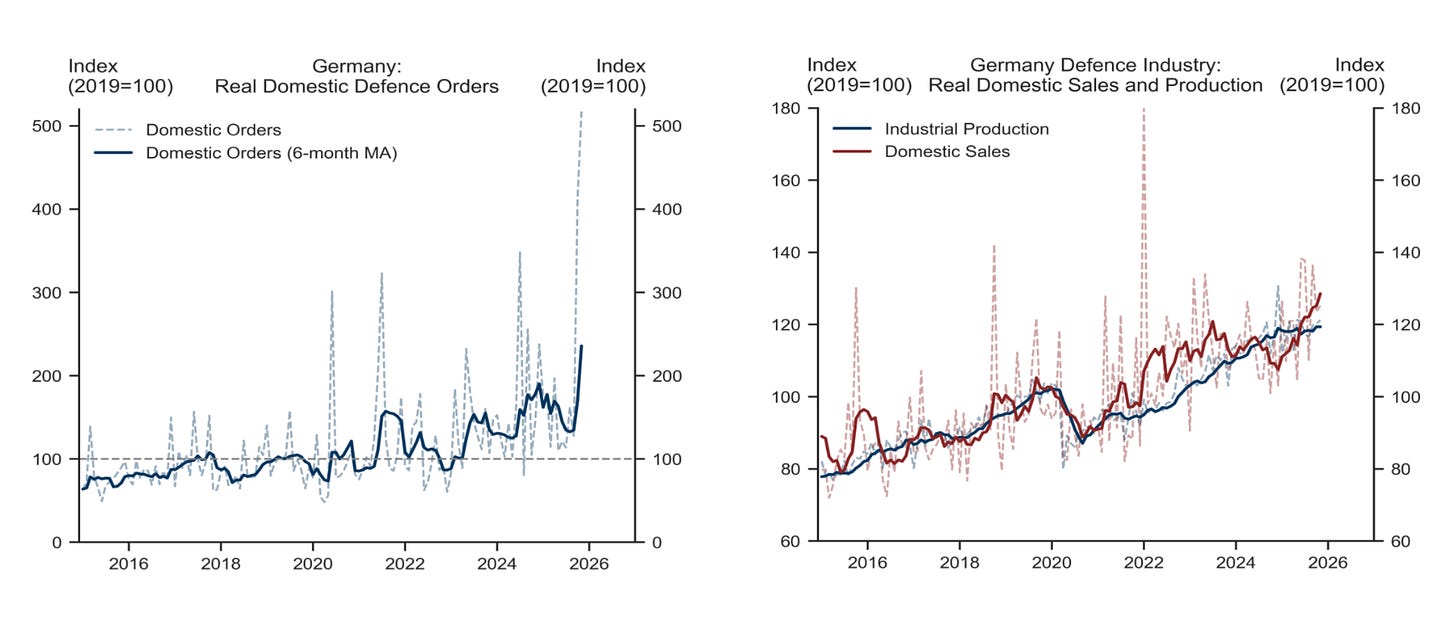
The Munich Security Conference in 2025 marked a watershed moment for Europe’s defense posture, ending the era of automatic reliance on American security guarantees and compelling a permanent strategic shift toward defense autonomy. Leaders like German Chancellor Merz and French President Macron publicly acknowledged this new reality, catalyzing a political consensus that transformed defense spending from a capped target into a baseline, with many NATO members raising budgets toward €380-400 billion collectively and some aiming for 5% of GDP. However, despite this political alignment, Europe faces the complex challenge of translating increased budgets into tangible military capabilities amid legacy procurement inefficiencies and industrial production bottlenecks, as exemplified by Germany’s doubling of defense orders but only marginal production growth.
Europe’s strategic imperative for sovereignty is driven by a growing distrust of the United States as a reliable security partner, a sentiment underscored by blunt messages from US officials like Vice President J.D. Vance and Secretary of State Marco Rubio signaling a retrenchment and conditionality in American defense commitments. This geopolitical shift has prompted European nations, including traditionally neutral states like Ireland, to reconsider their defense postures and invest in independent capabilities such as patrol ships and nuclear deterrents. Concurrently, efforts to decouple technologically from US dependence are underway, with countries like the Netherlands prepared to independently maintain critical systems like the F-35 fighter jet, reflecting a broader push to reduce the current 40% EU defense budget expenditure on American weapons.
Institutional reforms and industrial initiatives are central to Europe’s drive for defense autonomy, with measures such as Germany’s Bundeswehrbeschaffungsbeschleunigungsgesetz accelerating procurement and enabling rapid capacity expansion in key sectors like ammunition and air defense. The European Union’s €150 billion Security Action for Europe (SAFE) facility further supports this industrial mobilization by incentivizing domestic production and attracting private capital, as seen in contracts awarded to startups like Helsing and Stark Robotics. Yet, the strategic landscape remains complex, as national sovereignty over defense policies complicates cooperation on joint projects like the Future Combat Air System, necessitating new European Defense Industrial Program regulations to foster collaboration and overcome fragmentation.
While Europe is committed to building an independent defense architecture, pragmatic considerations lead to continued cooperation with the United States where interests align, exemplified by Germany’s simultaneous pursuit of US Tomahawk and Patriot missile systems amid its rhetoric for sovereignty. This tension highlights the industrial and strategic challenges Europe faces in replacing American capabilities, especially given Washington’s protection of critical technologies and the Pentagon’s cancellation of Tomahawk deployment in Germany by May 2026. Despite European missile alternatives like MBDA’s LCM MK2 and Aster 30 B1 NT offering competitive performance and cost advantages, accelerated access to US systems remains a priority, underscoring the transitional nature of Europe’s defense autonomy journey.


Factories Lag Behind Budgets
Despite record-breaking defense orders and financial firepower, Europe’s aging industrial base and labor bottlenecks are stifling production, forcing hard choices between traditional hardware and next-gen tech.
Europe’s defense industrial base is grappling with a stark mismatch between soaring demand and limited production capacity, as evidenced by Germany’s domestic defense orders doubling within six months by early 2026 while industrial output barely budged. This bottleneck is rooted in legacy industrial structures designed for efficiency and decline rather than surge capacity, leaving Europe ill-prepared for the rapid, high-intensity demands triggered by the Ukraine war. Efforts like Germany’s Bundeswehrbeschaffungsbeschleunigungsgesetz, passed in 2025, aim to accelerate procurement approvals and contracting, with companies such as Rheinmetall benefiting from advance payments and flexible contracts to expand ammunition and air defense production rapidly.
The labor-intensive nature of European ammunition manufacturing, concentrated in politically sensitive post-industrial regions like eastern Germany and northern France, adds complexity to scaling production swiftly. Poland’s urgent procurement of American systems such as Abrams tanks and F-35s underscores the tension between immediate capability needs and Europe’s slower industrial response. Meanwhile, Germany’s procurement reforms reveal strategic trade-offs, exemplified by the Leopard 3 tank program’s slowed pace to reallocate resources toward emerging technologies like drones and autonomous systems, which battlefield evidence suggests are critical for future survivability.
Germany’s defense spending surge to €80-90 billion through early 2026, supported by the €100 billion special fund and enhanced borrowing flexibility, creates a rare fiscal window for rapid rearmament. Large contracts, such as the €536 million strike drone deal awarded to Helsing and Stark with potential to reach €4.32 billion, act as market validation that attracts private capital, concentrates talent, and localizes supply chains—mirroring the industrial gravity seen in the US AI sector’s reshoring of critical production capabilities. However, this momentum risks consolidating Germany’s industrial advantage at the expense of broader European integration, as other countries struggle to keep pace.
Despite accelerated procurement reforms and EU-level coordination through the European Defense Agency, Europe faces a fundamental challenge transitioning from episodic, emergency-driven hardware purchases to sustainable, structural industrial capacity. Defense firms remain hesitant to invest in new production lines without assurances of persistent demand beyond the immediate crisis, prompting proposals for innovative procurement models that pay for guaranteed production capacity—akin to cloud infrastructure—to align incentives with permanence. This tension between urgent capability generation and long-term industrial growth persists even as ammunition production has tripled since 2022, highlighting ongoing bottlenecks and the need for durable reforms.



Defense Tech’s Startup Surge
A wartime investment boom has transformed Europe’s defense innovation scene, with AI-driven startups and Ukrainian tech firms capturing a lion’s share of new capital and reshaping the continent’s military edge.
The European defense innovation landscape has undergone a dramatic transformation since 2019, with investment skyrocketing from $100 million to $1.5 billion by 2025, largely fueled by the Ukraine war and shifting geopolitical imperatives. This surge has catalyzed a vibrant ecosystem of startups such as Frankenberg, Titan, and Helsing— the latter boasting a €12 billion valuation after raising €600 million—focusing on cutting-edge technologies including AI, autonomous systems, and quantum computing. Notably, Ukraine has evolved from an aid recipient to a strategic technology supplier, with its startups capturing roughly a third of Europe’s early-stage defense tech capital in 2025, underscoring the region’s interconnected innovation dynamics.
European governments and institutions have decisively stepped in to sustain this momentum, with the NATO innovation fund and the European Investment Bank quadrupling defense-related funding to €4 billion in 2025. The European Commission’s ambitious mobilization of up to €800 billion for defense spending, including a €150 billion fund dedicated to joint procurement of European-made military equipment, signals a strategic pivot toward sovereign technological autonomy. This financial backing is dismantling prior taboos around defense investments, encouraging entrepreneurs and investors to engage robustly in the sector, and fostering an environment ripe for sustained innovation in AI and autonomous systems.
By mid-2026, Germany exemplifies the continent-wide embrace of AI-driven defense innovation, propelled by increased budgets—approaching 5% of GDP—and political will to reduce bureaucratic barriers that previously hindered startup integration. Companies like Helsing have capitalized on this shift, while direct engagement with conflict zones such as Ukraine provides invaluable frontline insights that inform the development of AI-enabled defense solutions. This convergence of funding, policy reform, and real-world feedback is accelerating the maturation of Europe’s defense innovation ecosystem.
Eurosatory 2026 crystallized Europe’s strategic commitment to embedding emerging technologies like drones, quantum computing, and autonomous systems into defense operations, emphasizing rapid transition from exploration to actionable deployment. Partnerships such as Thales and Renault Group’s collaboration to industrialize the Toutatis loitering munition, and Greece’s Shield AI teaming with EFA Group to develop sovereign AI-based autonomous systems, illustrate a broader trend toward agile, sovereign, and edge-ready defense IT architectures. This ecosystem is increasingly international yet localized, with technology transfers and manufacturing agreements spanning from Lithuania to Indonesia, reinforcing resilience and capacity expansion amid rising defense spending.




Poland’s Pivot Shakes Supply Chains
Poland’s $16 billion South Korea deal is redefining European arms procurement, catalyzing a continental shift toward non-U.S. suppliers and local production that’s upending decades-old defense dependencies.
By early 2026, Europe’s defense procurement landscape is undergoing a decisive realignment away from US dominance, with Poland leading the charge through a landmark $16 billion partnership with South Korea that includes local production of 61 K2 tanks and extensive technology transfer. This Polish model, praised by the RAND Corporation as a blueprint for European defense industrial cooperation, exemplifies a broader continental push to rebuild sovereign capabilities while systematically excluding American contractors, as seen in Germany’s procurement plan limiting US suppliers to 8% and the EU’s Readiness 2030 mandate requiring 55% European or Ukrainian weaponry.
Localization and diversification efforts extend beyond Europe’s borders into the Middle East, where Hanwha Aerospace’s partnership with UAE’s Generation 5 Holding to locally manufacture K9 howitzers marks a strategic shift from mere arms exports to embedding Korean military technology within regional sovereign defense industries. This move, following precedents set in Egypt and backed by high-level political commitments from South Korea and the UAE, underscores a growing trend of defense supply chain realignment that enhances regional autonomy and resilience against reliance on traditional Western suppliers.
Europe is actively expanding its defense industrial base through innovative partnerships that integrate non-US suppliers, such as Rheinmetall’s collaboration to introduce South Korea’s KMSAM missile system and the joint venture between LIG Defense&Aerospace and Rheinmetall to develop layered air defense solutions for NATO. These alliances not only diversify supply chains but also accelerate procurement timelines and address capability gaps heightened by recent conflicts in Ukraine and the Middle East, signaling a pragmatic shift toward comprehensive, localized defense ecosystems.
Despite Germany’s vocal commitment to European defense sovereignty, its simultaneous pursuit of domestic co-production licenses for US-origin Tomahawk cruise missiles and Patriot interceptors reveals a nuanced strategy balancing independence with pragmatic cooperation. While European alternatives like MBDA’s MdCN missile offer competitive cost and capability, German leadership acknowledges the complexity of transitioning supply chains, with Chancellor Merz stating, 'Of course, we want to become more independent, but we are still interested in cooperating with the Americans where that aligns with our interests,' reflecting the ongoing tension between ambition and operational realities.

Autonomy Amid Alliance Uncertainty
Europe’s scramble for strategic self-sufficiency is intensifying as U.S. support grows conditional and regional crises expose both military gaps and the urgent need for unified, modernized defense capabilities.
Europe’s pursuit of defense autonomy is fundamentally reshaping in response to a complex geopolitical landscape marked by ongoing conflicts and shifting alliance dynamics. The war in Ukraine starkly exposed Europe’s critical dependencies on American systems such as GPS and satellite communications, as well as its ammunition shortages, prompting a strategic pivot toward home-grown capabilities from companies like Rheinmetall and Nexter. Meanwhile, NATO’s evolving posture—highlighted by Poland’s urgent procurement of US Abrams tanks and F-35s due to immediate border threats—illustrates the tension between Europe’s long-term industrial ambitions and short-term security needs. This dynamic is further complicated by the US strategic retrenchment, with troop withdrawals and a transactional NATO approach signaling a diminished American security guarantee, thereby accelerating Europe’s drive to build sovereign satellite, electronic warfare, and maritime capabilities to fill emerging security vacuums in the North Atlantic and Mediterranean.
The transatlantic relationship’s strain, fueled by fluctuating US policies from the Trump to Biden administrations and recent intelligence-sharing disruptions, has intensified Europe’s urgency to fund and manage its own defense. US Vice President J.D. Vance’s blunt assertion that Europe must 'go it alone' in defense funding underscores a growing consensus among European leaders like German Chancellor Merz and French President Macron, who have publicly committed to this strategic autonomy. This shift is evident even among traditionally neutral countries such as Ireland, which is now investing in naval assets to protect critical undersea infrastructure. However, Europe’s fragmented political landscape—with divergent national interests and varying readiness levels—complicates unified defense efforts, contrasting sharply with the US’s centralized defense oversight and raising questions about how best to allocate the roughly 800 billion euros in NATO defense spending amid industrial capacity constraints.
Recent regional conflicts, notably the Gulf crisis, have further exposed disparities within European defense capabilities and alliance cohesion. France and Italy have demonstrated operational effectiveness by deploying air defense systems to protect Gulf allies, whereas the UK’s faltering political and military response—exemplified by its inability to adequately defend bases like Akrotiri against Iranian missile and drone attacks—has strained its 'special relationship' with the US and highlighted the urgent need for increased air defense spending across Europe. These developments underscore a broader realignment where Europe must reconcile legacy defense postures, such as the UK’s reliance on nuclear deterrence and geographic distance, with emerging threats that demand rapid modernization and investment in autonomous defense technologies.
Europe’s strategic autonomy trajectory is still in its nascent stages but is gaining momentum amid global trade realignments and US pressure tactics, such as threats against allies over independent defense procurements like Canada’s potential Gripen fighter jet purchase. The finalization of major EU trade deals with Mercosur and India signals a broader geopolitical shift away from US-centric frameworks, while European collaborative efforts to develop indigenous defense systems are progressing despite fragmentation. NATO’s near 20% increase in defense spending, led by Germany’s planned doubling to over 150 billion euros by 2029, faces industrial and personnel absorption limits, reinforcing the imperative for Europe to substitute US systems with domestically produced alternatives to maintain operational sovereignty as American commitments wane.


Rearmament Meets Industrial Reality
A trillion-dollar defense boom is colliding with supply chain chokepoints and underappreciated industrial transformation, as Europe races to localize production and break its dependence on foreign suppliers.
Europe's defense sector is in the throes of a historic rearmament supercycle, driven by unprecedented financial commitments and a strategic pivot towards industrial sovereignty. With a $2.6 trillion spending pipeline over the next decade, countries like Poland are leading the charge, planning to spend $301.6 billion from 2026 to 2030—more than doubling previous periods—and signing over 130 contracts worth €35.2 billion in 2024 alone. This surge is reflected in market valuations, exemplified by Rheinmetall's staggering 1,500% stock increase since the Ukraine invasion, catapulting its market cap beyond Volkswagen's, yet investors still undervalue the sector, mistakenly treating it as a transient 'Ukraine trade' despite clear signals of sustained growth and structural industrial transformation.
The industrial landscape is undergoing profound shifts as traditional manufacturing adapts to defense demands, with Volkswagen’s Osnabrück plant repurposed to produce Lynx armored vehicles under Rheinmetall’s leadership, signaling deep structural changes. This industrial ramp-up is further complicated by critical supply chain bottlenecks, such as the TNT production shortfall where Nitro-Chem’s single factory in Poland produces only a fraction of NATO’s artillery shell requirements. New entrants like fintech founder Joakim Sjöblom’s SWEBAL are stepping in to fill these gaps, aiming to boost TNT output by 75% by 2027, while major producers like Rheinmetall plan significant increases in propellant powder production despite ongoing material import dependencies, notably nitric acid from China.
Institutional frameworks and procurement strategies underpin this defense expansion, with Germany’s €100 billion special fund and the EU’s €800 billion Readiness 2030 plan ensuring robust funding streams that will sustain growth well beyond any immediate geopolitical crises. Procurement is increasingly localized, as seen in Poland’s focus on technology transfer and domestic production through partnerships with South Korea, which supplies nearly half of its military exports to Poland, including manufacturing 61 of 360 K2 tanks locally. Concurrently, the EU mandates that 55% of weapons purchases come from European or Ukrainian manufacturers by 2030, signaling a deliberate shift away from U.S. suppliers, exemplified by Germany’s plan where only 8% of 154 major defense purchases through 2026 will go to U.S. firms.
Eurosatory 2026 crystallized the momentum of this defense supercycle, showcasing a flurry of strategic partnerships aimed at expanding production capacity, localizing manufacturing, and accelerating capability delivery. Collaborations like Thales and Renault Group’s joint industrialization of the Toutatis loitering munition, set to begin production in 2027, and Lockheed Martin’s cooperation with GM Defense to leverage commercial manufacturing expertise, highlight industry efforts to scale efficiently. The event also reflected the market’s growing internationalization, with strong participation from Ukraine—now a net exporter attracting Gulf investment—and emerging players from Asia and the Middle East, while the U.S. presence was notably subdued, indicating a shifting global defense industrial landscape.